
A widows peak is a distinctive hairline pattern where the center of the hairline forms a downward point toward the forehead. Some people notice it from childhood, while others become more aware of it as their hairstyle or hairline changes over time. It can be subtle or quite pronounced, and there is no single “correct” shape for a natural hairline.
Despite the myths surrounding it, having a widow’s peak does not automatically say anything unusual about a person’s personality, health, or future. In most cases, it is simply a natural variation in hairline shape influenced by genetics and the way hair grows.
Rather than treating it as something that needs to be hidden, many hairstyles can be adapted around the natural point. From short textured cuts to longer styles, the goal is usually to work with the hairline instead of constantly trying to make it look perfectly straight.
What Is a Widow’s Peak?
A widow’s peak is a V-shaped point at the center of the forehead created by the natural pattern of the front hairline. Instead of following a relatively straight curve from one temple to the other, the middle section extends slightly lower.
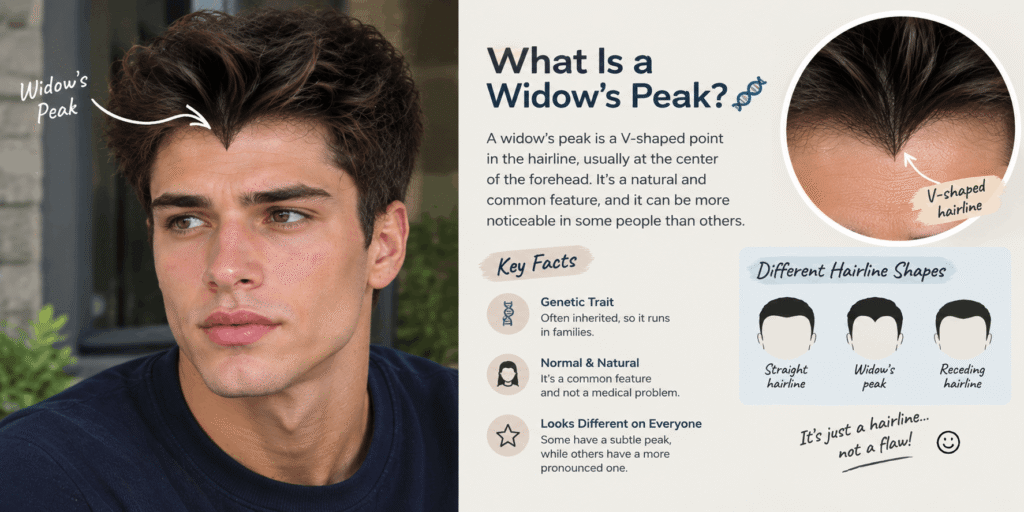
The shape can vary significantly from person to person. One person may have a very subtle point that is barely noticeable, while another may have a more defined V shape. Some hairlines also appear uneven, with one side being slightly higher or more pronounced than the other.
A widow’s peak is not the same thing as a receding hairline. A person can have a widow’s peak and a stable hairline, although changes in hair density or hairline position over time can make the shape appear more noticeable.
What a Widow’s Peak Looks Like
The easiest way to identify a widow’s peak is to look at the center of the front hairline. If the hairline creates a noticeable downward point before moving upward toward the temples, that is generally considered a widow’s peak.
The point does not have to be perfectly symmetrical. Natural hairlines often have small differences between the left and right sides, and these differences can become more visible with shorter hairstyles.
Lighting, hairstyle, hair density, and the direction in which the hair is brushed can also affect how prominent the shape appears. A hairstyle with the hair pushed backward may reveal the hairline more clearly, while a fringe or textured front can make the point less obvious.
What Causes a Widow’s Peak?
Genetics is one of the main factors behind the shape of a person’s hairline. The way the hair follicles are distributed around the forehead can influence whether the center forms a point, a rounded curve, or a relatively straight line.
Family traits can therefore play a role. However, having a widow’s peak does not mean that everyone in your family must have exactly the same hairline. Hairline shape is influenced by multiple characteristics, so there can be plenty of natural variation.
Age can also change how noticeable a widow’s peak looks. Changes in hair length, density, or the surrounding hairline may make an existing point appear stronger or softer. This is one reason it is useful not to judge a hairline based on a single photograph or hairstyle.
Widow’s Peak Hairstyles and Styling Ideas
A widow’s peak can work with a surprisingly wide range of hairstyles. The most suitable option depends on the amount of hair you want to keep, your natural texture, and whether you want the point to stand out or blend more softly into the hairstyle.
There is no requirement to hide the shape. In fact, many modern haircuts look intentional when they follow the natural direction of the hairline. A good barber or stylist can adjust the front, sides, and top so the haircut looks balanced rather than trying to force the hairline into an unnatural shape.
Short Hairstyles
Short cuts can make a widow’s peak more noticeable because there is less hair available to cover the forehead. That does not necessarily make the result less attractive; it simply creates a cleaner, more defined appearance.
A textured crop can work particularly well because the texture at the front breaks up a perfectly smooth hairline. A crew cut can also complement the natural shape while keeping the overall style simple.
A buzz cut is another option for someone who prefers an extremely low-maintenance look. Because the hair is kept consistently short, the natural hairline becomes part of the overall appearance rather than something the haircut attempts to disguise.
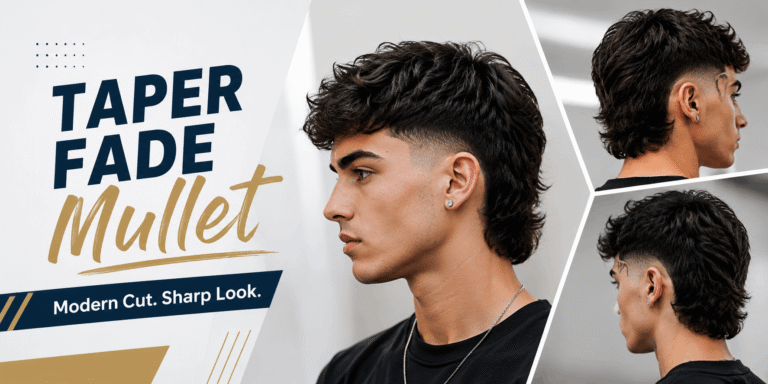
Fade haircuts can also be combined with different top lengths. The sides can be kept clean while the front and top retain enough length to create movement around the hairline.
Longer Hairstyles
Longer hair gives you more control over how the front of the hair sits. A side part, brushed-back style, or loose textured hairstyle can allow the hair to fall naturally around the point.
For a more polished finish, the hair can be directed slightly to one side rather than pulled straight backward. This can create a softer transition around the center of the hairline without requiring aggressive styling.
Longer styles also allow you to experiment. You can try different parting positions and textures to discover whether you prefer emphasizing the natural point or making it less noticeable.
Styles That Work With Natural Hairlines
The most useful styling principle is simple: do not force the front of the hair to behave in a way that goes completely against its natural growth pattern.
If the hair naturally separates around the center point, working with that direction can make styling easier. Lightweight products can add texture or control without making the front look overly rigid.
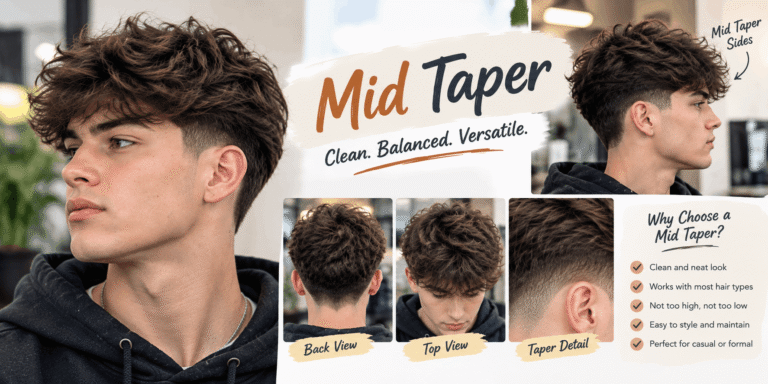
Your barber can also help determine where the sides should be tapered and how much length should remain around the temples. Small adjustments can change the balance of the entire haircut.
Can You Get Rid of a Widow’s Peak?
A natural widow’s peak is simply part of your hairline, so there is usually no need to remove it. However, if you strongly prefer a straighter-looking hairline, there are several ways to change how noticeable the point appears.
The easiest approach is hairstyling. Depending on your hair length and texture, a fringe, side-swept front, or textured style can reduce attention around the center of the hairline.
A barber can also shape the haircut around the existing hairline. Instead of cutting directly into the natural point, they can use the sides, top, and texture to create a more balanced overall shape.
It is important to avoid repeatedly shaving or cutting into the hairline in an attempt to create a perfectly straight edge. Hairlines naturally have irregularities, and forcing a specific shape can make the haircut look less natural as it grows out.
Can a Widow’s Peak Recede?
A widow’s peak itself does not necessarily mean that the hairline is receding. However, a person who naturally has a widow’s peak can also experience changes in hair density or hairline position for other reasons.
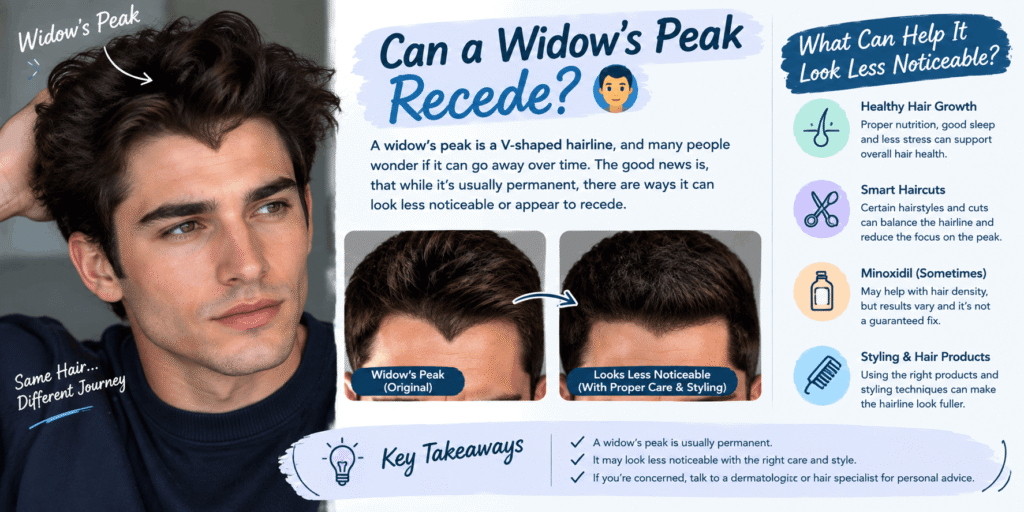
This can sometimes make the existing point appear more prominent. For example, if the hair around the temples becomes less dense while the center remains relatively stable, the V shape may become easier to notice.
The key is to look at changes over time rather than judging the hairline based on one image. If you notice sudden or significant changes in hair density, speaking with a qualified healthcare professional or dermatologist can help identify the cause.
How to Style a Widow’s Peak
Styling a widow’s peak usually comes down to choosing the right direction, texture, and amount of hold.
For a softer appearance, try brushing the front slightly forward or toward one side. Textured products can help separate individual strands and prevent the hair from looking too flat.
If you prefer a sharper appearance, a clean side part or controlled brushed-back style can make the widow’s peak look intentional. The key is to avoid using excessive product, especially around the front, because heavy buildup can make individual hairs stick together and emphasize the hairline.
Your natural hair texture should also influence your choice. Curly and wavy hair can naturally soften the shape, while straight hair may show the point more clearly.
Is a Widow’s Peak Attractive?
There is no universal answer because attractiveness is subjective, and hairstyles can dramatically change how a hairline looks.
A widow’s peak can give a haircut a distinctive shape and can work particularly well with styles that use texture, volume, or defined edges. Rather than seeing it as a flaw, many people simply treat it as one of their natural features.
The best hairstyle is usually one that complements the person’s overall hair texture, face shape, and preferred level of maintenance. A widow’s peak does not automatically limit your styling choices.
Widow’s Peak vs. Receding Hairline
These two things are often confused, but they are not the same.
A widow’s peak describes the shape of the hairline, particularly the downward point in the center. A receding hairline refers to a change in hairline position or density, commonly noticeable around the temples or front of the scalp.
Someone can have a widow’s peak without experiencing hair loss. Likewise, someone with a receding hairline may not have a widow’s peak.
Because hairlines naturally vary, it is better to focus on noticeable changes over time rather than assuming that a particular shape means the hairline is receding.
Styling a Widow’s Peak for Different Hair Types
One of the easiest ways to make a widow’s peak work with your hairstyle is to consider your natural hair texture first. The same haircut can create very different results on straight, wavy, curly, or thicker hair because texture changes how the front of the hair sits around the hairline.
Straight hair often makes the shape of the hairline easier to see. If you want to highlight the natural point, a brushed-back style or clean side part can make it part of the haircut. If you would rather soften it, adding texture to the front can prevent the hairline from looking too sharply defined.
Wavy hair naturally creates movement around the forehead, which can make the transition between the hairline and hairstyle look softer. A loose side-swept style can work especially well because it allows some strands to fall naturally instead of forcing every section into a precise direction.
Curly hair offers another advantage because the natural pattern can add volume and movement around the front. Depending on the curl pattern and length, you can allow the curls to frame the forehead or choose a shorter cut that keeps the entire hairstyle structured.
Thicker hair generally gives you more styling flexibility. You can experiment with different directions, lengths, and textures without relying heavily on styling products. The key is to avoid creating too much weight directly at the front if it makes the hairstyle difficult to control.
How to Choose a Haircut Around Your Hairline
Choosing a haircut based only on a picture can sometimes be misleading. A style that looks great on someone else may sit differently because their hair texture, density, forehead shape, and natural growth direction are different.
Instead of asking for an exact copy, consider which parts of the reference hairstyle you actually like. You may like the length on top, the fade around the sides, the texture at the front, or the way the hair is parted. Your barber can then adapt those elements to your own hairline.
Shorter sides can create a strong contrast with the top, while keeping additional length at the front provides more styling freedom. A softer taper can create a less dramatic transition if you prefer a more traditional appearance.
The front should also be considered separately from the sides. The shape of your hairline does not have to dictate the entire haircut. A good cut can use different lengths and textures to create a balanced overall shape.
Choosing Between a Defined or Softer Look
There are two basic styling directions you can take. The first is to make the natural point more visible. The second is to reduce its visual prominence.
For a defined look, styles that expose the forehead can work well. Brushed-back hair, shorter cuts, and clean partings allow the natural hairline to become part of the design.
For a softer look, textured fronts, side-swept hair, and longer fringe styles can create more coverage around the center. These approaches do not change the actual hairline; they simply change how much of it is visible.
Neither approach is automatically better. The choice comes down to the hairstyle you prefer and how much time you want to spend styling it.
Avoiding Common Styling Mistakes
One common mistake is applying too much product in an attempt to make every strand stay perfectly in place. Heavy product can make the front look stiff and may draw more attention to the hairline than intended.
Another mistake is repeatedly trimming the front yourself in an attempt to create a straighter shape. Small uneven cuts can become increasingly difficult to blend into the surrounding hair.
It is also worth remembering that your hairline does not need to look perfectly symmetrical. Natural hairlines often have small differences from one side to the other, and trying to eliminate every minor variation can make a hairstyle harder to maintain.
Widow’s Peak vs. a Changing Hairline
A natural widow’s peak and a changing hairline are not the same thing. Someone may have a pointed center hairline for years without it representing a sign of hair loss.
The important factor is change. If the shape has looked essentially the same for a long period, it may simply be your natural hairline. If you notice a noticeable change in density or position over time, however, it can be useful to discuss it with a qualified healthcare professional.
Photographs can sometimes make a hairline appear different because of lighting, camera angle, hairstyle, or wet versus dry hair. Comparing photographs taken under very different conditions can therefore be misleading.
Rather than constantly checking the hairline from different angles, pay attention to broader changes. If something seems significantly different from your usual pattern, professional advice is more useful than trying to identify the cause from internet images.
How to Make a Widow’s Peak Part of Your Style
A natural hairline can actually give a haircut more character. Instead of viewing the center point as a problem that has to be corrected, you can use it as one of the features that makes your hairstyle distinctive.
For a classic appearance, a side part can create a structured shape while allowing the hairline to remain visible. For something more casual, textured hair can make the front look less formal. Shorter styles can also create a clean, uncomplicated appearance with very little daily effort.
If you wear longer hair, changing the direction of the front section can dramatically alter how the hairline appears. You might discover that a slight side sweep works better than a straight-back style, or that a loose fringe gives you the appearance you prefer.
The best approach is usually experimentation rather than trying to follow a universal rule. Try different partings and lengths while keeping your natural growth pattern in mind. Once you find a direction that feels comfortable, you can ask your barber or stylist to build the next haircut around it.
Styling Products for a Widow’s Peak
The right styling product can make it easier to control the front without making the hairline look overly stiff. The best choice depends on your hair texture and the finish you want.
Lightweight creams or styling lotions can work well when you want movement and a natural finish. They allow the hair to stay flexible rather than locking every strand into one position.
For more definition, a small amount of matte styling paste or clay can help separate sections and create texture. These products are particularly useful when you want a messy or textured appearance rather than a perfectly smooth finish.
If you prefer a polished hairstyle, a light styling gel or similar product can provide additional control. Use a modest amount and distribute it evenly instead of concentrating too much product directly around the hairline.
Easy Everyday Widow’s Peak Hairstyles
A widow’s peak does not require an elaborate styling routine. Simple hairstyles can often work just as well, especially when they follow the natural direction of your hair.
A side part is one of the easiest options because it creates a clear direction while allowing the natural point to blend into the overall shape. A textured crop can also work well if you prefer shorter hair and minimal daily styling.
For medium-length hair, a loose side sweep provides flexibility. You can leave the front slightly relaxed for a casual appearance or use a small amount of product when you want more structure.
Longer hair gives you even more options. You can experiment with a center or side part, allow the front to fall naturally, or use layers to create movement around the forehead.
The goal is not to find one hairstyle that works for everyone. It is to find a style that works with your own texture, growth pattern, and preferred level of maintenance.
Final Thoughts
A widow’s peak is a natural variation in hairline shape, and it can look different from one person to another. For some people, the point is barely noticeable, while others have a much more defined V shape.
There is no requirement to hide or change it. Short textured cuts, fades, side parts, longer hairstyles, and many other looks can be adapted around the natural hairline.
If you like the shape, styling it intentionally can make it a distinctive part of your haircut. If you prefer a softer appearance, the right length, texture, and direction can make the point less prominent. The goal is simply to choose a style that works naturally with your hair rather than fighting against it.
3 Comments