
A skin fade is one of the most recognizable modern men’s haircuts, known for its clean sides, gradual transition, and extremely short finish around the lower part of the head. Unlike a regular fade that may leave some visible hair near the bottom, a skin fade takes the sides and back down to the skin before gradually blending into longer hair above.
What makes this haircut so versatile is that the fade itself is only one part of the overall style. You can pair it with a short crew cut, textured crop, slicked-back hair, pompadour, buzz cut, or many other hairstyles. That means the same basic fade technique can create completely different looks depending on the length, texture, and styling of the hair on top.
What Is a Skin Fade and Why Is It So Popular?
A skin fade, sometimes called a bald fade, starts with the hair shaved extremely close to the skin around the lowest section of the sides and back. The barber then gradually increases the length as the fade moves upward, creating a smooth transition between the bare area and the longer hair above.
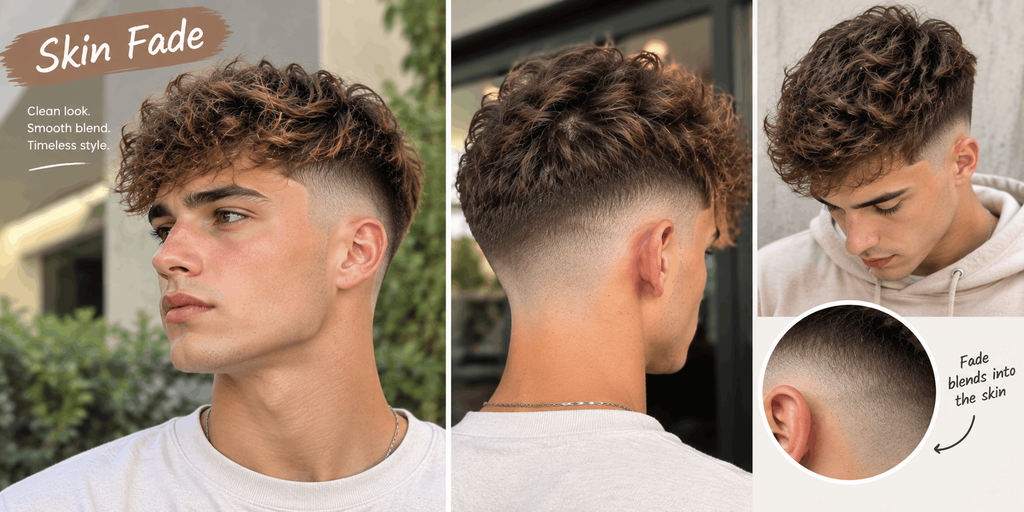
The fade can be positioned at different heights. A low skin fade keeps the shortest section closer to the ears and neckline, creating a more subtle transition. A mid skin fade rises higher around the sides, while a high skin fade creates a much stronger contrast between the short sides and the hair on top.
The key to a good result is the transition. There should not be an obvious harsh line separating the different lengths. A skilled barber gradually blends each section so that the hair appears to move naturally from skin-short at the bottom into longer hair toward the top.
The amount of contrast you want is something worth discussing before the haircut begins. Someone looking for a subtle change may prefer a lower fade, while someone who likes a more noticeable haircut may want the fade taken higher.
Your hair texture can also influence how the finished style looks. Straight hair can show the transition very clearly, while wavy or curly hair can create a softer visual connection between the faded sides and the longer top.
Face shape can play a role too, although there is no strict rule saying that a particular face shape cannot wear a skin fade. The top length and styling direction can be adjusted to create a balanced overall appearance. Instead of choosing a haircut solely based on a face-shape chart, it is often more useful to consider your natural hair texture, preferred maintenance level, and the amount of contrast you actually like.
Another reason the style remains popular is its clean appearance. Because the lower sides are taken extremely short, the haircut can look fresh and defined immediately after a barber visit. At the same time, the longer top gives you room to personalize the style.
One thing to remember is that a skin fade is not necessarily a low-maintenance haircut. The initial styling can be simple, but the very short fade grows out noticeably. If you want the sides to maintain that freshly blended appearance, you may need regular barber visits.
The Best Skin Fade Hairstyles to Try
The easiest way to customize a skin fade is to decide what you want to do with the hair on top. The fade can remain similar while the top completely changes the personality of the haircut.
Crew Cut With Skin Fade
A crew cut paired with a skin fade creates a short, structured haircut that does not require a complicated styling routine. The top is kept relatively short while the sides gradually disappear into the skin.
This combination works particularly well for someone who prefers a practical hairstyle but still wants a sharper finish around the sides. The top can be left slightly longer toward the front, allowing a small amount of texture or direction.
Because there is less hair to style, the crew cut can be easier to maintain than longer hairstyles. A small amount of styling product may be enough if you want extra texture, but it can also be worn naturally.
Slick Back With Skin Fade
For a more polished direction, a slick back can be combined with a skin fade. The longer hair on top is brushed backward while the sides provide a sharp contrast.
The amount of shine is completely customizable. A matte product can create a more modern finish, while a shinier styling product can give the haircut a more traditional appearance.
Hair length matters with this style. If the top is too short, it may not stay directed backward easily. Your barber can help determine how much length to leave based on your natural hair texture and how you want to style it.
Textured Crop With Skin Fade
A textured crop offers a more relaxed alternative to the slicked-back look. The top is generally kept short to medium and styled with visible texture, while the skin fade creates a clean contrast around the sides.
This haircut does not need to look perfectly uniform. The texture can be worked through the top with your fingers, creating separation between sections of hair.
For naturally wavy hair, the existing texture can become part of the finished style. Straight hair can also be styled into a textured crop with the right cutting and styling technique.
The front can be worn forward, slightly lifted, or arranged into a loose fringe depending on the cut. This makes the textured crop a flexible choice for someone who wants a modern hairstyle without committing to a very elaborate routine.
Buzz Cut With Skin Fade
A buzz cut with a skin fade is one of the shortest combinations available. The hair on top is clipped very close while the sides transition down to the skin.
Because the top is so short, there is little daily styling involved. The haircut itself creates most of the finished appearance.
This style can also be adjusted by changing the length of the buzz cut. A slightly longer top creates more contrast, while an extremely short top produces a more uniform appearance.
The simplicity of this haircut can make it appealing if you do not want to spend much time styling your hair. However, the fade will still need regular maintenance if you want to keep the sides looking freshly blended.
Pompadour With Skin Fade
A pompadour creates a much stronger contrast between the voluminous top and the closely faded sides. The hair is generally styled upward and backward, giving the top a fuller appearance.
This style requires more length and styling than a buzz cut or crew cut. Depending on your hair texture, you may need a blow dryer and styling product to create and maintain the desired shape.
The skin fade keeps the sides visually clean while allowing the pompadour to become the main feature of the haircut. Because the top is more prominent, your barber should consider the natural direction and density of your hair when deciding how to cut it.
How to Make a Skin Fade Work for Your Hair
A good skin fade begins with choosing a version that matches how you actually want to wear your hair. It is easy to save a photo of a haircut you like, but the same cut may look different depending on hair texture, density, growth pattern, and the length left on top.
Before your appointment, think about how much time you want to spend styling your hair. If you prefer something quick, a crew cut, buzz cut, or short textured top may be more practical. If you enjoy styling your hair, a slick back or pompadour gives you more room to experiment.
Your barber can also adjust the height of the fade. A low fade generally creates a more gradual visual change, while a higher fade produces greater contrast. If you are getting a skin fade for the first time, explaining how dramatic or subtle you want the transition can help your barber choose the right placement.
It is also useful to show a reference photo, but remember that the photo is a guide rather than a guarantee. Hair texture and growth patterns can make the final result different from the reference.
The neckline is another detail that can affect the finished haircut. Because the lower part of a skin fade is extremely short, the neckline can look particularly defined immediately after the cut. Your barber can shape it according to the overall haircut rather than treating it as a separate detail.
Styling at home is usually straightforward once you know what direction the top should go. Shorter cuts may need little or no product, while longer styles can benefit from a suitable styling cream, clay, pomade, or mousse. Start with a small amount and add more only if necessary.
Avoid using excessive product simply to force the hair into place. The right amount depends on your hair length, thickness, and the finish you want. A lighter product can be useful when you want movement, while stronger hold may be more suitable for structured styles.
Skin Fade Maintenance: How to Keep It Looking Fresh
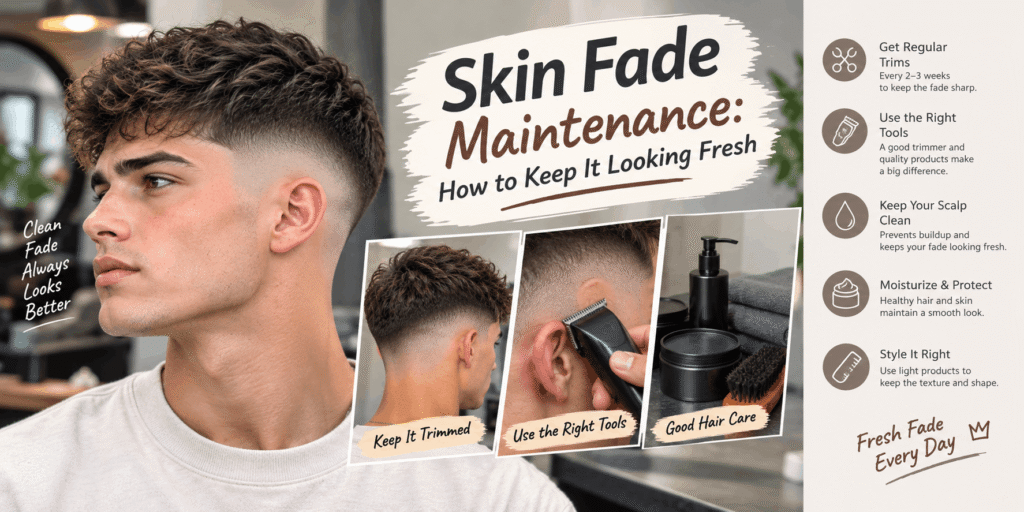
One of the biggest things to consider before choosing a skin fade is maintenance. Since the shortest portion is cut down to the skin, even a small amount of regrowth can make the fade appear less sharp.
How often you need a touch-up depends on how quickly your hair grows and how precise you want the fade to look. Some people prefer visiting their barber frequently, while others allow the fade to grow out naturally before getting another cut.
Between appointments, keep the scalp and hair clean according to your normal routine. If the skin feels dry after a very close haircut, a gentle moisturizer may help. Avoid applying heavy styling products directly onto the scalp unless they are intended for that purpose.
Sun exposure can also make freshly shaved skin more noticeable, so taking normal sun-protection measures is sensible when the scalp is closely shaved.
If you experience unusual irritation, persistent discomfort, or a reaction after a haircut, give the area time to settle and consider speaking with a qualified healthcare professional if the problem continues.
As the fade grows, you can also transition into a slightly longer haircut rather than immediately getting another skin fade. This can make the growing-out period easier and give you the opportunity to try a different style.
Is a Skin Fade Right for You?
A skin fade can be an excellent choice if you like clean, sharply defined sides and want plenty of freedom with the hair on top. Its biggest advantage is versatility: the same fading technique can be paired with short, medium, textured, or more structured hairstyles.
However, it is worth considering maintenance before committing to it. If you prefer a haircut that looks nearly identical for a long time without frequent barber visits, a longer fade or a less aggressive taper may be easier.
Your personal styling habits matter just as much. Someone who enjoys experimenting with hair can use the longer top to create different looks, while someone who prefers minimal styling can choose a short top that requires very little effort.
The most important thing is to communicate clearly with your barber. Tell them how high you want the fade, how short you want the sides, how much length you want to keep on top, and whether you prefer a subtle or strong contrast.
Final Thoughts
The skin fade has become a modern haircut staple because it can be adapted to almost any personal style. From a simple buzz cut and crew cut to a textured crop, slick back, or pompadour, the fade provides a clean foundation while the top determines the overall character of the hairstyle.
Rather than choosing a skin fade simply because it is popular, think about how you want your haircut to fit into your everyday routine. Consider your hair texture, desired styling time, preferred fade height, and how often you are comfortable visiting the barber.
A well-executed fade is ultimately about the transition between lengths. When the blending is clean and the top complements the sides, even a relatively simple haircut can look intentional and polished.
With the right variation and a barber who understands the result you want, a skin fade can be customized into a haircut that feels modern without looking like every other fade.
3 Comments