
Fashion has a way of bringing classic pieces back into the spotlight, but some styles never truly disappear. Pleated pants are a perfect example. Once strongly associated with traditional office clothing and formal menswear, they have become a versatile wardrobe choice for people who appreciate comfort, structure, and effortless style. Today, you can find them in relaxed streetwear outfits, polished work looks, elegant evening combinations, and casual everyday clothing.
What makes pleated pants interesting is the small detail that changes the entire appearance of a pair of trousers. The folds near the waistband create extra room through the upper leg, giving the fabric a softer drape and a more defined shape. Depending on the cut, material, and styling, the same design can look sophisticated, relaxed, vintage-inspired, or completely contemporary.
However, wearing pleated pants well is not simply about choosing a pair with attractive folds. The rise, leg width, fabric weight, length, and overall fit all influence how they look. A beautifully designed pair can feel awkward if the proportions are wrong, while a simple pair can become a standout outfit when styled thoughtfully.
If you have been wondering whether pleated pants are still fashionable, how to choose the right fit, or what to wear with them, this guide will help you understand their appeal and make them work with your personal style.
What Makes Pleated Pants Different?
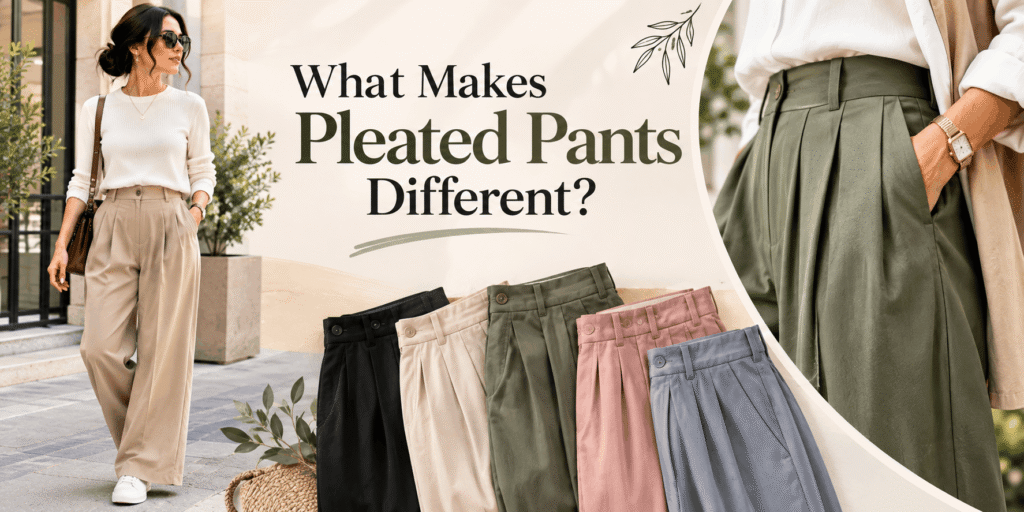
Pleated pants are trousers designed with one or more folds of fabric near the waistband. These folds are called pleats, and they create additional space around the hips and upper thighs. Rather than keeping the front of the trousers completely flat, the fabric is folded and stitched into place before opening into the leg.
This construction gives the trousers a distinctive appearance. The front looks more structured, but the extra fabric can also make the fit feel less restrictive. When you sit, walk, or move throughout the day, the additional room may provide a more comfortable experience than some tightly fitted flat-front styles.
Pleats also influence how the trousers hang. They can create a natural line from the waist toward the hem, especially when combined with a suitable rise and carefully chosen fabric. This is why pleated designs often look particularly attractive with tailored jackets, knitwear, button-down shirts, and other pieces that benefit from a balanced silhouette.
Not every pleated pair looks the same. Some have subtle folds that are barely noticeable, while others feature deeper pleats that create a more dramatic shape. The difference can change the entire personality of the outfit.
Single Pleats and Double Pleats
The two most common constructions are single-pleat and double-pleat designs.
Single-pleat trousers have one fold on each side of the front. They offer a relatively understated appearance and are often a good starting point for someone who wants to try the style without making a dramatic change to their usual wardrobe. Their shape can work with both modern tailored outfits and relaxed everyday combinations.
Double-pleat trousers have two folds on each side. Because they contain more fabric around the front, they can create a fuller appearance through the hips and thighs. This design is frequently associated with traditional tailoring, but contemporary versions can look surprisingly fresh when paired with simple tops and modern footwear.
Neither option is automatically better. The right choice depends on the silhouette you prefer, how much room you want through the upper leg, and how noticeable you want the pleats to be.
Pleats That Face Inward or Outward
The direction of the folds also affects the overall appearance.
Forward-facing pleats open toward the zipper area. They are commonly found in traditional tailoring and can create a clean, controlled look.
Reverse pleats open toward the pockets. They often produce a slightly more relaxed appearance and can provide a different sense of volume around the hips.
These details may seem minor when viewing trousers on a hanger, but they become more noticeable when the pants are worn. If possible, try both constructions before deciding which one feels more natural on your body.
Why Pleated Pants Have Become a Modern Wardrobe Favorite
Pleated pants are no longer limited to formal offices or traditional dress codes. Designers and everyday fashion enthusiasts have found new ways to use their shape, making them relevant across different styles and age groups.
One reason for their popularity is versatility. A tailored pair can look appropriate for a professional environment, while a relaxed cotton or linen version can be worn with a simple T-shirt. The design does not belong to one specific fashion category, which makes it easier to adapt.
Comfort is another important reason. The extra fabric around the upper leg can provide more room for movement, particularly when the trousers have a relaxed cut. This does not mean every pleated design is automatically comfortable. Tight waistbands, poor proportions, and stiff materials can still make trousers difficult to wear. However, a well-constructed pair can offer a useful balance between structure and ease.
Their appearance also makes them stand out without requiring complicated styling. Pleats introduce visual interest through the construction itself. You do not necessarily need bold prints, unusual colors, or oversized accessories to make the outfit feel considered.
There is also a growing appreciation for clothing that combines classic design with contemporary proportions. Pleated trousers fit naturally into this approach. They can be styled with vintage-inspired pieces or worn with clean, modern basics, creating outfits that feel current without depending on short-lived trends.
Finding a Fit That Actually Works
The most important part of choosing pleated pants is understanding their proportions. A pair may look attractive in a product photograph but feel completely different when you wear it. Pay attention to the waistband, rise, seat, thigh area, leg shape, and hem length rather than focusing only on the size printed on the label.
The waistband should sit comfortably without digging into your skin or requiring constant adjustment. If it is too loose, the trousers may slide down and cause the pleats to collapse awkwardly. If it is too tight, the fabric can pull across the front and prevent the folds from opening naturally.
The rise determines how high the trousers sit on your waist. High-rise designs generally create a longer-looking leg line and give the pleats more room to fall. Mid-rise options can feel familiar and easier to combine with everyday clothing. Low-rise pleated pants exist as well, but they can change the balance of the design and may not provide the same traditional drape.
The seat should have enough room to allow comfortable movement without creating excessive fabric around the back. Similarly, the thigh area should not feel restrictive. Pleats are meant to provide additional space, so a design that pulls tightly across the upper leg may defeat the purpose.
Leg width is another major decision. Slimmer pleated trousers create a sharper, more controlled silhouette, while straight and wide-leg versions produce a more relaxed appearance. The best option depends on your personal style and the other pieces in your wardrobe.
Length deserves just as much attention. Trousers that are too long may gather heavily around the shoes, making the lower half look untidy. Extremely short hems can make the outfit appear unbalanced unless the cropped length is intentional. A slight break, where the fabric gently touches the shoe, is a reliable starting point for many tailored outfits. A cleaner, shorter finish can work well with contemporary or casual styling.
When trying on a pair, walk around, sit down, and stand naturally. Check whether the pleats remain smooth, whether the waistband stays in place, and whether the fabric falls comfortably. A good fit should look intentional from different angles rather than only from the front.
Styling Pleated Pants Without Making the Outfit Complicated
One of the easiest ways to wear pleated pants is to let their shape do most of the work. Since the trousers already have texture and structure, the rest of the outfit does not need to be overly elaborate. Simple clothing often creates the most balanced result.
A Clean Everyday Look With a T-Shirt
A plain T-shirt is one of the simplest ways to make pleated pants feel relaxed. Choose a well-fitting crew-neck or slightly oversized T-shirt and combine it with straight or relaxed trousers. White, cream, grey, navy, and muted earth tones are easy choices because they allow the trousers to remain the main feature.
For a more polished appearance, tuck in the T-shirt or use a small front tuck. This reveals the waistband and helps the outfit maintain a clear shape. If you prefer a casual finish, leave the shirt untucked, provided its length does not completely hide the trousers’ upper construction.
Sneakers create an easy daytime combination, while loafers can make the same outfit look more refined. A simple belt or watch is usually enough to finish the look.
With a Button-Down Shirt for a Polished Appearance
A button-down shirt and pleated trousers create a natural partnership because both pieces have a structured appearance. This combination works for office environments, dinners, presentations, and occasions where you want to look neat without wearing a full suit.
A crisp white shirt offers a classic result, while light blue, pale pink, or subtle stripes can add variety. Tucking the shirt into the trousers helps highlight the waist and keeps the proportions balanced.
For a relaxed interpretation, roll the sleeves and leave the top button open. You can also choose an Oxford shirt or a softer cotton design instead of an extremely formal dress shirt.
The footwear determines how formal the outfit feels. Leather loafers and derby shoes create a more traditional appearance, while clean minimalist sneakers make it suitable for smart-casual settings.
With Knitwear for a Softer Silhouette
Knitwear can make pleated pants look comfortable and sophisticated at the same time. A lightweight sweater, fitted cardigan, or fine-knit polo adds texture without competing with the trousers.
A tucked-in knit top creates a defined waistline, while a shorter sweater can sit naturally over the waistband. If you prefer a looser top, make sure it does not overwhelm the width of the trousers. The goal is to create a balanced outline rather than allowing every piece to look oversized.
Neutral combinations are particularly easy to wear. Think charcoal trousers with a cream sweater, beige pants with a brown knit, or navy trousers with a soft grey top. These combinations feel coordinated without looking overly planned.
With a Blazer for a Modern Tailored Outfit
Pleated trousers and a blazer can create an elegant outfit that feels more relaxed than a traditional business suit. The key is to pay attention to proportion and fabric.
A structured blazer works well with tailored pleated pants, particularly when the colors complement each other. You can wear matching pieces for a suit-inspired appearance or combine different shades for a more flexible outfit.
For example, grey trousers with a navy blazer create a classic contrast. Beige trousers with a dark brown blazer offer a warmer combination. If you want something more contemporary, try a relaxed blazer with slightly wider trousers and a simple T-shirt underneath.
The blazer should sit comfortably across the shoulders. Avoid combining extremely tight trousers with a very oversized jacket unless you are intentionally creating a strong contrast in proportions.
With Casual Jackets for an Off-Duty Look
Pleated pants can also work with denim jackets, lightweight bomber jackets, overshirts, and other casual outerwear. These combinations are useful when you want the trousers to look less formal.
A simple bomber jacket with a plain top and relaxed pleated pants creates a clean weekend outfit. A denim jacket introduces a slightly rugged feel, especially when paired with cotton trousers and casual sneakers.
Overshirts are another practical choice. They add a layer without making the outfit feel too heavy, and they work particularly well with relaxed or straight-leg trousers.
When combining casual jackets with pleated pants, consider the fabric contrast. A soft cotton jacket can work beautifully with wool trousers, while denim can add texture to lightweight chinos.
Choosing the Right Fabric for Different Seasons
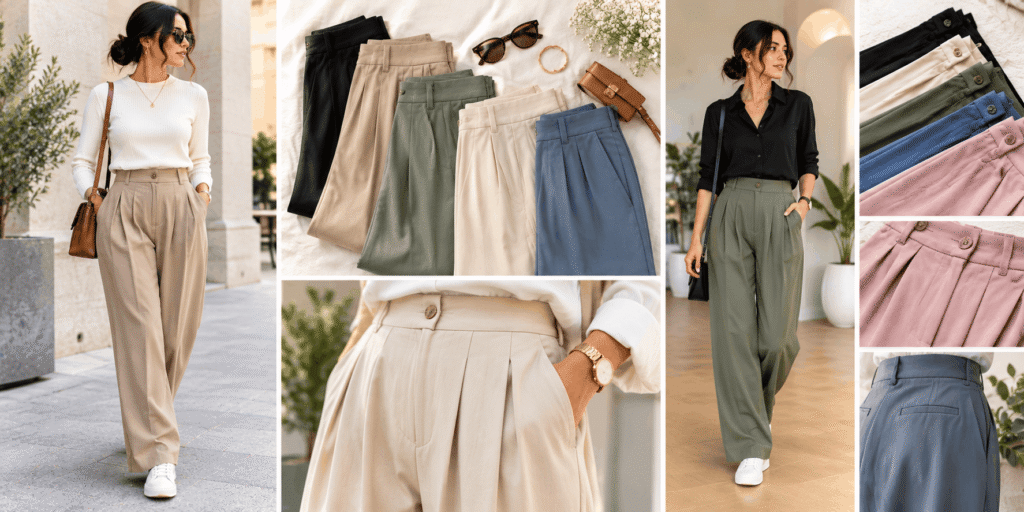
Fabric changes how pleated pants look, feel, and move. It can also determine whether a pair is suitable for warm weather, cold conditions, or year-round use.
Wool for Structure and Cooler Weather
Wool is a popular choice for tailored pleated trousers because it drapes well and can hold its shape. Depending on the weave and weight, wool trousers may feel appropriate for office wear, formal occasions, and cooler days.
Lightweight wool can be worn beyond winter, while heavier versions provide more warmth. Wool blends are also common and may combine the appearance of traditional tailoring with additional durability or easier care.
If you want a pair that looks refined with blazers and dress shirts, wool is worth considering.
Cotton for Everyday Versatility
Cotton pleated pants are a practical option for casual and smart-casual outfits. They are available in many colors and weights, making them easy to incorporate into an existing wardrobe.
Cotton chinos with pleats can look polished without feeling too formal. They work with T-shirts, polo shirts, casual button-downs, and lightweight jackets.
Some cotton fabrics wrinkle more easily than others, so check the material composition and care instructions before buying. A cotton blend may offer a smoother finish or easier maintenance.
Linen for Warm Days
Linen is especially useful during hot weather because it is lightweight and breathable. Linen pleated trousers often have a naturally relaxed appearance, making them suitable for holidays, outdoor gatherings, and warm-weather everyday outfits.
The fabric tends to wrinkle, but this is part of its natural character. Instead of expecting linen to remain perfectly smooth, choose a well-cut pair and embrace its softer finish.
A linen shirt, lightweight knit top, or simple cotton T-shirt can complete the look. Sandals, loafers, and minimal sneakers may all work depending on the occasion.
Blended Fabrics for Practical Wear
Some trousers combine different fibers to improve comfort, durability, wrinkle resistance, or flexibility. A wool-polyester blend, for example, may offer easier maintenance than certain pure-wool fabrics. Cotton blends can also provide a smoother finish.
The right blend depends on your priorities. If you travel frequently, wrinkle resistance may matter more. If you want a natural drape, fabric composition and construction deserve closer attention.
Do not judge quality by the fabric name alone. Check how the trousers hang, whether the material feels comfortable, and whether the construction suits the way you plan to wear them.
Colors That Make Pleated Pants Easy to Style
Color can completely change the impression of pleated trousers. A classic neutral shade may become a wardrobe staple, while a more expressive color can make the pants the centerpiece of an outfit.
Black is one of the easiest options for creating a sharp appearance. It pairs well with white shirts, grey knitwear, dark jackets, and many types of footwear. Black pleated trousers can be dressed up or down depending on their fabric and cut.
Grey is another reliable choice. Light grey feels fresh and works well with navy, white, black, and soft pastel shades. Charcoal looks more formal and can be a useful alternative to black, especially in office outfits.
Beige and cream create a softer appearance. These shades work particularly well with brown, olive, navy, and white. They are also useful for spring and summer outfits because they look light without requiring bright colors.
Navy offers a balance between traditional and relaxed styling. It works with white shirts, striped tops, grey sweaters, and brown leather accessories.
Olive, chocolate brown, and taupe are worth considering if you want something different from the usual black and grey options. These colors can create interesting outfits while remaining relatively easy to coordinate.
For a first purchase, choose a shade that works with several tops and shoes you already own. A versatile neutral pair is likely to receive more wear than a striking color that only matches one outfit.
Are Pleated Pants Suitable for Different Body Types?
Pleated pants are available in many cuts, so there is no single body type that can or cannot wear them. The important factor is choosing a design that creates the proportions and comfort you prefer.
If you have fuller thighs, a pair with enough room through the upper leg can feel more comfortable than a narrow flat-front style. The pleats should open naturally rather than being stretched tightly across the body. A straight or relaxed leg may provide a balanced appearance.
If you prefer a slimmer silhouette, look for subtle pleats and a more controlled leg shape. The trousers should still allow comfortable movement. Choosing a fabric with a good drape can help the design look clean without making it feel restrictive.
For people who want to create the impression of longer legs, high-rise trousers can be worth trying. Wearing a top that is tucked in or ends near the waistband can make the leg line appear more continuous. A hem that sits neatly above or on the shoe can also help avoid unnecessary visual breaks.
If you are shorter, this does not mean you need to avoid wide-leg pleated trousers. The overall proportions matter more than the label attached to the style. Try a moderate leg width, an appropriate rise, and a length that does not overwhelm your shoes. A well-fitted pair can look much more balanced than trousers chosen simply because they are described as slim or petite.
If you prefer a fuller silhouette, deeper pleats and wider legs can create the shape you want. Balance them with a top that has some structure, or choose a shorter layer that allows the trousers to remain visible.
The best approach is to judge the complete outfit rather than focusing on one measurement. A mirror check from the front, side, and back can reveal whether the trousers hang naturally and whether the overall shape feels right.
Pleated Pants for Work, Events, and Everyday Life
The versatility of pleated pants becomes clearer when you consider how easily they can move between different settings.
For work, choose tailored trousers in wool, cotton, or a suitable blend. Grey, navy, black, and beige are dependable colors. Pair them with a button-down shirt, knit polo, blouse, or blazer depending on the workplace dress code. Keep the fit comfortable and the hem neat.
For weddings and special occasions, consider a more refined fabric and a coordinated outfit. A well-fitted blazer, elegant shirt, and polished shoes can make pleated trousers feel appropriate for many dressier events. If the occasion has a formal dress code, make sure the entire outfit meets its requirements rather than assuming any pleated trousers will be suitable.
For casual outings, relaxed cotton or linen versions are easy to style with T-shirts, polos, and lightweight jackets. Sneakers or loafers can complete the outfit without making it look too formal.
For travel, comfort and practicality become especially important. Look for trousers that allow movement, resist excessive wrinkling, and work with several tops. A neutral pair can be useful when packing light because it can create multiple combinations with a small selection of clothing.
For evening plans, darker colors and smoother fabrics can create a more polished appearance. A fine-knit top, tailored jacket, or elegant shirt can make the trousers feel intentional without requiring a complete formal outfit.
Shoes That Work Beautifully With Pleated Pants
Footwear has a major influence on the final look because the trouser hem naturally draws attention toward the shoes. Choosing the right pair helps the outfit feel connected from top to bottom.
Loafers are one of the most natural partners for pleated trousers. Leather loafers create a refined appearance, while suede versions feel softer and more relaxed. They work especially well with cropped or slightly tapered trousers.
Derby shoes and Oxford shoes are useful for more formal combinations. They pair naturally with tailored wool trousers, shirts, and blazers. The finish of the shoe should complement the formality of the fabric.
Minimal sneakers make pleated pants feel more casual and contemporary. White, cream, grey, and understated black sneakers are easy to combine with neutral trousers. Avoid overly bulky designs if the trousers have a narrow hem, unless the contrast is intentional.
Boots can work particularly well during cooler months. Chelsea boots create a clean line, while other leather or suede styles can give the outfit a more rugged appearance. Make sure the trouser opening sits comfortably over the boot rather than bunching awkwardly.
Sandals can be a good option with linen or lightweight cotton pleated pants in warm weather. Choose a simple design that matches the relaxed character of the trousers.
There is no universal shoe rule. The best option depends on the fabric, length, leg width, and occasion. When in doubt, consider whether the footwear belongs to the same general style as the rest of the outfit.
Common Styling Mistakes That Can Ruin the Look
Pleated pants are not difficult to style, but a few avoidable mistakes can make them look less flattering or less polished.
One common issue is choosing the wrong size. If the waistband is too tight, the pleats may pull open and create unwanted lines across the front. If the trousers are too loose, they can slide down and lose their intended shape. Always check the fit rather than relying only on the size label.
Another mistake is ignoring the length. Excess fabric gathering around the ankles can make even expensive trousers look untidy. On the other hand, a hem that is too short may disrupt the proportions. If the trousers fit well everywhere else, a simple alteration can often improve the result.
Wearing an oversized top with extremely wide pleated trousers can sometimes make the outfit look shapeless. This combination can work when carefully styled, but it helps to create at least one point of definition. A tucked-in shirt, shorter jacket, or structured layer can provide that balance.
Some people also assume pleated trousers must always be worn formally. This limits their potential. A relaxed cotton pair can look excellent with a T-shirt and sneakers, while linen versions can feel natural with summer clothing.
At the opposite end, wearing very casual pieces with highly formal trousers may create a confusing combination. Mixing styles is possible, but the materials, colors, and proportions should still feel connected.
Finally, avoid choosing trousers simply because a particular silhouette is trending. If the rise, leg width, or fabric does not suit your preferences, you may rarely wear them. A comfortable pair that fits your wardrobe is a better investment than a dramatic design you feel unsure about.
How to Care for Pleated Pants and Keep Their Shape
Good care helps pleated trousers maintain their appearance over time. Because the folds are an important part of the design, careless washing, drying, or ironing can affect how they look.
Always read the care label before cleaning. Wool trousers may require professional dry cleaning or a specific gentle-care method, while cotton and linen versions may be easier to wash at home. Never assume that every pair can go through the same washing cycle.
When ironing, pay attention to the direction and position of the pleats. Use the recommended temperature for the fabric and avoid pressing random folds into the material. If you are uncertain, professional pressing can help maintain the original shape.
Hanging trousers properly is also useful. Use a suitable trouser hanger that supports the waistband or allows the legs to hang naturally. Avoid cramming them into a crowded wardrobe, where the fabric may develop unnecessary creases.
After wearing wool trousers, allow them to air out before storing them. Frequent washing is not always necessary, and excessive cleaning can shorten the life of certain fabrics. For small marks, follow the manufacturer’s cleaning guidance rather than immediately applying strong products.
If your trousers become wrinkled during travel, a garment steamer may help, provided the fabric allows it. Keep the steamer at an appropriate distance and follow the care instructions.
Small habits can make a difference. Store the trousers correctly, address stains promptly, and avoid exposing delicate fabrics to unnecessary heat. These steps help preserve both the material and the carefully constructed front.
How to Choose Your First Pair of Pleated Pants
If you have never owned pleated trousers, it is easy to feel overwhelmed by the number of styles available. The simplest approach is to start with a pair that fits naturally into your existing wardrobe.
Begin with a neutral color such as charcoal, navy, beige, or black. These shades are easier to coordinate and can be worn in several settings. Choose a fabric based on your lifestyle: cotton for everyday use, wool for tailored outfits, or linen for warmer weather.
Next, decide how much volume you want. A single-pleat design with a straight or gently tapered leg is a useful starting point if you prefer a balanced silhouette. If you enjoy relaxed or vintage-inspired clothing, a double-pleat pair with a wider leg may be more appealing.
Try different rises rather than assuming one style will suit everyone. The waistband should feel comfortable, and the pleats should fall naturally when you stand and move.
Think about your footwear as well. If you mostly wear sneakers, choose a length and leg opening that work with them. If your wardrobe includes loafers and formal shoes, a more tailored cut may offer greater flexibility.
Finally, consider how often you will wear the trousers. A versatile pair that works with several shirts, sweaters, and jackets is usually more useful than one designed for a very specific occasion.
You do not need to buy an entire new wardrobe to wear pleated pants. Start with one well-fitting pair, experiment with combinations you already own, and gradually discover which proportions feel most comfortable.
Final Thoughts
Pleated pants have earned their place in modern fashion because they combine a distinctive design with practical versatility. Their folds add character, their construction can provide extra room through the upper leg, and their wide range of fabrics and cuts makes them suitable for everything from relaxed everyday outfits to carefully tailored looks.
The secret to wearing them well is choosing the right proportions. Pay attention to the rise, waistband, leg width, fabric, and hem length. Then build the outfit around the trousers with pieces that complement their shape rather than compete with it.
Whether you prefer a clean office look, a relaxed weekend combination, or a more expressive fashion-forward outfit, pleated pants offer plenty of room to experiment. Start with a style that feels natural, keep the overall outfit balanced, and let this classic design become a useful part of your wardrobe.
Pleated pants are trousers with folds of fabric stitched near the waistband. These folds add visual detail and can provide extra room around the hips and thighs, creating a distinctive silhouette.
Yes, pleated pants remain a popular fashion choice. Modern designs feature different rises, leg widths, and fabrics, making them suitable for classic tailoring, casual outfits, and contemporary streetwear.
Pleated pants can be very comfortable because the folds provide additional room through the upper leg. Choosing the correct waistband, rise, fabric, and fit makes a significant difference.
4 Comments