
Flare jeans have a special place in fashion because they combine comfort, personality, and a distinctive silhouette. Their wide lower legs create a recognizable shape that separates them from straight-leg, skinny, and bootcut denim. Although many people associate flare jeans with the 1970s, their story began much earlier and developed through several different fashion movements.
Over the decades, flare jeans have moved from practical workwear into youth culture, celebrity wardrobes, designer collections, and everyday clothing. They have been worn with platform shoes, fitted shirts, oversized jackets, flowing blouses, and modern minimalist outfits. Each generation has found a different way to style them, giving this denim shape a lasting place in fashion.
Today, flare jeans are available in numerous designs, including high-waisted, low-rise, dark-wash, distressed, cropped, and extra-wide styles. Some versions create a subtle shape below the knee, while others feature dramatic openings that almost cover the shoes. This variety makes them suitable for different personal styles and occasions.
Understanding the history of flare jeans helps explain why they continue to return to fashion. Their popularity is not simply connected to nostalgia. It also comes from their ability to change with new trends while maintaining their original character.
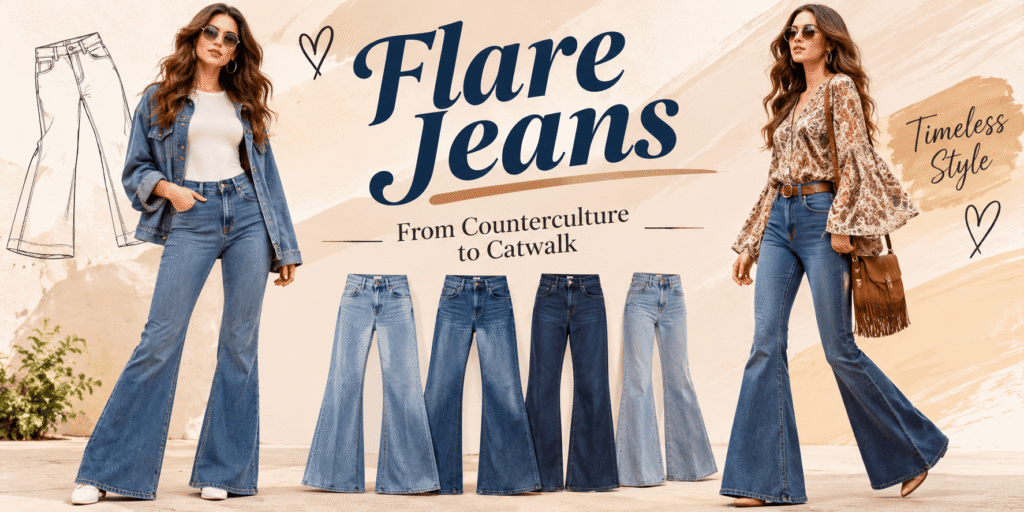
From Practical Clothing to a Fashion Statement
The history of flare jeans is closely connected to the development of denim itself. Before becoming a popular fashion item, denim trousers were primarily valued for their strength and usefulness. Workers needed clothing that could handle demanding physical activities, and durable fabric made denim a practical choice.
Early flared trousers were not necessarily designed to make a fashion statement. Wider lower legs appeared in different types of practical clothing, including sailor trousers. Their shape offered room around footwear and allowed greater freedom of movement. This older design helped establish the idea of trousers that gradually widened toward the bottom.
During the twentieth century, denim started moving beyond its original practical purpose. Young people began using jeans to express independence, personal taste, and cultural identity. Instead of being viewed only as work clothing, denim became part of everyday fashion.
The changing attitude toward clothing created opportunities for different denim silhouettes. Straight-leg jeans remained popular, but wider shapes attracted people who wanted something more expressive. Flare jeans gradually became associated with individuality and a relaxed approach to dressing.
Their design is relatively simple. The upper section usually fits around the waist, hips, and thighs, while the fabric expands from the knee toward the hem. This creates a balanced shape that looks different from trousers with a consistent width throughout the leg.
As fashion became more experimental during the 1960s, flared trousers found a natural place in youth culture. Their unusual proportions matched the creative atmosphere of the period. People began wearing them with colorful shirts, patterned jackets, boots, and accessories that made everyday outfits more distinctive.
The 1970s: The Golden Age of Flare Jeans
The 1970s are widely remembered as the defining decade for flare jeans. During this period, bell-bottom trousers and flared denim became important parts of mainstream fashion. Their popularity was connected to music, youth movements, changing attitudes, and a growing interest in individual expression.
Unlike many earlier denim styles, 1970s flare jeans were designed to attract attention. Some featured exaggerated openings at the bottom, while others had decorative stitching, faded washes, embroidered details, and unusual pocket designs.
The silhouette worked particularly well with the footwear of the decade. Platform shoes and boots added height, while the extended denim hem created a long, flowing appearance. Many people paired their jeans with fitted tops to create contrast between the upper and lower parts of an outfit.
Music and entertainment also played an important role in making flared denim recognizable. Photographs, television appearances, concerts, and magazine editorials introduced these trousers to wider audiences.
Several influential women became associated with the style and helped establish its fashionable image.
Jane Birkin
Jane Birkin became known for a relaxed approach to fashion that combined simplicity with effortless elegance. Her style often included everyday clothing rather than complicated outfits, making her appearance feel natural and approachable.
Flare jeans fitted easily into this aesthetic. When combined with simple tops, woven accessories, and understated footwear, denim trousers created an outfit that looked fashionable without appearing overly planned.
Her influence was particularly relevant to people who preferred casual clothing with a feminine touch. Rather than relying on elaborate decorations, the overall shape and combination of individual pieces created the look.
The connection between Jane Birkin and 1970s fashion continues to inspire modern outfits. Her relaxed styling demonstrates how flare jeans can become the central element of an outfit without requiring too many additional details.
Farrah Fawcett
Farrah Fawcett represented the energetic and glamorous side of 1970s fashion. Her television appearances and public photographs made her an influential style figure, particularly among young women interested in casual American clothing.
Her fashion image reflected the decade’s preference for movement, volume, and confident silhouettes. Flared trousers worked naturally with this approach because their wider hems created a noticeable shape while maintaining the comfort of denim.
The popularity of fitted shirts, casual jackets, and boots also helped make this combination recognizable. It offered a balance between relaxed clothing and a more carefully styled appearance.
Farrah Fawcett’s influence illustrates how television personalities helped turn everyday fashion into something widely admired. Her era contributed to the association between denim, confidence, and youthful style.
Cher
Cher brought a more dramatic personality to 1970s fashion. Her clothing choices often included striking patterns, decorative materials, and distinctive silhouettes. She demonstrated that casual-inspired clothing could also have a bold and theatrical appearance.
Flared trousers suited her expressive fashion identity. Their extended shape offered room for creative styling, especially when paired with fitted tops, statement belts, and eye-catching accessories.
The influence of performers such as Cher helped make flared clothing more than a temporary trend. It became connected to a broader cultural preference for personal expression.
By the end of the decade, flare jeans had become an established fashion choice. They were no longer limited to particular youth groups or music communities. People from different backgrounds were wearing them in everyday settings.
The 1980s and 1990s: When Flare Jeans Lost Their Spotlight
Fashion trends rarely remain popular forever, and flare jeans experienced a noticeable change during the 1980s and 1990s. As new clothing styles appeared, the dramatic bell-bottom shape gradually lost some of its mainstream attention.
The 1980s introduced a different approach to denim. Fashion became more focused on bold colors, oversized proportions, fitted silhouettes, and statement clothing. Acid-wash denim, stonewashed finishes, high-waisted jeans, and tapered legs became familiar features of the decade.
Although some people continued wearing flared trousers, other denim designs attracted more attention. Tapered jeans, particularly those with a narrower ankle, became an important part of casual fashion.
The 1990s brought another major change. Grunge, alternative music, hip-hop, and minimalist fashion influenced how people dressed. Baggy jeans, relaxed straight-leg trousers, and loose-fitting denim became popular choices.
Flare jeans did not disappear completely during these years. They remained available in different forms, but they were no longer the defining denim silhouette they had been during the 1970s.
Toward the end of the decade, fashion began exploring more fitted clothing again. Denim brands experimented with different waist heights, leg shapes, and washes. These developments helped create the conditions for another major return of flared denim in the following decade.

The 2000s: The Rise of Low-Rise Flare Jeans
The early 2000s introduced a completely different interpretation of flare jeans. Instead of repeating the traditional 1970s appearance, designers and denim brands created styles that reflected the youthful and experimental mood of the Y2K period.
Low-rise waistlines became particularly recognizable. Many jeans sat below the natural waist, fitted closely around the hips, and widened toward the bottom. This combination created a distinctive silhouette that became popular among teenagers, young adults, musicians, and celebrities.
Denim also became more decorative during this period. Rhinestones, embroidered pockets, contrast stitching, metallic details, and heavily faded washes appeared across different collections.
Some flare jeans featured extremely long hems designed to fall over platform shoes or high heels. Others had smaller openings that created a softer bootcut-inspired appearance.
The popularity of these designs was closely connected to celebrity fashion. Music videos, red-carpet appearances, television programs, and entertainment magazines introduced new denim combinations to millions of people.
Britney Spears
Britney Spears became one of the recognizable fashion influences of the early 2000s. Her music videos, performances, and public appearances helped define the youthful pop aesthetic associated with the decade.
Low-rise denim was an important part of this fashion environment. Flared jeans paired with fitted tops, crop tops, casual jackets, and statement belts reflected the energetic style that many young people wanted to recreate.
The combination was easy to recognize but offered plenty of opportunities for personal styling. Some people preferred simple blue denim, while others selected jeans with decorative pockets, fading, or embellished details.
Her influence demonstrates how pop music and celebrity culture can help transform ordinary clothing into a recognizable fashion trend.
Paris Hilton
Paris Hilton became strongly associated with the glamorous side of early 2000s fashion. Her outfits often included fitted clothing, fashionable accessories, playful colors, and statement pieces.
Flare jeans suited this aesthetic because they could be styled casually while still creating a polished appearance. Low-rise denim, fitted tops, handbags, sunglasses, and fashionable footwear became recognizable combinations during this period.
Her fashion influence also reflected the growing importance of celebrity street style. People were no longer interested only in clothing shown on traditional runways. They also followed the everyday outfits worn by public personalities.
The popularity of these looks helped make low-rise flare jeans a familiar item in shopping centers and denim collections.
Destiny’s Child
Destiny’s Child contributed to the visual identity of early 2000s fashion through coordinated outfits and bold performance clothing. Their appearances frequently combined denim, fitted silhouettes, decorative materials, and contemporary styling.
Flared denim worked particularly well with the group’s energetic image. Different washes and denim details created outfits that looked connected while allowing individual styling choices.
Their influence also highlighted the connection between music and clothing. Fans often looked to performers for inspiration when choosing casual outfits, accessories, and denim designs.
By the middle of the 2000s, flare jeans had become an established part of everyday fashion. Although skinny jeans gradually gained more attention later in the decade, the flared silhouette remained an important part of denim history.
Flare Jeans in Contemporary Fashion
Modern fashion has brought flare jeans back with updated proportions, improved denim construction, and a wider selection of designs. Instead of depending on one particular look, today’s collections offer several interpretations of the classic silhouette.
High-waisted flare jeans are especially recognizable in contemporary wardrobes. Their higher waist creates a defined shape, while the wider lower leg adds movement and visual balance.
Some designs have a subtle flare that begins around the knee. Others feature a dramatic opening that creates a more noticeable bell-bottom effect. This variety allows shoppers to choose a silhouette that matches their preferred style.
Modern denim collections also include different fabrics and finishes. Stretch denim provides flexibility, while traditional cotton denim offers a more structured appearance. Dark indigo, light blue, black, grey, and vintage-inspired washes provide additional styling possibilities.
Designer fashion has also contributed to the renewed interest in flared silhouettes.
Celine
Celine represents a refined approach to contemporary fashion, with an emphasis on clean shapes, carefully selected materials, and understated styling.
Flared denim fits naturally into this fashion direction because it can create a strong silhouette without requiring excessive decoration. Dark washes, simple tops, structured jackets, and elegant footwear offer a balanced appearance.
The appeal of this approach is its versatility. A pair of well-fitted flare jeans can work with everyday clothing while also becoming part of a more sophisticated outfit.
Gucci
Gucci is known for combining different fashion influences, including vintage references, bold patterns, and distinctive accessories.
Flared denim offers an interesting opportunity for this type of styling. Its connection to the 1970s makes it suitable for outfits that combine retro inspiration with contemporary details.
Patterned shirts, statement belts, leather accessories, and unusual footwear can all complement the shape of flare jeans. The result can feel expressive rather than overly traditional.
This relationship between vintage silhouettes and modern styling shows why older denim designs continue to influence luxury fashion.
Victoria Beckham
Victoria Beckham’s fashion direction is often associated with clean tailoring, simple color combinations, and elegant proportions.
Flare jeans work well within this style because their shape creates interest while keeping the rest of an outfit relatively simple.
A dark pair of high-waisted denim trousers can be combined with a fitted knit top, tailored blazer, or minimalist shirt. Neutral footwear and a structured handbag complete the appearance without making it feel complicated.
This type of outfit demonstrates that flare jeans are not limited to casual or bohemian fashion. They can also be incorporated into a more polished wardrobe.
Stella McCartney
Stella McCartney’s fashion collections are associated with contemporary design and an interest in alternative approaches to materials and production.
Flared denim fits into this broader fashion conversation because the silhouette can be adapted in numerous ways. Different fabric weights, washes, and proportions allow designers to experiment while maintaining the familiar shape.
The wider lower leg also creates movement, making flare jeans visually interesting when walking. This quality helps distinguish them from more structured straight-leg denim.
Diesel
Diesel has a strong connection to denim culture and experimental casual fashion. Its approach to jeans often includes distinctive washes, unusual finishes, and noticeable construction details.
Flare jeans provide a natural foundation for these design elements. Vintage-inspired fading, distressed surfaces, oversized pockets, and interesting waistlines can give the classic silhouette a more contemporary identity.
Modern denim enthusiasts often look for jeans that feel individual rather than ordinary. Designs influenced by Diesel’s experimental approach demonstrate how flared denim can remain relevant without losing its original character.
The Boho Revival: Bringing Back the Vintage Spirit
The renewed interest in bohemian fashion has played an important role in bringing flare jeans back into everyday wardrobes. Boho-inspired clothing often combines relaxed silhouettes, natural-looking fabrics, earthy colors, and vintage accessories. Flared denim fits comfortably into this aesthetic.
Unlike the glamorous approach of the early 2000s, modern bohemian styling often focuses on creating outfits that feel relaxed and expressive. Flowing blouses, embroidered shirts, suede jackets, woven handbags, and layered jewelry are common choices.
The connection between bohemian fashion and flare jeans is not new. During the 1960s and 1970s, wider trousers were already associated with artistic communities and alternative lifestyles. Their return reflects an interest in clothing that feels individual rather than strictly formal.
How to Style Flare Jeans Today
Flare jeans can be styled in several ways depending on the occasion, preferred colors, and overall outfit.
1. Casual Everyday Outfit
For a simple everyday appearance, combine blue flare jeans with a fitted T-shirt and comfortable sneakers. A small handbag and minimal accessories can complete the outfit. This combination works well for shopping, meeting friends, or casual outings.
2. Smart and Elegant Styling
Dark-wash flare jeans can create a more polished appearance. Pair them with a tucked-in shirt, fitted blazer, and heels. This combination offers a balance between casual denim and sophisticated clothing.
3. Bohemian-Inspired Look
Choose light-wash flare jeans and combine them with a loose blouse, suede jacket, and ankle boots. Adding a woven bag or simple necklace can strengthen the vintage-inspired appearance.
4. Modern Minimalist Outfit
Black or dark-blue flare jeans work particularly well with neutral clothing. A cream sweater, simple top, or structured jacket can create a clean outfit without unnecessary decoration.
Choosing the Right Flare Jeans
Finding the right pair involves more than selecting a color or following a trend. The waistline, fabric, length, and width of the lower leg all influence how the jeans look and feel.
- High-waisted flare jeans: These sit around the natural waist and create a defined silhouette.
- Low-rise flare jeans: These offer a relaxed Y2K-inspired appearance and sit lower on the hips.
- Classic flare jeans: These provide a balanced opening below the knee without an extremely wide hem.
- Wide flare jeans: These have a more dramatic shape and create a noticeable statement.
- Cropped flare jeans: These finish above the ankle and work well with sneakers, sandals, and ankle boots.
Length is another important consideration. Jeans that are too short may not create the intended flowing appearance, while excessively long hems can become uncomfortable when walking. Trying different lengths with the footwear you normally wear can help you find a practical fit.
Fabric also matters. Stretch denim can offer greater flexibility, particularly when the jeans fit closely around the hips and thighs. Traditional denim generally provides a firmer structure and may feel more substantial.
Why Flare Jeans Continue to Attract Fashion Lovers
One reason flare jeans remain popular is their ability to adapt to changing fashion preferences. They can look vintage, modern, elegant, casual, or dramatic depending on how they are designed and styled.
Another advantage is the variety available today. People who prefer understated clothing can choose simple dark denim, while those interested in statement fashion can explore exaggerated hems, unusual washes, and decorative details.
Social media has also helped introduce older fashion trends to younger audiences. Vintage-inspired outfits, Y2K combinations, and 1970s references frequently influence contemporary styling. As a result, flare jeans continue to reach people who may not have experienced their earlier periods of popularity.
Their history also demonstrates how fashion constantly revisits previous ideas. Rather than disappearing permanently, certain silhouettes return with updated details that reflect the preferences of a new generation.
From their practical beginnings to their association with 1970s counterculture, early 2000s celebrity fashion, and modern designer collections, flare jeans have experienced several transformations. Their recognizable shape remains the connecting element throughout these different periods.
Final Thoughts
Flare jeans have remained an important part of fashion because they offer a unique combination of vintage charm, comfort, and modern style. From their early connection to practical clothing to their popularity during the 1970s and their return in the 2000s, they have continued to evolve with changing fashion preferences.
Today, flare jeans are available in different fits, colors, waistlines, and designs, making them suitable for a wide range of personal styles. Whether paired with a simple T-shirt, an elegant blazer, or a bohemian blouse, they can create an attractive and balanced outfit.
Their lasting appeal comes from their versatility and ability to bring something distinctive to everyday clothing. As fashion continues to revisit classic designs, flare jeans remain a stylish choice for anyone who appreciates both timeless denim and contemporary trends.
Flare jeans are denim trousers that fit closely around the waist and thighs before gradually widening from the knees to the bottom, creating a distinctive flared shape.
Yes, flare jeans remain a popular fashion choice. Modern designs include high-waisted, low-rise, cropped, and wide-flare styles that suit different preferences.
Flare jeans look great with platform shoes, ankle boots, heels, sneakers, and sandals. The best choice depends on the length of the jeans and the overall outfit.
Fitted T-shirts, crop tops, tucked-in shirts, sweaters, and blouses work well with flare jeans. These combinations help create a balanced and stylish silhouette.

2 Comments