
A bright smile can make a noticeable difference in how your teeth look and how confidently you express yourself. However, teeth naturally change color over time. Coffee, tea, red wine, certain foods, tobacco, aging, and everyday habits can gradually leave stains that regular brushing may not completely remove. This is why many people explore at-home whitening products, particularly teeth whitening gel, as a convenient way to improve the appearance of their smile.
Teeth whitening gel is designed to lighten certain types of tooth discoloration using ingredients that break down or reduce the appearance of stains. Depending on its formula, it may be used with a dental tray, whitening strips, or another application system. Some products are available for home use, while stronger treatments are provided or supervised by dental professionals.
Although whitening gel can produce noticeable changes, choosing and using it correctly matters. Not every product is suitable for every person, and some stains respond better than others. Tooth sensitivity, gum irritation, existing dental work, and underlying dental problems should all be considered before starting a whitening routine.
The best approach is not simply to find the strongest formula. It is to understand what causes discoloration, select an appropriate product, follow the instructions, and protect your oral health throughout the process. This guide explains what teeth whitening gel does, how different formulas work, what results you can realistically expect, and how to make a more informed choice.
What Is Teeth Whitening Gel?
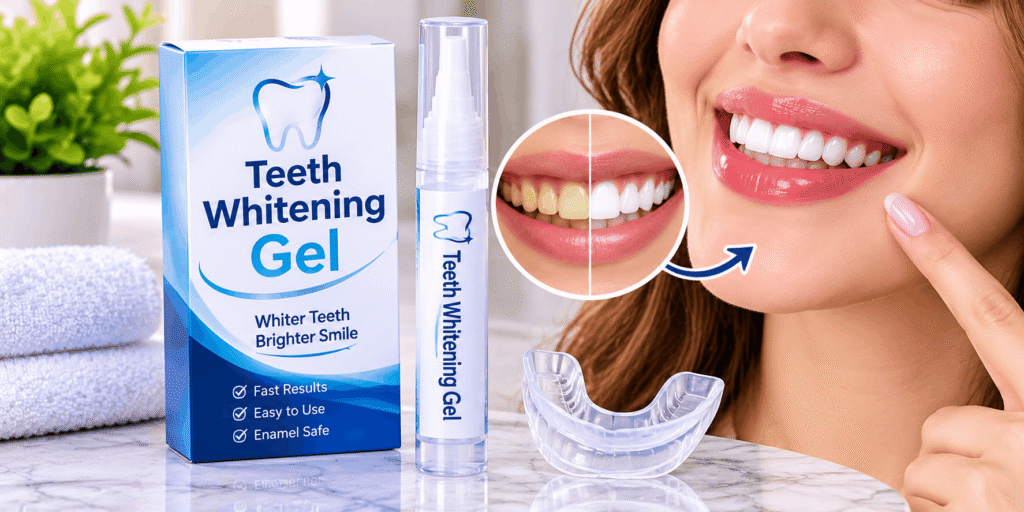
Teeth whitening gel is a dental cosmetic product formulated to reduce certain types of tooth discoloration. It usually contains a bleaching ingredient, such as hydrogen peroxide or carbamide peroxide, which helps break down colored compounds responsible for stains.
These ingredients work through a chemical process that changes the structure of some stain molecules, making them less visible. Rather than simply covering the teeth with a white coating, peroxide-based gels work on discoloration within the tooth structure. This is why they can sometimes improve stains that ordinary toothpaste cannot remove.
Whitening gels are available in different concentrations and application formats. Some are supplied in syringes for use with custom dental trays, while others come in preloaded trays or are included in whitening kits. Certain products are intended for professional dental use, while others are designed for consumers to apply at home.
The formulation matters because different products have different strengths, recommended contact times, and safety instructions. A gel designed for a professionally supervised treatment should not automatically be treated like an ordinary store-bought whitening product.
It is also important to understand that whitening gel does not change the natural structure of healthy teeth or make every tooth perfectly white. Its purpose is to improve the appearance of suitable discoloration. The final shade depends on the original tooth color, the type of staining, the whitening ingredient, and individual response.
Hydrogen Peroxide and Carbamide Peroxide
Hydrogen peroxide is a common active ingredient in whitening products. It releases oxygen-related compounds that help break down stain molecules in the enamel and dentin. Products containing hydrogen peroxide may work relatively quickly, although the result depends on concentration, application method, and treatment schedule.
Carbamide peroxide is another widely used whitening ingredient. It breaks down into hydrogen peroxide and urea, releasing the active whitening component more gradually. This slower release is one reason it is often used in certain at-home tray systems.
Both ingredients can be effective when used appropriately. However, a higher concentration does not automatically mean a better experience or a more suitable product. Stronger formulas may increase the likelihood of sensitivity or soft-tissue irritation, especially when used incorrectly.
The best ingredient and concentration depend on the condition of your teeth, your sensitivity history, and the product’s intended use. A dentist can help determine which approach is appropriate.
Why Do Teeth Become Yellow or Discolored?
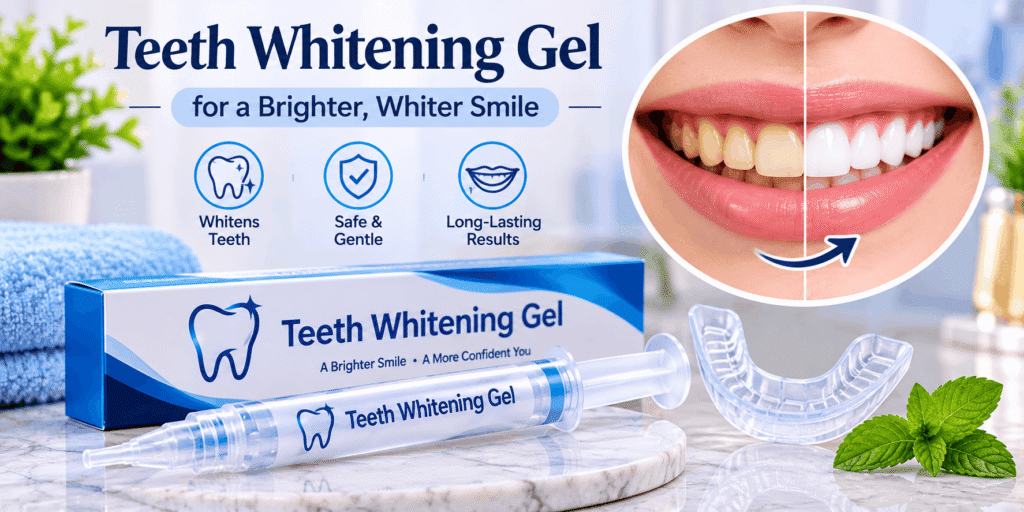
Before choosing a teeth whitening gel, it helps to understand why teeth lose their natural brightness. Tooth discoloration is not always caused by poor brushing. Several factors can influence the color of enamel and the layer underneath it.
One common cause is the regular consumption of strongly colored drinks. Coffee, black tea, cola, and red wine contain pigments or compounds that can contribute to staining over time. These substances may leave marks on the tooth surface, especially when exposure is frequent.
Foods with intense natural or artificial coloring can also affect tooth appearance. Berries, dark sauces, and certain spices may contribute to surface discoloration. This does not mean these foods must be avoided completely. Good oral hygiene and moderation can help reduce the buildup of stains.
Tobacco use is another significant contributor. Smoking and other tobacco habits can leave yellow or brown deposits on teeth. These stains may become more difficult to manage as they accumulate.
Aging also changes the appearance of teeth. Enamel gradually wears and becomes thinner over time, allowing the naturally yellowish dentin underneath to become more visible. This type of color change is different from a simple surface stain and may respond differently to whitening.
Some discoloration begins during tooth development. Certain medications, dental injuries, excessive fluoride exposure during childhood, and developmental conditions can affect tooth color. These stains may be more challenging to improve with standard whitening products.
Finally, dental plaque and tartar can make teeth look dull or discolored. Whitening gel is not a replacement for professional cleaning. If hard deposits have accumulated, a dental hygienist may need to remove them before cosmetic whitening is considered.
Understanding the source of discoloration helps prevent disappointment. A product that works well for coffee stains may not provide the same improvement for discoloration caused by injury or internal tooth changes.
Different Types of Teeth Whitening Gel
Not all whitening gels are designed in the same way. Their ingredients, strength, application methods, and intended users can differ considerably. Understanding these differences can help you choose a product that fits your needs without exposing your teeth and gums to unnecessary irritation.
At-Home Whitening Gel
At-home whitening gels are designed for consumer use and are often included in kits with trays or other application tools. They generally contain peroxide-based ingredients at concentrations intended for the product’s specific instructions and regulatory requirements.
Some kits use a universal tray that holds the gel against the teeth. Others provide prefilled trays or a more controlled application system. The convenience of these products makes them appealing to people who prefer to whiten their teeth at home.
However, the fit and design of the application system matter. If a tray does not fit properly, gel may spread onto the gums or contact areas where it is not intended to remain. Always follow the instructions supplied with the product and avoid using more gel than recommended.
Dentist-Supervised Whitening Gel
Dentist-supervised whitening may involve custom trays and a whitening gel selected according to the patient’s dental condition. A dentist can assess the teeth, identify possible problems, and recommend an appropriate formula.
Custom trays are designed to fit an individual’s teeth more closely than many generic trays. This may help control gel placement and reduce unnecessary contact with the gums when used correctly.
Professional guidance is particularly valuable for people who have sensitive teeth, previous dental treatment, uneven discoloration, or concerns about the condition of their enamel and gums.
In-Office Whitening Gel
Some dental clinics offer whitening treatments using professional-grade gels. These products may have higher concentrations than many consumer formulas and are applied under controlled conditions.
The dentist or trained dental professional protects the soft tissues and monitors the treatment. Depending on the product, the procedure may involve one or more applications during an appointment.
In-office whitening can produce a visible change in a relatively short period, but the result varies. It may also cause temporary sensitivity. A professional assessment helps determine whether this treatment is suitable.
Whitening Gel Pens
Whitening pens are small applicators designed to place a thin layer of gel directly onto the tooth surfaces. Their compact design makes them convenient for travel or occasional use.
However, the amount of gel delivered and the evenness of application may vary. It can be difficult to apply a consistent layer across every tooth, particularly around the edges and between teeth.
A whitening pen should not be used more frequently than its instructions allow. Its convenient format does not make it risk-free, and the ingredient concentration still matters.
How Does Teeth Whitening Gel Work?
The main purpose of peroxide-based whitening gel is to break down colored compounds responsible for discoloration. These compounds may be present within the enamel and dentin, depending on the type of stain.
When the active ingredient comes into contact with the teeth, it begins a chemical process that helps alter the appearance of stain molecules. As these molecules become less strongly colored, the teeth may appear brighter.
This process is different from ordinary brushing. Toothpaste mainly helps remove plaque, food debris, and some surface stains through cleaning ingredients and gentle polishing agents. Whitening gel uses a chemical bleaching process to address certain discoloration that brushing alone may not remove.
The effectiveness of the treatment depends on several factors. The original shade of the teeth, the type of stain, the formula, the amount of contact time, and consistency with the instructions all influence the outcome.
It is also worth remembering that natural teeth are not completely uniform in color. The front teeth, canines, and areas near the gums may naturally have slightly different shades. Whitening does not necessarily make every tooth identical, and an overly uniform result is not always realistic.
How to Use Teeth Whitening Gel Correctly
Using whitening gel correctly is essential for achieving a suitable result while reducing unnecessary irritation. Even a well-formulated product can cause problems if it is applied incorrectly, used too often, or left on the teeth longer than instructed.
Start by reading the complete product instructions. Check the active ingredient, concentration, recommended application method, contact time, and warnings. If the instructions are unclear or the product does not identify its ingredients properly, do not use it until you have obtained reliable guidance.
Before starting, consider having a dental checkup, particularly if you have not visited a dentist recently. Tooth decay, gum disease, cracked teeth, exposed roots, and damaged restorations may need attention before whitening. Applying bleaching gel over an untreated dental problem can increase discomfort and may delay necessary care.
If your kit includes a tray, use it according to the manufacturer’s directions. Apply only the recommended amount of gel. Filling a tray with excessive product can cause the material to spread onto the gums, increasing the risk of irritation.
When using a gel pen, follow the application instructions carefully. Avoid applying it to the gums, lips, or other soft tissues. Do not swallow the product, and do not use it inside the mouth in ways that are not described by the manufacturer.
Keep the recommended treatment time in mind. Leaving whitening gel on for longer does not guarantee a brighter result. It may instead increase sensitivity or irritate the gums.
After the application, follow the product’s removal or rinsing instructions. Clean the tray if the manufacturer recommends doing so, and store the product as directed. Keep whitening gel away from children and pets.
If you experience significant pain, burning, swelling, or unusual symptoms, stop using the product and seek dental advice. Continuing through discomfort is not a safe way to achieve a better result.
What Results Can You Expect From Teeth Whitening Gel?
The results of teeth whitening gel vary from one person to another. Some people notice a visible change after following the recommended treatment schedule, while others see a more gradual improvement.
Surface stains caused by common drinks and foods may respond differently from deeper discoloration. Yellowish teeth can sometimes respond more predictably than certain grey or brown stains, although individual cases vary.
The starting shade also matters. Someone with mild discoloration may achieve a noticeable improvement, while a person with naturally darker teeth or complex internal staining may see a smaller change.
Whitening results should be viewed as an improvement rather than a guarantee of a particular shade. Tooth color charts and online photographs can create unrealistic expectations because lighting, camera settings, editing, and screen displays influence how white teeth appear.
A natural-looking smile does not need to be extremely bright. The most suitable shade is one that looks balanced with your overall appearance and does not require repeated aggressive whitening.
It is also important to allow time for the result to settle. Teeth can appear temporarily dehydrated immediately after certain whitening treatments, which may make them look lighter than their later appearance. A dentist can help assess the more stable result.
How Long Does Teeth Whitening Gel Take to Work?
There is no single treatment timeline that applies to every whitening gel. Some products are designed for short application periods, while others use a gradual schedule over multiple days or weeks.
The instructions depend on the active ingredient, concentration, delivery system, and product design. A professional whitening plan may also differ from an over-the-counter kit.
Avoid comparing your progress with someone else’s results. Two people using similar products may experience different changes because their tooth structure, original shade, and staining patterns are not identical.
It is also important not to repeat applications simply because the result is not visible immediately. Whitening takes place according to the product’s intended schedule, and using more gel than recommended may increase the risk of sensitivity without providing a proportional improvement.
If the product does not appear to work after the recommended course, consult a dentist rather than extending the treatment yourself. The discoloration may not be suitable for peroxide-based whitening, or another dental concern may be affecting the result.
Benefits of Using Teeth Whitening Gel
One of the main attractions of teeth whitening gel is its ability to improve certain types of discoloration without changing the natural structure of the teeth. For people with suitable stains, it can create a brighter appearance and help restore a more even-looking smile.
Convenience is another benefit. Many at-home products can be used as part of a scheduled routine, making them appealing to people who prefer not to arrange multiple dental appointments. The different formats also allow consumers to compare trays, pens, and other application systems.
Another advantage is that peroxide-based whitening targets stain molecules rather than simply covering the teeth with a colored layer. When used appropriately, it can improve discoloration that regular toothpaste may not remove.
Whitening can also encourage people to become more aware of habits that affect tooth appearance. Someone who notices staining from frequent coffee or tobacco use may become more interested in maintaining a consistent oral-care routine.
However, these benefits do not mean every whitening product is suitable for every person. A product’s quality, ingredients, application system, and safety instructions matter more than attractive packaging or exaggerated advertising.
Possible Side Effects and Safety Considerations
Teeth whitening gel is widely used, but it can still cause side effects. The most commonly discussed concerns are temporary tooth sensitivity and irritation of the gums or other soft tissues.
Sensitivity may occur because peroxide-based ingredients can temporarily affect the tooth’s response to temperature or other stimulation. Some people notice discomfort when drinking cold water, eating hot foods, or breathing in cool air.
The sensitivity may be mild and temporary, but it can be more noticeable in people who already have sensitive teeth, exposed roots, enamel wear, cracks, or untreated dental problems.
Gum irritation can happen when whitening gel touches soft tissues. This is more likely when too much product is used, a tray does not fit properly, or the instructions are ignored. Some people may notice redness, tenderness, or a temporary white appearance in an irritated area.
Using a stronger product or applying gel more often than recommended can increase the risk of unwanted effects. Whitening should never be treated as a competition to reach the brightest possible shade in the shortest time.
Before using a product, check its ingredient information and intended use. Avoid unlabelled gels, products with unclear instructions, and whitening substances purchased from unreliable sellers.
If you have ongoing sensitivity, gum disease, cavities, damaged enamel, or recent dental treatment, speak with a dentist before whitening. Professional guidance is particularly important when the teeth or gums are already uncomfortable.
How to Manage Tooth Sensitivity During Whitening
Sensitivity is one of the main reasons people stop whitening treatments. Although some temporary discomfort may occur, there are ways to reduce the likelihood of irritation and recognize when a product should no longer be used.
First, do not start whitening while ignoring an existing dental problem. A cavity, cracked tooth, gum recession, or exposed root can make sensitivity worse. A dental examination can identify these concerns before treatment begins.
If you already have a history of sensitivity, ask your dentist whether whitening is appropriate. They may recommend a product with a different formulation or advise treating the underlying sensitivity first.
A toothpaste formulated for sensitive teeth may be useful as part of an oral-care routine. Some products contain ingredients designed to reduce sensitivity when used consistently. However, they are not a substitute for professional assessment if discomfort is severe or persistent.
Follow the whitening product’s recommended schedule exactly. Do not increase the concentration, extend application time, or add extra sessions to speed up the process.
If sensitivity becomes uncomfortable, stop the treatment and contact your dentist for advice. Do not assume that pain is a normal sign that the gel is working.
Can Teeth Whitening Gel Damage Enamel?
This is a common concern among people considering whitening. Properly formulated peroxide-based products, used according to their instructions, are generally designed to whiten teeth without intentionally removing enamel.
However, misuse can increase the risk of irritation and other dental problems. Excessive exposure, unsuitable products, and repeated aggressive treatments are not harmless simply because they are marketed as whitening solutions.
Enamel is the hard outer covering of the tooth, and it does not regenerate like some other body tissues. Protecting it should always be a priority. This is why products with clear ingredient information and appropriate instructions are preferable to unverified whitening mixtures.
Some whitening products contain additional polishing or abrasive ingredients. These may help with surface stains, but excessive abrasion can contribute to enamel wear over time, particularly when combined with aggressive brushing.
If you are concerned about enamel health, ask a dentist to evaluate your teeth before starting a whitening routine. They can explain whether bleaching is appropriate and which options are likely to be safer for your dental condition.
Teeth Whitening Gel vs. Whitening Toothpaste
Whitening gel and whitening toothpaste are often discussed together, but they do not work in exactly the same way.
Whitening toothpaste generally focuses on removing or reducing surface stains through cleaning and polishing ingredients. Some formulas contain additional ingredients that help improve the appearance of discolored teeth, but their effect is usually different from peroxide-based bleaching.
Teeth whitening gel, on the other hand, often contains hydrogen peroxide or carbamide peroxide. These ingredients chemically break down certain stain molecules, which may help improve discoloration beyond the tooth surface.
This does not mean whitening gel is automatically the better choice for everyone. Toothpaste is part of everyday oral hygiene, while bleaching gel is a cosmetic treatment with specific instructions and possible side effects.
The two may serve different purposes within a dental-care routine. A dentist can help determine whether a whitening toothpaste, professional cleaning, or peroxide-based treatment is most suitable for your concern.
Teeth Whitening Gel vs. Whitening Strips
Whitening strips are thin flexible strips that hold a whitening ingredient against the front surfaces of the teeth. They are usually coated with a gel and are designed to stay in contact with the teeth for a specified period.
Many whitening strips also use peroxide-based ingredients, so their basic whitening mechanism can be similar to that of other bleaching gels.
The main difference is the delivery system. A tray holds gel around the teeth, while a strip is placed directly against selected tooth surfaces. Some people prefer strips because they are straightforward to apply, while others prefer trays because they cover the teeth differently.
Neither format is automatically more effective or safer. The formula, fit, concentration, and application instructions all matter.
If you have crowded teeth, uneven tooth alignment, or dental restorations, the product may not contact every area in the same way. This can affect how uniform the result appears.
Choose a product according to its instructions and your dental needs rather than assuming that one application format is always superior.
How to Choose the Right Teeth Whitening Gel
Choosing a whitening gel requires more attention than comparing product prices or looking for the highest advertised strength. The right product should have clear ingredients, suitable instructions, and an application method that you can use correctly.
Start by checking the active ingredient. Hydrogen peroxide and carbamide peroxide are common options, but the concentration and intended use differ between products. Do not assume that a formula designed for professional use is suitable for unsupervised home application.
Next, look at the product’s intended user and application system. A tray-based kit, whitening pen, and professional gel may have different requirements. Make sure you understand how the gel is supposed to be applied and removed.
Check the packaging for manufacturer information, ingredient details, usage instructions, warnings, and storage guidance. Avoid products that make unrealistic promises, such as guaranteeing extremely white teeth in a single application.
If you have sensitive teeth, existing dental restorations, or a history of gum problems, professional advice is particularly important. A dentist can help you decide whether whitening is appropriate and whether a particular product is suitable.
It is also worth considering whether you actually need bleaching. Some surface stains may improve after a professional dental cleaning, which can be a simpler option than using a whitening gel.
A reliable product is one that is suitable for your situation, not necessarily the one with the most dramatic marketing claims.
Does Teeth Whitening Gel Work on Crowns, Veneers, and Fillings?
One important limitation of teeth whitening gel is that it does not change the color of dental restorations in the same way it changes natural teeth.
Crowns, veneers, bonding materials, and tooth-colored fillings are made from materials that do not respond to peroxide bleaching like natural enamel and dentin. As a result, whitening natural teeth may create a difference between the treated teeth and existing dental work.
This can be particularly noticeable when restorations are located near the front of the mouth. A person may achieve a lighter shade on natural teeth while a crown or veneer remains its original color.
If you have visible dental work, discuss your goals with a dentist before whitening. They can assess whether the existing restorations may create a color mismatch and explain possible options.
It is generally better to plan the desired tooth shade before replacing visible restorations. Otherwise, the new restoration may not match the final color of the natural teeth.
Whitening gel also does not repair damaged fillings, replace missing enamel, or correct structural problems. Its purpose is cosmetic stain reduction, not dental restoration.
How to Maintain a Brighter Smile After Whitening
Whitening results can gradually fade as teeth are exposed to foods, drinks, and everyday habits. Maintaining a brighter appearance does not require avoiding every colorful food, but a consistent oral-care routine can help.
Brush twice daily with a fluoride toothpaste and use a soft-bristled toothbrush. Gentle brushing helps remove plaque and food debris without unnecessary pressure on the gums.
Cleaning between the teeth is equally important. Floss or use another suitable interdental cleaning tool to remove plaque and debris from areas a toothbrush may miss. Healthy gums contribute to the overall appearance of a smile.
If you regularly drink coffee, tea, or other strongly colored beverages, consider how frequently you consume them. Rinsing with water afterward can help reduce the amount of residue left in the mouth. It is also wise to avoid brushing immediately after consuming acidic drinks; allow time for the mouth’s natural protective processes to take place.
Regular dental checkups and professional cleanings can help manage plaque, tartar, and surface stains. Your dentist can also monitor the condition of your enamel and gums.
Avoid repeating whitening courses too frequently. If the shade begins to change, ask a dental professional whether additional treatment is appropriate rather than automatically using more gel.
Natural Ways to Support Tooth Brightness
Some everyday habits can help maintain the natural appearance of teeth, even though they cannot replace professional whitening when deeper discoloration is present.
Drinking water regularly helps rinse away food particles and supports saliva production. Saliva plays an important role in protecting the mouth and maintaining a balanced oral environment.
Eating a varied diet and limiting frequent exposure to sugary snacks and acidic drinks can also support dental health. These habits are useful for protecting teeth, although they should not be presented as guaranteed whitening methods.
Crunchy fruits and vegetables can encourage saliva production and help with the natural cleansing action that occurs during chewing. However, they do not bleach teeth or remove every type of stain.
Avoid popular home remedies that involve harsh acids, household bleach, or aggressive scrubbing. Lemon juice, undiluted vinegar, and other acidic substances can damage enamel. Household bleaching products are not intended for oral use and can cause serious harm.
Charcoal powders and highly abrasive mixtures should also be approached cautiously. A product being described as natural does not automatically make it safe for daily use.
The most dependable foundation for a healthy-looking smile remains consistent oral hygiene, regular dental care, and sensible food and drink habits.
Common Teeth Whitening Gel Mistakes to Avoid
One of the biggest mistakes is assuming that more gel will produce a faster result. Using excessive product can cause it to spread onto the gums and increase irritation. Always use the amount specified by the manufacturer or dental professional.
Another mistake is leaving the gel on longer than instructed. Whitening products are formulated for particular application periods. Extending the treatment does not guarantee a better shade and may increase side effects.
Some people also use several whitening products at the same time. Combining a whitening pen, strips, toothpaste, and gel without professional advice can expose the teeth to unnecessary treatment and make sensitivity more likely.
Ignoring existing dental problems is another concern. If a tooth is painful, cracked, or affected by decay, cosmetic whitening should not take priority over diagnosis and treatment.
Buying unverified products from unknown sellers can create additional risks. A product with unclear ingredients or misleading packaging may not meet the standards expected of legitimate dental products.
Finally, chasing an unrealistic shade can lead to repeated treatments that provide diminishing benefits. Natural teeth have individual characteristics, and the healthiest result is not necessarily the whitest possible result.
Final Thoughts
Teeth whitening gel can be a convenient option for improving certain types of tooth discoloration, especially when the product is suitable and used correctly. Peroxide-based formulas work by breaking down stain molecules, helping natural teeth appear brighter without simply covering them with a white coating.
However, results depend on the cause of discoloration, the condition of your teeth, and the product you choose. Whitening gel cannot change the shade of crowns, veneers, or fillings, and it may not be effective for every type of internal staining. Temporary sensitivity and gum irritation are also possible, particularly when instructions are ignored.
Before starting a whitening routine, consider a dental examination and discuss any existing sensitivity or dental work. Choose a clearly labelled product, follow its directions, and avoid using more gel than recommended.
A brighter smile should never come at the expense of healthy teeth and gums. With realistic expectations, responsible product selection, and consistent oral care, you can make a more informed decision about whether teeth whitening gel is right for you.






One Comment