
A smile makeover is a personalized approach to improving the appearance of your teeth, gums, and overall smile. It combines different cosmetic dental treatments to address concerns such as discoloration, uneven teeth, small gaps, chipped edges, and an unbalanced gumline. Rather than relying on a single procedure, the process focuses on creating a smile that looks natural, feels comfortable, and complements your facial features.
Not everyone wants the same results from cosmetic dentistry. Some people simply want brighter teeth, while others hope to correct several noticeable imperfections that have affected their confidence for years. A well-planned smile makeover takes these individual goals into account and considers factors such as tooth shape, facial proportions, dental health, and personal preferences.
Modern dentistry offers several options for changing the appearance of a smile, ranging from straightforward whitening treatments to more comprehensive restorative procedures. Understanding these possibilities can help you make informed decisions before beginning treatment.
What Is a Smile Makeover?
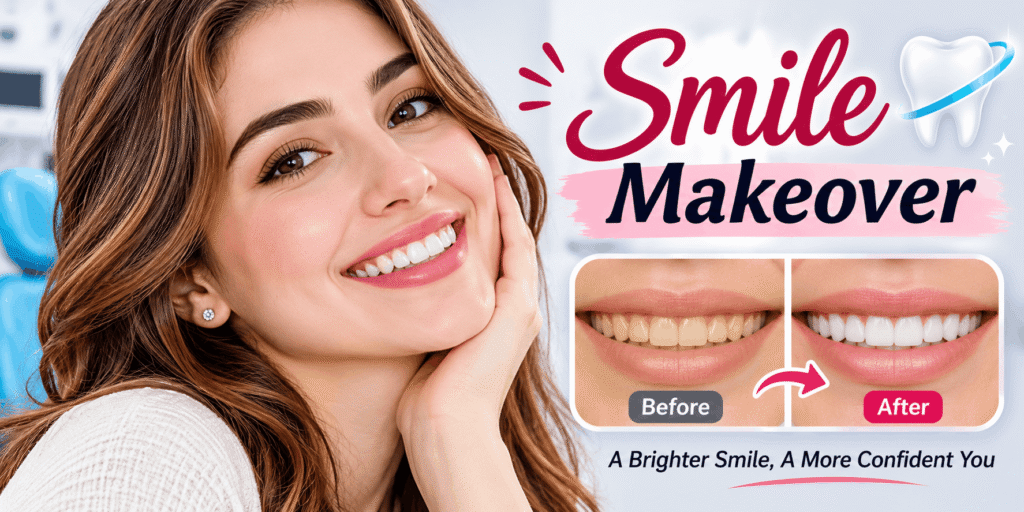
A smile makeover is a customized combination of dental treatments designed to improve the appearance of your smile. The treatments selected depend on the condition of your teeth, the appearance of your gums, and the changes you would like to achieve.
For one person, the process might involve professional teeth whitening and minor reshaping. Someone else may benefit from veneers, dental bonding, orthodontic treatment, or crowns to address more complicated concerns.
The main purpose is not to create an identical smile for everyone. Instead, cosmetic dentists consider how individual teeth work together and how the finished result will look when you speak, laugh, and smile.
A smile makeover can address several cosmetic concerns at once, but healthy teeth and gums should always come first. If you have untreated cavities, gum disease, or other dental problems, those issues generally need attention before elective cosmetic procedures begin.
Why People Consider a Smile Makeover
People choose cosmetic dental treatment for different reasons. Sometimes a single concern makes them uncomfortable about their appearance, while other times several small imperfections combine to affect how they feel about their smile.
Tooth discoloration is one common reason. Teeth can become stained through aging, smoking, coffee, tea, certain foods, and other factors. Professional whitening may help improve the appearance of suitable teeth.
Uneven tooth shapes are another concern. Some teeth naturally develop with irregular edges, while others become chipped or worn over time. Bonding, veneers, or reshaping may help create a more balanced appearance.
Gaps between teeth can also influence the overall look of a smile. Depending on the size and cause of the spaces, orthodontic treatment or cosmetic bonding may provide an appropriate solution.
Some people are concerned about crowded or overlapping teeth. These issues may affect appearance as well as cleaning, making orthodontic treatment an important consideration.
A smile makeover can also help address the appearance of an uneven gumline, missing teeth, or old dental restorations that no longer match the surrounding teeth.
For many individuals, the motivation goes beyond appearance. Feeling comfortable with their smile may make social interactions, photographs, professional situations, and everyday conversations more enjoyable.
Common Treatments Included in a Smile Makeover
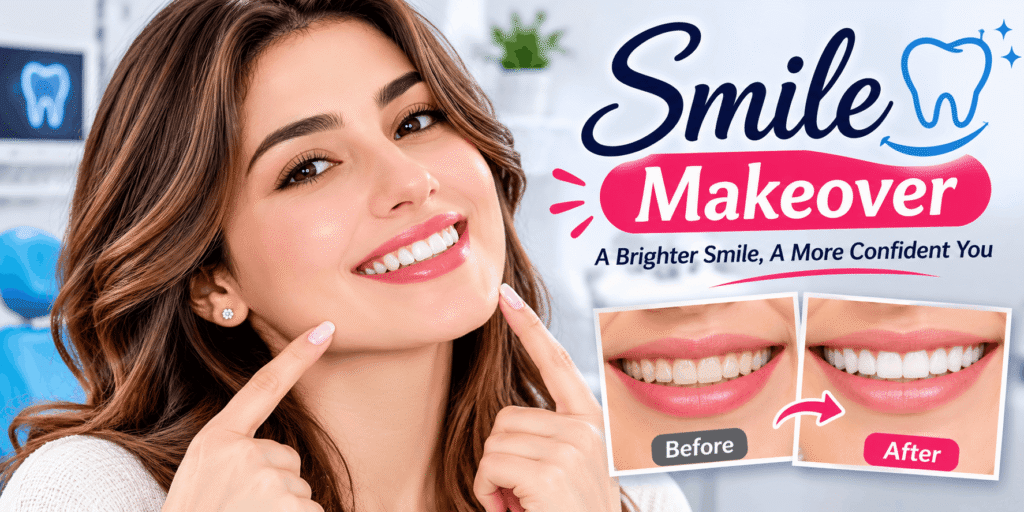
There is no fixed treatment package that every patient must follow. A cosmetic dentist selects procedures according to individual dental conditions and the desired outcome.
Professional Teeth Whitening
Professional teeth whitening is one of the most popular options for people who want a brighter smile without changing the natural shape of their teeth.
The procedure uses carefully selected whitening agents to reduce certain types of discoloration. Depending on the method, treatment may take place in a dental office or involve dentist-supervised take-home trays.
Professional whitening can be useful for stains caused by aging, beverages, and certain foods. However, it does not change the color of crowns, veneers, fillings, or other artificial restorations.
A dentist should evaluate the cause of discoloration before recommending whitening. Some stains, particularly those caused by trauma or certain medications, may not respond well to conventional whitening products.
Porcelain Veneers
Porcelain veneers are thin, custom-made coverings bonded to the front surfaces of selected teeth. They are designed to improve the appearance of concerns such as discoloration, minor chips, uneven shapes, and certain gaps.
One reason people consider veneers is their ability to change several visible features at once. Their color, proportions, and shape can be planned to complement the surrounding teeth.
Traditional porcelain veneers often require some removal of natural enamel. This makes treatment an important long-term decision because the prepared teeth may need ongoing restoration.
Not everyone is a suitable candidate. People who grind their teeth heavily or have untreated dental problems may need additional evaluation before considering veneers.
Composite Dental Bonding
Dental bonding uses tooth-colored composite resin to improve the appearance of selected teeth. The material can be shaped to repair small chips, close certain spaces, and correct minor irregularities.
Compared with traditional porcelain veneers, bonding generally involves less removal of natural tooth structure. In many cases, it can be completed in a single appointment.
However, composite resin may stain or wear more easily than porcelain. Its lifespan depends on the quality of the work, oral hygiene, biting habits, and the location of the restoration.
Bonding is particularly useful when the desired changes are relatively small and the natural tooth structure is otherwise healthy.
Orthodontic Treatment
Orthodontic treatment focuses on correcting the position of teeth and improving how the upper and lower teeth fit together.
Traditional braces use brackets and wires to gradually move teeth. Clear aligners offer another option through a series of removable trays designed to guide teeth into planned positions.
Orthodontics can address crowding, spacing, certain bite problems, and uneven alignment. Unlike cosmetic coverings, these treatments work by changing tooth positions rather than simply hiding their appearance.
Treatment time varies depending on the complexity of the case. Some people complete treatment within several months, while more complicated situations may require longer.
Dental Crowns
Dental crowns cover the visible portion of a tooth to restore its shape, strength, and appearance.
They may be recommended for teeth that are severely damaged, weakened after root canal treatment, or affected by extensive decay. Certain crowns can also improve the appearance of teeth with significant discoloration or irregular shapes.
Materials include porcelain, ceramic, zirconia, and other dental materials. The appropriate choice depends on the tooth’s location, functional requirements, and aesthetic goals.
Crowns are not simply cosmetic alternatives to veneers. Because they cover more of the tooth, they are generally selected when the tooth requires additional structural protection.
Gum Contouring
Sometimes the teeth themselves are not the main reason a smile looks uneven. The gumline may cover different amounts of each tooth, making some teeth appear shorter than others.
Gum contouring reshapes selected gum tissue to create a more balanced outline. Depending on the case, dentists may use soft-tissue lasers or conventional surgical techniques.
Before recommending this procedure, a dentist must evaluate gum health and the underlying tooth structure. Removing gum tissue without proper planning can create sensitivity, recession, or other complications.
Dental Implants
Missing teeth can affect both the appearance and function of a smile. Dental implants offer a replacement option that uses a small post placed in the jawbone to support an artificial tooth.
After the implant integrates with the surrounding bone, a custom restoration is attached to complete the replacement.
Implants can help restore the appearance of missing teeth while also providing support during chewing. They require adequate bone, healthy gums, and careful planning.
Not every missing tooth needs an implant. Bridges and removable dentures may also be appropriate depending on the patient’s dental condition and preferences.
How to Plan a Smile Makeover That Looks Natural
A successful smile makeover begins with realistic planning. Instead of choosing treatments simply because they are popular, it is important to understand what will genuinely improve your individual smile.
Start With Your Main Concerns
Think about the features you would most like to change. You might be bothered by dark stains, uneven edges, spaces between teeth, or the overall alignment of your smile.
Identifying your priorities helps your dentist recommend treatments that address the actual concerns rather than introducing unnecessary procedures.
Consider Your Facial Features
A smile should complement the rest of your appearance. Tooth proportions, facial shape, lip movement, and natural tooth visibility can all influence the final design.
Extremely large or unusually white teeth may look artificial when they do not suit the individual’s facial characteristics.
A thoughtful approach focuses on balance rather than creating a dramatic change for its own sake.
Protect Your Natural Teeth
Preserving healthy tooth structure should remain an important priority. Whenever possible, conservative treatments that require minimal alteration may be worth discussing.
For example, minor chips might be corrected with bonding instead of preparing the entire front surface of a tooth for a veneer.
Your dentist should explain the advantages, limitations, and long-term consequences of every recommended procedure.
Review the Expected Results
Ask to see realistic examples of similar dental cases. Digital smile previews or mock-ups may help you understand the proposed changes before treatment begins.
However, computer-generated previews are estimates rather than guarantees. The actual result depends on your dental anatomy, treatment response, and clinical circumstances.
What Happens During a Smile Makeover Consultation?
The consultation is an important stage because it establishes the foundation for your treatment plan.
Your dentist will usually begin by discussing your concerns and asking what you hope to change. You may be asked whether you prefer a subtle improvement or a more noticeable transformation.
A dental examination follows. The dentist checks your teeth, gums, existing restorations, and bite. X-rays or other diagnostic images may be recommended when needed to evaluate areas that cannot be examined visually.
Photographs, dental impressions, or digital scans may also be taken to understand the current arrangement of your teeth.
Once the assessment is complete, the dentist explains the available treatment options. You should receive information about the expected results, possible risks, estimated treatment time, and financial considerations.
This is also the right time to discuss maintenance requirements. Some procedures require future replacements or repairs, while others may involve periodic adjustments.
Do not feel pressured to make a decision during the first appointment. A good treatment plan should give you enough information to understand what is being proposed and why.
How Much Does a Smile Makeover Cost?
The cost of a smile makeover varies considerably because every treatment plan is different. A person who needs professional whitening and minor bonding will generally have different expenses from someone requiring orthodontics, multiple crowns, or dental implants.
Several factors influence the total price.
The number of teeth involved is one important consideration. Treating two front teeth is different from changing the appearance of an entire visible smile.
The type of procedure also matters. Porcelain veneers, dental implants, and orthodontic treatment involve different materials, equipment, laboratory work, and clinical time.
The dentist’s experience and the location of the dental practice can influence pricing as well. Specialized cosmetic procedures may cost more because they require additional planning and technical expertise.
Additional treatments can increase the overall budget. If you need gum treatment, fillings, root canal therapy, or other restorative work before cosmetic procedures, these expenses should be included in your planning.
Before agreeing to treatment, request a written estimate that explains the cost of each procedure. Ask whether follow-up appointments, temporary restorations, repairs, and future maintenance are included.
If you are considering treatment in Pakistan, compare clinics based on qualifications, hygiene standards, treatment planning, and the quality of materials rather than choosing entirely on the lowest advertised price.
How Long Does a Smile Makeover Take?
The timeline depends on the procedures involved and the condition of your teeth before treatment begins.
Simple whitening treatments may be completed in one appointment or through a short course of dentist-supervised home treatment.
Dental bonding can often be completed during a single visit, depending on how many teeth need attention.
Porcelain veneers usually require multiple appointments. These may include preparation, impressions or digital scans, temporary restorations when appropriate, and final placement.
Orthodontic treatment generally takes longer because teeth need time to move gradually. The timeline can range from several months to a few years, depending on the complexity of the case.
Dental implants involve additional healing time because the implant needs to integrate with the jawbone. The full process may take several months or longer.
If several procedures are combined, your dentist will arrange them in an appropriate sequence. Some treatments need to be completed before others, particularly when gum health or tooth stability must be addressed first.
Benefits of Getting a Smile Makeover
A carefully planned smile makeover can offer several advantages beyond changing the visible appearance of your teeth.
One major benefit is improved smile balance. Correcting discoloration, uneven edges, and certain spacing issues can create a more harmonious appearance.
Another advantage is the opportunity to address damaged or weakened teeth. Restorative procedures such as crowns and implants can improve function while also contributing to a more complete-looking smile.
Some treatments may make daily cleaning easier. For example, orthodontic correction can improve certain alignment problems that make brushing and flossing difficult. However, cosmetic treatment alone does not guarantee better oral health.
A smile makeover can also provide greater confidence. People who previously avoided photographs or felt uncomfortable smiling may become more relaxed after addressing concerns that bothered them.
The benefits depend on the treatment selected. Cosmetic improvements should always be considered alongside the long-term health and function of your natural teeth.
Possible Risks and Disadvantages to Consider
Although modern cosmetic dentistry offers many options, every procedure has limitations and potential risks.
Tooth sensitivity is possible after whitening, especially when the treatment involves stronger bleaching agents. It is usually temporary, but persistent discomfort should be evaluated by a dentist.
Veneers require careful consideration because traditional preparation removes some natural enamel. They may chip, crack, or need replacement over time.
Dental bonding can stain, wear down, or become damaged, particularly when used on teeth exposed to heavy biting forces.
Orthodontic treatment may cause temporary discomfort, and poor oral hygiene during treatment can increase the risk of cavities and gum problems.
Implant treatment involves surgery and carries potential complications, including infection, healing problems, and failure of the implant to integrate with the bone.
Gum contouring may lead to sensitivity or gum recession if not properly planned.
Another important disadvantage is financial commitment. Some cosmetic restorations require future maintenance or replacement, so the initial treatment price may not represent the entire long-term cost.
Understanding these limitations helps you make a decision based on realistic expectations rather than advertisements or dramatic before-and-after photographs.
How to Maintain Your Smile Makeover Results
Maintaining your results requires consistent oral hygiene and regular dental care. Even beautifully restored teeth need attention to remain comfortable and functional.
Brush twice daily with fluoride toothpaste and use a soft-bristled toothbrush. Clean carefully along the gumline and pay attention to areas around veneers, crowns, and other restorations.
Floss once a day to remove food particles and plaque from between teeth. If traditional floss is difficult to use, your dentist may recommend interdental brushes or another suitable cleaning aid.
Try to limit frequent exposure to foods and beverages that contribute to staining. Coffee, tea, and strongly colored foods may affect natural teeth and some restorative materials differently.
Avoid using your teeth to open packages, bite hard objects, or break food that places excessive pressure on restorations. These habits can damage both natural teeth and cosmetic work.
If you grind or clench your teeth, discuss a protective night guard with your dentist. Excessive pressure can shorten the lifespan of veneers, crowns, and other dental restorations.
Professional dental checkups are also essential. Your dentist can monitor gum health, examine restorations, and identify small problems before they become more complicated.
Is a Smile Makeover Suitable for Everyone?
A smile makeover may be suitable for many adults who want to improve the appearance of their teeth, but not everyone is ready for cosmetic treatment.
Healthy gums and stable teeth provide a better foundation for long-lasting results. If you have active gum disease, untreated decay, or dental infections, those concerns should be addressed first.
People with severe tooth grinding may need additional evaluation because repeated pressure can damage certain cosmetic restorations.
Patients with complex bite problems may benefit from orthodontic or restorative assessment before selecting cosmetic procedures.
Age is another consideration. Children and teenagers generally require different treatment planning because their teeth and jaws may still be developing.
People with unrealistic expectations should also take time to discuss what is clinically possible. A dentist can explain which changes are achievable and which requests may compromise natural tooth structure.
The most appropriate treatment is one that considers dental health, function, appearance, and long-term maintenance together.
How to Choose the Right Cosmetic Dentist
Selecting the right dentist is one of the most important decisions in the entire process. The quality of treatment planning can influence not only the appearance of your smile but also the health of your teeth.
Look for a properly qualified and registered dental professional with relevant experience in cosmetic and restorative dentistry.
Review examples of their previous work, particularly cases involving concerns similar to yours. Before-and-after photographs can provide useful information, although they should not replace a clinical consultation.
Ask which materials and techniques will be used. A professional should be able to explain why a particular treatment is suitable and discuss alternative options.
Pay attention to communication. Your dentist should listen to your concerns, answer questions clearly, and explain the limitations of proposed procedures.
Clinic hygiene and sterilization standards are equally important. The dental environment should be clean, organized, and equipped to support safe treatment.
Be cautious of clinics promising perfect results, permanent whitening, or extremely quick transformations without examining your teeth. Responsible cosmetic dentistry begins with an individual assessment rather than a one-size-fits-all package.
Final Thoughts
A smile makeover can be an effective way to improve the appearance of your teeth while addressing concerns that affect your confidence. Whether you are interested in brighter teeth, smoother edges, better alignment, or replacing missing teeth, modern cosmetic dentistry offers several options to explore.
The best results come from choosing treatments that suit your dental condition instead of following trends or trying to recreate someone else’s smile. Professional assessment, realistic expectations, and careful planning help ensure that cosmetic improvements do not come at the expense of natural tooth health.
Remember that a beautiful smile is not necessarily the whitest or most perfectly symmetrical one. It is a smile that looks natural, functions comfortably, and supports your long-term oral health. With the right dentist and a consistent maintenance routine, you can work toward results that make you feel more comfortable showing your smile every day.