Balayage highlights are a hair-coloring technique in which a colorist paints lighter shades onto selected sections of hair to create a soft, blended effect. The result can range from subtle, sun-kissed dimension to noticeable blonde contrast. Your starting hair color, placement, desired shade, and maintenance routine all influence the final look.
Table of Contents
- What Is Balayage?
- How to Choose Balayage Highlights
- Balayage vs. Highlights
- Ombré, Sombré, Babylights and Balayage
- Booking an Appointment or Coloring at Home
- Shop At-Home Highlights
- How to Care for Balayage Hair
- What Does Balayage Do to Your Hair?
- How Much Does Balayage Cost?
- What Is the Downside of Balayage?
- Final Thoughts
Key Takeaways
- Balayage is a freehand coloring technique that creates blended highlights.
- It can work with brunette, blonde, and other hair-color goals, depending on the starting shade and coloring process.
- Traditional foil highlights often provide more uniform brightness from the roots, while balayage usually creates a softer transition.
- Balayage may require less frequent root maintenance, but toning and conditioning can still be necessary.
- Lightening hair can cause dryness and breakage, especially when the process is aggressive or the hair is already damaged.
What Is Balayage?
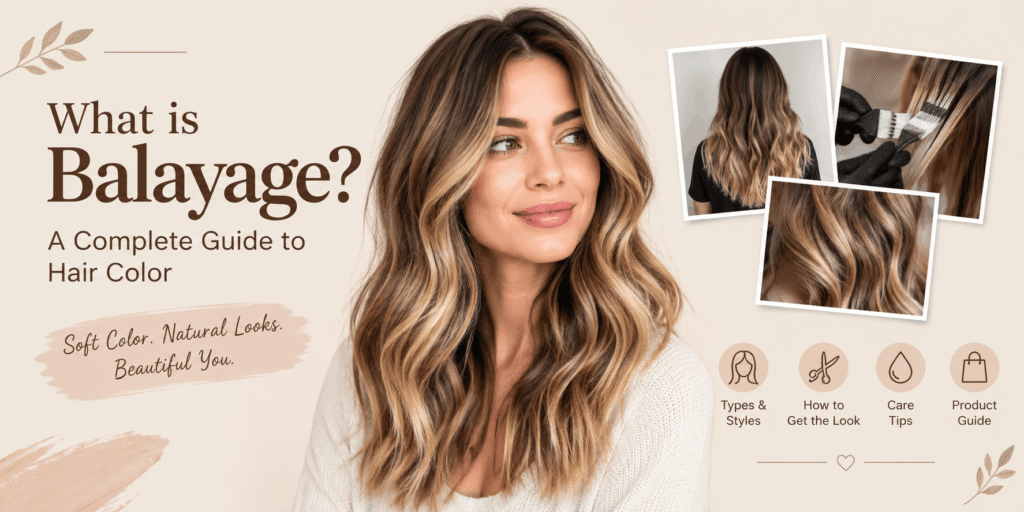
Balayage is a freehand hair-coloring method in which a colorist applies lightener or color to selected strands using a sweeping, painting motion. The placement creates gradual transitions between the natural base and lighter sections rather than a uniform pattern of highlights.
The word balayage comes from French and refers to sweeping. In hair coloring, it describes the application technique rather than one specific shade or finished hairstyle.
What Does Balayage Hair Look Like?
Balayage often creates a graduated appearance, with darker roots blending into lighter mid-lengths and ends. The exact result depends on the colorist’s placement, the contrast between shades, and how much the hair is lightened.
Common balayage looks include:
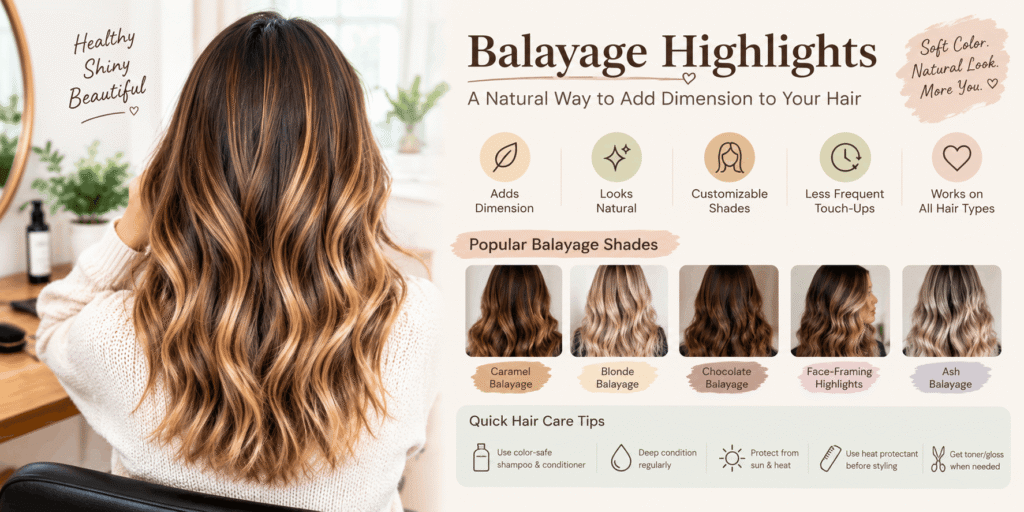
- Caramel balayage: Warm, golden-brown ribbons that add dimension to darker hair.
- Blonde balayage: Lighter pieces that can range from beige blonde to brighter, cooler tones.
- Chocolate balayage: Subtle brown variations that create depth without a dramatic color change.
- Face-framing balayage: Lighter sections around the face for a brighter appearance.
- Subtle balayage: Small differences between the base color and highlights for a softer finish.
Balayage is not limited to blonde hair. A colorist can adapt the placement and shade to different natural and previously colored bases.
Who Should Consider Balayage?
Balayage highlights may suit people who want dimension without a strong, continuous root line. It is also worth considering if you prefer customized color rather than identical highlights throughout the head.
However, balayage is not automatically suitable for every hair condition or color goal. If you want very bright blonde roots, extensive gray coverage, or a dramatic transformation from dark to light, your stylist may recommend another technique or a combination of methods.
How to Choose Balayage Highlights
The most practical way to select balayage is to consider your starting color, the effect you want, and the level of upkeep you can manage.
Choose a Shade That Works With Your Base Color
Your natural or current hair color influences how a highlight shade will look and how much lightening may be required.
| Starting Hair Color | Shades to Consider | Possible Result |
|---|---|---|
| Black or very dark brown | Caramel, chestnut, warm brown | Warm dimension with visible contrast |
| Medium brown | Toffee, honey, beige | Soft ribbons of lighter color |
| Light brown | Golden blonde, beige blonde | Noticeable brightness through the lengths |
| Blonde | Cream, beige, pearl-inspired tones | More dimension and variation |
| Previously colored hair | Depends on color history | May require professional assessment |
These are starting points, not guaranteed outcomes. Artificially colored hair may respond differently from untreated hair, and some shades require multiple appointments.
Match the Placement to Your Desired Look
Balayage placement changes the overall effect even when the same shade is used.
- For a subtle result, ask about fine, scattered pieces with a gradual transition.
- For brighter ends, discuss concentrating more lightness through the lower lengths.
- For a brighter face frame, ask whether a few lighter sections around the front would complement the rest of the color.
- For more contrast, discuss stronger separation between the base and highlighted strands.
Practical example: Someone with dark brown hair who wants a natural-looking change could discuss caramel balayage concentrated through the mid-lengths and ends. Someone with light brown hair who wants a brighter blonde appearance might need a different placement plan and a more extensive lightening service.
The correct choice depends on the actual hair, not just the name of the shade.
Balayage vs. Highlights
Balayage and traditional highlights both add lighter sections to the hair, but they differ in how the color is applied and the effect they typically create.
| Feature | Balayage | Traditional Foil Highlights |
|---|---|---|
| Application | Usually painted freehand | Sections are commonly isolated in foils |
| Placement | Often concentrated through lengths and ends | Often applied close to the roots |
| Appearance | Soft, graduated blending | More uniform, defined brightness |
| Regrowth | Usually less sharply defined | May show a clearer root line |
| Customization | Placement can be tailored strand by strand | Patterns can also be customized |
| Maintenance | May allow longer gaps between full refreshes | Root touch-ups may be needed more frequently |
Hair.com by L’Oréal explains that foil placement can help create more pronounced lightening and contrast, while balayage uses a freehand painting approach. The best method depends on the desired finish.
Is Balayage Better Than Foil Highlights?
Neither technique is universally better. Balayage is worth considering when you want a blended finish and a softer grow-out. Foil highlights may be more appropriate when you want brighter, more consistent lightness close to the roots.
Some colorists combine both methods, using painted sections through the lengths and foils where extra brightness is needed. This can be useful when one technique alone does not achieve the desired result.
Ombré, Sombré, Babylights and Balayage
These terms describe related but different approaches to creating variation in hair color.
- Ombré: A noticeable transition from a darker upper section to lighter ends. The gradient is the defining feature.
- Sombré: A softer, less contrasting version of ombré.
- Babylights: Very fine highlights, commonly created with foils, for delicate brightness across the hair.
- Balayage: A freehand placement technique used to create a blended distribution of color.
The distinction matters because a hairstyle can combine techniques. For example, a colorist might use balayage to soften the lengths and babylights to brighten the parting.
Davines’ guide to babylights also describes them as fine, delicate highlights and distinguishes their sectioning method from freehand balayage.
Booking an Appointment or Coloring at Home
Both salon coloring and at-home kits have advantages, but they require different levels of skill and planning.
Book a Balayage Appointment
A professional appointment is useful if your hair is dark, previously colored, fragile, or intended to become several shades lighter. A colorist can assess the base color, hair condition, and likely result before choosing an approach.
Before booking:
- Collect two or three reference photos showing the shade and placement you like.
- Tell the stylist about previous dyes, bleach, straightening treatments, and other chemical services.
- Explain how much maintenance you can realistically manage.
- Ask whether the goal can be reached in one appointment or needs multiple sessions.
- Discuss the total price, including any toner, gloss, or additional services.
Practical example: If your inspiration photo shows beige blonde ends against dark brown roots, ask the colorist how much lightening is realistic for your current hair. A photograph may show a result achieved after several sessions, so using it as a guaranteed one-visit target could lead to disappointment.
Get the Balayage Look at Home
At-home balayage kits can be an option for people whose desired result fits the product’s intended use. However, freehand application is difficult to distribute evenly on the back of the head, and mistakes can create patchy or overly light sections.
L’Oréal Paris publishes guidance for DIY balayage and describes its at-home highlighting products. Product availability, kit contents, shade options, and instructions can vary, so check the current package and official product page before buying.
For safer preparation:
- Choose a kit intended for your starting hair color.
- Read all directions before opening the product.
- Complete the allergy alert test and strand test as directed by the manufacturer.
- Use the supplied gloves and application tools.
- Follow the specified processing time exactly.
- Do not apply lightener to irritated or damaged scalp skin.
- Avoid combining different chemical services without professional guidance.
Stop and rinse the product off according to its instructions if you experience significant burning or irritation. Seek medical advice if a reaction is severe or persists.
Light Works™ Balayage Highlighting Kit
A named kit, such as the Light Works™ Balayage Highlighting Kit, should be evaluated using its current official product information rather than the product name alone.
Before purchasing, confirm:
- Whether the kit is available in your country.
- Which starting shades it is designed for.
- What tools and aftercare products are included.
- Whether its directions match your hair-color history.
- The manufacturer’s current safety and application instructions.
Do not assume that every balayage kit works on every hair color or previously treated hair.
Shop At-Home Highlights: What to Compare
When comparing hair-color kits, focus on suitability rather than packaging or marketing claims.
| Buying Factor | What to Check |
|---|---|
| Shade compatibility | Whether the product suits your starting color |
| Application method | Whether it is designed for balayage or another highlighting technique |
| Instructions | Clear processing and rinsing directions |
| Safety | Allergy testing instructions and warnings |
| Included products | Lightener, developer, applicator, gloves, and aftercare items, as applicable |
| Support | Access to official product guidance |
A beauty store can organize its products under categories such as Hair Color Shade, All Products, Hair Color Goals, and Hair Color Kits. These are useful shopping filters, but they should remain separate from the educational explanation of balayage.
How to Care for Balayage Hair
Balayage maintenance involves protecting the hair’s condition and keeping the color looking the way you intended. Lightened sections may need extra conditioning, and the right routine depends on hair texture, porosity, and the final shade.
Use a Gentle, Consistent Hair-Care Routine
- Choose a shampoo and conditioner suitable for color-treated hair.
- Condition the mid-lengths and ends regularly.
- Reduce excessive heat styling and use an appropriate heat protectant.
- Follow the directions for any purple or toning shampoo; overuse can affect the desired tone.
- Protect your hair from prolonged sun exposure.
- Schedule color refreshes based on fading, regrowth, and your stylist’s recommendations.
The American Academy of Dermatology warns that coloring and lightening can leave hair dry and brittle. Its guidance recommends careful product use and notes that greater lightening can increase the potential for damage.
Creating Different Tones Within the Same Overall Color
A multidimensional color result can combine related shades instead of relying on one uniform highlight color.
For example, a brunette base might include caramel and honey-toned pieces to create visual variation. A blonde result might combine beige and cream-inspired tones, depending on the starting color and the stylist’s plan.
A toner or gloss may help adjust the appearance of lightened hair, but it cannot always correct uneven lifting or substantial underlying color differences. Discuss the intended result with a colorist before choosing additional products.
Creating Lowlights in Uniformly Colored Hair
Lowlights are darker sections added to hair to restore depth or create contrast between lighter pieces. They differ from highlights, which generally make selected sections lighter.
Someone whose hair appears too uniformly blonde may discuss lowlights with a colorist to introduce variation. The final result depends on the chosen shade, placement, and existing color history.
What Does Balayage Do to Your Hair?
Balayage changes the appearance of selected strands; it does not automatically improve the hair’s physical condition. If the process uses bleach or another lightening product, the treated sections can become drier, more fragile, or more prone to breakage.
Potential concerns include:
- Dryness and rough texture.
- Breakage from excessive or repeated lightening.
- Uneven color if the product is applied inconsistently.
- Unwanted warm or brassy tones.
- Scalp irritation or an allergic reaction to a coloring product.
Risk depends on the product, technique, processing, and condition of the hair. A professional assessment is particularly important if the hair has already undergone bleaching, relaxing, or other chemical treatments.
How Much Does Balayage Cost?
There is no single price for balayage that applies to every salon or country. The total cost depends on hair length, thickness, starting color, desired lightness, stylist experience, location, and whether extra services are needed.
A useful way to compare quotes is to ask whether the price includes:
- Consultation and application.
- Toner or gloss.
- Blow-drying or styling.
- Additional lightening sessions, if needed.
- Follow-up color maintenance.
At-home kits may have a lower initial purchase cost, but that does not guarantee an equivalent salon result. Compare the likely total expense with the skill, time, and risk involved rather than judging by the first price alone.
What Is the Downside of Balayage?
The main disadvantages are the cost of professional coloring, the time required to achieve some shades, and the potential for lightening damage. Balayage may also disappoint people who expect very bright roots or an identical result to an edited inspiration photo.
A few practical limitations to consider:
- Very dark or previously dyed hair may need a staged color plan.
- Uneven DIY application can be difficult to correct.
- Lightened ends may need additional conditioning.
- Toning products and maintenance visits can add to the overall expense.
- Balayage does not automatically cover gray hair completely.
The best way to reduce surprises is to agree on a realistic target shade, discuss the hair’s condition, and understand the full maintenance plan before coloring.
Final Thoughts
Balayage highlights offer a flexible way to add dimension, create softer transitions, and customize hair color without necessarily lightening every strand. The result depends on the shade, application method, starting hair color, and condition of your hair.
Before choosing a salon service or at-home kit, use the Shade–Placement–Upkeep framework: decide how light you want to go, where you want the brightness, and how much maintenance you can manage. If your hair is already damaged or you want a significant color transformation, consult a qualified colorist before proceeding.
For Best Glownest readers, the most useful next step is to compare a few realistic reference photos, check the current product instructions if coloring at home, and choose a plan that suits both your desired look and your hair’s condition.
Balayage highlights are created by painting lighter shades onto selected sections of hair. This technique creates a soft, blended appearance that can look natural or dramatic depending on the chosen color, placement, and starting hair shade.
Balayage typically uses a freehand painting technique to create a gradual color transition. Traditional foil highlights use foils to isolate sections of hair and often produce more uniform brightness, particularly near the roots.
Balayage highlights can grow out softly because the color is often blended near the roots. However, how long they look fresh depends on hair growth, color fading, the chosen shade, and your hair-care routine.
Balayage can cause dryness, brittleness, and breakage when lightening products are used. The risk depends on your hair’s condition, the products used, and the amount of lightening required. Proper aftercare can help maintain healthier-looking hair.
2 Comments