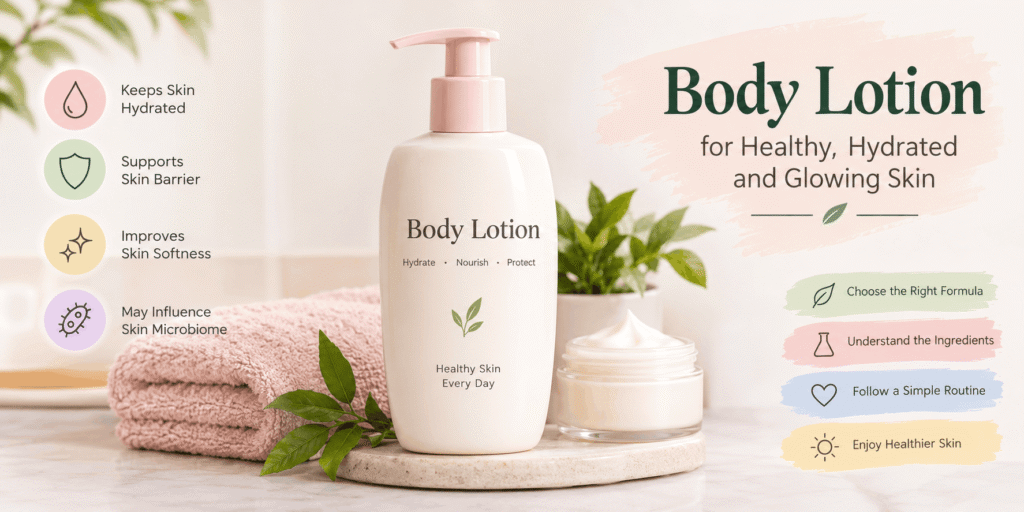
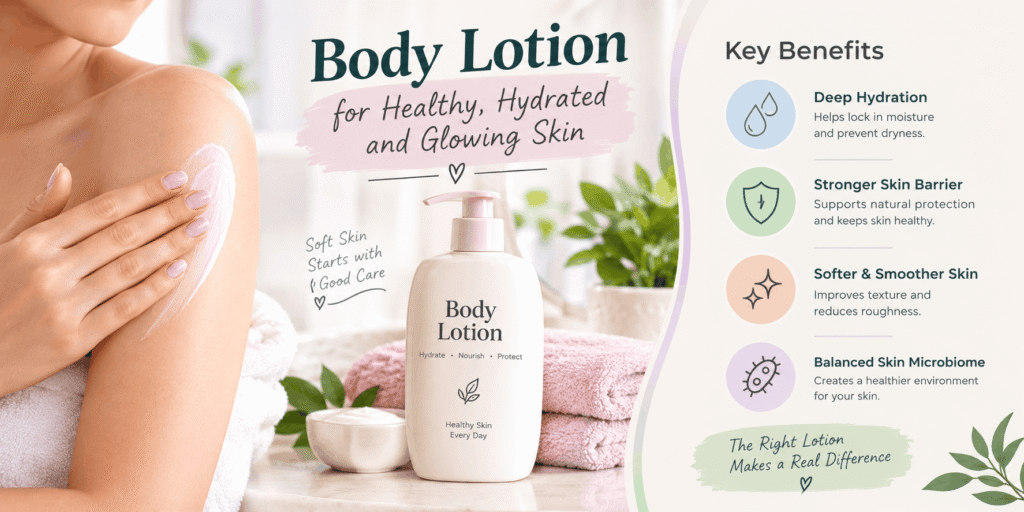
Body lotion is an important part of everyday skincare because it helps keep the skin soft, smooth, and hydrated. Whether your skin feels dry after a shower, becomes rough during cold weather, or loses moisture throughout the day, using a suitable body lotion can help improve its overall appearance and comfort. However, body lotion does more than simply make the skin feel softer. Depending on its ingredients, it can also support the skin’s natural protective barrier and help reduce moisture loss.
The skin is home to a complex community of microorganisms, including bacteria and fungi, collectively known as the skin microbiome. These microorganisms interact with the skin’s natural environment and contribute to its overall condition. At the same time, the skin barrier relies on lipids, including ceramides, to retain moisture and protect against external irritants.
Choosing the right body lotion can help maintain this balance. Products containing ingredients such as glycerin, ceramides, and other moisturizing agents can support hydration and improve the feel of dry skin. Nevertheless, not every formula works equally well for every person, and individual results depend on skin type, product ingredients, and application habits.
This article explores how body lotion works, why the skin microbiome matters, how ceramides support the skin barrier, and what to consider when choosing a moisturizer for everyday use.
Understanding Body Lotion and Its Main Benefits
Body lotion is a topical skincare product designed to moisturize the skin and improve its softness. Most lotions combine water, oils, emollients, and humectants to help the skin maintain a comfortable level of hydration. Some formulas also include ingredients that support the skin barrier.
Unlike thicker body creams and ointments, lotions usually have a lighter texture and spread easily over larger areas of the body. This makes them convenient for daily use, particularly after bathing or showering.
How Body Lotion Moisturizes the Skin
The skin naturally loses water through a process known as transepidermal water loss. This process occurs even when the skin appears healthy. When moisture escapes too quickly, the skin may become dry, tight, flaky, or rough.
Body lotion can help by combining different types of moisturizing ingredients.
Humectants attract and hold water within the outer layers of the skin. Common examples include glycerin, hyaluronic acid, and urea. These ingredients are frequently used in products designed for dry or dehydrated skin.
Emollients help soften the skin by filling spaces between dry, rough skin cells. Ingredients such as fatty acids, certain plant oils, and other skin-conditioning substances can improve the skin’s smoothness.
Occlusive ingredients form a protective layer that slows down moisture loss. Petrolatum, mineral oil, and dimethicone are examples used in some moisturizing products.
A well-formulated body lotion may combine these ingredient categories to provide more effective moisturization than a product relying on only one approach.
Everyday Benefits of Using Body Lotion
Regularly applying a suitable body lotion can provide several benefits. It can reduce the uncomfortable feeling associated with dry skin, improve softness, and make rough areas feel smoother. It may also help minimize visible flaking caused by dryness.
Moisturized skin often feels more comfortable after washing because water and cleansing products can remove some of the skin’s natural oils. Applying lotion afterward helps restore a more comfortable surface condition.
Body lotion can also be useful on areas that commonly become dry, including the elbows, knees, hands, lower legs, and feet. These areas may require more frequent moisturizing than other parts of the body.
However, a moisturizer cannot solve every skin concern. Persistent itching, painful cracks, redness, or an ongoing rash may indicate a condition that requires advice from a qualified healthcare professional.
Understanding Dry Skin and Its Microbiome
Dry skin develops when the outermost layer of the skin does not retain enough moisture or when its protective barrier becomes less effective. It may feel rough or tight and can sometimes appear dull, flaky, or irritated.
Several factors can contribute to dryness, including cold weather, low humidity, hot showers, harsh cleansers, frequent washing, and certain skin conditions. Age can also influence the skin’s ability to retain moisture.
To understand why body lotion can be helpful, it is important to examine the relationship between the skin barrier and the skin microbiome.
What Is the Skin Microbiome?
The skin microbiome refers to the community of microorganisms that live on the skin’s surface. It includes different types of bacteria, fungi, and other microscopic organisms. Their presence is a normal feature of healthy skin.
These microorganisms exist alongside the skin’s natural oils, sweat, dead skin cells, and other substances. Together, these factors create an environment that influences which microorganisms can live and grow on the skin.
The composition of the skin microbiome varies from one person to another. It can also differ between body areas because the forehead, underarms, hands, and legs have different levels of moisture, oil, temperature, and exposure to the environment.
A balanced skin environment supports the normal relationship between the skin and its resident microorganisms. However, scientists are still investigating the complex connections between specific microorganisms, skin conditions, and skincare ingredients.
It would therefore be inaccurate to claim that every body lotion improves the microbiome. The effects depend on the formula, the person’s skin, and other environmental factors.
How Dryness May Affect the Skin’s Natural Environment
When the skin barrier becomes compromised, it may lose water more easily and become more vulnerable to external irritants. Some people may experience increased sensitivity, itching, or inflammation.
Changes in skin moisture and surface conditions can also influence the microorganisms that live there. However, dryness does not automatically mean that the microbiome is unhealthy, and microbiome changes are not the only explanation for dry skin.
A person may have dry skin because of environmental exposure or frequent washing without experiencing a major change in the microorganisms on the skin. Similarly, someone with a skin condition may experience both barrier disruption and changes in microbial communities.
Using a suitable body lotion can help improve hydration and support the outer skin barrier. This may create a more comfortable environment for the skin, but moisturizer should not be considered a treatment for every microbiome-related concern.
The Importance of Gentle Skincare
A gentle skincare routine can help reduce unnecessary stress on dry skin. Very hot water, aggressive scrubbing, and heavily fragranced products may cause discomfort in people with sensitive skin.
Using a mild cleanser and applying moisturizer after bathing can help limit dryness. People who frequently experience irritation may benefit from fragrance-free products formulated for sensitive skin.
It is also important to avoid excessive exfoliation. Although exfoliating products can help remove dead skin cells, overuse may irritate the skin and weaken its protective barrier.
The aim of a good body-care routine is not to remove every microorganism or make the skin completely free of bacteria. Instead, the goal is to maintain a comfortable, well-hydrated skin surface while avoiding unnecessary irritation.
Changes to the Skin: The Role of Ceramides
Ceramides are lipid molecules naturally found in the outermost layer of the skin. They play an important role in maintaining the skin’s protective barrier by helping organize the spaces between skin cells.
A simple way to understand this structure is to imagine the outer skin layer as a brick wall. The skin cells act like bricks, while ceramides and other lipids contribute to the material between them. When this structure is functioning properly, it helps reduce water loss and provides protection against external irritants.
When the barrier becomes less effective, the skin may lose moisture more quickly and feel rough, tight, or irritated.
Why Ceramides Matter in Body Lotion
Some body lotions contain ceramides to help support the skin barrier. These ingredients are particularly relevant for people who experience persistent dryness or have skin that feels easily irritated.
Ceramide-containing moisturizers can help supplement the skin’s surface lipids and improve moisture retention. When combined with other moisturizing ingredients, they may help the skin feel smoother and more comfortable.
However, the performance of a product depends on its complete formulation rather than one ingredient alone. The type and concentration of ceramides, the other ingredients in the formula, and how consistently the product is used can all influence the results.
A lotion containing ceramides is not automatically better for every person. Someone with mildly dry skin may be comfortable using a simple moisturizer, while a person with very dry skin may prefer a richer cream containing several barrier-supporting ingredients.
Ceramides and Skin Hydration
Healthy skin needs both water and an effective barrier to help prevent excessive moisture loss. Humectants attract water, while barrier-supporting lipids help reduce the rate at which moisture escapes.
This is why ceramides are often combined with ingredients such as glycerin, fatty acids, and other moisturizing agents. These ingredients can perform complementary roles in a well-designed skincare product.
For example, a body lotion may contain glycerin to attract moisture and ceramides to support the skin barrier. Together, these ingredients can help improve the feeling of dryness and maintain softer skin.
People with sensitive skin should still pay attention to the complete ingredient list. Fragrance, preservatives, and other components may cause reactions in some individuals, even when a product contains beneficial moisturizing ingredients.
Can Ceramides Improve the Skin Microbiome?
The relationship between ceramides, the skin barrier, and the microbiome is an area of ongoing scientific interest. A healthy skin barrier helps maintain the physical and chemical conditions in which skin microorganisms live.
By supporting barrier function and hydration, ceramide-containing moisturizers may help maintain the skin’s overall environment. Nevertheless, this does not mean that ceramides directly restore every microbial imbalance or treat infections.
The skin microbiome is influenced by many factors, including genetics, age, climate, personal hygiene, medications, and underlying skin conditions. A single skincare ingredient cannot control all these influences.
For this reason, it is more accurate to describe ceramides as skin-barrier-supporting ingredients rather than as guaranteed microbiome-balancing treatments.
Choosing a Ceramide Body Lotion
When selecting a body lotion, look for a formula suited to your skin type and the level of dryness you experience.
For mildly dry skin, a lightweight lotion containing glycerin and emollients may be sufficient. For very dry areas, a richer moisturizer containing ceramides and occlusive ingredients may provide longer-lasting comfort.
If your skin is sensitive, consider a fragrance-free formula and introduce new products gradually. Apply a small amount to a limited area first to see whether irritation develops.
People experiencing persistent redness, severe itching, open cracks, or symptoms that do not improve with regular moisturizing should seek professional medical advice. A body lotion may support the skin barrier, but it cannot replace appropriate treatment for an underlying skin condition.
In short, ceramides are valuable ingredients to consider when choosing body lotion, especially when dryness and barrier support are major concerns. Their benefits are best understood as part of a complete moisturizing formula and a consistent skincare routine.
How Weather and Environment Affect Your Skin
Your skin responds to changes in temperature, humidity, and environmental conditions. These changes can influence how much moisture your skin retains and how comfortable it feels throughout the day. Choosing the right body lotion for different seasons can help maintain soft, healthy-looking skin.
Body Lotion During Winter
Cold weather often brings lower humidity, while indoor heating can make the air even drier. These conditions may increase moisture loss and leave the skin feeling tight, rough, or flaky.
During winter, a richer body lotion or moisturizing cream may be more comfortable than a lightweight formula. Products containing glycerin, ceramides, and occlusive ingredients can help maintain hydration and support the skin’s protective barrier.
Pay particular attention to your hands, elbows, knees, and lower legs, as these areas can become noticeably dry during colder months. Applying moisturizer after bathing and before going outdoors may help improve comfort.
Body Lotion During Summer
Hot weather can make some moisturizers feel heavy or sticky. During summer, lightweight lotions that absorb comfortably may be more suitable, especially for people who spend considerable time outdoors.
Sweating does not eliminate the need for moisturizing. However, it is helpful to cleanse gently after heavy sweating and apply lotion when the skin is clean and dry or slightly damp.
If you spend time in the sun, remember that body lotion is not automatically a sunscreen. Use a broad-spectrum sunscreen on exposed skin and reapply it according to the product instructions.
Adjusting Your Routine to Your Environment
You do not necessarily need a completely different moisturizer for every season. Instead, observe how your skin feels and adjust the texture or frequency of application when necessary.
For example, a lightweight lotion may be sufficient in humid weather, while a richer product may be preferable during dry winter conditions. The goal is to maintain comfortable skin without using more products than you need.
Body Lotion and Different Skin Concerns
Although body lotion is mainly designed to moisturize, certain formulations can help improve the appearance and comfort of skin affected by specific concerns. Selecting a product according to your needs is more useful than expecting one lotion to solve every problem.
Rough and Uneven Skin Texture
Dryness can make the skin feel rough and cause small flakes to become more visible. A moisturizer containing glycerin and emollients can help soften the surface and improve its overall feel.
Some products contain urea or lactic acid, which can help soften rough skin and improve the appearance of certain types of scaling. These ingredients may be useful for areas such as the elbows, knees, and upper arms.
However, exfoliating ingredients can irritate sensitive or damaged skin. Start cautiously, follow the product instructions, and avoid applying them to open cuts or severely irritated areas.
Itchy Skin Caused by Dryness
Dry skin can sometimes feel itchy, especially after bathing or exposure to cold, dry air. Applying a suitable fragrance-free moisturizer may help relieve discomfort associated with dryness.
Try to avoid scratching, as repeated scratching can damage the skin and make irritation worse. Keeping showers lukewarm and choosing gentle cleansers may also help reduce dryness.
Persistent itching should not automatically be attributed to a lack of moisture. If itching continues, becomes severe, or occurs with a rash, consult a healthcare professional to identify the cause.
Skin That Feels Tight After Bathing
A tight feeling after bathing may indicate that the skin has lost some moisture or that the cleansing product is too harsh for your skin.
Using a mild cleanser and applying body lotion shortly after bathing can help improve comfort. If the tightness continues despite regular moisturizing, consider changing your cleanser or choosing a richer moisturizer.
Sensitive or Easily Irritated Skin
People with sensitive skin may benefit from simple, fragrance-free formulas. Products with fewer unnecessary fragrances and exfoliating ingredients may be easier to tolerate.
Nevertheless, sensitive skin can react to many different ingredients, so there is no single formula that works for everyone. Introduce new products gradually and discontinue use if irritation develops.
Body lotion can support general skin comfort, but persistent inflammation or recurring rashes may require professional assessment.
Understanding the Difference Between Lotion, Cream, and Body Butter
Body moisturizers are available in several textures. Understanding their differences can make it easier to choose a product that suits your skin and daily routine.
Body Lotion
Body lotion usually contains a relatively high proportion of water and has a lighter consistency than many creams and body butters. It spreads easily, making it convenient for moisturizing large areas of the body.
It may be a practical option for normal skin, mildly dry skin, and people who prefer a lightweight finish.
Body Cream
Body cream generally has a thicker texture and may contain a higher proportion of oils or other moisturizing ingredients. Depending on its formulation, it can provide a more substantial moisturizing effect.
People with dry skin may find creams more comfortable during colder weather or when ordinary lotion does not provide enough hydration.
Body Butter
Body butter is usually rich and dense, often containing ingredients such as shea butter, cocoa butter, or other emollients. It can be useful for areas that frequently become rough or dry.
However, a richer product is not automatically the best choice for everyone. Some people prefer lighter textures, and the suitability of any moisturizer depends on its formulation and how the skin responds.
Which One Should You Choose?
Choose body lotion when you want something lightweight and easy to spread. Consider body cream when you need additional moisture, and try body butter when you prefer a richer product for particularly dry areas.
You can also use different textures on different parts of your body. For example, a lightweight lotion may be comfortable on your arms, while a thicker moisturizer may work better on your elbows and lower legs.
How to Read a Body Lotion Label
Product labels can provide useful information about a moisturizer’s intended purpose, ingredients, and application instructions. Learning to interpret them can help you make more informed purchasing decisions.
Check the Main Ingredients
Look for ingredients that match your skin’s needs. Glycerin may help attract moisture, ceramides can support the skin barrier, and occlusive ingredients can reduce water loss.
If your main concern is rough skin, a product containing urea or lactic acid may be worth considering, provided your skin can tolerate it.
Understand Fragrance Claims
The terms “fragrance-free” and “unscented” are not necessarily identical. Fragrance-free products are formulated without added fragrance ingredients, while unscented products may contain ingredients used to mask other odors.
If you are prone to irritation, a fragrance-free option may be a sensible starting point. Still, check the full ingredient list because fragrance-free products can contain other ingredients that do not suit every individual.
Avoid Relying on Marketing Claims Alone
Words such as “natural,” “luxury,” and “premium” do not automatically indicate that a lotion is more effective. A product’s performance depends on its complete formulation, not simply its branding.
Similarly, a claim that a moisturizer supports the skin microbiome should be evaluated carefully. Look for clear explanations of what the product is designed to do rather than assuming that every microbiome-related claim has been scientifically established.
Check the Directions and Expiry Information
Follow the manufacturer’s directions for application and storage. Avoid using products that have changed noticeably in smell, colour, or texture.
Proper storage can help maintain product quality. Keep the container closed and follow any temperature or storage recommendations on its packaging.
Building a Simple Daily Body Care Routine
A practical skincare routine does not have to involve numerous products. Consistency, gentle cleansing, and appropriate moisturizing are often more useful than constantly changing your routine.
In the morning: If your skin feels dry, apply a suitable body lotion after washing. Use sunscreen on exposed areas when needed.
After showering: Pat your skin dry and apply moisturizer while it is still slightly damp. This is a convenient opportunity to cover areas that frequently become dry.
During the day: Reapply lotion to hands or other areas if washing or environmental exposure leaves them feeling dry.
In the evening: Check whether any areas need additional moisture. A richer moisturizer may be useful for particularly dry elbows, knees, or lower legs.
Your routine should be flexible. You may need more frequent moisturizing during winter or after activities that involve repeated washing. Avoid applying products excessively if they cause discomfort or leave your skin feeling unpleasant.
Common Myths About Body Lotion
Misinformation about skincare can make it difficult to choose suitable products. Understanding a few common misconceptions can help you establish realistic expectations.
Myth 1: Everyone Needs the Same Body Lotion
Different people have different skin types, preferences, and environmental conditions. A lightweight lotion that works well for one person may not provide enough moisture for another.
Choose a product based on your own skin’s needs rather than assuming that a popular product is suitable for everyone.
Myth 2: Oily Skin Does Not Need Moisturizing
Oil production and hydration are different aspects of skin health. Oily skin can still feel dehydrated or uncomfortable, particularly after harsh cleansing.
A lightweight moisturizer may help maintain comfort without leaving a heavy finish.
Myth 3: More Lotion Always Means Better Results
Applying a large amount of moisturizer does not necessarily produce better results. Use enough to cover the skin comfortably and follow the manufacturer’s directions.
If dryness persists despite regular use, consider whether the product is suitable for your skin instead of simply applying more.
Myth 4: Natural Ingredients Cannot Cause Irritation
Plant-derived ingredients can be useful in skincare, but natural substances may still trigger irritation or allergic reactions in some individuals.
Always consider the complete formulation and stop using a product if it causes a concerning reaction.
Myth 5: Body Lotion Can Treat Every Skin Problem
Moisturizers can improve dryness and support the skin barrier, but they are not universal treatments for eczema, infections, allergic reactions, or other medical conditions.
If you have persistent symptoms, seek appropriate medical advice rather than relying solely on cosmetic products.
Final Thoughts
Body lotion is a practical part of everyday skincare because it helps maintain moisture, soften rough areas, and support the skin’s protective barrier. Choosing a suitable formulation can make a noticeable difference to how comfortable your skin feels throughout the year.
Ingredients such as glycerin, ceramides, emollients, and occlusive agents can serve complementary purposes in a moisturizer. Understanding these ingredients helps you select products according to your skin’s needs rather than relying entirely on advertising claims.
The skin microbiome is another important area of scientific research, but its relationship with everyday moisturizers is complex. While maintaining a healthy skin barrier is beneficial, no ordinary body lotion should be assumed to balance or restore the microbiome without appropriate evidence.
For the best everyday results, cleanse gently, moisturize consistently, and adjust your routine according to your environment and skin type. With sensible product selection and realistic expectations, body lotion can help keep your skin feeling smoother, softer, and more comfortable.
Body lotion is used to moisturize the skin, reduce dryness, improve softness, and help maintain the skin’s natural protective barrier.
Yes, most people can use body lotion daily. Regular application helps maintain skin hydration and keeps the skin feeling smooth and comfortable.
Look for ingredients such as glycerin, ceramides, hyaluronic acid, and emollients. These ingredients help attract moisture, soften the skin, and support the skin barrier.
Yes, body lotion can help relieve dryness and roughness. People with very dry skin may benefit from a richer moisturizer containing ceramides or occlusive ingredients.