
Some lipstick colors make a statement the moment you apply them, while others work quietly with your natural features to create a polished appearance. Nude lipstick belongs to the second category, but that does not mean every nude shade looks subtle or flattering on everyone. One color may bring warmth to your complexion, another may make your lips look softly rosy, and a third may appear much lighter than you expected.
The secret is understanding that nude is not one specific color. It is a family of shades that includes pink, beige, peach, brown, mauve, caramel, and many combinations in between. The right choice depends on your natural lip color, skin depth, undertone, and the finish you prefer. Even small differences in pigment can change how a lipstick looks once it meets your lips.
Rather than choosing a shade simply because it is popular, think about the effect you want to create. You might prefer a barely-there tint for daily wear, a creamy color for a more refined look, or a deeper neutral that adds definition without the intensity of a bold lipstick. These 17 shade ideas will help you explore different directions and find colors that feel natural to your style.
Understanding Nude Lip Colors Before Choosing Your Shade
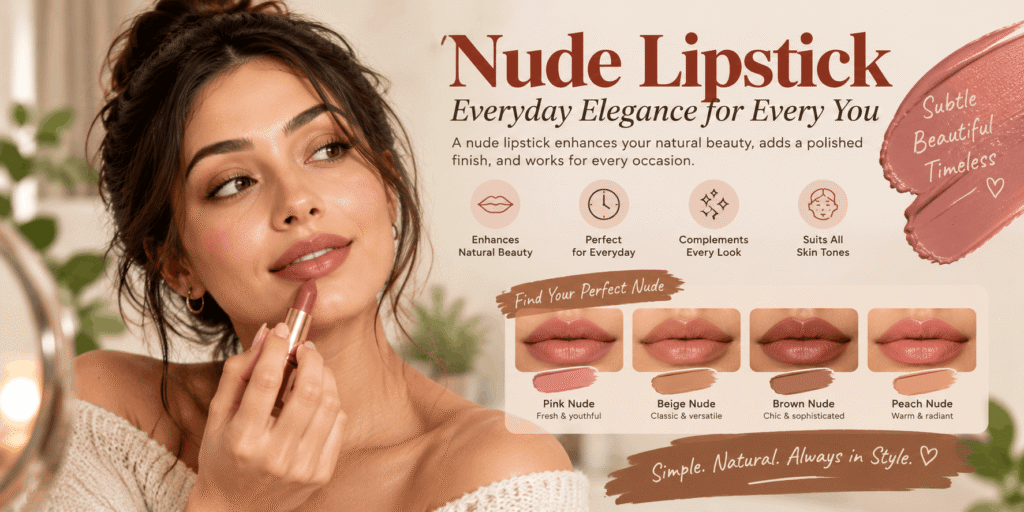
A flattering neutral lip color should work with your overall coloring rather than erase it completely. If your natural lips have noticeable pink or berry tones, a beige lipstick may look different on you than it does in a product photograph. Similarly, a brown-based shade can appear warmer, cooler, lighter, or deeper depending on your complexion.
This is why testing a Nude Lipstick on your own lips can be more informative than judging it from a hand swatch. The natural pigment of your lips influences the final result, and lighting can change how a color appears in photographs. If you shop online, look for swatches on people with different skin tones and compare the shade in more than one lighting condition.
Finish matters, too. Matte formulas generally create a more defined appearance, creamy lipsticks can give a softer finish, and glosses add shine that may make the color look more translucent. A sheer formula often allows more of your natural lip color to show through, while a highly pigmented lipstick can create a more noticeable change.
Another useful detail is the contrast between your lips and the rest of your face. A shade that is almost identical to your skin may produce an understated effect, but it can also make your lips appear less defined. Choosing a color with a little more pink, brown, or warmth can help preserve dimension while keeping the overall look neutral.
17 Nude Lipstick Shades Worth Exploring
1. Pinky Nude for a Fresh, Natural Look
Pinky nude combines the softness of pink with the understated quality of a neutral color. It can be a useful starting point if you want your lips to look naturally rosy without wearing a noticeably bright pink lipstick.
This shade works particularly well with minimal makeup, soft blush, and understated eye looks. For daytime wear, a creamy or satin finish can create a comfortable-looking result without appearing overly glossy. If your natural lips are already quite pink, choose a shade with enough pigment to show up without simply disappearing into your existing lip color.
2. Rosy Nude for a More Polished Finish
Rosy nude has a slightly richer pink tone than a delicate pinky nude. It can add a little more definition while maintaining the understated character that makes neutral lipstick easy to wear.
Consider this color for work, dinners, family gatherings, or occasions when you want your makeup to look finished without drawing attention away from your eyes. It can pair nicely with rose-toned blush, brown eyeliner, and soft neutral eyeshadow.
If very pale lip colors tend to wash you out, a rosy nude may offer a more balanced alternative. Look for a depth that complements your natural lip pigment rather than choosing the lightest shade available.
3. Brown Nude for Subtle Definition
Brown nude brings a more earthy quality to the neutral lipstick family. Depending on its depth, it may lean toward beige-brown, cocoa, or a soft coffee color. This makes it a versatile direction for anyone who prefers a neutral lip with more visible definition.
Lighter brown shades can create a soft everyday finish, while deeper variations may complement more dramatic eye makeup. Brown-based lip colors can also work beautifully with bronze eyeshadow, warm blush, and softly sculpted cheeks.
When selecting a brown nude, pay attention to its undertone. Some versions have a reddish warmth, while others appear cooler or more muted. If the color looks too gray or pale against your complexion, a warmer or slightly deeper option may create a more harmonious result.
4. Peach Nude for a Warm, Lively Appearance
Peach nude blends beige with gentle orange-pink tones, giving the lips a softer and warmer appearance. It can be a lovely choice when you want a neutral color that does not feel too brown or too pink.
This shade often complements peach blush, warm champagne eyeshadow, and light bronzer. For a fresh daytime look, try a satin formula with a little natural shine. A more opaque version can work for occasions when you want the color to remain noticeable throughout your makeup look.
The balance of peach and beige makes a difference. Too much pale beige may reduce definition, while a stronger orange undertone can make the color feel less neutral. Testing the lipstick in natural light helps you understand which variation suits you.
5. Mauve Nude for a Soft, Muted Effect
Mauve nude combines neutral color with muted pink, purple, or rose-brown undertones. Compared with a peachy nude, it generally feels cooler and more subdued, which can make it a useful option for people who prefer understated colors without strong orange tones.
A muted mauve can complement cool-toned blush, taupe eyeshadow, and softly defined lashes. It can also be a good transition shade between a traditional pink lipstick and a deeper neutral brown.
If your complexion has cool or neutral undertones, compare mauve shades with rosy beige options. However, undertone guidelines are only a starting point; your natural lip color and personal preference are equally important. The best shade is the one that gives you the effect you actually enjoy wearing.
6. Orange-Toned Nude for Added Warmth
Orange-toned nude is a warmer interpretation of a neutral lip. It may contain hints of terracotta, apricot, cinnamon, or muted coral, depending on the formula. These shades can add warmth to a makeup look without reaching the intensity of a vivid orange lipstick.
Pair this color with warm brown eyeliner, golden eyeshadow, or peachy cheek products for a coordinated appearance. If you prefer a restrained finish, choose a version with more beige or brown than orange.
The distinction between a warm nude and a bright orange lipstick lies largely in the color balance. A muted orange-based neutral can feel understated, while a more saturated shade will become a stronger feature of your makeup.
7. Caramel Nude for a Rich, Warm Neutral
Caramel nude sits between beige and warm brown, sometimes with golden or honey-like undertones. It offers more depth than many pale nude shades while remaining versatile enough for everyday makeup.
This color can look especially harmonious with warm-toned blush, bronze eyeshadow, and brown lip liner. Depending on its depth, it can create anything from a subtle, blended lip to a more defined neutral finish.
If you have naturally pigmented lips, a medium caramel shade may show up more clearly than a very pale beige. If you prefer a lighter appearance, look for a sheer caramel formula rather than choosing a shade that is dramatically lighter than your natural lip color.
8. Deep Nude for a Defined, Sophisticated Look
Deep nude includes shades such as cocoa, chestnut, rich rose-brown, and deeper beige-brown. These colors provide visible definition while staying within the neutral family, making them useful alternatives to traditional red or berry lipstick.
A deeper neutral can balance a minimal eye look or complement smoky eyes without introducing another strong color. For evening makeup, a satin or matte finish can give the lips a more defined appearance. For everyday wear, a creamy texture may feel softer and easier to apply.
Do not assume that deep nude is reserved for one particular complexion. The most flattering depth depends on the contrast you want, your natural lip pigment, and the rest of your makeup. A shade that is slightly deeper than your natural lips can create definition without looking dramatically different.
9. Light Nude for a Minimal Makeup Look
Light nude generally includes pale beige, soft cream, and light neutral pink shades. These colors can create a subtle finish, particularly when paired with understated eye makeup and a similar-toned blush.
However, very pale lipstick can sometimes make the lips appear flat, especially if its color closely matches the surrounding skin. Instead of automatically choosing the lightest option, consider a shade with a little pink or peach to preserve natural-looking dimension.
If you love a barely-there finish, try applying a small amount of lipstick and blending it with your fingertip. This creates a softer effect than applying a thick, opaque layer. A touch of clear gloss can also add shine without significantly changing the color.
The most important thing to remember when exploring nude lipstick is that a shade does not need to disappear against your complexion to look natural. A flattering neutral can still provide color, definition, and personality while remaining easy to wear.
More Nude Shades and Finishes to Consider
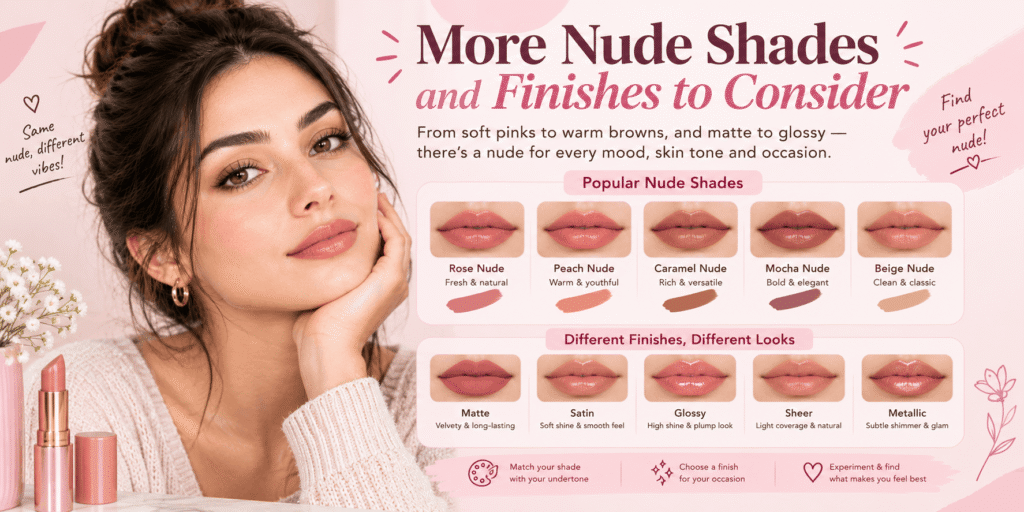
10. Light Pinky Nude for a Delicate Finish
Light pinky nude combines pale pink with a subtle neutral base. It offers a softer appearance than a bright pink lipstick and can work well when you want your makeup to feel understated.
This shade can complement light blush, fine eyeliner, and softly defined lashes. If you enjoy a fresh makeup look, a creamy texture can prevent the color from appearing too flat. You can also dab a small amount onto the center of your lips and blend outward for a more natural finish.
Because light pink shades vary considerably, compare the color against your natural lip pigment before choosing one. A very pale version may appear almost white on naturally darker lips, while a slightly deeper pink-beige can preserve more definition.
11. Cool-Toned Nude for a Muted Appearance
Cool-toned nude shades often contain grayish beige, muted rose, or subtle mauve undertones. They can be appealing if you prefer understated colors without a strong golden, orange, or caramel quality.
These shades work naturally with taupe eyeshadow, cool pink blush, and soft brown or charcoal eyeliner. For a more defined look, select a formula with enough pigment to remain visible against your lips rather than relying on a shade that is too close to your skin color.
Cool undertones are not a strict rule for lipstick selection. Someone with warm coloring may still enjoy a cool nude, and someone with cool coloring may prefer warmer shades. The most useful approach is to compare a few variations and observe which one makes your overall makeup feel balanced.
12. Warm Nude for a Golden, Soft Look
Warm nude shades feature golden beige, peach-brown, honey, or gentle terracotta tones. They can bring warmth to the lips without requiring a bold color, making them suitable for makeup looks built around bronze, brown, and peach shades.
For daytime wear, pair a warm neutral with a little bronzer and a natural-looking blush. In the evening, a more pigmented version can complement softly smoked eyes or a warm-toned eyeshadow look.
If a nude shade makes your complexion appear dull, compare it with a warmer alternative before abandoning neutral lipstick altogether. A small change in undertone may make the color feel more harmonious without requiring a darker or brighter shade.
13. Matte Nude for a Defined Lip Shape
Matte lipstick creates a finish with little visible shine. This can make the lip color appear more defined and give a polished result, especially when the shade has enough depth to complement your natural lip color.
Matte formulas vary in texture. Some feel lightweight and flexible, while others can emphasize dryness or fine lines. If your lips frequently feel tight, prepare them with a suitable lip balm and remove excess product before application. Follow the lipstick’s directions and allow the balm to settle so the color applies evenly.
A matte neutral can be worn on its own or paired with a lip liner in a similar color. If you want a softer effect, apply a small amount and blend it across the lips instead of creating a thick, fully opaque layer.
14. Liquid Nude Lipstick for Precise Application
Liquid formulas offer different levels of coverage, from lightweight color to highly pigmented finishes. Their applicators can make it easier to outline the cupid’s bow and reach the corners of the mouth with control.
Some liquid lipsticks dry down to a matte finish, while others remain creamy or glossy. Long-wearing versions may feel less flexible than traditional bullet lipsticks, so read product descriptions and reviews carefully if comfort is important to you.
For a neat application, begin with a small amount and distribute the color evenly. Avoid repeatedly layering product while the previous coat is still wet, unless the manufacturer recommends doing so. This can help prevent uneven buildup and a heavy-looking finish.
15. Glossy Nude for a Fuller-Looking Effect
Glossy nude lipstick combines neutral pigment with reflective shine. The finish catches light across the lips, creating the appearance of added dimension without needing a dramatically darker outline.
Depending on the formula, a glossy neutral may contain pink, peach, beige, or brown tones. A sheer version can enhance your natural lip color, while a more pigmented product gives you greater control over the finished shade.
For a simple everyday look, apply a nude gloss directly to clean lips. If you prefer more definition, use a compatible lip liner first and blend its edges so there is no obvious line between the products. Gloss can transfer more easily than many matte formulas, so carrying the product for touch-ups may be useful.
16. Your Perfect Nude: A Shade Chosen Around You
There is no single color that deserves the title of the perfect nude for everyone. For one person, it may be a muted rose-brown; for another, it may be caramel, soft peach, or a deeper cocoa shade. The best choice depends on the appearance you enjoy and how the lipstick works with your natural coloring.
Start by identifying the effect you want. A shade close to your natural lip color can provide a subtle enhancement, while one that is slightly deeper may create more definition. A pink-based neutral can look fresh, a brown-based option can feel earthy, and a peach-based shade can bring warmth.
Consider your usual makeup as well. If you often wear warm eyeshadow, a peachy or caramel neutral may coordinate easily. If your favorite looks feature mauve blush and cool taupe shades, a rosy or muted neutral might fit better. These are starting points rather than fixed rules, so do not feel limited by undertone charts.
When possible, test a color on your lips and inspect it in natural daylight. If shopping online, compare several swatches on people with a similar depth of skin and look for photographs that show the product under different lighting conditions.
17. Sheer Nude Lip Tint for Effortless Color
A sheer nude lip tint offers a lighter alternative to a fully pigmented lipstick. Rather than completely covering your natural lip color, it adds a translucent wash that allows some of your existing pigment to remain visible.
This type of product can suit people who prefer low-maintenance makeup or dislike the feeling of heavier lip color. Depending on its formula, a tint may leave a soft stain, provide a glossy finish, or create a light veil of color. The result will vary, so check the product’s description rather than assuming all tints perform the same way.
For a simple application, distribute a small amount across the lips and blend it gently. If the tint is designed to leave a stain, allow it to develop according to the directions. A suitable lip balm can be used when needed to maintain comfort, provided it does not interfere with the product’s intended finish.
Sheer formulas can be especially useful when you want your lips to look naturally colored rather than heavily made up. They also offer an easy way to experiment with nude tones before investing in a more opaque lipstick.
How to Make Your Nude Lip Color Look More Natural
The way you prepare and apply Nude Lipstick can change the final result as much as the shade itself. If your lips have dry flakes or uneven patches, color may settle differently across the surface. Gently caring for your lips and using a comfortable balm when needed can help create a smoother-looking base. Avoid harsh scrubbing, especially when your lips are already irritated.
Lip liner is optional, but it can help define the lip shape and reduce the appearance of uneven edges. Choose a liner that coordinates with your lipstick or natural lip color, then blend the boundary instead of leaving a sharp outline. A liner that is dramatically darker may create a deliberate contrast, but it can look disconnected if the rest of the makeup is very soft.
Application technique also makes a difference. For a subtle result, apply the lipstick in a thin layer and press your lips together gently to distribute the color. If you prefer greater coverage, build it gradually rather than applying a thick layer immediately. This makes it easier to control the intensity.
When testing a new nude lipstick, avoid judging it only under bathroom lighting or a bright store display. Artificial lighting can shift the appearance of beige, pink, and brown tones. Look at the shade in natural daylight and consider how it appears alongside your usual blush, foundation, and eye makeup.
Comfort deserves attention, too. If a formula repeatedly leaves your lips feeling dry or uncomfortable, try a different texture instead of assuming every lipstick should feel the same. Creamy, satin, matte, and sheer products each offer different experiences, and personal preference is a legitimate part of choosing makeup.
Final Thoughts
Choosing a neutral lip color becomes much easier when you stop treating nude as a single shade. Pinky beige, rosy brown, muted mauve, caramel, and sheer peach can all create different results while remaining within the same broad color family.
Think about the finish you prefer, how much definition you want, and whether you need a lightweight tint or more substantial coverage. Test shades in natural light whenever possible, and pay attention to how they look with your natural lip pigment rather than relying entirely on packaging photographs or online trends.
Ultimately, nude lipstick should help you create a look that feels comfortable and personal. You might settle on one dependable everyday color or keep several options for different outfits, seasons, and occasions. There is no need to follow a strict shade rule: experiment with different undertones and finishes until you find the neutrals you genuinely enjoy wearing.
Not necessarily. A shade that is much lighter than your complexion may reduce definition around the mouth, while a neutral close to your natural lip color may look more balanced. You can choose a lighter, similar, or deeper shade depending on the effect you want.
Medium pink, rose-brown, caramel, and deeper beige shades may show up more clearly than very pale colors. However, coverage varies between formulas. If you want the product’s advertised color to appear prominently, look for a more pigmented option and check swatches on lips with similar natural coloring.
Neither finish is automatically better. Matte lipstick offers a more defined appearance, while glossy products add shine and may feel different on the lips. Consider your comfort, the makeup look you prefer, and how much maintenance you want throughout the day.




3 Comments