A double chin can appear for many different reasons, including genetics, natural changes in skin elasticity, aging, and shifts in body composition. While some people notice fullness beneath the chin from a relatively young age, others may see it become more noticeable over time as the skin and underlying tissues change. Because the area is highly visible, even a small amount of fullness can affect how the jawline appears in photos and everyday life.
The good news is that there are several approaches that can improve the appearance of a double chin. Some are simple techniques that can be incorporated into a skincare routine, while others involve professional cosmetic treatments designed to target fat, improve skin firmness, or create a more defined appearance around the jaw and neck. The right approach depends on what is contributing to the fullness in the first place.
It is also important to have realistic expectations. Skincare products, facial exercises, and massage techniques may support the appearance of the skin, but they cannot work in exactly the same way as procedures that specifically target submental fat. Professional treatments also vary considerably in how they work, how many sessions may be needed, and how long results take to become visible.
What Causes a Double Chin?
A double chin refers to fullness or loose tissue beneath the chin that can make the transition between the face and neck look less defined. Although excess fat is one possible contributor, it is not the only one. Skin laxity, anatomy, genetics, and the natural structure of the jaw and neck can all influence how prominent this area looks.
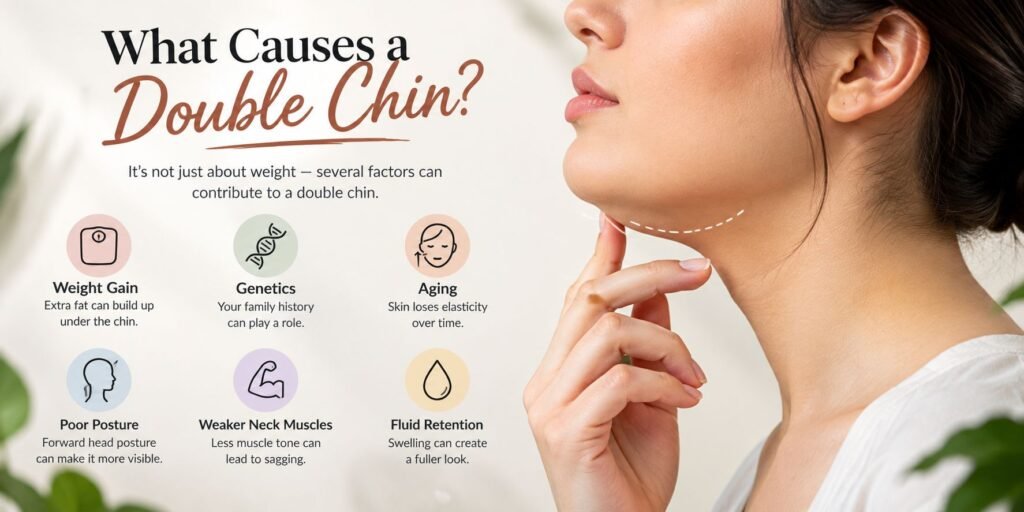
For some people, the appearance is strongly influenced by genetics. Someone can have a relatively stable body weight and still naturally carry more fullness beneath the chin. The shape of the lower face and the position of the jaw can also affect the way the area appears from different angles.
Aging can introduce another factor. As skin gradually loses some of its elasticity and structural support, it may become looser around the lower face and neck. Changes in collagen and elastin can make the jawline look less sharply defined, even when there has not been a major change in body weight.
Weight changes can contribute as well, particularly when additional fat is stored beneath the chin. However, trying to change this area through extreme dieting or excessive exercise is not an appropriate solution. There is no reliable way to choose exactly where the body loses fat first, and a healthy approach should focus on overall well-being rather than attempting to force a particular facial shape.
Before choosing a treatment, it helps to determine whether the main concern is fat, loose skin, muscle or anatomy. This is one reason professional assessment can be useful when someone is considering a cosmetic procedure.
10 Ways to Get Rid of a Double Chin
There is no single method that works for everyone. Options range from everyday skincare and massage techniques to treatments performed by qualified medical professionals. Each approach has different goals, so understanding what it can and cannot realistically do is important.
1. Consider Fat-Freezing Treatments
CoolSculpting is a form of cryolipolysis, a technique that uses controlled cooling to target fat cells. It has been used for certain areas of localized fat, including the area beneath the chin. The concept behind the treatment is that fat cells are more sensitive to controlled cold exposure than surrounding tissues.
During treatment, an applicator is positioned over the targeted area. The device delivers controlled cooling, and the treated fat cells are gradually processed by the body afterward. Unlike a surgical procedure, the treatment does not involve making an incision or removing fat directly.
Results are not usually immediate. Because the body needs time to process the treated cells, changes may become noticeable gradually over the weeks following treatment. The number of sessions required can vary depending on the individual and the amount of fullness being addressed.
Cryolipolysis is not intended as a weight-loss treatment. It is designed for localized areas where someone may have fat that remains noticeable despite maintaining a stable weight. A qualified provider should determine whether the area beneath the chin is appropriate for this type of treatment.
It is also worth discussing potential side effects and limitations before treatment. Temporary redness, swelling, tenderness, numbness, or sensitivity can occur. A medical professional can explain the expected recovery and determine whether another approach may be more appropriate.
2. Explore Energy-Based Body Contouring
SculpSure is another noninvasive body-contouring technology that uses controlled energy to target fat cells. Instead of cooling the treatment area, this type of technology uses laser energy. However, not every energy-based treatment is appropriate for every area of the body, so treatment availability and suitability for the chin should be confirmed with a qualified provider.
The important point is that noninvasive fat-reduction technologies are not interchangeable. Different devices have different mechanisms, treatment areas, applicators, and regulatory indications. A provider should explain exactly what device is being used and what results can realistically be expected.
Someone considering this type of treatment should also ask whether the concern is actually excess fat. If loose skin is the primary issue, reducing fat may not create the desired jawline definition and could potentially make laxity more noticeable. A personalized evaluation can help distinguish between these concerns.
3. Try Gentle Facial Exercises
Facial exercises are often promoted as a simple way to improve the appearance of a double chin. Some exercises focus on activating muscles around the jaw, mouth, and neck through controlled movements.
These exercises may help someone become more aware of and engage the muscles in the area, but they should not be presented as a guaranteed method for removing submental fat. Spot reduction is not something facial exercises can reliably accomplish. In other words, repeatedly exercising the muscles beneath the chin does not necessarily cause the body to burn fat specifically from that location.
Still, gentle facial movements can be incorporated into a broader routine if they feel comfortable. Movements should be controlled rather than aggressive, particularly around the neck and jaw. If an exercise causes pain, dizziness, significant tension, or discomfort, it should be stopped.
The most useful way to view facial exercises is as a low-cost wellness technique rather than a substitute for treatments that specifically target fat or loose skin. Expectations matter because the visible structure of the chin depends on much more than muscle activity alone.
4. Use Collagen-Focused Skincare
Skincare can play a role when loose or less resilient skin contributes to the appearance of fullness beneath the chin. Moisturizers and products containing ingredients associated with supporting the skin barrier can make the skin appear smoother and more hydrated.
Collagen itself is a structural protein found naturally in the skin. As people age, the skin’s collagen production and overall structural support change. This contributes to the development of fine lines, wrinkles, and reduced firmness.
Applying a topical collagen product does not simply replace the collagen underneath the skin. Large collagen molecules generally do not penetrate the skin in a way that would directly rebuild deeper structural collagen. However, moisturizing ingredients can improve hydration, which may temporarily make skin appear smoother and more supple.
For a skincare routine aimed at maintaining healthier-looking skin around the jaw and neck, sunscreen is particularly important. Ultraviolet exposure contributes to premature skin aging and can affect collagen and elastin over time. Applying broad-spectrum sunscreen to exposed areas of the neck and upper chest can therefore be an important part of long-term skin care.
Other topical ingredients may also be useful depending on the person’s overall skincare goals. A dermatologist can recommend ingredients based on skin type, sensitivity, age, and the specific concern being treated.
5. Use a Gentle Facial Massage Tool
Handheld massage tools are commonly used as part of facial skincare routines. They may include rollers, vibrating devices, or other tools designed to glide across the skin.
Massage can temporarily change the appearance of facial puffiness by encouraging movement of fluid in the superficial tissues. This may make the face and area around the jaw look less swollen for a short period. However, this effect should not be confused with permanent fat reduction.
The way a massage tool is used matters. Excessive pressure can irritate the skin, especially if someone has sensitive skin, active acne, inflammation, or another condition that makes the area more reactive. A clean tool and a suitable facial product can help reduce friction during use.
Massage tools should also not be marketed as a way to physically break up or permanently remove fat beneath the chin. The deeper tissues involved in a double chin are not changed simply by repeatedly pressing or rolling the surface of the skin.
For someone who enjoys facial massage, it can still be a relaxing addition to a skincare routine. Its most realistic benefit is temporary improvement in the appearance of puffiness and a smoother-feeling skincare application rather than permanent reshaping of the jawline.
6. Try Lymphatic-Style Facial Massage
Lymphatic drainage massage has become popular in facial skincare routines, particularly for people who feel that their face looks puffy in the morning or after certain lifestyle factors. The technique generally involves very light, controlled movements rather than deep pressure.
The lymphatic system helps transport fluid through the body. Gentle massage techniques are sometimes used to encourage the movement of superficial fluid. When temporary fluid retention contributes to facial puffiness, this may make the face appear somewhat less swollen.
However, lymphatic massage should not be confused with a treatment for excess fat. A double chin caused primarily by submental fat will not disappear because fluid has been moved through the superficial tissues.
Technique is especially important. The movements should remain gentle rather than forceful, and the skin should not be aggressively pulled or stretched. Anyone with a medical condition affecting the lymphatic system, unexplained swelling, an active skin infection, or another relevant concern should speak with an appropriate healthcare professional before attempting specialized massage techniques.
For everyday facial care, a gentle approach is generally more sensible than trying to create dramatic pressure in an effort to change the shape of the neck.
7. Incorporate Gua Sha Carefully
Gua sha is another facial massage technique that has become widely used in modern skincare routines. Traditional gua sha practices have different cultural and historical contexts, while contemporary facial versions often involve gently moving a smooth tool across the skin.
When used carefully, facial gua sha can feel relaxing and may temporarily reduce the appearance of puffiness. The tool can also encourage people to slow down during their skincare routine and pay attention to how much pressure they are applying.
It is important, however, not to confuse temporary changes in fluid distribution with permanent fat loss. A gua sha tool cannot physically sculpt away the fat responsible for a double chin.
The tool should be moved gently over adequately lubricated skin rather than dragged across dry skin. Excessive pressure can lead to irritation, redness, or bruising. Keeping the tool clean is also important because it comes into direct contact with the face and neck.
People with highly sensitive skin or active inflammatory skin conditions may need to be particularly cautious. If there is persistent irritation or discomfort, the technique should be discontinued.
Choosing the Right Approach for Your Chin and Neck
The most important step is understanding what is actually creating the appearance of a double chin. Two people can have a similar-looking area beneath the double chin while requiring completely different approaches.
If the concern is mainly temporary puffiness, gentle massage and consistent skincare may help the area look less swollen. If the issue is primarily skin laxity, improving general skin care and discussing professional skin-tightening options may make more sense. If localized fat is the main contributor, a qualified professional can discuss whether a noninvasive or minimally invasive treatment is appropriate.
It is also possible for several factors to occur together. Someone may have some submental fat combined with reduced skin elasticity, making a treatment that addresses only one factor less effective than expected.
This is why promises of instant or guaranteed results should be approached carefully. A realistic treatment plan starts with identifying the underlying concern, understanding the limitations of each option, and choosing an approach that matches the individual’s anatomy and goals.
A dermatologist or other appropriately qualified medical professional can assess the chin and neck area and explain which options are medically appropriate. Professional advice becomes particularly important before considering injectable treatments, energy-based procedures, or surgery.
In the meantime, basic habits such as sun protection, a consistent skincare routine, adequate hydration, and avoiding unnecessary irritation can support the overall appearance and health of the skin. These measures may not eliminate a double chin, but they can help maintain healthier-looking skin while someone considers whether additional treatment is necessary.
Professional Treatments for a More Defined Jawline
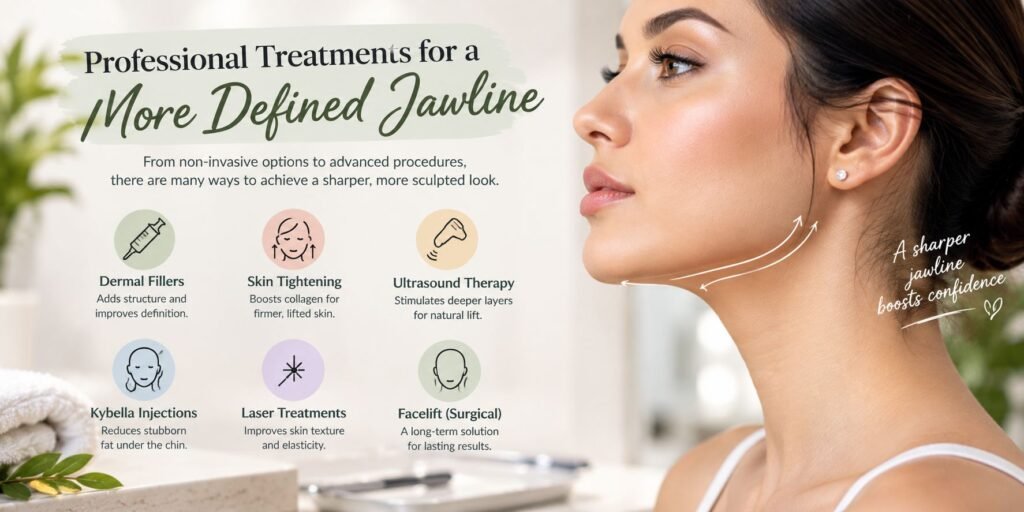
When skincare, massage, and other at-home approaches are not enough to change the appearance of a double chin, professional treatments may provide more noticeable results. These options are generally designed to address one or more specific factors, such as localized fat, loose skin, or the overall contour of the area beneath the chin.
The best treatment depends heavily on anatomy. A person with a small pocket of localized fat but relatively firm skin may have different options from someone whose main concern is loose skin around the neck. This distinction is important because removing fat does not automatically tighten skin, and tightening skin does not necessarily remove excess fat.
A consultation with a qualified dermatologist or appropriately trained medical professional can help determine which factor is most significant. During an assessment, the provider may examine the amount and location of submental fat, skin elasticity, jawline structure, and the overall proportions of the lower face and neck. These details can influence both treatment selection and the expected outcome.
Explore Noninvasive Skin-Tightening Treatments
Noninvasive treatments can be considered when reduced skin firmness contributes to the appearance of a double chin. Depending on the technology, these procedures may use forms of radiofrequency, ultrasound, or other energy to deliver controlled heat or energy to targeted tissues.
The goal is generally different from that of a fat-reduction treatment. Rather than directly removing a pocket of fat, certain skin-tightening technologies are intended to encourage changes in the deeper layers of the skin and support a firmer-looking appearance over time.
Results tend to develop gradually rather than appearing immediately. The skin needs time to respond to the treatment, and the final effect can depend on the person’s age, skin characteristics, degree of laxity, and the specific technology used.
Not every person with a double chin will benefit equally from skin tightening. If the area contains a significant amount of localized fat, tightening the skin alone may not produce the level of contouring someone expects. Conversely, removing fat when skin laxity is the primary concern may leave the person disappointed with the result.
This is why professional evaluation is more useful than choosing a treatment based only on photographs or advertisements. A qualified provider can explain what the treatment is actually designed to change and whether it addresses the main reason the chin looks fuller.
The treatment itself can vary considerably depending on the device and technique. Some procedures require little or no downtime, while others may involve temporary redness, swelling, tenderness, or sensitivity. Before treatment, patients should ask what recovery is expected and when visible changes are likely to appear.
It is also worth asking whether the treatment is specifically intended for the submental area. Technologies can differ in their approved uses and appropriate treatment locations, so the exact device and its intended application matter.
Consider Injectable Treatments
Injectable treatments are another option for people whose main concern is localized fat beneath the chin. One commonly discussed injectable approach uses deoxycholic acid, a substance that occurs naturally in the body and can help break down dietary fat. When used as a medical treatment beneath the chin, it is injected into carefully selected areas to target fat cells.
The treatment requires precise placement. The provider must understand the anatomy of the area because important nerves, blood vessels, and other structures are located around the jaw and neck. For this reason, injectable treatment should only be performed by an appropriately qualified medical professional.
Unlike a cream or facial massage technique, an injectable fat-reduction treatment is intended to produce a biological change in the targeted fat cells. The body then gradually processes the affected material. Because this process takes time, the result does not appear immediately after an injection session.
More than one treatment session may be necessary. The exact number varies depending on the amount of fat being treated, the individual’s response, and the treatment plan established by the provider.
Swelling can be particularly noticeable after injections in the chin area. Other possible temporary effects may include redness, bruising, tenderness, discomfort, or numbness. A medical professional should explain the expected reactions before treatment so that the person understands what normal recovery may look like.
There are also important risks associated with injections in this region. The anatomy beneath the chin is complex, and incorrect placement can cause complications. This is another reason why choosing a qualified provider matters more than simply looking for the lowest treatment price.
Injectables are also not a universal solution. They are designed to address a particular type of concern, primarily localized fat. If the appearance of the double chin comes mostly from loose skin or the natural structure of the jaw, reducing fat may not create the expected definition.
A good consultation should therefore include a discussion of the underlying cause, expected results, potential side effects, the number of sessions that may be needed, and alternative treatments.
When Surgical Treatment May Be an Option
Discuss Liposuction With a Qualified Surgeon
For people with a more significant amount of localized fat beneath the chin, submental liposuction may be discussed as a surgical option. Unlike noninvasive treatments, liposuction physically removes fat from the targeted area.
During the procedure, a surgeon uses specialized equipment to remove unwanted fat through small openings in the skin. Because the procedure allows the surgeon to directly contour the area, it can provide a more immediate change than treatments that rely on the body gradually processing treated fat cells.
The goal is not simply to remove as much fat as possible. Facial and neck contouring requires careful attention to proportion. Removing too much tissue can produce an unnatural appearance, while removing too little may not provide the desired improvement.
A person’s skin quality is also an important consideration. Skin with good elasticity may adapt more effectively to the new contour after fat removal. If the skin is significantly loose, liposuction alone may not address all of the concerns.
Recovery varies between individuals. Swelling, bruising, tenderness, and temporary changes in sensation can occur following the procedure. A surgeon will provide specific instructions regarding activity, compression, wound care, and follow-up appointments.
As with any surgery, liposuction has risks that should be discussed before deciding whether to proceed. The risks can depend on the procedure, the individual’s health, the surgical technique, and other factors.
Because the area is close to important anatomical structures, experience with facial and neck contouring is especially relevant. Someone considering surgery should choose a properly qualified surgeon and ask about their training, experience with the procedure, expected recovery, and possible complications.
Liposuction also should not be viewed as a substitute for maintaining overall health. It is a contouring procedure rather than a general weight-loss treatment. The most appropriate candidates are typically those who have localized areas they would like to address rather than expecting surgery to change their overall body composition.
How to Decide Which Double Chin Treatment Makes Sense
Choosing a treatment begins with identifying the main cause of the fullness. This sounds simple, but it can be surprisingly difficult to determine by looking at the area yourself.
For example, someone may assume that excess fat is responsible when loose skin is actually contributing significantly to the appearance. Another person may have a relatively small amount of fat but a naturally less prominent jawline, making the area appear fuller from certain angles.
Genetics can also influence the shape of the chin and neck. Bone structure, jaw projection, the position of soft tissues, and natural fat distribution all contribute to facial proportions. These characteristics cannot necessarily be changed with skincare or massage.
This is why online before-and-after photographs should be interpreted carefully. Lighting, camera angle, posture, facial expression, makeup, image editing, and differences in anatomy can all affect how dramatic a result appears.
A professional assessment provides a more useful starting point. Instead of asking only how to remove a double chin, it can be helpful to ask what is creating the appearance of fullness and which treatment, if any, is designed to address that specific factor.
It is also reasonable to consider whether treatment is actually necessary. A double chin is a common anatomical feature, and having one does not mean that something is wrong with your health or appearance. Cosmetic treatment is a personal choice, and there is no medical requirement to have a sharply defined jawline.
What Results Can You Realistically Expect?
Expectations are one of the most important parts of any cosmetic treatment. Even procedures specifically designed for the chin cannot guarantee that someone will achieve a particular jawline.
Noninvasive approaches generally produce more gradual changes. Skincare and massage may influence hydration or temporary puffiness, while certain professional technologies may target fat or skin laxity. The visible effect depends on the specific treatment and the person’s individual response.
Injectable fat-reduction treatments can also require patience. The body needs time to process the targeted cells, and multiple sessions may sometimes be recommended. Swelling during the early recovery period can temporarily make the area look different from the eventual result.
Surgical contouring can produce a more direct change because fat is physically removed, but healing still takes time. Early postoperative swelling can obscure the final contour, meaning the appearance immediately after surgery should not be treated as the finished result.
Maintaining realistic expectations also means understanding that treatments cannot completely override natural anatomy. A person’s jaw shape, chin projection, skin quality, and genetics continue to influence the final appearance.
The goal of a professional treatment should therefore be a natural-looking improvement rather than trying to force the face into a particular template.
How to Maintain the Skin Around Your Chin and Neck
Regardless of whether someone chooses professional treatment, a consistent skincare routine can help maintain the quality and appearance of the skin around the lower face and neck.
Sun protection is one of the most useful long-term habits. The neck is frequently exposed to sunlight but is sometimes forgotten during daily skincare. Regular use of broad-spectrum sunscreen can help protect the skin from ultraviolet radiation that contributes to premature skin aging.
Moisturizing can also support the skin barrier. Well-hydrated skin may look smoother and feel more comfortable, especially when environmental conditions cause dryness. The neck can generally be included in the same basic skincare routine used on the face, provided the products are appropriate for the individual’s skin.
Gentle cleansing is preferable to aggressive scrubbing. Repeated friction or harsh products can irritate the skin without providing a meaningful solution for submental fat or loose tissue.
Lifestyle habits can contribute to overall skin health as well. Adequate sleep, balanced nutrition, regular physical activity, and avoiding smoking can support general health and the normal functioning of the skin. None of these habits can selectively remove a double chin, but they can contribute to healthier-looking skin and overall well-being.
It is also important to avoid extreme approaches promoted online as quick fixes. Restrictive diets, excessive exercise, aggressive massage, or unregulated cosmetic products are not reliable solutions for changing the anatomy beneath the chin.
Final Thoughts
There are many ways to approach the appearance of a double chin, but they do not all work for the same reason. At-home methods such as moisturizing, sun protection, gentle facial massage, and facial exercises may have a place in a broader skincare routine, particularly when the goal is healthier-looking skin or a temporary reduction in puffiness.
Professional treatments can target more specific concerns. Noninvasive technologies may be used for certain types of localized fat or skin laxity, injectable treatments can target submental fat in appropriate candidates, and liposuction can physically remove localized fat when surgery is considered suitable.
The most important factor is matching the treatment to the underlying cause. A procedure designed to remove fat may not solve loose skin, while a skin-tightening treatment may not significantly reduce a larger pocket of fat. Natural facial anatomy also plays an important role in how the chin and jawline look.
Anyone considering a medical or cosmetic procedure should have an in-person consultation with an appropriately qualified professional. They can evaluate the area, explain realistic outcomes, discuss potential risks, and help determine whether treatment is appropriate.
A double chin is a normal variation in facial anatomy, and there is no single appearance that a healthy face needs to have. If someone chooses to address it cosmetically, the most useful approach is one based on accurate information, realistic expectations, and professional guidance rather than quick-fix promises.
In the meantime, basic habits such as sun protection, a consistent skincare routine, adequate hydration, and avoiding unnecessary irritation can support the overall appearance and health of the skin. These measures may not eliminate a double chin, but they can help maintain healthier-looking skin while someone considers whether additional treatment is necessary.