
Niacinamide serum benefits have become an important topic for people who want healthier-looking skin without following a complicated skincare routine. From improving the appearance of uneven skin tone to supporting the skin’s natural protective barrier, niacinamide is a versatile skincare ingredient that can fit into many different routines. It is commonly used by people with oily skin, dry skin, visible pores, redness, and dark spots.
One reason niacinamide serum is so popular is its flexibility. It can be used alongside many familiar skincare ingredients, and it is available in products designed for different skin types and concerns. However, getting the best results depends on choosing an appropriate formula, using it consistently, and understanding what this ingredient can realistically do.
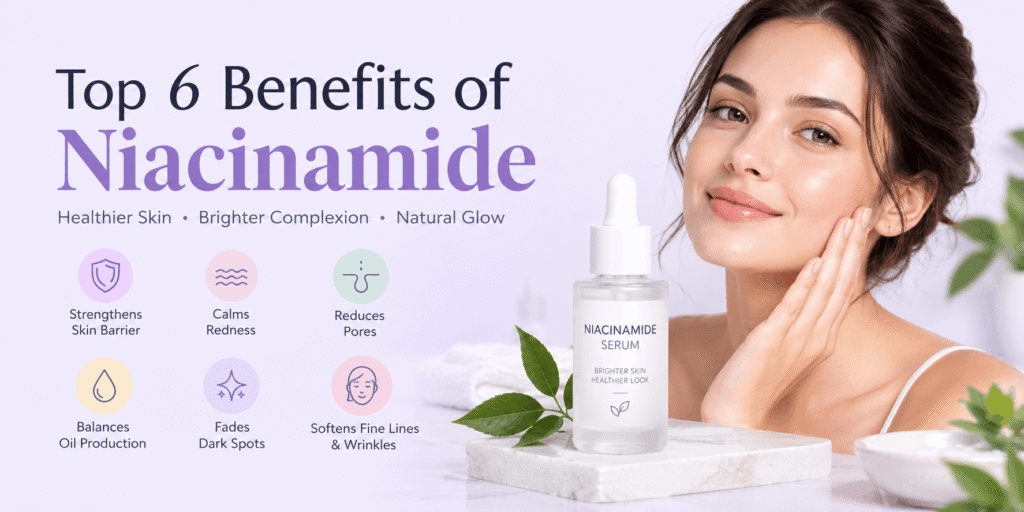
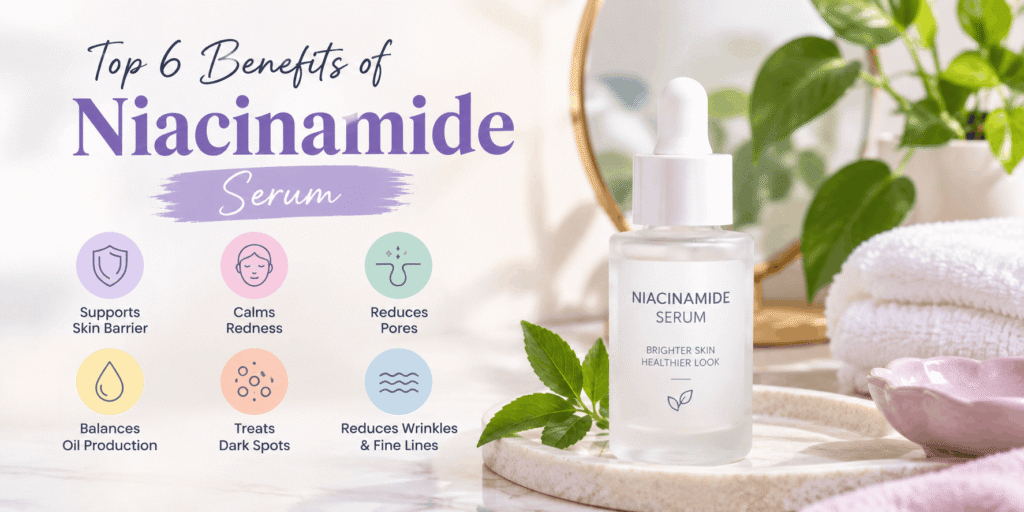
The niacinamide serum benefits discussed in this guide include supporting the skin barrier, calming the appearance of redness, making pores look less noticeable, balancing excess oil, improving the appearance of dark spots, and softening the look of fine lines. We will also explore possible side effects and practical ways to include niacinamide serum in your daily skincare routine.
What Is Niacinamide?
Niacinamide serum is a form of vitamin B3, a water-soluble vitamin that plays an important role in normal cellular function. In skincare, niacinamide is used in topical products such as serums, moisturizers, and facial creams. It is valued for its ability to support the skin barrier and address several visible skin concerns at the same time.
Unlike some exfoliating ingredients that work by loosening the bonds between dead skin cells, niacinamide supports normal skin functions and helps maintain a healthier skin environment. This makes it an appealing option for people who want to improve their complexion without relying entirely on strong exfoliants.
Niacinamide serum usually contains a measured concentration of the ingredient in a lightweight liquid formula. Some products contain around 2% to 5% niacinamide, while others offer concentrations of 10% or more. A higher percentage does not automatically mean better results. For many people, a lower concentration may provide useful benefits while being easier to tolerate.
The formula matters, too. A serum may contain additional ingredients such as glycerin, hyaluronic acid, ceramides, or soothing agents. These ingredients can complement niacinamide by helping the skin retain moisture or maintain a comfortable feel.
People with oily, combination, dry, or mature skin may all find niacinamide useful. However, no single ingredient works equally well for everyone. Your skin type, existing routine, product formulation, and consistency of use can influence the results.
Niacinamide Serum Benefits
The main niacinamide serum benefits come from its ability to support several aspects of skin health rather than focusing on only one concern. Although it is not a miracle treatment, regular use may help improve the appearance and feel of the skin over time.
1. Supports Your Skin Barrier
One of the most valuable niacinamide serum benefits is its role in supporting the skin’s natural protective barrier. Your skin barrier is the outermost layer of the skin. It helps reduce excessive moisture loss while protecting against environmental irritants and other external factors.
A healthy skin barrier helps your face feel comfortable, hydrated, and less prone to dryness. When the barrier becomes weakened, the skin may feel tight, rough, flaky, or unusually sensitive. Harsh cleansers, excessive exfoliation, weather changes, and unsuitable skincare products can all contribute to barrier problems.
Niacinamide supports the skin’s production of ceramides and other components involved in maintaining the barrier. Ceramides are lipids that help hold skin cells together and limit water loss. By supporting these natural processes, niacinamide may help the skin retain moisture more effectively.
This benefit can be particularly useful for people who experience dryness after cleansing or whose skin feels uncomfortable when using multiple active ingredients. Adding a suitable niacinamide serum may help support a more balanced routine.
For the best experience, apply the serum to clean skin and follow it with a moisturizer. The moisturizer helps reduce water loss and provides additional hydration. If your skin is already irritated, simplify your routine instead of adding several new products at once.
It is also important to remember that niacinamide is not a replacement for every barrier-supporting ingredient. A moisturizer containing ceramides, glycerin, or other moisturizing components may complement its effects.
With consistent use, this combination may help your skin feel smoother, more comfortable, and better hydrated. These improvements can make your complexion look healthier, although results depend on the condition of your skin and the products you choose.
2. Calms the Appearance of Redness
Another reason people explore niacinamide serum benefits is its potential to help calm the appearance of redness and uneven-looking skin. Redness may occur for several reasons, including irritation, dryness, environmental exposure, or inflammatory skin conditions.
Niacinamide has properties that may help support a calmer skin environment. It can also strengthen the skin barrier, which may make the skin less vulnerable to certain external irritants when used as part of a suitable skincare routine.
For people who experience occasional redness after cleansing or notice that their skin becomes uncomfortable easily, a gentle niacinamide formula may be worth considering. Supporting the barrier and maintaining adequate moisture can improve overall skin comfort.
However, niacinamide serum should not be considered a cure for persistent facial redness. Conditions such as rosacea, eczema, and contact dermatitis may require specific treatments. If redness is ongoing, painful, itchy, or accompanied by swelling, a dermatologist can help identify its cause.
The concentration and overall formulation are important when selecting a product for redness-prone skin. A serum with a high concentration of active ingredients or added fragrance may be uncomfortable for some users, even if it contains niacinamide.
Start with a gentle formula and introduce it gradually. If your skin tolerates it, regular use may help improve the appearance of unevenness and support a more comfortable complexion.
3. Reduces the Appearance of Pores
Visible pores are a common skincare concern, particularly for people with oily or combination skin. Pores are natural openings in the skin that allow oil and hair to reach the surface. Their size and visibility can be influenced by genetics, oil production, age, and skin structure.
Although skincare products cannot permanently eliminate pores, certain ingredients can make them appear less noticeable. One of the potential niacinamide serum benefits is helping improve the appearance of pores by supporting more balanced oil production and smoother-looking skin.
When excess oil collects around the pores, the skin may appear shinier, and pores can become more prominent. Niacinamide may help reduce excessive surface oil in some people, which can make the overall texture look more refined.
Regular use may also support the skin barrier, helping the surface appear smoother and more balanced. These effects can improve the appearance of enlarged pores without the need for aggressive scrubbing or frequent exfoliation.
For better results, combine niacinamide with a gentle cleanser and a lightweight moisturizer suited to your skin type. If clogged pores are a major concern, salicylic acid may be another option because it can help clear material from inside the pores. However, it should be introduced carefully, especially if your skin is sensitive.
Avoid squeezing pores or using harsh scrubs in an attempt to make them smaller. These practices can irritate the skin and may make redness or uneven texture more noticeable.
It is also helpful to have realistic expectations. Niacinamide serum may improve the appearance of pores, but it will not change your natural pore structure. Consistent skincare, sun protection, and suitable product selection are more useful than expecting pores to disappear completely.
4. Regulates Oil Production
Excess oil can make the face appear shiny, cause makeup to separate, and contribute to concerns about clogged pores. For people dealing with these issues, balancing surface oil is one of the most appealing niacinamide serum benefits.
The skin naturally produces sebum through its sebaceous glands. Sebum helps lubricate and protect the skin, so the goal is not to eliminate oil completely. Instead, a suitable skincare routine should help maintain a comfortable balance without stripping away the skin’s natural moisture.
Research suggests that topical niacinamide may help reduce sebum excretion in some individuals. This can be useful for people who notice excessive shine across the forehead, nose, and chin. However, results vary, and niacinamide will not necessarily control oil production for everyone.
People with oily skin sometimes make the mistake of washing their faces repeatedly or using strong cleansers to remove every trace of shine. Unfortunately, these habits may lead to dryness and irritation. A gentle cleanser, lightweight moisturizer, and niacinamide serum can provide a more balanced approach.
When choosing a serum, consider how it feels on your skin. A lightweight, non-greasy formula may be more comfortable for daytime use, especially under sunscreen or makeup. You do not need to avoid moisturizer simply because your skin produces excess oil.
It is also worth understanding that oily skin can still become dehydrated. Oil and water are different components, and having plenty of sebum does not guarantee that the skin has sufficient moisture.
By combining gentle cleansing with appropriate hydration, niacinamide may help your skin look less shiny while maintaining a healthy feel. Give a new routine time to work, and avoid changing several products at once so you can identify what suits your skin.
5. Helps Improve the Appearance of Dark Spots
Dark spots and uneven skin tone can develop after acne, irritation, sun exposure, or other changes in the skin. They may take weeks or months to fade, which is why many people search for ingredients that can help their complexion look more even.
Among the best-known niacinamide serum benefits is its potential to reduce the appearance of hyperpigmentation. Niacinamide can influence the transfer of melanosomes, which are structures that carry pigment from pigment-producing cells to surrounding skin cells. By affecting this process, topical niacinamide may help reduce the visible appearance of certain dark spots over time.
This does not mean that niacinamide removes every type of pigmentation or produces immediate results. The cause, depth, and duration of the discoloration all influence how much improvement is possible.
For example, marks left after acne may gradually become less noticeable with an appropriate skincare routine. However, deeper pigmentation or conditions such as melasma can be more difficult to manage and may require professional guidance.
Consistency is essential when using niacinamide for uneven skin tone. Apply the serum according to the product instructions and follow it with a moisturizer. Most importantly, use broad-spectrum sunscreen with SPF 30 or higher during the day. Sun exposure can worsen existing dark spots and contribute to new discoloration, making sun protection a key part of any pigmentation-focused routine.
Avoid combining too many strong brightening ingredients at once. Excessive irritation can make some forms of discoloration worse, particularly in skin that is prone to post-inflammatory hyperpigmentation.
Niacinamide may work well alongside other ingredients used for uneven skin tone, but compatibility depends on the formulation and your skin’s tolerance. Introduce new products gradually and monitor how your skin responds.
With patience, niacinamide serum may help create a more even-looking complexion. The aim should be gradual improvement rather than instant whitening or a complete change in your natural skin color.
6. Reduces the Appearance of Wrinkles and Fine Lines
Fine lines and wrinkles develop naturally as skin ages. Sun exposure, environmental factors, changes in collagen and elastin, and reduced moisture retention can all contribute to visible lines over time.
Another potential benefit of niacinamide serum is helping improve the appearance of fine lines by supporting the skin barrier and improving its overall texture. When the skin retains moisture more effectively, it may look smoother, and small dehydration lines can become less noticeable.
Niacinamide also plays a role in cellular processes related to normal skin function. Some research on topical niacinamide suggests improvements in aspects of skin texture, fine lines, and uneven pigmentation with continued use. However, the degree of improvement varies, and it should not be expected to erase deep wrinkles.
For mature skin, niacinamide can be a practical addition because it addresses several concerns at once. It may support the barrier, help balance oil, and improve the appearance of uneven skin tone without requiring an elaborate routine.
To make the most of these potential benefits, use a moisturizer that suits your skin and apply sunscreen every morning. Sun protection is especially important because ultraviolet radiation contributes significantly to premature skin aging.
You may also consider other ingredients, such as retinoids, if your primary concern is photoaging or persistent fine lines. These ingredients can be effective for certain concerns but may cause dryness or irritation, so they should be introduced thoughtfully.
If you are combining niacinamide with retinol or another active ingredient, start slowly and avoid adding multiple new products simultaneously. A simpler routine can make it easier to identify irritation and maintain consistent use.
The goal of niacinamide serum is to support healthier-looking skin, not to stop the natural aging process. With realistic expectations and regular care, it may help your complexion look smoother, more hydrated, and more even.
Niacinamide Side Effects
Although niacinamide is generally well tolerated when used in suitable topical formulations, it can cause side effects in some people. Understanding these possible reactions is important when deciding whether niacinamide serum is appropriate for your skincare routine.
Potential side effects include:
- Mild redness or irritation.
- Itching or a burning sensation.
- Dryness or tightness.
- A rash or other signs of sensitivity.
These reactions may occur because of niacinamide itself, the concentration used, or other ingredients in the formula. Fragrance, preservatives, and additional active ingredients can also contribute to irritation.
A higher concentration is not always necessary to achieve useful results. If you are new to niacinamide, consider starting with a lower-concentration product and following the directions on its label. People with sensitive skin may prefer a simple formula without unnecessary fragrance or multiple strong actives.
Before applying a new serum across your face, test a small amount on a limited area of skin. Follow the product instructions and observe the area for signs of irritation. A patch test cannot guarantee that a reaction will not occur, but it may help identify some problems before regular use.
If irritation develops, stop using the serum until your skin has settled. Seek medical advice if the reaction is severe, persistent, or accompanied by significant swelling. Difficulty breathing or swelling of the lips or tongue requires emergency medical attention.
Niacinamide is different from niacin, another form of vitamin B3. Oral niacin supplements can cause flushing and other effects depending on the dose, but those effects should not automatically be attributed to topical niacinamide serum.
People with an existing skin condition or a history of reactions to skincare products should introduce new ingredients carefully. If you are unsure which product is causing irritation, temporarily simplifying your routine may make it easier to identify the problem.
How to Use Niacinamide Serum
Using niacinamide serum correctly can help you get the most from its potential benefits while reducing the likelihood of irritation. The best routine is one that fits your skin type, product formulation, and other skincare products.
1. Cleanse your face gently. Start with a mild cleanser that removes dirt, sunscreen, and excess oil without leaving your skin feeling stripped. Avoid harsh cleansing techniques that may weaken the skin barrier.
2. Apply the serum according to its instructions. After cleansing, apply the recommended amount of niacinamide serum. Many people use a few drops, but the correct quantity depends on the product. Spread it gently over the face and avoid direct contact with the eyes.
3. Follow with moisturizer. Apply a moisturizer to help maintain hydration and support the skin barrier. Choose a lightweight formula if your skin is oily or a richer formula if it is dry.
4. Use sunscreen during the day. Finish your morning routine with broad-spectrum SPF 30 or higher. Sunscreen is especially important if you want to improve the appearance of dark spots, uneven skin tone, and signs of premature aging.
5. Introduce other active ingredients carefully. Niacinamide can often be used with ingredients such as hyaluronic acid and many moisturizers. It may also fit into routines containing retinoids or exfoliating acids, but the complete formula and your skin’s tolerance matter. Introduce products gradually rather than starting everything together.
Niacinamide serum can generally be used in the morning or evening, depending on the product directions and your routine. Some people use it once daily, while others may tolerate more frequent application. There is no need to use it several times a day if a single application fits your needs.
Consistency is more useful than applying excessive amounts. Changes in oiliness, texture, and uneven skin tone may take several weeks to become noticeable. More persistent pigmentation and signs of aging may require a longer period or additional treatments.
Keep your expectations realistic. Niacinamide serum is a supportive skincare ingredient, not a replacement for medical treatment when a skin concern requires professional care. If a product repeatedly causes irritation or does not suit your skin, there is no need to continue using it simply because it is popular.
Key Takeaways
Niacinamide serum benefits make this ingredient a useful option for people looking to improve the appearance and comfort of their skin. It may support the skin barrier, help calm visible redness, reduce the appearance of pores, balance excess oil, improve the look of dark spots, and soften the appearance of fine lines.
The most suitable product depends on your skin type and personal concerns. A moderate concentration, a well-formulated serum, and a consistent routine are often more practical than choosing the strongest product available.
For best results, combine niacinamide with gentle cleansing, appropriate moisturizing, and daily sun protection. Introduce new skincare products gradually, watch for irritation, and give your routine enough time to show whether it is working.
Healthy-looking skin does not require dozens of products. Understanding your skin’s needs and choosing a few compatible ingredients can make your routine simpler, more comfortable, and easier to maintain.
Better Skin Health Starts Here
Improving your skin begins with understanding what it needs rather than following every new skincare trend. Niacinamide serum can be a helpful addition to a routine focused on maintaining the skin barrier, managing excess oil, and improving the appearance of uneven tone.
However, no serum can address every skin concern on its own. Gentle cleansing, adequate hydration, daily sun protection, and consistent habits remain important parts of long-term skincare.
If you experience persistent acne, severe redness, painful irritation, or dark spots that continue to worsen, consider consulting a dermatologist. Professional guidance can help you identify the cause of the problem and select treatments that suit your skin.
By choosing suitable products and using them consistently, you can build a routine that supports your skin without unnecessary complexity. The purpose of niacinamide serum is to complement that routine and help your skin look and feel its best over time.
Final Thoughts
Niacinamide serum benefits make it a valuable addition to a skincare routine for people who want smoother, healthier-looking, and more balanced skin. From supporting the skin barrier and controlling excess oil to improving the appearance of dark spots, visible pores, and fine lines, niacinamide can address several common skin concerns with one ingredient.
The key to getting the best results is choosing a suitable formula, using it consistently, and protecting your skin with daily sunscreen. Remember that results vary depending on your skin type and individual concerns, so patience is essential.
Whether you have oily, dry, combination, or mature skin, niacinamide serum may help you work toward a more even and comfortable complexion. Start with a product your skin can tolerate, maintain a simple routine, and focus on long-term skin health rather than expecting overnight changes.
Niacinamide serum may help support the skin barrier, balance excess oil, reduce the appearance of pores, calm visible redness, improve the appearance of dark spots, and soften the look of fine lines.
Yes, most people can use niacinamide serum daily, depending on the product’s instructions and their skin’s tolerance. Beginners can start once a day and adjust if needed.
Yes, niacinamide serum may help reduce excess surface oil and improve the appearance of pores. Choose a lightweight formula and use a gentle cleanser and moisturizer.
Niacinamide may help fade the appearance of certain dark spots gradually by influencing pigment transfer in the skin. Daily sunscreen is essential to prevent existing pigmentation from becoming more noticeable.


One Comment