The right short beard style can change your entire look without requiring a long, heavy beard. From barely-there stubble to a neatly shaped boxed beard, short facial hair can be clean, versatile, and surprisingly distinctive.
But which style actually suits you? Your face shape, natural growth pattern, grooming routine, and even how much definition you want can all change the answer. That is why these short beard styles range from effortless stubble to classic beards and mustache-focused looks.
How to Choose a Short Beard Style for Your Face Shape
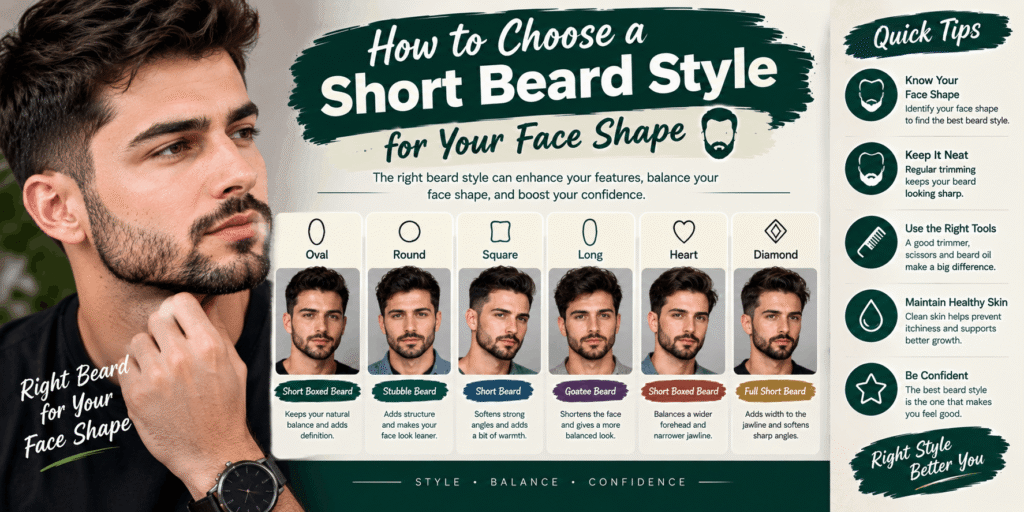
Before choosing a style, look at the overall shape of your face rather than focusing only on beard length. A short beard styles can subtly change how your jawline and cheeks appear, so small differences in trimming and shaping can make one style look very different from another.
Rounder faces often pair well with styles that create a little more definition around the chin and jaw. Meanwhile, naturally angular faces can work beautifully with evenly trimmed short beards that keep the overall appearance balanced.
Oval faces tend to offer plenty of flexibility, making them suitable for everything from short stubble to a classic boxed beard. Longer or more rectangular faces can also benefit from keeping the beard neat and relatively even rather than adding unnecessary length at the chin.
Your natural beard growth matters too. Some styles look best when your facial hair grows evenly across the cheeks, while others are more forgiving if your growth is lighter in certain areas.
The goal is not to find one universally “best” beard. It is to find a style that works with the way your facial hair naturally grows and fits the amount of grooming you actually want to do.
20 Short Beard Styles Worth Trying
There is a much bigger range of short beard styles than simply choosing between “beard” and “no beard.” Even a few millimeters of difference can create a noticeably different appearance.
The following styles cover clean, classic, modern, vintage-inspired, and mustache-focused options, giving you plenty of directions to consider without needing a long beard.
1. Light Stubble
Light stubble is one of the simplest short beard styles and requires relatively little styling. It creates a subtle amount of facial hair while keeping the overall look understated.
This can be a good option if you prefer your facial hair to look natural rather than heavily shaped. Keeping the edges neat can make light stubble appear more intentional.
2. Heavy Stubble
Heavy stubble sits between light stubble and a short beard. It gives the face more visible texture while still maintaining a relatively short length.
The style can look especially polished when the neckline and cheek area are kept tidy. It is also flexible enough to transition into a fuller short beard as the hair grows.
3. Five O’Clock Shadow
The classic five-o’clock-shadow look focuses on very short facial hair that creates subtle definition around the lower face.
Despite the name, the appearance does not have to follow a specific clock schedule. The important part is the intentionally short, slightly rugged finish.
4. Short Goatee
A short goatee focuses facial hair around the chin and mustache while leaving the cheeks cleaner.
This style can create a distinctly different appearance from an all-over beard. The contrast between the facial-hair area and cleaner cheeks makes the chin and mustache the main features.
5. Circle Beard
A circle beard connects the mustache and chin hair into a rounded shape around the mouth.
It offers more structure than simple stubble while keeping the cheeks relatively clean. The result can feel neat and traditional without requiring a full beard.
6. Short Boxed Beard
The short boxed beard is a classic choice for anyone who wants fuller coverage without growing a long beard.
The facial hair is kept relatively short and shaped around the jaw, cheeks, and chin. Its clean structure gives the beard a polished appearance while retaining enough fullness to look substantial.
7. Corporate Beard
The corporate beard is essentially a neat, professionally maintained short beard. It focuses on controlled length, clean edges, and an overall tidy appearance.
Rather than being defined by one exact length, the style is more about presentation. It works well for people who want facial hair while keeping their grooming look refined.
8. Short Full Beard
A short full beard keeps coverage across the cheeks, jaw, chin, and mustache while maintaining a controlled length.
This is a useful choice if you enjoy the appearance of a fuller beard but do not want the maintenance or length associated with a long beard.
9. Faded Beard
A faded beard gradually changes in length as it moves from the sideburn area toward the lower beard.
The transition creates a sharper connection between the haircut and facial hair. It can make a short beard look more deliberately styled without needing additional length.
10. Short Chin Beard
A short chin beard places most of the attention on the chin area. It can be kept simple and closely trimmed rather than forming a large or extended beard.
This is another option for people who prefer focused facial hair instead of full cheek coverage.
Short Beards That Keep the Look Classic
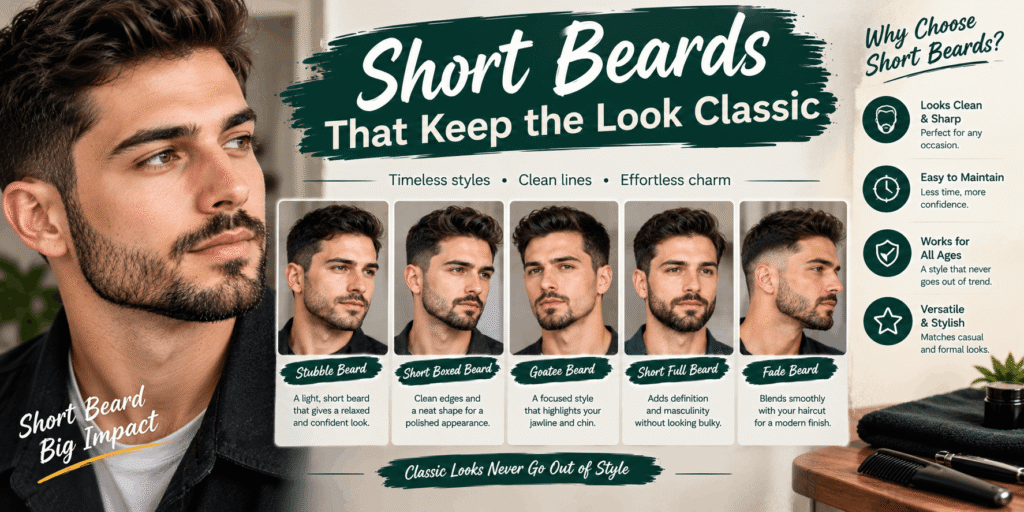
Classic short beard styles have remained popular because they are easy to recognize and adaptable to different personal styles. You do not need an unusual shape to make a short beard interesting.
A simple, well-maintained beard can often look more polished than a complicated design that does not match your natural growth.
11. Short Anchor Beard
The anchor beard combines facial hair around the chin and jaw with a connected or accompanying mustache, creating a shape that resembles an anchor.
It has a more defined appearance than basic stubble and can give the lower face a structured look.
12. Balbo-Inspired Short Beard
A Balbo-inspired beard separates or visually distinguishes the mustache from the main chin and jaw hair.
Keeping everything short makes the style more wearable and less dramatic than a longer traditional version. It is a good option if you like defined facial-hair shapes.
13. Van Dyke-Inspired Beard
The Van Dyke is traditionally associated with a pointed chin beard and mustache, but a shorter interpretation can make the concept feel much more modern.
Keeping the overall length controlled allows the mustache and chin area to remain the focus without creating a large beard.
14. Short Moustache and Chin Combo
This style keeps the mustache and chin beard as the primary features while minimizing the cheeks.
It sits somewhere between a goatee and a more traditional beard, making it useful for anyone who wants facial hair with clear separation between different areas.
15. Neat Jawline Beard
A neat jawline beard focuses on creating a clean, consistent shape along the lower face.
The style does not need to be dramatically sculpted. A short, even beard with tidy boundaries can provide enough definition while maintaining a natural appearance.
Modern Short Beard Styles to Try
Modern short beard styles often combine traditional beard shapes with cleaner transitions and more deliberate detailing. They can look sharp without requiring the dramatic length associated with some classic beard styles.
16. Short Beard Fade
A beard fade creates a gradual transition between the hair around the sideburns and the fuller portion of the beard.
This can make a short beard look more connected to the haircut and gives the sides a cleaner appearance. It is particularly useful if you like a groomed look rather than an entirely uniform beard.
17. Short Beard With Defined Mustache
This style keeps the beard relatively short while allowing the mustache to become a more noticeable part of the look.
The contrast can make the mustache stand out without requiring a long beard. Keeping the overall beard neat helps prevent the mustache from looking disconnected from the rest of the facial hair.
18. Short Ducktail-Inspired Beard
A traditional ducktail beard is usually associated with greater length, but a shorter interpretation can borrow the slightly pointed shape around the chin.
The result gives a short beard a little more character while avoiding the fullness of a traditional long ducktail.
19. Textured Short Beard
Instead of aiming for an extremely uniform appearance, a textured short beard embraces the natural variation in facial hair.
The beard is still maintained and trimmed, but the finish feels less rigid. This can work particularly well if you prefer a natural-looking style that does not appear overly sculpted.
20. Short Beard With Clean Mustache
This final style keeps both the beard and mustache short and controlled, creating a straightforward everyday appearance.
It is a useful choice when you want facial hair that looks presentable without turning your grooming routine into a major project. The simplicity also makes it easy to adapt to different hairstyles and clothing styles.
Essential Short Beard Grooming Tips
Once you choose a style, consistency matters more than constantly changing the shape. A short beard can quickly lose its clean appearance when the length becomes uneven or the edges become noticeably untidy.
A beard trimmer is one of the most useful tools for maintaining short facial hair. Choose a suitable guard and keep the trimming approach consistent so the beard does not develop noticeably uneven areas.
A small beard comb can also help organize the hair, especially when the mustache and chin area are slightly longer than the surrounding facial hair.
For detail work, a suitable grooming tool can help clean up areas that need more precision. However, avoid repeatedly going over the same area if the skin starts to feel uncomfortable.
Keep Your Routine Simple
You do not need a large collection of beard products to maintain a short beard. Regular washing, gentle grooming, and occasional trimming can go a long way.
If your beard feels dry or the skin underneath feels uncomfortable, a suitable beard-conditioning product may help. Product choice should depend on how your skin and facial hair respond rather than simply following trends.
Keeping tools clean is important too. Hair and product residue can build up on grooming equipment, so follow the manufacturer’s cleaning instructions for your trimmer and other tools.
Basic Beard Care for a Better-Looking Beard
Beard care is not only about the hair itself. The skin underneath also plays an important role in how comfortable and well-maintained the beard feels.
Wash your face and beard regularly with products appropriate for your skin. Avoid aggressively scrubbing the area, especially if your skin feels sensitive.
After washing, gently pat the area dry rather than rubbing it aggressively. If you use a beard conditioner or other grooming product, follow its directions and use only as much as needed.
Regular trimming can also help maintain the shape you have chosen. You do not necessarily need to make dramatic changes; small adjustments can keep a short beard looking intentional.
Give Your Beard Time to Grow
It can be tempting to judge a new beard style immediately, but facial hair does not always grow evenly.
Some areas may appear fuller while others take longer to develop. Give the style some time before deciding that it does not work for you.
If your growth pattern naturally has lighter areas, choosing a style that works with that pattern can often look better than constantly trying to force a particular shape.
Choosing Beard Products Without Overcomplicating Things
There are countless beard products available, but more products do not automatically mean a better grooming routine.
A basic cleanser can help keep the beard and surrounding skin clean. A conditioner or beard-specific moisturizing product may be useful if the hair feels rough or the skin underneath feels dry.
Beard oils and balms are often used for conditioning and styling, but they are optional rather than mandatory. If you use one, follow the product directions and stop using it if it causes irritation.
The most important thing is choosing products that feel comfortable and work well with your own hair and skin. A simple routine you can maintain consistently is usually more useful than a complicated routine you rarely follow.
Common Short Beard Mistakes to Avoid
One common mistake is choosing a style because it looks good on someone else without considering your own natural beard growth. Facial hair density and growth patterns vary considerably, so the same style can look different from person to person.
Another mistake is trimming too frequently in an attempt to keep every hair perfectly controlled. Constant adjustments can make it harder to see the beard’s natural shape.
Ignoring the mustache is another easy mistake. Even when the beard itself looks neat, an untidy mustache can change the overall appearance of the style.
It is also worth paying attention to comfort. If a product or grooming method causes persistent irritation, reassess the routine rather than simply continuing with it.
Final Thoughts
The best short beard styles are not necessarily the most complicated ones. A little stubble can create a relaxed appearance, while a short boxed beard, faded beard, or defined mustache can give you a much more structured look.
The right choice comes down to your natural growth, face shape, preferred level of grooming, and the amount of time you want to spend maintaining your facial hair.
If you are unsure where to begin, start with a simple short style and gradually experiment with the shape. You may discover that a small change around the mustache, jaw, or chin completely transforms the look.
Most importantly, keep your grooming routine comfortable and consistent. A short beard looks its best when it suits you rather than when you are trying to force it into a style that does not work with your natural facial hair.
2 Comments