
Body piercing has become a popular way to express personal style and confidence. While ear, nose, and navel piercings are common, some people choose more intimate body piercings. One of these is the Jacob’s Ladder piercing, which is known for its unique appearance and personal significance.
If you’re considering this piercing or simply want to learn more, it’s important to understand what it is, how the procedure works, the healing process, possible risks, and the aftercare it requires.
This guide covers everything you need to know in simple language so you can make an informed decision.
What Is a Jacob’s Ladder Piercing?💎
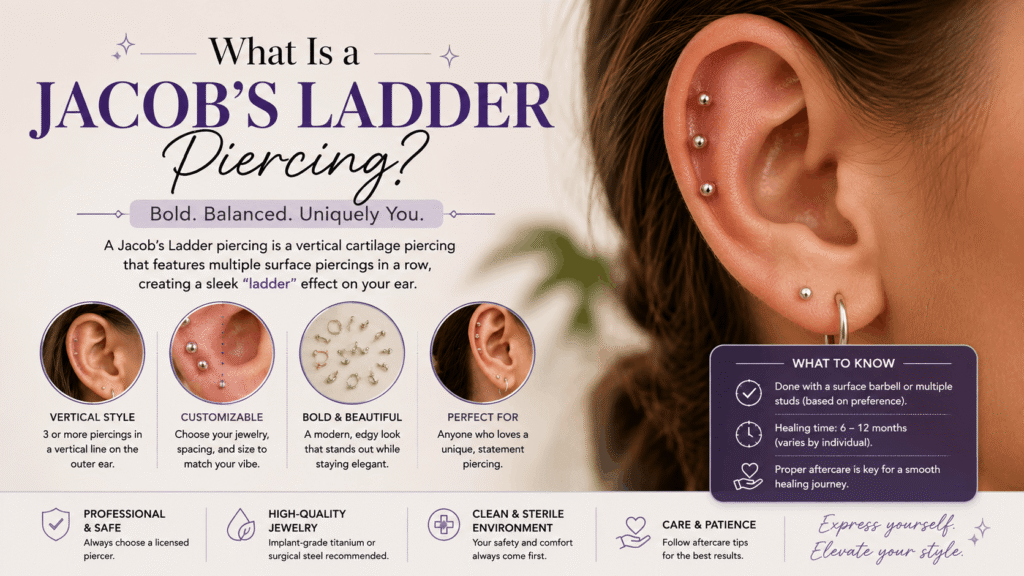
A Jacob’s Ladder piercing is an intimate male genital piercing that consists of multiple surface piercings placed vertically along one side—or sometimes both sides—of the shaft. The number of piercings can vary depending on personal preference and anatomy.
Unlike a single piercing, Jacob’s Ladder is a collection of individual piercings that create a ladder-like appearance, which is where the name comes from.
Because this is a specialized piercing, it should only be performed by an experienced professional who has knowledge of intimate body piercings.
Why Is It Called Jacob’s Ladder?📍
The name comes from the ladder-like arrangement of multiple piercings. It is inspired by the biblical story of “Jacob’s Ladder,” which describes a ladder reaching between earth and heaven.
In body piercing, the name simply refers to the visual pattern created by the piercings rather than having any religious purpose.
Who Can Get a Jacob’s Ladder Piercing?❓
Not everyone is a suitable candidate for this piercing. A professional piercer will examine your anatomy before deciding whether the procedure is appropriate.
You may be a good candidate if you:
- Are at least 18 years old (or meet your local legal age requirements)
- Are in good overall health
- Have healthy skin in the piercing area
- Understand the healing process
- Are willing to follow aftercare instructions carefully
A consultation with an experienced piercer is the best way to determine if this piercing is right for you.
How Is the Piercing Procedure Done?💉
The procedure is usually performed one piercing at a time. Some people choose to get only two or three piercings initially and add more later after healing.
Consultation
The piercer discusses your goals, explains the procedure, and checks whether your anatomy is suitable.
Cleaning the Area
The skin is thoroughly cleaned using a professional antiseptic solution to reduce the risk of infection.
Marking the Placement
Each piercing location is carefully marked to ensure proper spacing and alignment.
Piercing
A sterile, single-use needle is used to create each piercing. Professional studios never use piercing guns for intimate piercings.
Jewelry Placement
After each piercing is completed, appropriate jewelry is inserted immediately.
The entire appointment may take longer than a standard piercing because several piercings may be done during the same visit.
Does a Jacob’s Ladder Piercing Hurt?⚖️
Pain is different for everyone, so there is no exact answer.
Because this is an intimate area with many nerve endings, most people describe the pain as moderate to high. However, the piercing itself usually lasts only a few seconds.
Factors that affect pain include:
- Individual pain tolerance
- Number of piercings
- Piercer’s experience
- Your body’s sensitivity
- Stress and anxiety levels
Many people say the anticipation is worse than the actual procedure.
How Long Does It Take to Heal?⏳
Healing time depends on several factors, including the number of piercings, your body’s healing ability, and how well you follow aftercare instructions.
In general:
- Initial healing may take several weeks.
- Complete healing often takes several months.
- Healing may take longer if multiple piercings are done at once.
Your piercer will monitor the healing process and advise when the piercings are fully healed.
What Jewelry Is Used?💍
Choosing the right jewelry is important for comfort and healing.
Straight Barbells
Straight barbells are one of the most common choices because they provide stability during healing.
Curved Barbells
Some people prefer curved barbells depending on their anatomy and comfort.
Titanium Jewelry
Implant-grade titanium is one of the safest materials because it is lightweight, durable, and suitable for people with sensitive skin.
Surgical Steel
High-quality surgical steel is another popular option, although some people with metal sensitivities may prefer titanium.
Your piercer will recommend the best jewelry based on your anatomy and healing needs.
How Much Does a Jacob’s Ladder Piercing Cost?💰
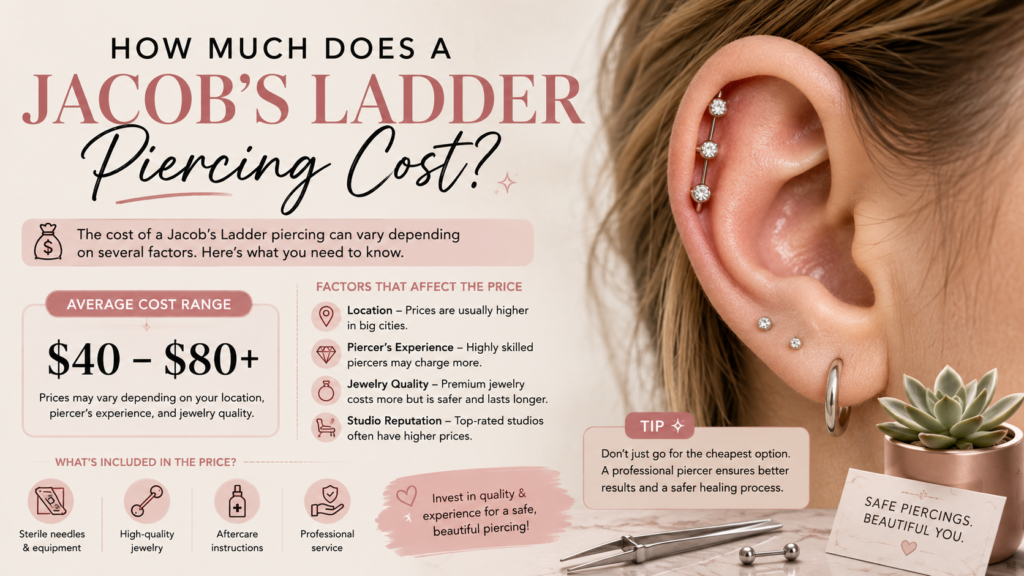
The cost varies depending on:
- Your location
- The experience of the piercer
- The quality of the jewelry
- The number of piercings performed
- The reputation of the studio
Remember that choosing an experienced professional is more important than finding the cheapest price. High-quality jewelry and proper sterilization are worth the investment.
Benefits of a Jacob’s Ladder Piercing✨
People choose this piercing for different personal reasons.
Unique Appearance
The ladder-like design gives this piercing a distinctive look that stands out from more common body piercings.
Personal Expression
Many people see intimate piercings as a form of self-expression and body confidence.
Customizable Design
The number and placement of piercings can often be adjusted based on personal preference and anatomy.
Long-Term Style
With proper care, healed piercings can remain in place for many years.
Possible Risks and Complications⚠️
Like any body piercing, a Jacob’s Ladder piercing carries some risks.
Possible complications include:
- Infection
- Swelling
- Bleeding
- Jewelry rejection
- Migration
- Allergic reactions to certain metals
- Delayed healing
These risks can be reduced by choosing an experienced piercer and following proper aftercare instructions carefully.
Jacob’s Ladder Piercing Aftercare⚖️
Proper aftercare is the most important part of the healing process. Even if the piercing is done perfectly, poor aftercare can increase the risk of irritation or infection.
Follow these tips to help your piercing heal safely:
Clean the Area Gently
Use a sterile saline solution or the aftercare product recommended by your piercer. Clean the piercing gently without scrubbing the skin.
Wash Your Hands First
Always wash your hands with soap and water before touching the jewelry or cleaning the piercing. Dirty hands can introduce bacteria and slow healing.
Wear Comfortable Clothing
Choose loose, breathable clothing that reduces friction and pressure on the piercing area. Tight clothing can cause irritation and discomfort.
Leave the Jewelry in Place
Do not remove or change the jewelry until your piercer confirms that the piercing has fully healed. Removing jewelry too early may cause the piercing to close or become irritated.
Follow Your Piercer’s Advice
Every person’s body heals differently. Follow the aftercare instructions given by your professional piercer and attend any recommended follow-up appointments.
Signs of Healthy Healing⏳
Knowing what normal healing looks like can help you avoid unnecessary worry.
During the healing process, you may notice:
- Mild swelling during the first few days
- Slight redness around the piercing
- Clear or light-colored fluid that dries into a small crust
- Minor tenderness when the area is touched
- Gradual improvement over time
These signs are usually a normal part of healing and should slowly decrease.
Signs of Infection💉
While some discomfort is expected, certain symptoms may indicate an infection or another complication.
Watch for signs such as:
- Severe or worsening pain
- Excessive swelling that does not improve
- Thick yellow or green discharge with a bad smell
- Skin that feels unusually hot to the touch
- Fever or feeling generally unwell
- Increasing redness spreading beyond the piercing site
If you experience these symptoms, contact your piercer or a qualified healthcare professional as soon as possible. Avoid removing the jewelry unless advised by a professional, as doing so may trap an infection inside the piercing.
Things to Avoid During Healing⏳
Your daily habits can affect how quickly your piercing heals.
Touching the Piercing Unnecessarily
Only touch the piercing when cleaning it. Frequent handling can transfer bacteria and cause irritation.
Using Harsh Products
Avoid alcohol, hydrogen peroxide, and strong antiseptics unless specifically recommended. These products may dry out the skin and delay healing.
Swimming Too Soon
Pools, hot tubs, lakes, and oceans may contain bacteria that increase the risk of infection. Wait until your piercer says it is safe.
Tight Clothing
Clothing that rubs against the jewelry may cause discomfort and slow healing.
Changing Jewelry Early
Wait until the piercing is fully healed before replacing the jewelry. Your piercer can safely perform the first jewelry change if needed.
When to Contact a Professional❓
You should contact your piercer or a healthcare provider if:
- Swelling becomes worse instead of better.
- Bleeding continues longer than expected.
- The jewelry appears to be moving out of the skin.
- You develop signs of infection.
- You have questions about healing or aftercare.
Getting professional advice early can help prevent more serious problems.
Pros and Cons of a Jacob’s Ladder Piercing🏆
Like any body modification, this piercing has both advantages and disadvantages.
Pros
- Unique and eye-catching appearance
- Can be customized with multiple piercings
- Allows different jewelry styles after healing
- A form of personal expression
- Can last for many years with proper care
Cons
- Healing may take several months.
- Requires careful daily aftercare.
- Multiple piercings can increase healing time.
- There is a risk of infection, rejection, or migration.
- It should only be performed by an experienced professional.
Understanding both the benefits and drawbacks can help you decide whether this piercing is right for you.
Final Thoughts
A Jacob’s Ladder piercing is a specialized form of body piercing that requires careful planning, professional placement, and consistent aftercare. While its unique appearance makes it appealing to some people, it is also one of the more advanced intimate piercings and should never be done by someone without proper experience.
Before making your decision, research reputable piercing studios, ask questions during your consultation, and be prepared to follow the full healing process. Choosing high-quality jewelry, maintaining good hygiene, and being patient during recovery will give you the best chance of a smooth healing experience.





One Comment