Clown makeup is a creative form of face makeup that can range from colorful and playful designs to theatrical and dramatic looks. It is commonly associated with circus performances, stage shows, costume parties, festivals, photography, and creative makeup projects. While the classic clown look often includes a pale face, bold eyes, colorful lips, and exaggerated facial features, modern clown makeup can be customized in countless ways.
Creating a good clown makeup look does not necessarily require professional-level skills. With a few basic products, suitable brushes, and some practice, beginners can learn to create simple designs and gradually experiment with more detailed styles.
What Is Clown Makeup? 🤡
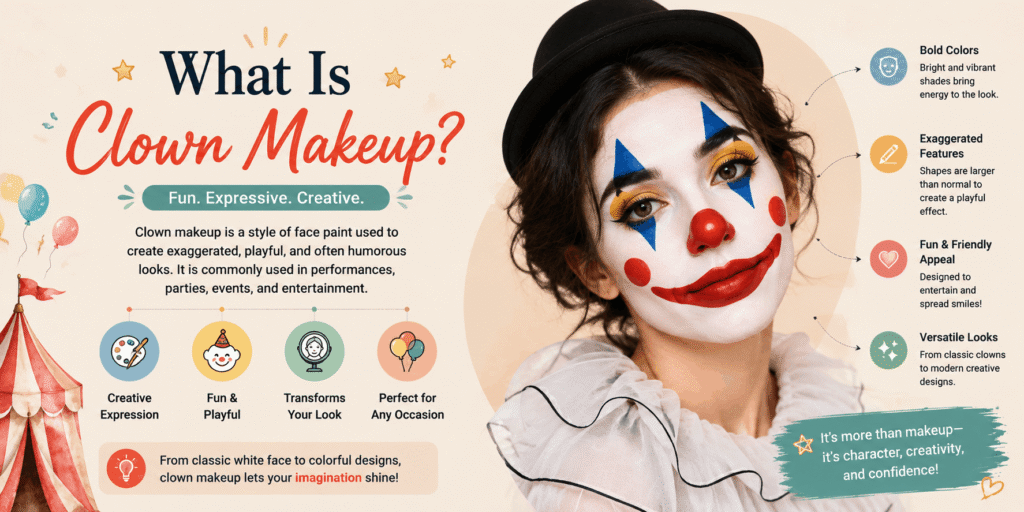
Clown makeup is designed to exaggerate facial features so that expressions remain visible from a distance or create a distinctive artistic appearance.
Traditional clown designs often use strong contrasts, bright colors, and defined shapes. Modern versions can be much more varied, including minimalist, glamorous, colorful, vintage-inspired, or artistic designs.
The Main Features of Clown Makeup
Common elements include:
- Pale or light-colored base
- Defined eyebrows
- Exaggerated eye shapes
- Colorful eyeshadow
- Bold lips
- Painted cheeks
- Decorative lines or shapes
- Glitter or face-safe accents
Not every clown makeup look needs to include all of these features.
Why Is Clown Makeup Popular? 🎭
Clown makeup allows people to transform their appearance without needing complicated costumes. A few carefully placed shapes can completely change the overall look.
It is also highly customizable, making it suitable for Halloween, theatrical performances, costume events, photoshoots, and creative content.
Types of Clown Makeup 🎨
There are many different approaches to clown makeup.
Classic Clown Makeup
The classic style usually features a light face, strongly defined eyes, bright cheeks, and an exaggerated lip shape.
The goal is often to create a cheerful and recognizable character.
Glam Clown Makeup
Glam clown makeup combines theatrical elements with modern beauty techniques.
You might see carefully blended eyeshadow, eyeliner, glitter, highlighted features, and a more polished lip design.
Colorful Clown Makeup
This version focuses on bright shades and creative color combinations.
Different colors can be used around the eyes, cheeks, lips, and forehead to create a playful appearance.
Minimal Clown Makeup
A minimalist look uses fewer products and simpler shapes.
Instead of covering the entire face, you might create a small painted nose, dramatic eyeliner, or a few decorative lines.
How to Prepare for Clown Makeup 🧼
Preparation can make the application smoother and help the makeup sit more comfortably.
Start With Clean Skin
Begin with clean skin and remove excess oil or residue.
A gentle skincare routine can help create a comfortable base for makeup.
Moisturize
A suitable moisturizer can help prevent the skin from feeling excessively dry under makeup.
Allow skincare products to absorb before applying your makeup base.
Use a Suitable Primer
Primer can help create an even surface for makeup.
Choose a product appropriate for your skin type and the makeup products you plan to use.
Essential Clown Makeup Products 💄
You do not need every product available to create a clown look.
Face Paint or Cosmetic Makeup
Use products specifically designed for application to the face. Avoid using craft paint or other products that are not intended for skin.
White or light-colored face makeup is commonly used for traditional clown designs.
Eyeliner
Black or colorful eyeliner can help create exaggerated shapes around the eyes.
Liquid eyeliner can be useful for sharp lines, while pencil formulas may be easier for beginners to control.
Eyeshadow
Bright eyeshadow can add color and dimension.
You can use one shade for a simple design or combine several shades for a more artistic appearance.
Lip Color
Bold lip colors are common in clown makeup.
Red is a traditional choice, but modern designs can use pink, purple, blue, or other cosmetic shades.
Brushes and Sponges
Different brushes can help create different effects.
Small detail brushes are useful for lines and small shapes, while larger brushes or cosmetic sponges can help apply base makeup.
How to Create a Basic Clown Makeup Look 🖌️
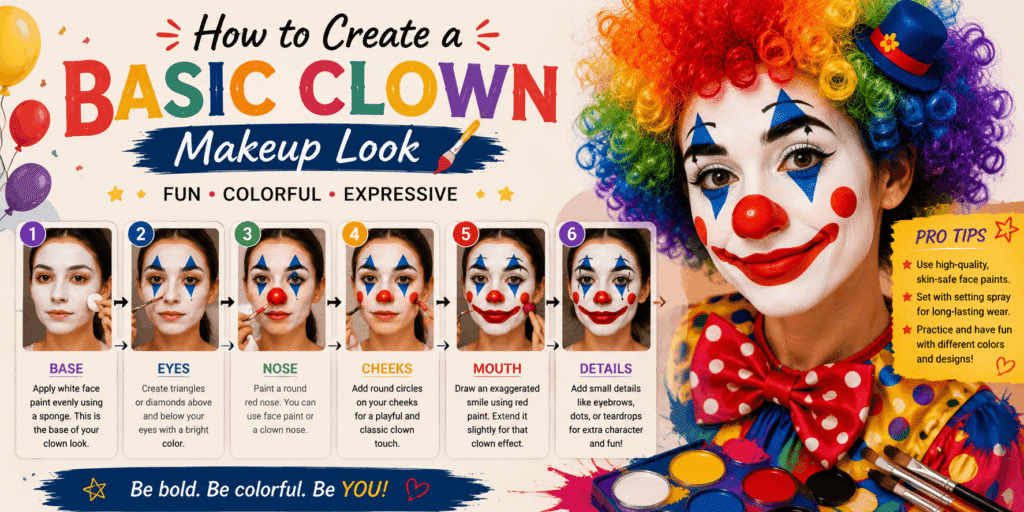
Beginners can start with a simple design before attempting complex patterns.
Step 1: Apply the Base
Apply your chosen face makeup evenly across the areas you want to cover.
For a traditional clown appearance, a white or pale base can create a strong contrast with the colorful details.
Avoid applying excessive product around sensitive areas such as the eyes.
Step 2: Define the Eyes
Use eyeliner to create an exaggerated shape around the eyes.
You can extend the lines upward or downward to create a theatrical effect.
Keep the design balanced by checking both sides as you work.
Step 3: Add Color
Apply colorful eyeshadow or face-safe cosmetic colors around the eye area.
Blend where appropriate, but keep decorative shapes defined if you want a graphic look.
Step 4: Create the Nose
A painted red or colorful nose is one of the most recognizable clown features.
You can create a simple rounded shape or a more artistic design depending on your chosen style.
Step 5: Define the Lips
Apply a bold lip color and extend the shape slightly if your design calls for an exaggerated clown mouth.
Use a small brush to create cleaner edges.
Step 6: Add Decorative Details
Finally, add lines, dots, stars, diamonds, hearts, or other decorative shapes.
This is where you can personalize the look.
Easy Clown Makeup for Beginners 🌈
If you are new to face painting, start with simple shapes.
Simple Eye Design
Create a small triangle or curved shape around each eye using face-safe makeup.
Add eyeliner around the edges and fill the shape with a bright cosmetic color.
Simple Cheek Design
A small circle or heart on each cheek can create a recognizable clown-inspired appearance without requiring advanced techniques.
Simple Lip Design
Use a bold lip color and slightly exaggerate the corners for a theatrical effect.
These simple elements can be combined into a complete look.
How to Make Clown Makeup Look Symmetrical ⚖️
Symmetry can be challenging when painting directly onto the face.
Work Slowly
Avoid rushing the design. Apply one side first, then use it as a reference when creating the second side.
Use Small Guidelines
You can lightly mark where you want major shapes to go before filling them in.
This can help keep the overall design balanced.
Check Your Makeup From a Distance
A design can look symmetrical up close but appear different when viewed from farther away.
Use a mirror and check the overall appearance throughout the application.
Choosing Clown Makeup Colors 🌈
Color selection can completely change the character of your makeup.
Traditional Colors
Classic clown designs often use combinations of white, red, black, and bright accent colors.
Pastel Colors
Pastel pink, blue, lavender, and mint can create a softer aesthetic.
Bold Colors
Bright primary or neon-inspired cosmetic colors can create a more energetic appearance.
When combining colors, choose shades that provide enough contrast for the design to remain visible.
Clown Makeup for Different Occasions 🎉
Clown makeup can be adapted depending on where you plan to wear it.
Halloween
Halloween is one of the most common occasions for dramatic clown makeup.
You can create a simple costume-friendly design or a highly detailed artistic look.
Costume Parties
For a costume party, consider matching your makeup colors with your outfit.
A coordinated look can make the entire costume appear more complete.
Stage Performances
Stage clown makeup may need stronger shapes and colors so that facial features remain visible from a distance.
The specific makeup requirements depend on lighting, performance distance, and venue.
Common Clown Makeup Mistakes ⚠️
Beginners often make a few mistakes when creating their first look.
Using Products Not Designed for Skin
Never assume that every colorful paint is safe for facial use.
Use cosmetic products or face paints specifically labeled for skin application.
Applying Too Much Product
Heavy layers can feel uncomfortable and may become difficult to remove.
Build coverage gradually instead of applying a large amount at once.
Making Both Sides Too Different
Asymmetry can happen easily when creating detailed face designs.
Use reference points and work slowly to improve balance.
Removing Clown Makeup 🧴
Removing theatrical or colorful makeup requires patience.
Start With a Suitable Makeup Remover
Use a makeup remover designed for the products you applied.
Avoid aggressive scrubbing, particularly around the eyes.
Cleanse Gently
After removing the majority of the makeup, gently cleanse the skin.
Follow with a suitable moisturizer if your skin feels dry.
Clown makeup can be adapted far beyond the traditional red nose and white face. Once you understand the basic techniques, you can experiment with different colors, shapes, textures, and levels of detail. The same basic products can create a playful costume look, a theatrical design, or a colorful artistic style.
The key is to choose a design that matches the occasion and your comfort level. You do not need advanced makeup skills to create an impressive result. Starting with simple shapes and gradually adding details can make the process much easier.
Creative Clown Makeup Ideas 🎨
There are many ways to personalize clown makeup and create a style that feels unique.
Rainbow Clown Makeup 🌈
A rainbow-inspired design can use several bright cosmetic colors around the eyes and cheeks.
You can create small colored shapes or blend different shades into a larger design. Keep the colors balanced so the main features remain visible.
Pastel Clown Makeup 🩷
Pastel shades can create a softer interpretation of traditional clown makeup.
Pink, lavender, light blue, peach, and mint can be combined with white or neutral makeup for a playful appearance.
Adding Small Decorative Details ✨
Tiny stars, dots, hearts, or curved lines can make a pastel design more interesting without making it overly complicated.
Glam Clown Makeup 💄
Glam clown makeup combines theatrical shapes with techniques commonly used in beauty makeup.
You might use carefully blended eyeshadow, defined eyeliner, cosmetic glitter, highlighted areas, and a bold lip.
The theatrical elements can remain around the eyes, nose, and mouth while the rest of the makeup stays polished.
Matching Clown Makeup With a Costume 🎭
Makeup and clothing can work together to create a more complete character.
Coordinate Your Colors 🎨
If your costume has specific colors, consider using similar shades in your makeup.
For example, a colorful outfit can be paired with matching eye or cheek details.
Consider the Overall Character
Think about the mood you want your character to communicate.
A cheerful design might use bright colors and rounded shapes, while an artistic character could use unusual color combinations and graphic lines.
Clown Makeup for Photography 📸
Clown makeup can look especially interesting in photographs because bold shapes and colors can create strong visual contrast.
Use Defined Shapes
Small details may not be noticeable in photographs, particularly when the camera is farther away.
For photography, consider making important design elements slightly more defined while keeping the makeup balanced.
Test the Look Before the Shoot
Take a few test photographs before the main session.
This allows you to see whether the colors and shapes appear as intended under the available lighting.
Clown Makeup for Stage Performances 🎬
Stage makeup may require stronger definition than everyday costume makeup.
Consider Stage Lighting
Bright stage lights can make subtle makeup details less visible.
Bold outlines and clearly defined shapes can help facial expressions remain noticeable from a distance.
Avoid Overcomplicating the Design
A complicated design is not always better for a performance.
Choose a few recognizable features and make them clear enough to work with the stage environment.
How to Make Clown Makeup Last Longer
If you are wearing clown makeup for several hours, preparation can help.
Start With a Suitable Base
Clean skin and appropriate makeup preparation can provide a better surface for application.
Allow skincare products to settle before applying face makeup.
Apply Thin Layers
Rather than applying one very thick layer, build coverage gradually.
Thin layers can make the finished makeup feel more manageable and may reduce the chance of excessive product buildup.
Set Appropriate Areas
Depending on the makeup products you use, a cosmetic setting product may help improve longevity.
Follow the instructions for the specific makeup rather than applying excessive setting powder or spray.
Keeping Clown Makeup Comfortable 😊
Comfort is important when wearing face makeup for extended periods.
Avoid Sensitive Areas
Be particularly careful around the eyes and lips.
Use only products intended for those areas and follow their application instructions.
Take Breaks When Appropriate
If you are wearing makeup for a long event and experience significant discomfort, remove it rather than continuing to wear it.
Do not ignore persistent irritation.
Safe Product Choices 🛡️
One of the most important rules when creating clown makeup is using products intended for cosmetic use.
Use Face-Safe Makeup
Face paints should be specifically labeled for skin application.
Do not substitute craft paint, markers, or other materials that were not designed for use on the face.
Check Product Instructions
Read the manufacturer’s directions before applying a new product.
If you have sensitive skin or known allergies, check the ingredient information carefully.
Patch Testing
If a product is new to you, follow the manufacturer’s recommendations regarding testing it on a small area before using it more broadly.
If irritation occurs, remove the product and discontinue use.
Clown Makeup for Beginners 🤡
Beginners do not need to create an elaborate design immediately.
Start With Three Main Features
Choose three recognizable elements, such as:
- Light face base
- Defined eye design
- Bold lips or nose
Once you are comfortable with those elements, add additional decorative details.
Practice Before the Event
If you are creating clown makeup for Halloween or another important occasion, practice beforehand.
A practice session lets you determine which products work well together and how long the application takes.
How to Create Cleaner Lines ✍️
Sharp lines can make theatrical makeup look more polished.
Use Small Brushes
A small detail brush can give you more control when creating thin decorative lines.
Work in Short Sections
Instead of trying to draw one very long line perfectly, work in smaller sections.
This can make it easier to correct mistakes.
Correct Mistakes Carefully
If a line is uneven, use a suitable makeup remover or clean tool to correct the specific area rather than wiping away the entire design.
Adding Glitter to Clown Makeup ✨
Glitter can add a dramatic effect, but it should be used carefully.
Choose Cosmetic Glitter
Only use glitter products that are specifically intended for cosmetic use.
Avoid craft glitter, especially around the eyes.
Keep Glitter Away From the Eyes
Even cosmetic glitter should be applied according to the manufacturer’s instructions and kept away from areas where it could enter the eyes.
If you experience eye irritation, stop using the product and remove it carefully.
Removing Clown Makeup 🧼
After an event, remove the makeup gently rather than scrubbing the skin aggressively.
Use a suitable makeup remover for the products you applied, then cleanse the skin gently. If your skin feels dry afterward, you can follow with a suitable moisturizer.
Final Thoughts 🎪
Clown makeup offers plenty of room for creativity. From classic designs to rainbow, pastel, glam, and artistic styles, small changes in color and shape can create completely different results.
For beginners, the best approach is to start with a few simple features and practice before an important event. Use only products designed for cosmetic application, follow product instructions, and take care around sensitive areas such as the eyes.
With practice and thoughtful product choices, clown makeup can become an enjoyable way to explore creative face painting while creating a look suited to your costume, performance, photography session, or personal style.