Floral perfume is one of the most versatile fragrance choices because it can smell fresh, soft, romantic, powdery, or rich depending on the flowers and other notes in its composition. From delicate rose fragrances to creamy white-flower blends, these perfumes offer a wide range of scents for different personalities, seasons, and occasions. The key to finding the right floral perfume is understanding how its notes smell, how they develop on your skin, and which combinations suit your preferences.
Whether you prefer a light fragrance for everyday wear or a more noticeable scent for special occasions, floral perfumes offer plenty of options. You do not have to choose a fragrance simply because it contains your favorite flower. The overall blend, concentration, and way the perfume interacts with your skin can make a significant difference.
What Makes Floral Perfume So Appealing?
Floral perfume is a fragrance category built around the scent of flowers. Some compositions focus on one prominent flower, while others combine several floral notes to create a layered fragrance. Many also include citrus, fruit, woods, musk, spices, or sweet ingredients to add depth and balance.
A floral fragrance does not always smell like a fresh bouquet. It might remind you of rose petals after rain, a garden filled with blooming flowers, freshly washed fabric, or a warm evening surrounded by fragrant blossoms. Some floral perfumes are airy and subtle, while others are dense, creamy, and intense.
One reason this category remains popular is its flexibility. Floral notes can work beautifully in fresh daytime perfumes, elegant evening fragrances, and comforting scents for cooler weather. The same flower can also smell different depending on the ingredients surrounding it. Rose paired with citrus may feel bright and refreshing, while rose blended with amber and woods can become warmer and more sensual.
Floral perfumes also vary in their overall personality. A green floral fragrance may smell crisp and natural, whereas a powdery floral perfume can feel soft and nostalgic. Fruity florals often have a playful character, while white-flower compositions can be creamy, bold, or tropical.
Understanding these differences helps you look beyond the word floral on a perfume label. Instead of assuming every floral scent will smell similar, you can choose a composition that matches your taste and the way you want your fragrance to feel.
Popular Floral Notes and How They Smell
The flowers used in floral perfume contribute different qualities to a fragrance. Learning their general characteristics can help you narrow your choices, although the final scent always depends on the complete formula.
Rose: Classic, Romantic, and Versatile
Rose is one of the most recognizable notes in perfumery. Depending on the composition, it can smell fresh, dewy, green, sweet, spicy, or richly velvety. A light rose perfume may feel delicate and clean, while a deeper blend can create a more dramatic impression.
Rose works particularly well with citrus, musk, patchouli, and woody notes. Citrus can brighten its character, while musk may give it a softer finish. Patchouli and woods can make the fragrance feel deeper and more suitable for evening wear.
If you enjoy elegant fragrances that do not feel overly sugary, rose is worth exploring. However, rose perfumes are not all alike. Testing a few different compositions is often more useful than deciding whether you like the note based on a single fragrance.
Jasmine: Creamy, Lush, and Expressive
Jasmine is commonly used to add richness and a noticeable floral character. Its fragrance can feel sweet, creamy, fresh, or intensely white-floral, depending on how it is blended.
In lighter compositions, jasmine may contribute a clean, airy impression. In richer perfumes, it can create a fuller scent that feels especially suited to evenings or special occasions. Jasmine is also frequently paired with orange blossom, tuberose, citrus, and warm woods.
Because some jasmine fragrances are quite powerful, people who prefer subtle perfumes may want to test the scent on their skin before buying a full bottle. A composition that smells balanced on a paper strip may develop differently after several hours of wear.
Peony: Soft, Fresh, and Airy
Peony is often associated with light, modern floral fragrances. Its scent is commonly presented as fresh, delicate, and slightly rosy, making it appealing to people who prefer understated perfumes.
Peony frequently appears alongside rose, apple, citrus, or clean musky notes. These combinations can produce a bright fragrance that works well for everyday activities, casual outings, and warmer weather.
If traditional floral perfumes seem too heavy to you, a peony-centered composition may be a comfortable starting point. Look for descriptions that mention freshness, dewy petals, or soft florals rather than intense white flowers or heavy amber.
Lavender: Aromatic and Relaxed
Lavender has a distinctive aromatic character that can make a floral fragrance feel cleaner, greener, and more herbal. Although it is often associated with calming home products, lavender is also used in sophisticated perfumes for all genders.
When combined with citrus, lavender can create a crisp opening. With woods or musk, it may develop into a smooth, understated fragrance. Some blends lean toward herbal freshness, while others incorporate lavender into a more traditional floral composition.
Lavender is a useful choice for people who enjoy flowers but want something less sweet or traditionally romantic.
Orange Blossom: Bright and Elegant
Orange blossom offers a floral scent that can feel fresh, citrusy, sweet, or creamy. It is often used in perfumes designed to balance brightness with softness.
This note works well with bergamot, neroli, jasmine, musk, and vanilla. A citrus-led orange blossom fragrance may be particularly appealing in spring and summer, while a warmer composition can feel suitable throughout the year.
Orange blossom is also a good option for people who enjoy clean, polished fragrances with a noticeable floral element without wanting a perfume that smells like a single flower.
Tuberose: Rich and Creamy
Tuberose is known for its powerful white-floral character. In perfume, it can smell creamy, sweet, lush, and sometimes slightly green. It often creates a stronger impression than lighter floral notes.
Tuberose works well in evening fragrances and compositions that combine white flowers with vanilla, woods, amber, or other warm ingredients. However, its intensity varies between perfumes, so the note should not automatically be considered overpowering.
If you enjoy fragrances that feel expressive and memorable, tuberose may be worth testing. Those who prefer very light scents may find a tuberose blend more comfortable when it is balanced with fresh or musky notes.
Different Styles of Floral Perfume
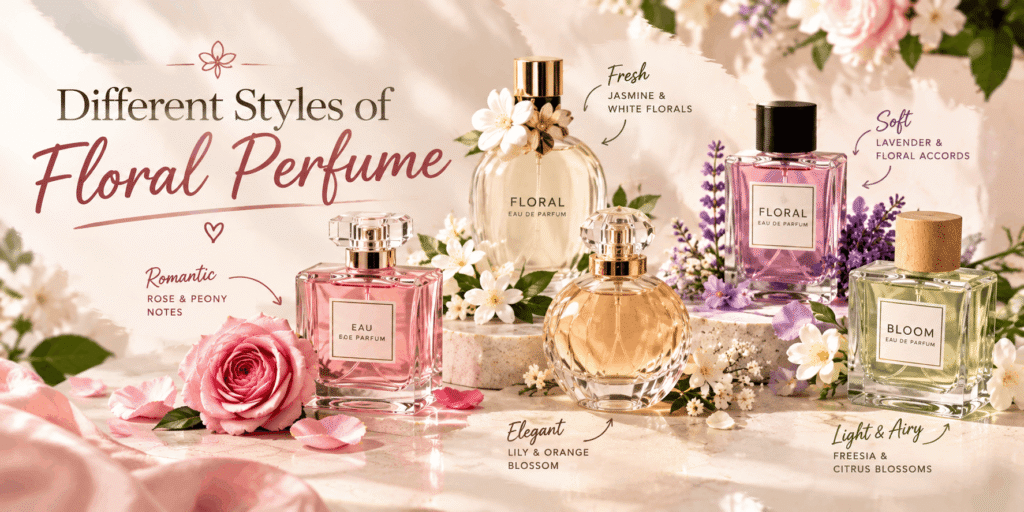
Not every floral perfume belongs to the same scent family. Some are built around flowers alone, while others combine floral notes with fruit, sweetness, woods, or fresh ingredients. Recognizing these styles makes fragrance shopping easier.
Fresh floral perfumes combine delicate flower notes with clean, green, or citrus elements. They often create a light and refreshing impression without feeling too sweet. These fragrances can work well for daytime wear, particularly when you want something noticeable but not overly rich.
Fruity floral perfumes blend flowers with notes such as pear, peach, berries, apple, or other fruit-inspired accords. The result can feel juicy, playful, and modern. Depending on the composition, fruity florals may range from crisp and sparkling to sweet and creamy.
Powdery floral perfumes have a soft, smooth quality that may remind you of cosmetic powder or delicate fabric. Iris, violet, rose, and musk can contribute to this impression. These fragrances may appeal to people who prefer understated elegance rather than sharp freshness or strong sweetness.
White-floral perfumes often feature flowers such as jasmine, tuberose, gardenia, and orange blossom. They can be creamy, lush, tropical, or intensely floral. Some are light enough for daytime use, while others have the depth and presence associated with evening fragrances.
Woody floral perfumes combine flowers with ingredients such as sandalwood, cedar, or patchouli. Woods can add warmth and structure, helping a floral composition feel deeper and less delicate. This style may suit people who enjoy floral notes but want a more grounded fragrance.
Sweet floral perfumes incorporate vanilla, tonka-like accords, honeyed notes, or other sweet ingredients. They may smell warm, soft, or dessert-like depending on the formula. If you dislike overly sugary scents, look for sweet florals balanced with citrus, green notes, or woods.
These categories can overlap. A single perfume might be a fruity floral with a powdery finish or a white-floral fragrance with a woody base. Rather than relying entirely on labels, pay attention to the notes and descriptions that match scents you already enjoy.
How to Choose a Floral Perfume That Suits You
The most suitable floral perfume is not necessarily the most expensive, popular, or long-lasting option. It is the fragrance that feels comfortable on your skin and fits the situations in which you plan to wear it.
Start by considering your fragrance preferences. If you usually enjoy fresh body washes, light citrus scents, or clean laundry-inspired fragrances, a fresh floral may be a natural choice. If you prefer warm, sweet perfumes, look for floral compositions containing vanilla, amber, or creamy notes. People who enjoy earthy fragrances may prefer rose or jasmine blended with patchouli and woods.
Think about how noticeable you want your perfume to be. A soft fragrance that stays close to the skin can be suitable for shared workspaces, classrooms, and everyday errands. A richer composition may be more appealing for celebrations or evening outings, although a strong fragrance should still be applied thoughtfully.
Your daily routine matters, too. If you spend a lot of time outdoors, you might prefer a fresh floral that feels comfortable in warm conditions. If you work in an air-conditioned environment or frequently attend evening events, you may enjoy a more rounded composition with musk or woods.
Do not choose a perfume based solely on its opening. Fragrances change as they develop, and the first few minutes may not represent the scent you will experience later. A perfume that initially smells sharp or citrusy may become soft and musky, while a sweet opening may settle into a deeper floral base.
Whenever possible, test a fragrance on your skin and give it time to develop. If you are comparing several perfumes, try one or two at a time rather than spraying many scents together. This makes it easier to notice differences without overwhelming your sense of smell.
Finally, consider your budget and how often you will wear the fragrance. A versatile perfume that you enjoy regularly may offer more value than a bottle purchased mainly because it is trending. If you are unsure, a sample or travel-size bottle can help you decide before investing in a larger size.
Floral Perfume for Different Seasons and Occasions
Although people often associate floral perfumes with spring, they can be worn throughout the year. The best choice depends on the composition, weather, setting, and your personal comfort.
During spring, fresh rose, peony, orange blossom, and green floral fragrances can complement the feeling of blooming gardens. Look for compositions that combine petals with citrus or green notes if you want something bright and airy.
Summer may call for lighter florals, especially in hot or humid weather. Fresh jasmine, delicate peony, citrus-led orange blossom, and clean floral musk can feel comfortable when used sparingly. Very sweet or dense fragrances may become more noticeable in heat, so consider applying less rather than assuming you need a different perfume.
Autumn offers an opportunity to explore deeper floral blends. Rose with woods, jasmine with amber, or powdery florals with musk can create a warmer impression. These compositions often work well with the richer textures and layered clothing associated with cooler weather.
In winter, creamy white florals and warm floral fragrances may feel especially appealing. Vanilla, woods, amber, and soft musks can give a floral perfume more depth. However, a fresh fragrance can still work beautifully in cold weather if that is what you enjoy.
For everyday wear, choose a scent that does not distract you or the people around you. A light floral perfume may be suitable for work, shopping, casual meetings, or daytime outings. For weddings, dinners, and celebrations, you might prefer a more distinctive rose, jasmine, or tuberose composition.
There is no strict rule that certain flowers belong to specific seasons or events. A light perfume can be elegant in the evening, and a richer fragrance can work during the day when applied moderately. Your comfort and the setting should guide the decision.
Understanding Perfume Notes, Strength, and Longevity
When shopping for floral perfume, you will often see descriptions of top, middle, and base notes. These terms explain how a fragrance is structured as it develops.
Top notes are the scents you notice soon after application. They often include bright or fresh ingredients such as citrus and light aromatic notes. Because they are usually more volatile, they tend to fade sooner than the deeper parts of the composition.
Middle notes, also called heart notes, form much of the fragrance’s central character. Floral ingredients such as rose, jasmine, peony, and orange blossom commonly appear here. The heart becomes more noticeable as the opening settles.
Base notes provide depth and help shape the fragrance’s lasting impression. Woods, musk, amber accords, and vanilla-like notes may contribute warmth or softness. The final result depends on the interaction of all the ingredients rather than any single note.
Perfume concentration can also influence how a fragrance performs. Eau de parfum and eau de toilette are common product categories, but concentration labels do not guarantee a particular level of strength or longevity. Different formulas use different ingredients, and some lighter compositions last longer than you might expect.
Skin chemistry, weather, application, and the fragrance formula can all affect performance. A floral perfume may last several hours on one person but fade more quickly on another. This is why personal testing is more reliable than assuming a fragrance will perform identically for everyone.
It is also important to distinguish projection from longevity. Projection describes how far a fragrance can be noticed by others, while longevity refers to how long it remains detectable. A perfume can last for many hours while staying close to the skin, or it can project strongly during its opening and then become subtle.
If you want a fragrance that lasts, explore its performance through a sample rather than judging it only by the concentration printed on the bottle.
How to Apply Floral Perfume for a Pleasant, Lasting Scent
Applying perfume thoughtfully can help you enjoy its character without using more than necessary. Start with clean skin and use a small amount. You can always add another spray later if the fragrance feels too subtle.
Many people apply perfume to pulse points, such as the wrists or sides of the neck. These areas can help make the scent noticeable, but applying perfume there is not essential. You can choose another suitable area depending on your preference and the fragrance’s strength.
Moisturized skin may help some fragrances remain noticeable for longer. If you use body lotion, choose an unscented formula or one that complements your perfume. Strongly scented lotions can change the overall fragrance experience by introducing competing notes.
Avoid rubbing your wrists together after spraying. Rubbing can alter how the fragrance develops at the surface and may make it harder to observe its natural progression. Allow the perfume to dry on its own.
Clothing can retain fragrance, but always check the fabric and product instructions first. Some perfumes may leave marks or affect delicate materials. Avoid spraying directly onto silk, light-colored fabrics, or other sensitive materials unless you know the product is suitable.
For hot weather, shared spaces, or close-contact settings, begin with fewer sprays. A floral fragrance that smells delicate in an open room may feel much stronger in a small office, car, or crowded venue.
Do not repeatedly reapply perfume simply because you can no longer smell it on yourself. Your nose may become accustomed to a scent after wearing it for a while, a process known as olfactory adaptation. Other people may still be able to notice it. Give the fragrance time before deciding whether another application is needed.
If perfume causes irritation, stop using it on the affected area. Fragrance ingredients can trigger reactions in some people, and applying more product will not solve the problem. People with sensitive skin may prefer spraying on clothing when appropriate, following product directions, or avoiding fragrances that cause symptoms.
Common Mistakes to Avoid When Buying Floral Perfume
One common mistake is buying a perfume because it smells wonderful on someone else. Fragrances can develop differently across skin types, and your preferences may not match another person’s. If possible, test the perfume yourself before purchasing it.
Another mistake is judging a fragrance immediately after spraying it. The opening can be quite different from the heart and base, so give the perfume time to develop. A short test may lead you to reject a fragrance that becomes beautiful later or buy one whose initial freshness quickly disappears.
Some shoppers also assume that every floral perfume is sweet, feminine, or delicate. Floral ingredients are used in a wide variety of compositions, including fresh, green, spicy, woody, and unisex fragrances. Exploring different styles can help you find options that suit your personality.
Buying a large bottle before trying a fragrance is another risk. A scent that seems appealing in a store may become tiring after several hours of wear. Samples and smaller sizes provide a practical way to test whether you enjoy the perfume over time.
Finally, do not assume that stronger application means better performance. Overspraying can make even a beautiful fragrance uncomfortable for you and the people nearby. Start with a modest amount, consider the setting, and adjust only when necessary.
Final Thoughts
Floral perfume offers much more than a traditional bouquet-inspired scent. It can be fresh and sparkling, creamy and warm, powdery and soft, or rich enough to create a memorable evening fragrance. Understanding popular flower notes, fragrance families, and perfume structure makes it easier to explore the options available.
The best approach is to choose a fragrance based on your own preferences rather than trends or popularity alone. Test it on your skin, allow its notes to develop, and consider how it fits your routine, climate, and budget. With a little patience, you can find a floral perfume that feels natural to wear and becomes a fragrance you genuinely look forward to using.
A floral perfume is a fragrance featuring the scent of flowers such as rose, jasmine, peony, lavender, or orange blossom. It can smell fresh, sweet, powdery, creamy, or rich depending on its ingredients.
Rose, jasmine, lavender, peony, tuberose, gardenia, and orange blossom are popular floral notes. Each offers a different scent character, ranging from light and fresh to deep and creamy.
Yes, floral perfume can be an excellent choice for everyday use. Light rose, peony, and fresh floral blends are often suitable for work, casual outings, and daytime activities.