
Why does coily hair sometimes feel dry even when you moisturize it regularly? The answer may be hiding in the way your coils naturally hold and lose moisture.
Coily hair is beautiful, versatile, and capable of creating countless styles, but its unique structure means it often needs a thoughtful balance of moisture, gentle handling, and low manipulation. Understanding your curl pattern and building the right routine can make a noticeable difference in how your hair feels and looks.
What Is Coily Hair?
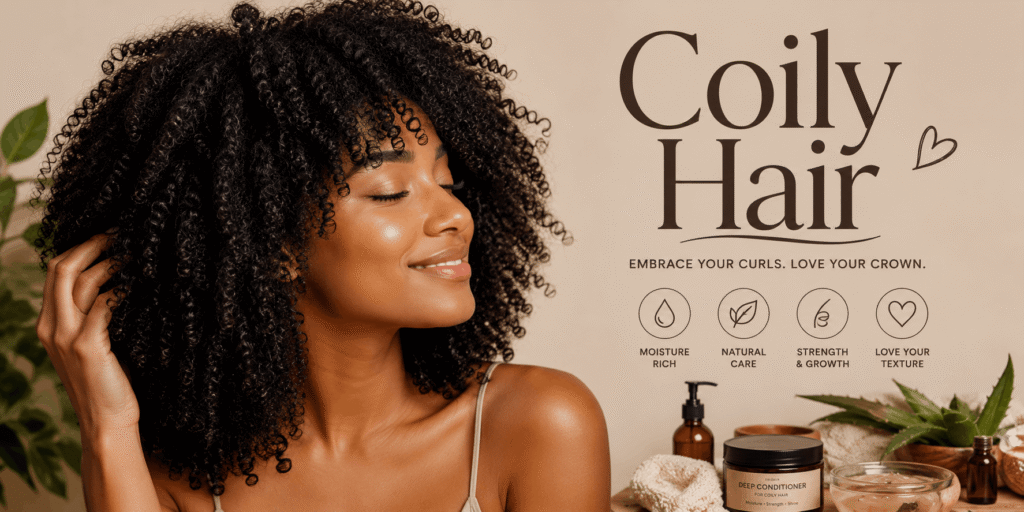
Coily hair has a tight curl or coil pattern that naturally forms around itself instead of falling in loose waves or curls. The strands may create small, spring-like coils or sharper bends, and the overall pattern can vary significantly from one person to another.
One important characteristic of coily hair is that its shape can make it harder for natural scalp oils to travel along the entire length of the strand. This can contribute to a dry-feeling appearance, particularly toward the ends.
Coily hair can also shrink considerably when exposed to moisture. Hair may appear much shorter when it is in its natural, unstretched state, even though the actual length is significantly longer.
Because of this structure, coily hair often benefits from routines focused on hydration, gentle detangling, and minimizing unnecessary manipulation.
4A Hair Type
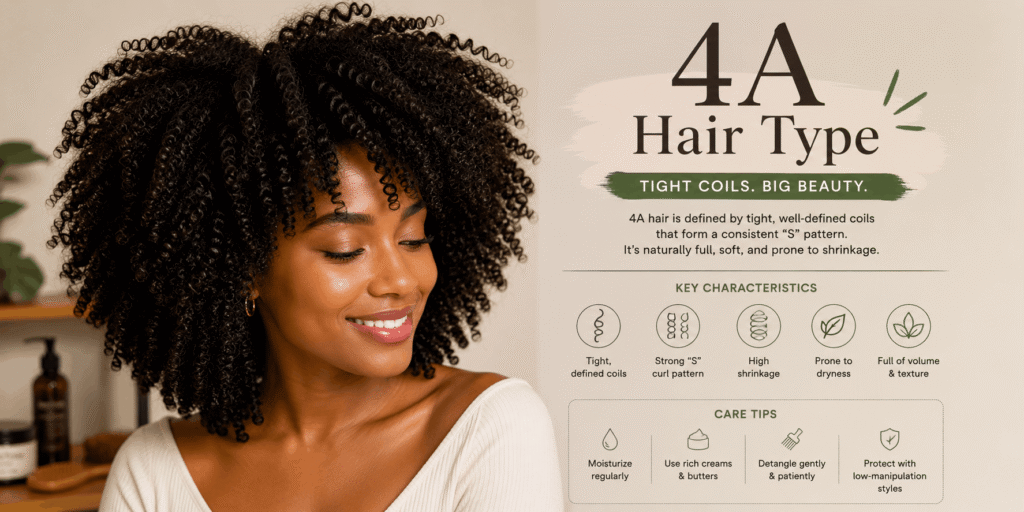
4A hair generally has clearly defined, spring-like coils. The curl pattern can be relatively small and may form an “S” shape when stretched.
Compared with some tighter coily patterns, 4A hair may retain its definition more easily. However, it can still become dry or tangled without appropriate moisture and careful handling.
Lightweight leave-in conditioners, moisturizing creams, and gentle styling techniques can help maintain the appearance of defined coils.
4B Hair Type
4B hair typically has a tighter, less clearly defined pattern than 4A hair. Instead of forming obvious circular coils, the strands can bend in sharper angles.
Shrinkage can be quite noticeable, and the hair may feel dense and textured.
Because individual strands can experience friction as they move against each other, gentle detangling and regular conditioning are especially useful parts of a 4B hair routine.
4C Hair Type
4C hair generally has the tightest coil pattern among the commonly used Type 4 categories. The curl definition may be less visible without styling or manipulation, and significant shrinkage is common.
The tighter pattern means moisture may be more difficult to distribute along the entire hair strand. This does not mean 4C hair is inherently unhealthy or fragile, but it does mean that gentle care can be especially important.
Rich conditioning products, careful detangling, protective styling, and reduced manipulation can all be useful depending on the individual’s hair needs.
Coily Hair vs. Curly Hair: What’s the Difference?
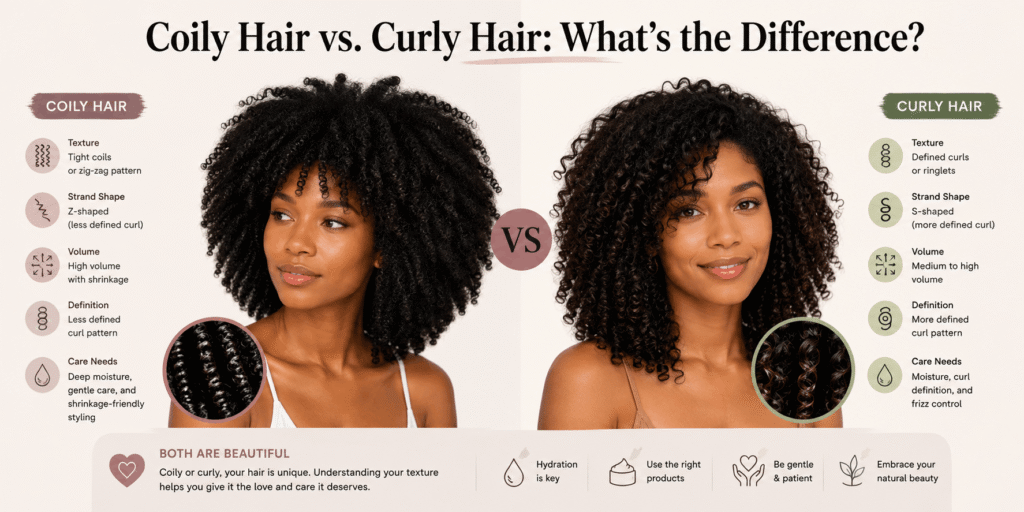
The main difference between coily and curly hair is the tightness and shape of the natural pattern.
Curly hair often forms larger loops or spirals, while coily hair usually forms much tighter coils, bends, or zigzag patterns. Coily hair is generally categorized within Type 4, whereas curly hair is commonly associated with Type 3.
The difference can also affect how the hair behaves. Tighter coils can experience more shrinkage and may require more deliberate moisture distribution and detangling techniques.
However, these categories are simply a way to describe texture. They do not determine the health, beauty, or quality of someone’s hair.
How to Care for Coily Hair
A good coily hair routine does not need to involve dozens of products. The most important habits are usually consistency, moisture, gentle handling, and avoiding unnecessary stress on the strands.
1. Start With a Hydrating Shampoo and Conditioner
Cleansing removes buildup, sweat, excess oil, and styling products, but an overly harsh shampoo can leave hair feeling uncomfortable and dry.
Choose a shampoo that works with your scalp and hair needs, followed by a conditioner that helps improve softness and manageability.
For especially dry-feeling hair, a moisturizing conditioner can make detangling easier and reduce the need for excessive pulling.
2. Detangle Gently and in Sections
Detangling coily hair all at once can create unnecessary pulling and frustration.
Divide the hair into manageable sections and work through one section at a time. Start at the ends and gradually move upward toward the roots rather than forcing a comb through the entire length.
A wide-tooth comb, suitable detangling brush, or fingers can be used depending on what works best for your hair.
3. Try the LOC or LCO Method
The LOC method generally refers to Liquid, Oil, Cream, while LCO means Liquid, Cream, Oil.
The goal is to layer moisturizing products in a way that helps the hair retain moisture.
The best order depends on your hair’s texture, density, and how it responds to products. Some people find that oil works best before cream, while others prefer cream followed by oil.
There is no universal formula, so experiment gradually and pay attention to how your hair feels.
4. Sleep on Silk or Satin
Cotton bedding can create friction as you move during sleep.
Using a satin or silk bonnet, scarf, or pillowcase can help reduce friction and may make it easier to maintain a hairstyle overnight.
Choose whichever option feels comfortable and works with your hairstyle.
5. Keep Up With Regular Trims
Trimming can help remove visibly split or damaged ends and keep the hairstyle looking neat.
How often you need a trim depends on your hair’s condition, styling habits, and personal goals.
6. Keep Your Scalp Clean and Healthy
Healthy hair care starts at the scalp. Regular cleansing helps remove sweat, product buildup, and excess oil.
Avoid scratching the scalp aggressively, and pay attention to persistent itching, redness, scaling, or other unusual changes.
If you notice an ongoing scalp concern, consider speaking with a dermatologist or another qualified healthcare professional.
7. Avoid Over-Washing Your Hair
Washing too frequently may leave some coily hair feeling dry, particularly if the shampoo is not suitable for the hair and scalp.
At the same time, avoiding cleansing for excessively long periods can allow buildup to accumulate.
The ideal schedule depends on your scalp, activity level, products, and hair’s individual needs.
How Often Should You Wash Coily Hair?
There is no single washing schedule that works for everyone with coily hair.
Your scalp produces oils at its own rate, and factors such as exercise, climate, styling products, and lifestyle can influence how frequently washing feels necessary.
Focus less on following a strict calendar and more on how your scalp and hair respond. If your scalp feels comfortable and clean, your routine may be working well. If buildup or discomfort develops, you may need to adjust your cleansing schedule.
How to Keep Coily Hair Moisturized Between Wash Days
Maintaining moisture between wash days can help hair feel softer and easier to manage.
Refresh With Water and Leave-In Conditioner
A small amount of water followed by a suitable leave-in conditioner can help refresh hair that feels dry.
Avoid soaking the hair unnecessarily if your chosen style does not require it. The goal is to add manageable moisture rather than completely restart the hairstyle.
Seal in Moisture With a Lightweight Oil
A small amount of oil can be used after moisturizing if your hair responds well to it.
Different oils have different textures, so choose one that does not leave your hair excessively heavy or greasy.
Protect Your Hair at Night
Using a satin or silk bonnet or pillowcase can help reduce friction and preserve moisture and hairstyle definition.
Avoid Excessive Manipulation
Constant brushing, combing, twisting, and restyling can put unnecessary stress on coily strands.
Try to refresh the hairstyle only when necessary and use gentle techniques.
Coily Hair and Protective Styling
Protective styles can be useful when you want to reduce daily manipulation and give your hair a break from frequent styling.
Braids, twists, buns, and other low-manipulation styles can help keep the hair organized while reducing the need for repeated brushing or combing.
Choose Comfortable Styles
A protective hairstyle should feel comfortable rather than excessively tight. If a style causes persistent discomfort or pulling, consider loosening it or choosing another style.
Do Not Neglect Your Scalp
Even when your hair is in a protective style, continue paying attention to your scalp. Keep your cleansing routine appropriate for your scalp and avoid allowing excessive product buildup to accumulate.
How to Keep Coily Hair Defined
Definition can depend on your natural pattern, styling products, moisture level, and technique.
Start with well-conditioned hair and apply styling products in manageable sections. Work the product through the hair gently and allow the coils to form naturally.
Use Styling Products Gradually
Applying too much product at once can leave the hair feeling heavy or coated.
Start with a small amount and add more when necessary. A leave-in conditioner, curl cream, gel, or styling butter may work differently depending on your hair’s texture and preferences.
Give Your Hair Time to Set
After styling, avoid constantly touching or rearranging the coils while they are drying.
Allowing the hairstyle to set can help maintain its intended shape and reduce unnecessary manipulation.
Common Coily Hair Care Mistakes
Even a well-planned routine can become less effective if everyday habits create unnecessary stress on the hair.
Detangling Dry Hair Too Aggressively
Trying to force a comb through dry, tangled hair can create unnecessary pulling. Working in sections with appropriate moisture and conditioner can make the process more manageable.
Using Too Much Product
More product does not automatically mean more moisture or better definition. Excessive layering can create buildup and make the hair feel heavy.
Choosing the Wrong Clip or Hair Accessory
Hair accessories that are too tight or too small can pull on coily strands. Choose accessories that provide enough room and hold without creating unnecessary pressure.
Ignoring the Scalp
Hair care should include the scalp as well as the strands. Regular cleansing and paying attention to unusual scalp changes can help maintain a practical routine.
How to Protect Coily Hair While Sleeping
Nighttime care can make a difference when you want to preserve moisture and reduce friction.
A satin or silk bonnet can help protect the hairstyle, while a satin or silk pillowcase can provide another option if you prefer not to wear a bonnet.
Use a Gentle Nighttime Routine
Before bed, avoid excessive brushing or restyling. If the hair feels dry, lightly refresh it according to your normal routine rather than repeatedly manipulating the strands.
Coily Hair in Different Seasons
Weather can influence how your hair feels and how often you need to adjust your routine.
Coily Hair in Winter
Cold weather and dry indoor air may make hair feel drier. You may prefer richer conditioning products or slightly more frequent moisturizing depending on how your hair responds.
Coily Hair in Summer
Heat and humidity can change how styling products behave. Lighter products may feel more comfortable for some people, while others may need additional moisture depending on their environment.
How to Build a Simple Coily Hair Routine
You do not need a large collection of products to care for coily hair.
A basic routine can include a suitable shampoo, conditioner, leave-in conditioner, styling product, and a satin or silk accessory for nighttime protection.
Keep Your Routine Consistent
Instead of constantly changing products, give your routine enough time to determine whether it works well for your hair.
Pay attention to how your hair feels after washing, detangling, moisturizing, and styling.
Adjust Based on Your Hair
Your hair may respond differently depending on the season, hairstyle, products, and amount of manipulation.
If your hair feels weighed down, you may need less product. If it feels dry or difficult to manage, you may need to reconsider your conditioning or moisturizing routine.
How to Care for Coily Hair
A good coily hair routine is less about using countless products and more about understanding what your hair responds to. Because tightly coiled strands can become tangled and dry-feeling more easily, gentle handling and consistent moisture can make daily styling much easier.
1. Start With a Hydrating Shampoo and Conditioner
Cleansing removes buildup, sweat, excess oil, and styling products, but an overly harsh shampoo can leave hair feeling uncomfortable and dry.
Choose a shampoo that works with your scalp and hair needs, followed by a conditioner that helps improve softness and manageability.
For especially dry-feeling hair, a moisturizing conditioner can make detangling easier and reduce the need for excessive pulling.
2. Detangle Gently and in Sections
Detangling coily hair all at once can create unnecessary pulling and frustration.
Divide the hair into manageable sections and work through one section at a time. Start at the ends and gradually move upward toward the roots rather than forcing a comb through the entire length.
A wide-tooth comb, suitable detangling brush, or fingers can be used depending on what works best for your hair.
3. Try the LOC or LCO Method
The LOC method generally refers to Liquid, Oil, Cream, while LCO means Liquid, Cream, Oil.
The goal is to layer moisturizing products in a way that helps the hair retain moisture.
The best order depends on your hair’s texture, density, and how it responds to products. Some people find that oil works best before cream, while others prefer cream followed by oil.
There is no universal formula, so experiment gradually and pay attention to how your hair feels.
4. Sleep on Silk or Satin
Cotton bedding can create friction as you move during sleep.
Using a satin or silk bonnet, scarf, or pillowcase can help reduce friction and may make it easier to maintain a hairstyle overnight.
Choose whichever option feels comfortable and works with your hairstyle.
5. Keep Up With Regular Trims
Trimming can help remove visibly split or damaged ends and keep the hairstyle looking neat.
How often you need a trim depends on your hair’s condition, styling habits, and personal goals.
6. Keep Your Scalp Clean and Healthy
Healthy hair care starts at the scalp. Regular cleansing helps remove sweat, product buildup, and excess oil.
Avoid scratching the scalp aggressively, and pay attention to persistent itching, redness, scaling, or other unusual changes.
If you notice an ongoing scalp concern, consider speaking with a dermatologist or another qualified healthcare professional.
7. Avoid Over-Washing Your Hair
Washing too frequently may leave some coily hair feeling dry, particularly if the shampoo is not suitable for the hair and scalp.
At the same time, avoiding cleansing for excessively long periods can allow buildup to accumulate.
The ideal schedule depends on your scalp, activity level, products, and hair’s individual needs.
8. Choose Protective, Low-Manipulation Hairstyles
Protective and low-manipulation hairstyles can reduce how often you need to comb, brush, or restyle your hair. Braids, twists, loose buns, and other styles can help keep the hair organized for several days.
However, a protective style should still feel comfortable. Avoid hairstyles that pull tightly around the hairline or create persistent scalp tension.
The amount of time you keep a style should also depend on how your scalp and natural hair respond. Take the style down when you notice excessive buildup, tangling, discomfort, or other issues.
9. Limit Heat and Chemical Treatments
Frequent high-heat styling or chemical processing can affect the condition of hair over time. This does not mean you can never use heat or color, but moderation and appropriate care are important.
If you use heat-styling tools, follow their instructions and use suitable heat protection. Give your hair breaks between intensive styling sessions when possible.
How Often Should You Wash Coily Hair?
There is no single washing schedule that works for everyone with coily hair.
Your scalp produces oils at its own rate, and factors such as exercise, climate, styling products, and lifestyle can influence how frequently washing feels necessary.
Focus less on following a strict calendar and more on how your scalp and hair respond. If your scalp feels comfortable and clean, your routine may be working well. If buildup or discomfort develops, you may need to adjust your cleansing schedule.
How to Keep Coily Hair Moisturized Between Wash Days
Maintaining moisture between wash days can help hair feel softer and easier to manage.
Refresh With Water and Leave-In Conditioner
A small amount of water followed by a suitable leave-in conditioner can help refresh hair that feels dry.
Avoid soaking the hair unnecessarily if your chosen style does not require it. The goal is to add manageable moisture rather than completely restart the hairstyle.
Seal in Moisture With a Lightweight Oil
A small amount of oil can be used after moisturizing if your hair responds well to it.
Different oils have different textures, so choose one that does not leave your hair excessively heavy or greasy.
Protect Your Hair at Night
Using a satin or silk bonnet or pillowcase can help reduce friction and preserve moisture and hairstyle definition.
Avoid Excessive Manipulation
Constant brushing, combing, twisting, and restyling can put unnecessary stress on coily strands.
Try to refresh the hairstyle only when necessary and use gentle techniques.
Common Coily Hair Mistakes to Avoid
Even a carefully planned routine can become less effective when certain habits create unnecessary stress. One of the easiest mistakes is trying to manage coily hair with too much manipulation.
Using Too Much Product
More product does not automatically mean more moisture. Applying excessive amounts of creams, oils, or gels can create buildup and make the hair feel heavy.
Start with a small amount and add more only when needed. Your hair’s density, length, and texture can determine how much product works best.
Detangling Dry Hair
Dry detangling can increase friction and make the process more difficult. If your hair responds better to damp or conditioned detangling, work in sections and use enough slip to make the strands easier to separate.
The goal is not to rush through the process. Gentle, gradual detangling can be much easier on the hair.
Skipping Deep Conditioning
Regular conditioning can help improve softness and manageability. A deeper conditioning treatment may be useful when your hair feels especially dry or difficult to detangle.
How frequently you need one depends on your hair and routine. There is no need to deep condition simply because a trend recommends a particular schedule.
Wearing Tight Hairstyles Too Often
Constant tension can be hard on the hairline and scalp. Alternate between different styles and give your hair periods of lower manipulation.
A comfortable hairstyle should make your routine easier, not create ongoing scalp discomfort.
Best Ingredients for Moisturizing Coily Hair
Choosing products becomes easier when you understand what common moisturizing ingredients do.
Humectants
Ingredients such as glycerin can help attract water and are commonly included in moisturizing formulas. How well they work can depend on the overall formulation and environment.
Emollients
Plant oils and cosmetic emollients can help improve the feel and softness of the hair. Common examples include jojoba oil, coconut oil, and other oils used in hair products.
Your hair may respond better to some oils than others, so introduce products gradually.
Butters
Shea butter and similar rich ingredients are frequently used in products designed for textured and dry-feeling hair. They can provide a heavier coating than lightweight lotions or sprays.
Conditioning Ingredients
Conditioning agents can improve slip and make detangling easier. Look for products designed specifically for hair care rather than assuming that one ingredient alone determines whether a product will work for you.
How to Prevent Breakage in Coily Hair
Breakage can happen for many reasons, including excessive manipulation, dryness, tension, heat, and chemical processing.
Keeping hair moisturized is helpful, but handling technique matters just as much.
Detangle gently, avoid pulling through knots, and reduce unnecessary brushing. When creating hairstyles, keep tension comfortable and avoid repeatedly styling the same sections.
Protect the Ends
The ends are the oldest parts of the hair and may be more vulnerable to dryness and wear.
Low-manipulation styles can help reduce repeated handling of the ends. Applying appropriate conditioning products can also improve how the hair feels and behaves.
Be Careful When Removing Styles
Taking down braids, twists, or other styles can create just as much stress as installation if you rush.
Work slowly, separate sections carefully, and address knots gradually instead of pulling through them.
Coily Hair at Night
Nighttime habits can influence how your hair looks and feels the next morning.
A satin or silk bonnet or pillowcase can help reduce friction. Loose braids, twists, or another comfortable nighttime style may also make detangling easier the following day.
Avoid tying the hair so tightly at night that it creates pressure around the hairline.
Morning Refresh
If your hair needs refreshing, use a small amount of water and a suitable leave-in product rather than repeatedly brushing it from dry.
For defined styles, gently reshape individual sections with your fingers.
Coily Hair and Product Buildup
Using many styling products can sometimes lead to buildup, particularly around the scalp and along the hair shaft.
If your hair starts feeling coated, heavy, dull, or difficult to moisturize, review your routine rather than automatically adding another product.
Regular cleansing can help remove accumulated products. Choose a shampoo that cleanses effectively while remaining comfortable for your scalp and hair.
Coily Hair and Hair Growth
The way coily hair shrinks can make it seem like the hair is not growing, even when the strands are getting longer.
Hair growth occurs at the scalp, while visible length depends on how much of that growth remains intact and how much the coils shrink.
Instead of focusing only on stretched length, pay attention to overall condition, breakage, and whether the hair remains strong enough to retain its length.
How to Choose Products for Coily Hair
Choosing products for coily hair is easier when you focus on your actual hair needs instead of following every trend.
Consider your hair’s density, texture, porosity, styling habits, and how it responds to different products. A lightweight leave-in may work well for one person, while another may prefer a richer cream or butter.
Check the Formula
Look for products that provide the level of moisture and conditioning your hair needs without leaving excessive buildup.
Consider Your Styling Routine
If you frequently wear protective styles, you may prioritize lightweight products that are easy to distribute. If you wear your hair loose and defined, you may prefer products that provide conditioning and hold.
Introduce Products Gradually
Adding several new products at once can make it difficult to determine which one works well for your hair. Introduce changes gradually and observe how your hair responds.
When to See a Professional
A stylist can help with haircutting, trimming, detangling, and creating a routine that fits your hair. A dermatologist or qualified healthcare professional may be more appropriate if you notice persistent scalp problems or unusual changes in hair growth.
Seek professional advice for concerns such as persistent itching, significant scalp irritation, sudden hair loss, patchy thinning, or other unusual symptoms.
Final Thoughts
Coily hair can thrive with a routine built around moisture, gentle handling, and thoughtful styling. Understanding whether your pattern is closer to 4A, 4B, or 4C can help you recognize how your hair behaves, but your individual strands may still have their own needs.
The most important habits are simple: cleanse the scalp appropriately, condition regularly, detangle carefully, avoid excessive tension, protect the hair at night, and limit unnecessary heat and chemical processing. When your hair feels dry, refresh it with suitable products rather than repeatedly manipulating it.
Remember that shrinkage is a natural feature of tightly coiled hair and does not mean your hair is not growing. Focus on retaining length and maintaining the condition of your strands rather than comparing your hair with someone else’s.
There is no single perfect routine for coily hair. The best routine is one that keeps your hair comfortable, manageable, and strong while fitting naturally into your lifestyle.

4 Comments