Foundation has always been an important part of makeup, but not everyone enjoys the feeling of wearing a thick layer of product on their face. Some people want to even out their complexion without hiding their natural skin texture, while others prefer makeup that feels comfortable throughout the day. This is where serum foundation offers an interesting alternative.
Combining the lightweight feel of a serum with the complexion-enhancing qualities of traditional foundation, this hybrid product has attracted attention from people who prefer a more natural makeup finish. It is designed to provide a fresh-looking complexion without necessarily creating the heavy, highly covered appearance associated with some conventional formulas.
However, serum foundation is not simply a thinner version of regular foundation. Its texture, application, coverage, and compatibility with different skin types can make it behave quite differently. Understanding these differences can help you decide whether it deserves a place in your makeup routine.
What Makes Serum Foundation Different From Traditional Foundation?
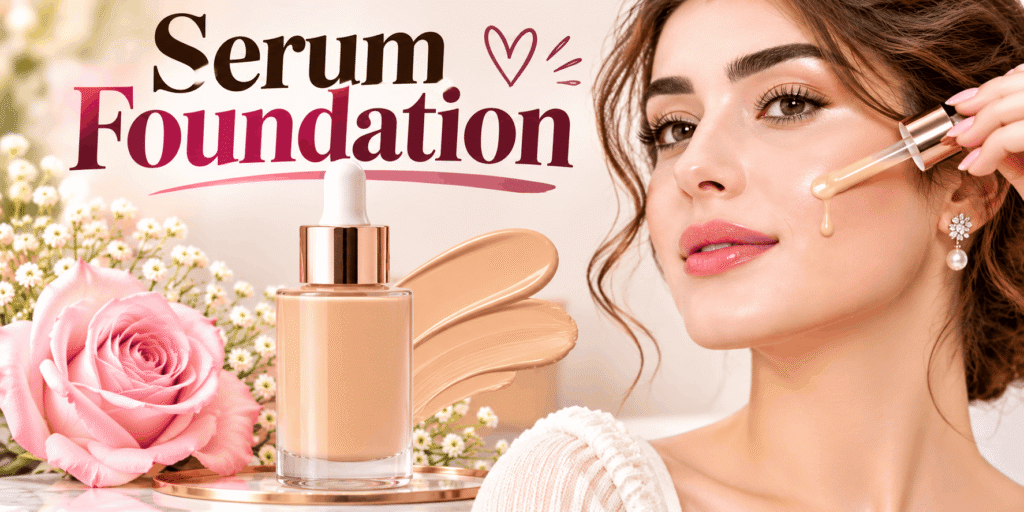
Serum foundation combines the fluid consistency commonly associated with skincare serums and the pigment found in complexion makeup. The result is generally a lightweight liquid formula that spreads easily and offers sheer-to-medium coverage, depending on the product.
Traditional foundations often focus on creating a more uniform complexion, with formulas ranging from light to full coverage. Serum foundations usually approach the same goal differently. Rather than completely concealing every visible feature, they aim to soften the appearance of uneven skin tone while allowing natural skin details to remain visible.
Their thinner consistency can also make application feel less complicated. Instead of requiring several layers to achieve a comfortable finish, many formulas can be distributed using a small amount of product.
Another important difference is the finish. Depending on the formulation, serum foundations may leave the skin looking radiant, naturally luminous, satin-like, or softly hydrated.
It is important to understand that the word serum does not automatically mean a product provides the same benefits as a dedicated skincare treatment. Although certain formulas contain ingredients commonly used in skincare, their primary purpose remains complexion makeup.
Why Serum Foundation Has Become an Interesting Makeup Choice
The popularity of serum foundation reflects a wider change in how people approach everyday makeup. Instead of aiming for a completely flawless appearance, many makeup enthusiasts now prefer products that enhance their natural features.
One reason is comfort. Heavy foundation can feel noticeable, particularly when someone wears makeup for several hours. A lightweight formula may provide a more comfortable alternative for people who dislike that sensation.
Another reason is versatility. Serum foundations can work particularly well for casual makeup, office routines, daytime events, and occasions where a softer complexion is preferred.
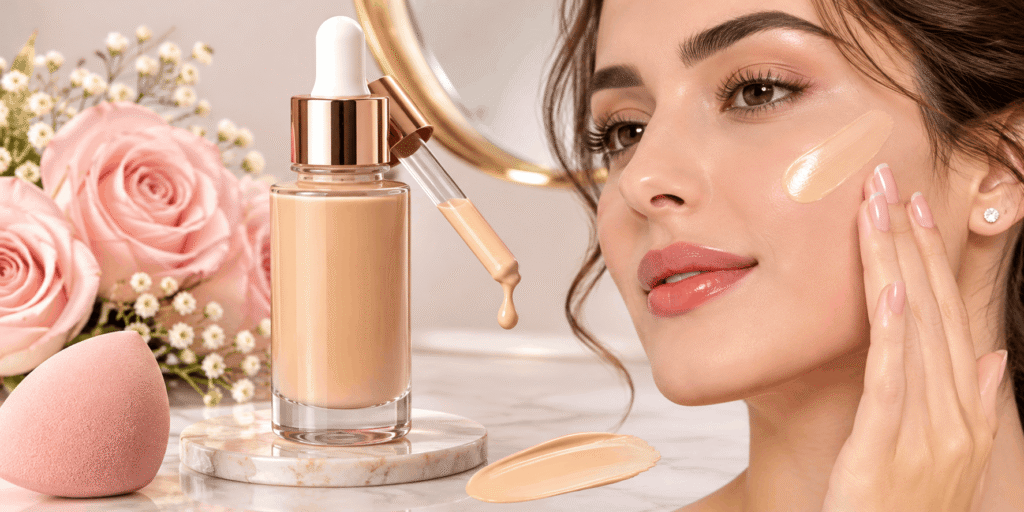
Their fluid texture also makes them appealing to people who enjoy applying makeup with their fingers or using a damp sponge. The product can often be blended quickly without creating an overly structured appearance.
However, their popularity should not suggest that every serum foundation works for everyone. Some formulas may emphasize dry patches, while others may become shiny on oilier complexions. Choosing the right formulation matters much more than simply following a makeup trend.
Understanding the Main Features of Serum Foundation
Before purchasing one, it helps to understand what makes this category different in practical terms.
1. Lightweight Texture
One of the most recognizable characteristics of serum foundation is its fluid consistency. Some formulas are almost watery, while others have a slightly thicker texture that resembles a traditional liquid foundation.
This lightweight feel can make the product appealing to people who prefer minimal makeup. It may also be easier to spread across the face without creating a thick-looking layer.
Because the texture can vary between brands, it is worth testing how a formula feels before deciding whether it suits your routine.
2. Natural-Looking Coverage
Most serum foundations are designed to provide a softer level of coverage rather than completely hiding every imperfection.
They can help reduce the appearance of mild redness, uneven pigmentation, and differences in skin tone. However, noticeable acne marks, dark spots, and deeper discoloration may still remain visible.
This is not necessarily a disadvantage. The purpose of a natural-looking foundation is often to improve the overall appearance of the complexion without removing every detail.
3. Buildable Application
Some serum foundations allow you to add another thin layer where extra coverage is needed.
For example, you might apply one light layer across your cheeks and forehead, then add a little more around areas with uneven pigmentation.
The key is to build coverage gradually. Applying too much product at once can make the finish less natural and may cause certain formulas to separate or collect around textured areas.
4. Radiant or Satin Finishes
Many serum foundations are associated with luminous finishes, although not all products are equally dewy.
A radiant formula may make the complexion appear fresh, while a satin finish offers a balance between shine and softness.
People who prefer a completely matte complexion may need to explore specific serum foundations designed with oil control in mind.
5. Easy Blending
Their thin consistency often makes serum foundations relatively easy to blend.
This can be helpful when working around the nose, jawline, and areas where foundation sometimes creates visible edges.
Nevertheless, blending performance depends on the formula, the amount applied, and the condition of the skin underneath.
How to Choose a Serum Foundation for Your Skin Type
Finding the right serum foundation involves more than selecting a shade. Your skin type, preferred finish, coverage expectations, and existing makeup routine all influence how a product performs.
Serum Foundation for Dry Skin
Dry skin often benefits from complexion products that do not create an excessively powdery finish.
A serum foundation with a comfortable, flexible texture may help create a smoother-looking appearance without adding the heavy sensation of some thicker formulas.
Look for descriptions such as hydrating, radiant, luminous, or moisturizing. These terms can help narrow your options, although the ingredient list and actual formulation are more important than marketing language.
Skin preparation also makes a difference. Applying a suitable moisturizer before foundation can help reduce the appearance of flaky areas.
Avoid rubbing foundation repeatedly over dry patches because this may make them more noticeable.
Serum Foundation for Oily Skin
People with oily skin may prefer serum foundations with a natural or satin finish rather than extremely dewy formulas.
A lightweight product can feel comfortable, but lightweight does not automatically mean oil-controlling. Some serum foundations may become shiny after several hours.
Before applying foundation, allow your moisturizer and sunscreen to settle properly. Using a small amount of setting powder around the forehead, nose, and chin may also help manage unwanted shine.
If your skin becomes oily quickly, look for formulas that specifically mention long wear, oil control, or a soft-matte finish.
Serum Foundation for Combination Skin
Combination skin can be slightly more complicated because different areas of the face may respond differently to the same product.
For example, the forehead and nose might become shiny while the cheeks feel dry.
A serum foundation with a balanced natural finish can be a useful starting point. You can also adjust your preparation according to individual areas.
Use a lighter moisturizer around oilier sections and a more nourishing product where dryness is noticeable. Applying powder only to the areas that need it can help maintain a balanced appearance.
Serum Foundation for Sensitive Skin
People with sensitive skin should pay particular attention to ingredients and fragrance.
A product described as gentle or serum-based is not automatically suitable for every sensitive complexion.
Check the ingredient list, especially if you already know which ingredients tend to irritate your skin. Fragrance-free options may be worth considering if fragrance is a personal trigger.
Testing a new foundation on a small area before applying it across the entire face is a sensible precaution.
If you experience persistent irritation, discontinue the product rather than trying to cover the reaction with additional makeup.
How to Find the Right Serum Foundation Shade
Even a beautifully formulated foundation can look unnatural when the shade does not match your complexion.
The most reliable way to select a shade is to consider both your skin depth and undertone.
Skin depth refers to how light or deep your complexion is. Undertone describes the subtle colour beneath the surface of your skin.
Common undertone categories include:
- Cool undertones: Often have pink, rosy, or bluish characteristics.
- Warm undertones: Often have golden, yellow, or peach-like characteristics.
- Neutral undertones: Usually have a balance of warm and cool characteristics.
- Olive undertones: May have a subtle greenish or muted golden appearance.
When testing shades, apply a small amount along the jawline rather than relying entirely on the back of your hand.
Check the colour in natural daylight because artificial lighting can make a foundation appear warmer, cooler, or lighter than it actually is.
Allow the product a few minutes to settle before making a decision. Some formulas may change slightly after application.
If you are choosing between two shades, compare how both blend into your jawline and neck. The most suitable shade should create a natural transition rather than an obvious line.
How to Apply Serum Foundation for a Smooth, Natural Finish
Application technique can significantly influence the final result. Because serum foundations are often more fluid than traditional formulas, controlling the amount of product is particularly important.
Step 1: Prepare Your Skin
Begin with a clean face. Remove leftover makeup, excess oil, and surface impurities using your usual gentle cleansing routine.
Follow with a moisturizer that suits your skin type. Allow it to absorb before moving on to the next step.
During the daytime, apply broad-spectrum sunscreen as the final step of your skincare routine before makeup. Let it settle according to its directions.
Good preparation helps create a more comfortable base and may reduce uneven application.
Step 2: Shake the Product if Necessary
Some serum foundations contain pigments that can settle slightly inside the bottle.
Check the packaging instructions to determine whether shaking is recommended.
If the product requires shaking, mix it gently before dispensing. This helps ensure the formula is properly combined before application.
Step 3: Start With a Small Amount
Rather than covering your entire face with a large amount of foundation, begin with a few drops.
Apply the product to the centre of your face, where uneven tone or redness may be more noticeable.
Gradually blend it outward toward the cheeks, forehead, and jawline.
Starting with less product gives you more control over the final coverage.
Step 4: Blend Using Your Preferred Tool
There are several ways to apply serum foundation, and each technique can produce a slightly different result.
Fingers: Your fingertips can help distribute thin formulas quickly. Use gentle movements and avoid dragging the product aggressively across the skin.
Damp makeup sponge: A slightly damp sponge can help press foundation into the complexion while removing excess product. This is useful when you want a soft, natural appearance.
Foundation brush: A soft, densely packed brush can provide more controlled coverage. Use light circular or pressing motions depending on the brush design and formula.
There is no single universally correct application tool. The best option is the one that creates an even finish without irritating your skin.
Step 5: Add Coverage Only Where Needed
After blending the first layer, examine your complexion in natural light.
If certain areas need additional coverage, apply a small amount of foundation directly to those sections.
You can also use a separate concealer for more noticeable blemishes, dark circles, or pigmentation.
This approach prevents unnecessary product buildup across areas that already look even.
Step 6: Finish According to Your Preference
Some people prefer to leave serum foundation as it is, especially when they want a fresh, radiant appearance.
Others may prefer a light dusting of setting powder around areas that become shiny.
You can complete the look with blush, bronzer, mascara, and your preferred lip colour.
The final result should reflect the type of makeup you enjoy rather than forcing every product into the same routine.
Serum Foundation vs Traditional Foundation: Which One Makes More Sense?
Both products can create an attractive complexion, but they serve slightly different preferences.
Serum foundation generally focuses on lightweight application and natural-looking coverage. Traditional foundation offers a wider variety of textures and coverage levels, including formulas designed for full coverage, long wear, and matte finishes.
| Feature | Serum Foundation | Traditional Foundation |
|---|---|---|
| Texture | Usually thin and fluid | Varies from liquid to cream |
| Coverage | Commonly sheer to medium | Available from sheer to full |
| Finish | Often radiant or natural | Matte, satin, natural, or dewy |
| Application | Usually easy to spread | Depends on formulation |
| Skin appearance | Often allows natural texture to show | Can create a more perfected appearance |
| Best suited for | Lightweight everyday makeup | Different makeup styles and coverage needs |
Neither category is automatically better.
If you want to conceal noticeable discoloration or create a more polished appearance for photography and special occasions, a traditional foundation with higher coverage may be more suitable.
If you prefer a softer finish that does not feel like a heavy layer, serum foundation may be worth exploring.
Your choice should depend on your desired result rather than the assumption that one category is more advanced than the other.
Ingredients Worth Understanding Before Buying
One reason serum foundations attract attention is their association with skincare ingredients. However, it is important to understand what these ingredients actually contribute to a makeup formula.
Hyaluronic Acid
Hyaluronic acid is a humectant commonly used in skincare products. It helps attract and retain water within the outer layers of the skin.
When included in a foundation, it may contribute to a more comfortable, hydrated-feeling formula.
However, the presence of hyaluronic acid does not mean that foundation can replace a dedicated moisturizer.
Niacinamide
Niacinamide is a form of vitamin B3 used in skincare formulations.
It is commonly associated with supporting the skin barrier and improving the appearance of uneven skin tone when used in suitable skincare products.
Its inclusion in a serum foundation may be appealing, but the actual benefit depends on the formulation and concentration.
Glycerin
Glycerin is another widely used humectant. It helps attract moisture and is frequently included in cosmetic and skincare products.
In foundation, it can contribute to a smoother, more comfortable application.
Vitamin E
Vitamin E is an antioxidant ingredient used in many cosmetic formulations.
It may help support the formula and provide antioxidant-related benefits, depending on the type and concentration used.
Still, do not assume that every foundation containing vitamin E will deliver noticeable skincare improvements.
The overall formulation matters more than a single ingredient mentioned on the packaging.
Common Serum Foundation Mistakes That Can Ruin the Finish
A good formula can still look disappointing when it is applied incorrectly. Fortunately, many common problems are easy to avoid.
Using too much product: Because serum foundation is often highly fluid, it can be tempting to dispense several drops at once. Start with a small amount and build coverage gradually.
Applying it over unsettled skincare: If moisturizer or sunscreen has not properly settled, foundation may move around, separate, or become difficult to blend.
Choosing the wrong undertone: A foundation can match your skin depth but still look unnatural if its undertone is incorrect.
Ignoring skin texture: Lightweight makeup does not automatically hide dry patches, enlarged pores, or textured areas. Proper preparation and gentle application can improve the result.
Expecting full coverage: Many serum foundations are not designed to conceal every imperfection. Using one with unrealistic coverage expectations can lead to unnecessary layering.
Applying too much powder: Excessive powder can remove the fresh finish that makes serum foundation appealing in the first place. Apply it only where necessary.
Skipping the neck and jawline check: A well-blended face with an unmatched neck can make the foundation look noticeably different from the rest of your complexion.
How to Make Serum Foundation Last Longer
Although serum foundations can create a comfortable everyday finish, their staying power varies considerably.
Some formulas are designed for longer wear, while others prioritize a lightweight feel and may require occasional touch-ups.
A few practical adjustments can help improve how your makeup looks throughout the day.
Start by preparing your skin with suitable skincare products. Avoid applying unnecessarily thick layers underneath your foundation because they can interfere with how makeup settles.
Choose a primer only if it addresses a particular concern. For example, a smoothing primer may help soften the appearance of visible pores, while a mattifying formula may help manage shine.
After applying foundation, give it a little time to settle before adding other complexion products.
If you prefer longer-lasting makeup, a light layer of setting powder can help secure areas that tend to move or become oily.
A setting spray may also be useful as the final step, depending on the formula and your desired finish.
Remember that no technique guarantees identical wear on every skin type. Temperature, humidity, natural oil production, skincare, and product compatibility all influence makeup longevity.
Who Should Consider Using Serum Foundation?
Serum foundation may be a particularly appealing option for people who enjoy lightweight makeup and prefer their natural complexion to remain visible.
It can work well for:
- People who dislike the heavy feeling of traditional foundation.
- Makeup beginners who want a relatively simple complexion product.
- Those who prefer sheer-to-medium coverage.
- People who enjoy radiant or natural-looking makeup.
- Anyone looking for a softer everyday alternative to full-coverage foundation.
- Makeup enthusiasts who prefer a skin-like finish for casual occasions.
However, it may not be the most practical choice for everyone.
People who require substantial coverage for prominent pigmentation, extensive acne marks, or specific photographic looks may prefer a fuller-coverage formula.
Likewise, anyone who strongly prefers an oil-free, completely matte finish should carefully examine the product description before purchasing.
The important thing is to select a foundation that works with your actual makeup needs instead of choosing one simply because it is popular.
Is Serum Foundation Worth Adding to Your Makeup Collection?
Serum foundation offers an interesting middle ground between skincare-inspired textures and traditional complexion makeup.
Its lightweight consistency, flexible application, and naturally appearing coverage make it appealing to people who want to enhance their complexion without creating an overly finished appearance.
It is especially worth considering if your current foundation feels too heavy for everyday use or if you prefer makeup that allows freckles, natural texture, and other individual features to remain visible.
However, its suitability depends on the formula. Shade selection, skin preparation, finish, coverage, and wear time should all influence your purchasing decision.
You do not necessarily need to replace your existing foundation, either. Keeping a serum foundation for casual days and a fuller-coverage option for special occasions can be a practical approach.
Ultimately, the best serum foundation is not the one with the most impressive packaging or the longest list of skincare ingredients. It is the one that matches your complexion, feels comfortable on your skin, and delivers the finish you genuinely enjoy wearing.
Final Thoughts
Serum foundation is a great option for anyone who wants to enjoy the benefits of foundation without the heavy, overly polished appearance of traditional makeup. Its lightweight texture, natural-looking coverage, and easy application make it a practical choice for everyday beauty routines. However, finding the right formula, shade, and finish is essential to getting the results you want. Whether you prefer a radiant glow or a soft, natural complexion, the right serum foundation should complement your skin rather than hide its natural character. The goal is not to create a flawless-looking mask but to achieve a finish that feels comfortable, looks beautiful, and still feels like your skin.
Serum foundation is used to even out skin tone while providing lightweight, natural-looking coverage. It helps soften the appearance of redness and minor imperfections without creating a heavy makeup finish.
Yes, serum foundation can be a good choice for everyday makeup. Its lightweight texture and comfortable feel make it suitable for casual outings, office wear, and simple daytime looks.
Neither is universally better. Serum foundation generally offers lighter coverage and a more natural finish, while traditional foundation provides more options for full coverage, matte finishes, and longer wear.
Yes, but choose a formula with a natural, satin, or soft-matte finish. Using a small amount of setting powder around oily areas can also help control unwanted shine.