Red hair has a way of making people look twice. Sometimes it’s a soft, natural-looking auburn that catches the light beautifully. Other times, it’s a bold cherry shade that turns an ordinary hairstyle into a statement. That’s what makes red hair dye so exciting: it isn’t just one color, but an entire world of shades, undertones, and creative possibilities.
From delicate strawberry tones to deep wine-inspired colors, there’s a red for almost every personality. You can choose something subtle that blends naturally with your features or experiment with a brighter shade that makes your hair the center of attention.
But here’s something worth knowing: two red shades can look completely different depending on your starting hair color, lighting, and undertones. A copper-red dye applied to light blonde hair, for example, may produce a very different result from the same formula applied to dark brown hair.
If you’re thinking about changing your hair color, these 25 red hair dye ideas will help you discover shades you might not have considered before.
25 Red Hair Dye Shades Worth Falling in Love With
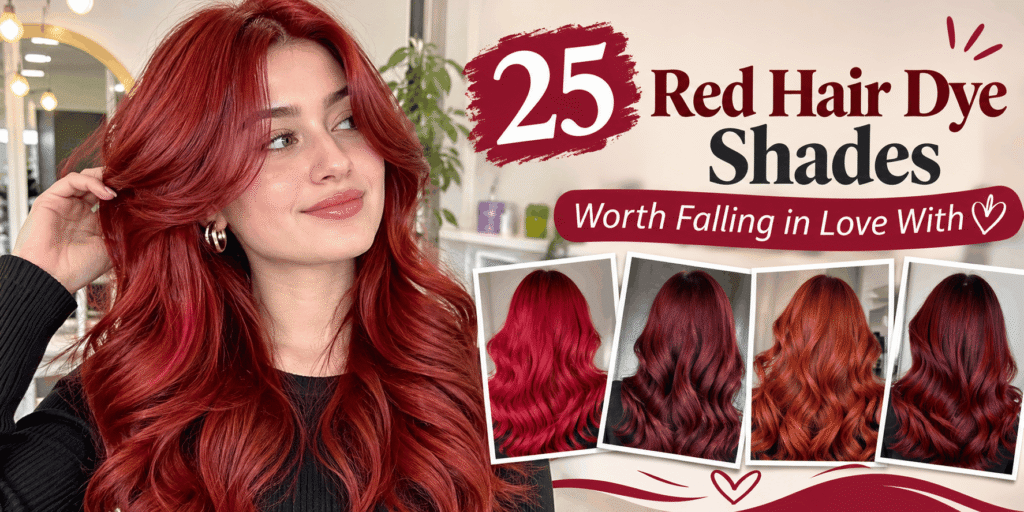
Red doesn’t have to mean bright, fiery, or dramatic. Some shades are muted and earthy, others are rich and sophisticated, while a few look almost like fantasy colors. Understanding their differences can help you find a color that feels exciting without becoming difficult to maintain.
Understanding the Different Shades of Red
Before choosing a red hair dye, it helps to understand how undertones influence the final appearance.
- Warm reds: These contain orange, golden, or copper undertones. They create a sunny, vibrant appearance.
- Cool reds: These lean toward violet, berry, or blue-based tones, giving the color a deeper and sometimes more dramatic finish.
- Neutral reds: These balance warm and cool pigments, making them versatile options.
- Light reds: Strawberry blonde and peachy red belong to this softer color family.
- Dark reds: Burgundy, black cherry, and mahogany create a richer appearance with greater depth.
Your natural hair color also matters. Going from dark brown to a bright copper or strawberry shade may require pre-lightening, while darker red-brown colors can often be achieved without extensive lightening.
1. Light Auburn
Light auburn is an excellent starting point if you want red hair without making a dramatic change. It combines soft reddish pigments with brown and golden undertones, producing a natural-looking color.
What makes this shade interesting is how it changes under different lighting. Indoors, it may appear like a warm light brown. Outside, its reddish and coppery reflections become much more noticeable.
It’s particularly appealing for anyone who enjoys understated hair colors but wants something more interesting than ordinary brunette.
You can also pair light auburn with soft layers or loose waves. These hairstyles help reveal the different tones throughout the hair.
2. Mahogany
Mahogany is where red becomes more sophisticated. This deep shade combines reddish pigments with brown and subtle violet undertones, creating a luxurious finish.
Unlike brighter red colors, mahogany doesn’t immediately demand attention. Its beauty comes from its depth and the way it reflects light.
It works particularly well on medium and dark hair because the brown foundation gives the color a naturally rich appearance.
If you want a red hair dye that feels elegant rather than overly bright, mahogany deserves a place on your shortlist.
3. Raspberry Hair
Imagine the color of ripe raspberries translated into a hair color. That’s the inspiration behind raspberry red.
This shade combines pink and red pigments to create a playful berry-inspired appearance. Depending on the formula, it can lean toward bright pink-red or a deeper raspberry tone.
It’s an interesting choice for people who find traditional copper and auburn shades too predictable.
Raspberry hair looks especially striking when paired with a glossy finish. You can also experiment with subtle darker roots to create dimension.
Keep in mind that achieving a vivid raspberry result may require a lighter starting base, particularly if your natural hair is very dark.
4. Burgundy
Burgundy is one of the most recognizable dark red hair colors. Inspired by deep red wine, it blends red with violet and sometimes brown undertones.
Its appeal comes from the contrast between richness and subtlety. In bright lighting, the red pigments become visible, while indoors the color can appear much darker.
Burgundy is a great option if you want a noticeable color transformation without choosing an extremely bright red.
It also works beautifully with long layers, sleek hairstyles, and textured curls because different styling techniques reveal different aspects of the shade.
5. Soft Brick Red
Not every red hair dye needs to look glossy or jewel-like. Soft brick red takes inspiration from earthy terracotta and traditional red clay.
It combines muted red pigments with brown and orange undertones, resulting in a slightly dusty appearance.
This shade is particularly interesting for people who prefer warm, natural-looking colors. Rather than looking like an obvious fashion color, it has an understated quality.
Soft brick red can also create a beautiful transition for someone moving from brunette into red territory.
6. Red Velvet
Red velvet is a dramatic shade inspired by the deep, luxurious appearance of red velvet fabric.
It typically combines rich red pigments with darker burgundy or berry undertones. The result is a saturated color that feels bold without necessarily appearing neon.
The most attractive feature is its depth. Instead of looking like a flat bright red, it can reveal different tones as the hair moves.
For a particularly striking finish, consider pairing it with a smooth blowout or defined curls.
This shade is ideal for anyone who wants their red hair dye to feel glamorous and expressive.
7. Strawberry Blonde
Strawberry blonde sits somewhere between blonde and red, making it one of the softer choices in this color family.
It blends light blonde pigments with delicate pink, copper, and golden-red undertones. Depending on the formula, the result can look more golden or noticeably rosy.
One reason people love this shade is that it offers a change without creating the intensity of a traditional red.
It’s particularly beautiful when styled with soft waves because the lighter sections reflect light and create a multidimensional appearance.
If you’re starting with naturally dark hair, reaching strawberry blonde may require significant lightening and professional color correction.
8. Black Cherry
Black cherry is for people who love dark hair but want something more mysterious than traditional black.
This shade combines a deep brunette or near-black foundation with cherry-red and burgundy reflections.
At first glance, it can appear almost black. Under direct light, however, its red undertones become much more visible.
That subtle color shift is exactly what makes it interesting.
Black cherry is an excellent option if you want a dramatic red transformation without choosing a bright or highly saturated shade.
It also looks beautiful on straight hair, where the glossy finish helps reveal its hidden red tones.
9. Bright Copper
Bright copper is one of the most energetic shades of red. It combines vivid orange and red pigments to create a fiery, reflective appearance.
Unlike darker auburn shades, copper doesn’t hide its personality. Even a simple hairstyle can look more noticeable when paired with this color.
The shade can range from golden copper to intense orange-red, depending on the dye formula.
If you’re considering bright copper, remember that maintaining its vibrancy requires attention. Red and copper pigments can fade relatively quickly, especially with frequent washing and heat styling.
A color-safe shampoo and conditioner can help preserve the finish.
10. Hot Chili
Hot chili red takes inspiration from the intense color of freshly cut red chilies.
It’s a vibrant, warm shade with noticeable orange undertones. Compared with traditional auburn, it looks much brighter and more energetic.
This color is perfect for people who enjoy experimenting with expressive hair colors and aren’t afraid of attention.
Hot chili can also look interesting with darker roots, which create contrast and add visual depth.
Because of its brightness, the final result depends heavily on your starting color. Dark hair may need pre-lightening to achieve a vivid finish.
11. Scarlet
Scarlet is a classic red that sits between warm and cool red families, depending on the particular formula.
It has a bold, clean appearance that makes it different from softer copper and brown-based shades.
Think of a rich red fabric or a freshly painted red surface. Scarlet aims for that same striking intensity.
If you want a hair transformation that feels confident and unmistakable, this shade is worth exploring.
For the best-looking result, focus on even application and good color maintenance. Uneven fading can make highly saturated reds appear less polished over time.
12. Warm Cinnamon
Warm cinnamon brings together reddish-brown, copper, and golden undertones.
Instead of looking fiery, it creates a cozy, earthy finish that resembles the color of cinnamon sticks.
This makes it an appealing option for people who want to experiment with red without leaving their brunette comfort zone completely.
It also works well with layered hairstyles because the different lengths can reveal subtle variations in the color.
If you’re not ready for a dramatic transformation, warm cinnamon is a lovely middle ground.
13. Rose Gold
Rose gold is a softer interpretation of red hair dye. It combines delicate pink, rose, copper, and golden pigments to produce a metallic-inspired appearance.
The shade can look more pink under cool lighting and more golden when exposed to warm sunlight.
Its versatility makes it particularly interesting for people who want something different from conventional red shades.
Rose gold generally looks best when the starting hair is light enough to allow its delicate pigments to show clearly.
Because pastel-like colors can lose their intensity quickly, refreshing the shade with an appropriate color-depositing product may help maintain its appearance.
14. Peachy Red
Peachy red hair dye is a beautiful combination of soft orange, pink, and red.
Rather than looking intensely fiery, it creates a light, almost sunset-inspired finish.
This shade is ideal if you want something playful but not overwhelmingly bright. It can also be adjusted toward a more peachy or more reddish appearance depending on the formula.
One of its most appealing qualities is its softness. It brings color to the hair without creating the dramatic contrast associated with deep crimson or scarlet.
15. Medium Auburn
Medium auburn is a balanced red-brown shade that offers noticeable warmth without becoming too dark.
It’s a popular option for people who want their hair to look naturally red rather than artificially vibrant.
Depending on the lighting, medium auburn can reveal copper, cinnamon, and reddish-brown tones.
It also provides a relatively subtle color transition for people who currently have medium brown hair.
If you’re looking for an everyday red hair dye that doesn’t feel overly dramatic, medium auburn is a strong contender.
16. Dark Auburn
Dark auburn takes the warmth of traditional auburn and gives it a deeper foundation.
It combines rich brown pigments with red and copper undertones, creating a shade that can look brunette in some lighting and distinctly red in others.
This color is particularly useful if you want dimension without moving into bright red territory.
It also pairs nicely with long hairstyles and soft layers, where the lighter reflections can become more visible.
For anyone who wants a sophisticated red-brown transformation, dark auburn is worth considering.
17. Russet
Russet is an earthy shade inspired by autumn leaves and reddish-brown natural tones.
It combines muted red, brown, and orange pigments, creating a color that feels warm and slightly rustic.
Unlike bright copper, russet doesn’t rely on intense orange reflections. Its appeal comes from a more subdued blend of colors.
It’s a particularly interesting option for people who prefer natural-looking hair transformations with a little extra character.
Russet can also be customized with slightly deeper roots or warmer highlights for added dimension.
18. Tawny Red
Tawny red is a softer, golden-brown interpretation of red hair.
It usually combines warm copper, light brown, and muted reddish pigments, creating a subtle finish.
What makes this shade appealing is that it doesn’t immediately look like a traditional red dye. Instead, it gives brunette hair a warm reddish glow.
It’s a nice choice for someone who wants to experiment with red while keeping the overall appearance relatively natural.
You can enhance its dimension with soft layers and a glossy styling finish.
19. Violet Red
Violet red is a cooler and more dramatic alternative to traditional copper-based shades.
It combines strong red pigments with violet undertones, resulting in a deep berry-like color.
Depending on the intensity, it can look like a bright red-violet or a rich plum-red.
This shade is particularly appealing if you prefer cool-toned colors and want something that feels different from ordinary burgundy.
For a more dimensional result, darker roots can be combined with slightly brighter lengths.
However, violet-based red dyes may fade differently from warm reds, so choose maintenance products designed for colored hair.
20. Deep Crimson
Deep crimson is a saturated, dramatic shade that sits between classic red and darker wine-inspired colors.
It has a bold appearance without being as orange as copper or as purple as some burgundy formulas.
This makes it a great choice for someone who wants a strong red statement with a little depth.
Deep crimson can look particularly striking on long, smooth hair because its reflective surface highlights the richness of the pigment.
Keep in mind that maintaining such a saturated shade may require regular color refreshes.
21. Pink and Red Hair
Why choose between pink and red when you can combine both?
Pink and red hair creates a playful color combination that can be customized in several ways. You might choose a red base with pink highlights, alternate the two colors in separate sections, or blend them into a soft gradient.
The beauty of this idea is its flexibility.
For a subtle look, use muted rose and reddish-brown tones. For something more expressive, combine bright cherry red with vivid pink.
This color combination works particularly well for people who enjoy creative hair transformations and aren’t interested in sticking to traditional shades.
22. Copper Brown
Copper brown is a beautiful meeting point between brunette and red.
It combines a brown foundation with noticeable copper and orange-red reflections, producing a warm and dimensional result.
Unlike bright copper, it doesn’t appear intensely orange. Instead, the brown base gives the color a more grounded appearance.
It’s an excellent choice for someone who wants a visible change without committing to a highly saturated red.
Copper brown can also make a brunette hairstyle look more interesting without completely changing its original character.
23. Fruit Punch
Fruit punch is a playful red shade inspired by colorful summer drinks.
It typically combines vivid red with pink and sometimes orange undertones. Depending on the color formula, it can look like cherry red, watermelon pink, or a bright red-pink blend.
This is definitely not the most understated choice on the list.
Fruit punch is designed for people who enjoy bold beauty experiments and want their hair to become a major part of their personal style.
Since its color intensity is an important part of the look, regular maintenance and protection against excessive heat can help keep it looking fresh.
24. Platinum Strawberry
Platinum strawberry takes the softness of strawberry blonde and gives it a much lighter, cooler appearance.
It combines pale blonde with delicate strawberry-pink and reddish undertones.
The result is an almost icy blonde shade with a subtle rosy finish.
Unlike traditional strawberry blonde, this version has a lighter foundation and more delicate color reflections.
Achieving it can be challenging, especially if your natural hair is dark. Significant lightening may be necessary, which can increase the risk of dryness and breakage.
A professional colorist can help determine whether your hair is healthy enough for this transformation.
25. Bright Copper Red
Bright copper red deserves a final mention because it takes the traditional copper family in a more intense direction.
This shade combines vibrant orange, warm red, and golden reflections to create an energetic finish.
Unlike muted copper brown, it makes its presence known immediately.
It’s particularly appealing for people who want a noticeable transformation that feels warm, lively, and full of personality.
If you’re already wearing a copper shade, increasing the red intensity can be an interesting way to refresh your appearance without switching to an entirely different color family.
Just remember that bright copper red needs consistent maintenance to prevent its vivid appearance from becoming dull.
How to Make Your Red Hair Dye Last Longer
Red hair is beautiful, but maintaining its color can require more attention than many people expect. Red pigments can fade relatively quickly, especially when exposed to frequent washing, heat, sunlight, and harsh cleansing products.
Fortunately, a few simple habits can help preserve your color.
Wait before your first wash. Follow the dye manufacturer’s instructions before shampooing after a fresh color application. This gives the color process time to settle as recommended.
Use color-safe shampoo. Choose a gentle shampoo designed for colored hair. Avoid unnecessarily frequent washing, as repeated cleansing can contribute to fading.
Keep water temperature comfortable. Very hot water can make hair feel drier and may contribute to faster color fading. Lukewarm water is generally a better choice.
Limit excessive heat styling. Frequent use of straighteners and curling irons can damage the hair and make colored strands look dull. Apply a suitable heat protectant whenever you use hot tools.
Protect your hair from the sun. Extended UV exposure can affect color vibrancy. A suitable UV-protective hair product, a hat, or limiting direct exposure can help.
Refresh the color when needed. Depending on the formula, a color-depositing conditioner or gloss may help revive fading red tones. Always choose one compatible with your current shade.
Most importantly, don’t overlook hair condition. Healthy, well-maintained hair generally looks more vibrant and polished.
Choosing the Right Red Hair Dye for Your Starting Color
The same red hair dye won’t produce identical results on everyone. Your natural or previously colored hair creates the foundation for the final shade.
- Blonde hair: Strawberry blonde, peachy red, rose gold, and bright copper can be easier to achieve on a lighter base.
- Light brown hair: Light auburn, warm cinnamon, medium auburn, and copper brown are interesting options.
- Dark brown hair: Mahogany, dark auburn, burgundy, and black cherry offer beautiful deeper transformations.
- Black hair: Deep crimson, burgundy, and black cherry may provide subtle red reflections, although a brighter result may require professional lightening.
If your hair has previously been colored, the situation can be more complicated. Applying a lighter dye over an existing darker artificial color generally won’t produce the lighter result you expect.
For significant transformations, especially when bleaching is involved, consulting a professional colorist is a safer approach.
Final Thoughts
Choosing a red hair dye is about more than picking your favorite color from a chart. It’s about finding the right balance between your starting hair color, desired intensity, undertones, and maintenance routine.
If you prefer something subtle, light auburn, tawny red, or copper brown can give your hair a beautiful warm transformation. If you want something more dramatic, black cherry, violet red, and deep crimson offer plenty of personality.
And if traditional red feels too predictable, raspberry, rose gold, or fruit punch might be exactly the change you’re looking for.
The most exciting part is that you don’t have to settle for just one version of red. With so many variations available, you can find a shade that feels completely different from anything you’ve tried before.
Frequently Asked Questions About Red Hair Dye
Red hair dye can fade faster than some other color families because its pigments may lose intensity with repeated washing and environmental exposure. The exact fading rate depends on the formula, starting hair condition, washing habits, and maintenance routine.
Light auburn, medium auburn, dark auburn, and copper brown are popular natural-looking options. Their brown undertones help soften the intensity of the red pigments.
Yes, certain dark red and red-brown shades can be applied without bleaching, depending on your natural hair color and the dye formula. However, achieving bright copper, strawberry blonde, or vivid red on very dark hair may require lightening.