Cocoa butter is a popular skincare ingredient known for its rich texture, moisturising properties, and ability to help soften dry skin. It is commonly found in body lotions, creams, lip balms, and other personal care products. Many people use it to improve skin hydration and maintain a smooth, healthy-looking appearance. However, when it comes to facial skincare, particularly for people experiencing cystic acne, cocoa butter may not be suitable for everyone.
Cystic acne is a severe form of acne that develops when inflammation occurs deep within the skin. It can cause painful lumps, swelling, redness, and sometimes long-lasting scars. Choosing the right skincare products is important because heavy or pore-clogging ingredients may worsen breakouts in some individuals. Although cocoa butter can help moisturise dry skin, it is not an established treatment for cystic acne.
Understanding how cocoa butter works, what benefits it offers, and which precautions to consider can help you make better skincare decisions. This guide explores its properties, potential benefits, uses, and limitations, especially for acne-prone skin.
What Is Cocoa Butter?
Cocoa butter is a natural fat extracted from cocoa beans, the same beans used to produce chocolate and cocoa powder. It is widely used in cosmetics, skincare products, food manufacturing, and personal care formulations. At room temperature, it is usually solid but softens when exposed to body heat.
Its rich texture comes from its fatty acid composition, which includes oleic acid, stearic acid, and palmitic acid. These fats help cocoa butter form a protective layer on the skin, reducing moisture loss and leaving the surface feeling softer.
In skincare, cocoa butter is often used in moisturisers, body butters, massage products, and formulations designed for dry or rough areas. It can be especially useful for areas such as elbows, knees, hands, and heels, where the skin may need additional moisture.
However, natural ingredients are not automatically suitable for every skin type. Cocoa butter has a relatively rich consistency, and some people with oily or acne-prone skin may find that products containing it contribute to clogged pores or breakouts. The likelihood of this happening depends on the individual, the formulation, and how the product is used.
What Is the Difference Between Cocoa Butter and Cacao Butter?
The terms cocoa butter and cacao butter often refer to the same fat extracted from cocoa beans. The difference is usually related to terminology, marketing, and how the cocoa beans are processed rather than the basic substance itself.
Cacao is commonly used when referring to less-processed cocoa ingredients, while cocoa is frequently associated with conventional chocolate and cocoa products. However, these terms are not applied consistently across all brands, so the name alone does not guarantee a particular processing method.
For skincare purposes, the more important factors are the product’s ingredients, purity, fragrance, and intended use. A product labelled cacao butter may be just as rich as one labelled cocoa butter.
If you have sensitive or acne-prone skin, examine the complete ingredient list rather than relying only on the product name. Added fragrance, essential oils, and other ingredients may affect how a particular formulation works with your skin.
Cocoa Butter Benefits for Skin
Cocoa butter is primarily valued for its moisturising and emollient properties. It can help soften the skin, reduce dryness, and support the skin barrier by limiting moisture loss. These benefits make it a useful ingredient in many body-care products.
Nevertheless, it is important to distinguish between moisturising benefits and medical treatments. Cocoa butter may improve the feel and appearance of dry skin, but there is limited clinical evidence that it treats acne, removes scars, or prevents stretch marks.
1. Helps Moisturise Dry Skin
One of the main benefits of cocoa butter is its ability to soften dry skin. Its fatty components create a protective layer that helps reduce water loss from the skin’s surface.
This can be helpful during cold weather, after frequent handwashing, or when the skin feels rough and tight. People with dry skin may find cocoa butter-based creams useful for improving softness and comfort.
For the face, however, a lighter moisturiser may be a better option if you have oily skin or regularly experience breakouts. A product labelled non-comedogenic is generally a more suitable starting point for acne-prone skin, although no product can guarantee that it will never cause breakouts.
2. Supports the Skin Barrier
The skin barrier helps protect the body from environmental irritants and prevents excessive moisture loss. When this barrier becomes dry or damaged, the skin may feel uncomfortable, rough, or sensitive.
Cocoa butter can help support moisture retention by forming an emollient layer over the skin. This may improve the appearance and feel of dry areas when used as part of an appropriate skincare routine.
However, cocoa butter does not replace medical treatment for inflammatory skin conditions. If you experience persistent irritation, painful acne, or significant skin damage, a suitable skincare routine and professional advice are more appropriate than relying on a single ingredient.
3. May Improve the Appearance of Rough Skin
Regular moisturising can make rough skin appear smoother and more supple. Cocoa butter is often included in body creams because its rich consistency helps soften areas that become dry or flaky.
For example, it may be useful on elbows, knees, and heels. Gentle application can help improve the skin’s texture over time, especially when dryness is the main concern.
It is important to understand that smoother-looking skin does not necessarily mean that the underlying skin condition has been treated. Cocoa butter cannot reliably remove acne scars, deep marks, or other structural changes in the skin.
4. Contains Naturally Occurring Antioxidant Compounds
Cocoa beans contain naturally occurring antioxidant compounds, including certain polyphenols. However, the amount present in a finished cocoa butter product can vary depending on processing and refinement.
Although antioxidants are relevant to skin health, this does not establish that applying cocoa butter directly to the face will treat acne or prevent skin ageing. The evidence for specific skincare outcomes depends on the ingredient, its concentration, the formulation, and clinical testing.
For most people, cocoa butter is best viewed as a moisturising ingredient rather than a specialised antioxidant treatment.
Is Cocoa Butter Good for Cystic Acne?
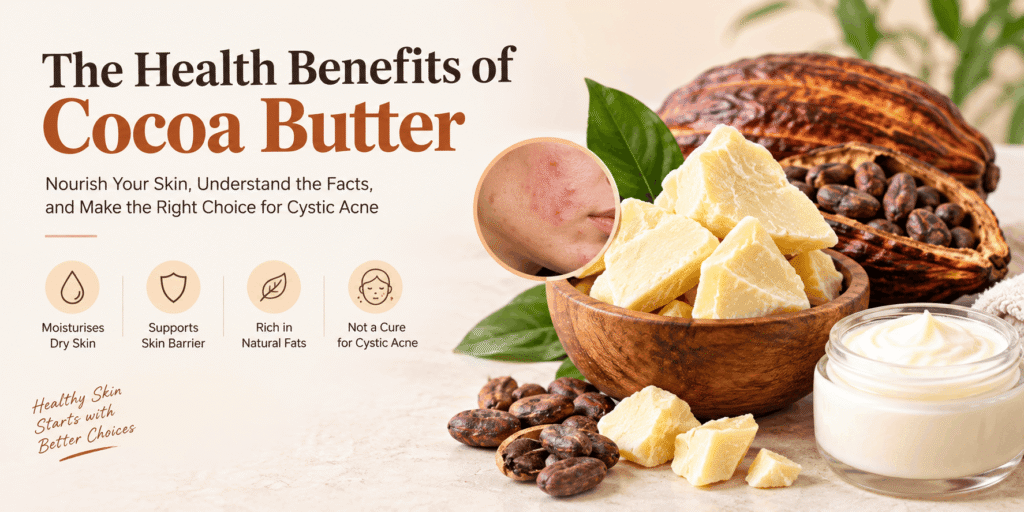
Cocoa butter is not considered a proven treatment for cystic acne. While it may moisturise dry areas of the skin, its rich consistency can be a concern for people whose pores clog easily.
Cystic acne develops when inflammation affects deeper structures within the skin. It can produce painful, deep-seated lumps that may persist for weeks and leave scars. Because of this, managing cystic acne usually requires more than applying a moisturiser.
Some people with acne-prone skin may tolerate cocoa butter without obvious problems, while others may notice more clogged pores or breakouts after using rich products. Individual responses vary, and cocoa butter should not automatically be considered either suitable or unsuitable for every person with acne.
If your main concern is cystic acne, consider these practical steps:
- Choose facial moisturisers labelled non-comedogenic.
- Avoid introducing several new skincare products at the same time.
- Stop using a product if you notice a consistent increase in breakouts after introducing it.
- Use gentle cleansing rather than harsh scrubbing.
- Seek professional advice for painful, persistent, or scarring acne.
Dermatologists may recommend treatments such as topical retinoids, benzoyl peroxide, or prescription medicines depending on the severity of the condition. Deep, painful acne often benefits from early medical assessment because timely treatment can reduce the risk of permanent scarring.
Cocoa butter may still have a place in your routine if you use it on dry body areas that are not prone to acne. However, applying it directly to cystic acne lesions is unlikely to resolve the underlying inflammation.
How to Use Cocoa Butter on Your Skin
The best way to use cocoa butter depends on your skin type and the area where you want to apply it. Because it is rich and occlusive, it is often more suitable for dry body skin than for an oily or acne-prone face.
Before using a new product, check its ingredient list and follow the manufacturer’s directions.
For Dry Body Skin
Apply a small amount of cocoa butter to clean skin when it feels dry. Many people prefer using moisturisers after bathing, when the skin is slightly damp, because this can help retain moisture.
Focus on areas such as elbows, knees, hands, and heels. Avoid applying excessive amounts, as a thick layer may feel greasy or uncomfortable.
For the Face
If your face is prone to cystic acne, begin with a lightweight, non-comedogenic moisturiser instead of pure cocoa butter. If you still want to try a cocoa butter-containing facial product, consider its complete formulation and introduce it cautiously.
Test a small amount on a limited area first, but remember that a patch test mainly helps identify irritation or allergic reactions. It cannot reliably predict whether a product will cause acne over time.
Do not apply cocoa butter to broken, irritated, or infected skin without appropriate guidance. If painful acne continues, consult a dermatologist rather than relying on moisturising products alone.
For Lips and Other Dry Areas
Cocoa butter is commonly used in lip balms and products designed to soften dry skin. A formulation made specifically for the lips may be convenient, especially in cold or dry weather.
Avoid assuming that a product intended for the body is automatically suitable for the face or lips. Check its intended use, fragrance, and other ingredients before applying it to sensitive areas.
Can You Eat Cocoa Butter?
Yes, food-grade cocoa butter can be eaten and is commonly used in chocolate, confectionery, and some baking recipes. It is the natural fat extracted from cocoa beans and helps give chocolate its smooth texture and rich mouthfeel.
However, not every cocoa butter product is suitable for eating. Cocoa butter sold for skincare may contain added fragrances, preservatives, or other ingredients that are not intended for consumption. Always check the product label and choose food-grade cocoa butter if you plan to use it in food.
Cocoa butter is high in fat, including saturated fat. Although it can be part of a balanced diet in moderate amounts, consuming large quantities may increase your overall calorie and saturated fat intake. It should not be treated as a health supplement or eaten in excess simply because it is a natural ingredient.
What Are the Risks of Cocoa Butter?
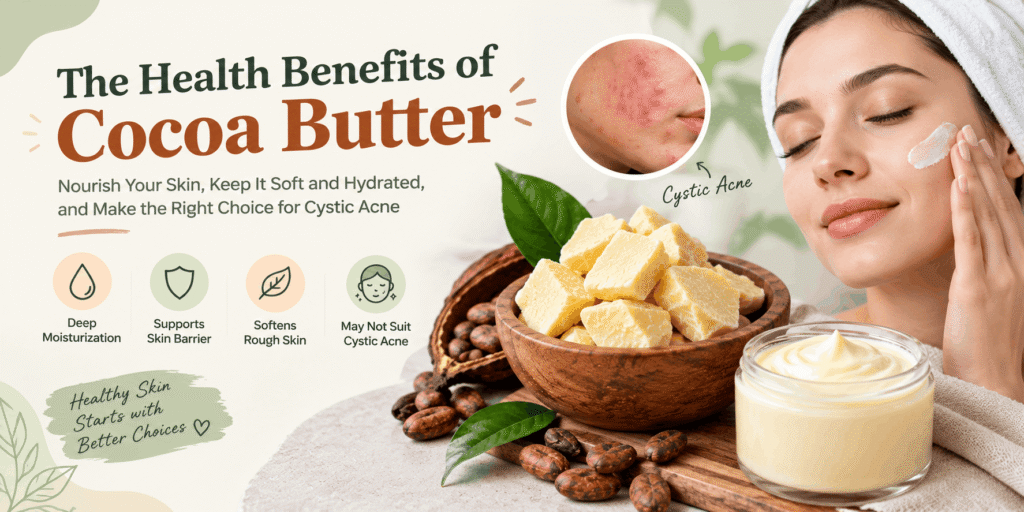
Cocoa butter is generally well tolerated when used appropriately, but it is not suitable for everyone or every skin type. Understanding its potential drawbacks can help you decide whether it belongs in your skincare routine.
1. It May Clog Pores
One of the main concerns with cocoa butter is its rich, thick texture. It creates an oily layer on the skin that helps reduce moisture loss, which can be useful for dry areas. However, some people with acne-prone skin may find that heavy products contribute to clogged pores or worsen breakouts.
This is especially important for people who experience cystic acne. Cystic acne involves deep, inflamed lesions beneath the skin, and applying a rich butter is not a proven treatment for this condition. Cocoa butter does not reliably clear clogged pores or treat the underlying causes of cystic acne.
If your skin is prone to breakouts, consider using a lightweight, non-comedogenic moisturizer instead. If you still want to try cocoa butter, test a small amount on a limited area and stop using it if you notice more pimples, irritation, or discomfort.
2. Allergic Reactions and Skin Irritation
Although pure cocoa butter is usually well tolerated, any skincare ingredient can cause a reaction in some individuals. Products marketed as cocoa butter may also contain fragrance, essential oils, or other additives that can irritate sensitive skin.
Possible signs of a reaction include redness, itching, burning, swelling, or a rash. If these symptoms develop, stop using the product. Seek medical attention if the reaction is severe or involves significant swelling or difficulty breathing.
Before applying a new product to a large area, test it on a small patch of skin and observe how your skin responds. A patch test can reduce uncertainty, although it cannot guarantee that irritation will never occur.
3. It May Not Suit Oily Skin
People with oily skin may find cocoa butter too heavy for everyday facial use. Its thick consistency can leave the face feeling greasy, particularly in warm or humid weather.
That does not mean everyone with oily skin must avoid cocoa butter completely. Some people may tolerate small amounts on dry areas, such as the lips or elbows. The key is to pay attention to how your skin responds rather than assuming that a natural product will suit every skin type.
4. It Does Not Cure Acne Scars or Stretch Marks
Cocoa butter is often promoted as a solution for stretch marks, scars, and uneven skin tone. While it can soften and moisturize the skin, there is limited evidence that cocoa butter alone prevents stretch marks or significantly reduces established scars.
Similarly, moisturizing the skin does not necessarily remove the marks left behind by acne. If you have persistent acne marks, deep scars, or cystic breakouts, a dermatologist can recommend treatments based on the type and severity of the problem.
5. Dietary Considerations
Food-grade cocoa butter is calorie-dense because it consists almost entirely of fat. Eating it in large amounts can contribute to excess calorie intake, while its saturated fat content is worth considering as part of your overall diet.
People managing their cholesterol levels or following a medically recommended diet should consider the amount they consume and discuss dietary concerns with a qualified healthcare professional when necessary.
How to Choose the Right Cocoa Butter
Choosing the right product depends on how you intend to use it. For skincare, look for a clearly labelled product with a short ingredient list and avoid unnecessary fragrance if your skin is sensitive.
For facial use, people with acne-prone skin should be particularly cautious. A product labelled non-comedogenic may be a more suitable starting point, although no label guarantees that it will work perfectly for everyone.
If you want cocoa butter for cooking, select a product explicitly labelled as food-grade. Do not assume that a product is edible simply because its ingredients appear natural or because it is sold in a beauty store.
Store cocoa butter according to the manufacturer’s instructions and keep it away from excessive heat. If the product changes noticeably in smell, appearance, or texture, check the packaging guidance before using it.
Final Thoughts
Cocoa butter can be a helpful option for moisturizing dry skin, softening rough areas, and reducing moisture loss. Its rich texture makes it particularly useful for areas such as the elbows, knees, hands, and lips. Food-grade cocoa butter can also be used in cooking and chocolate-making.
However, cocoa butter is not a proven cure for cystic acne, acne scars, or other persistent skin conditions. Because it is rich and heavy, it may not be the best choice for everyone with oily or acne-prone skin. Choosing products according to your skin type and watching for irritation or breakouts is more useful than following beauty claims without evidence.
The best skincare routine is one that meets your skin’s needs, uses suitable products consistently, and addresses persistent problems with appropriate professional care. Cocoa butter may have a place in that routine, but it should be used for what it can reasonably do: moisturize and soften the skin.
Cocoa butter is not a proven treatment for cystic acne. Its rich texture may not suit acne-prone skin and could worsen breakouts in some people.
Cocoa butter may feel too heavy for some people with oily or acne-prone skin. Choose products carefully and monitor your skin for new breakouts.
Cocoa butter moisturizes the skin, but there is limited evidence that it significantly reduces acne scars or dark spots.
It depends on your skin type. People with dry skin may tolerate it, while those with oily or acne-prone skin may prefer a lightweight, non-comedogenic moisturizer.