Well-defined eyebrows can change the appearance of your entire face, helping frame your eyes and bring balance to your features. However, filling in sparse areas with a brow pencil every morning can take time, especially if you prefer a polished look without a lengthy makeup routine. Brow tinting offers an alternative by adding temporary colour to the eyebrow hairs, making them appear more noticeable and giving the brows a more defined finish.
The treatment is popular because it can create a natural-looking result without requiring permanent makeup or a dramatic change in eyebrow shape. Depending on your natural brow colour, the tint you choose, and the product used, the final appearance can range from a subtle enhancement to a deeper, more striking look. Understanding the process, choosing a suitable shade, and following proper aftercare can help you decide whether brow tinting fits your beauty routine.
What Is Brow Tinting and How Does It Work?
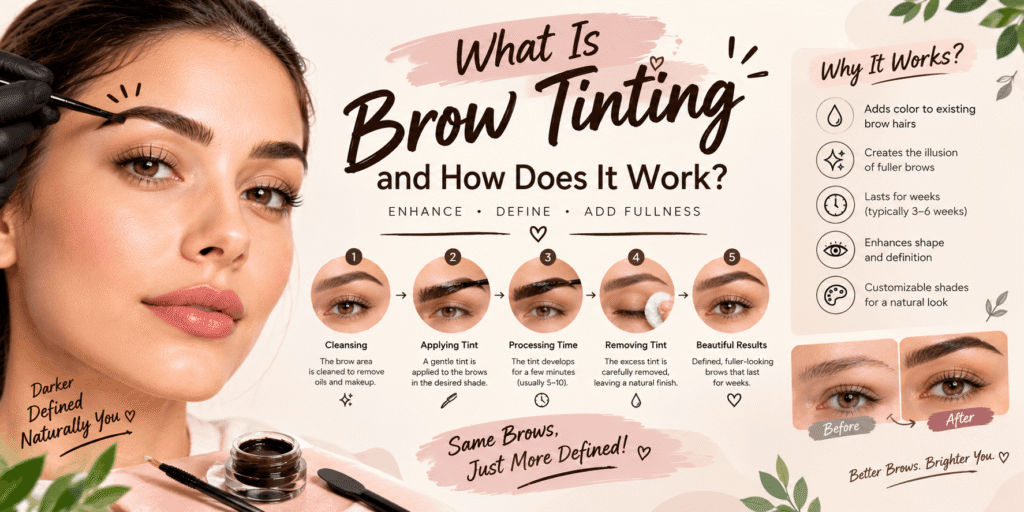
Brow tinting is a cosmetic treatment that uses a specially formulated colouring product to darken eyebrow hairs temporarily. It is designed to make existing hairs more visible, which can help brows look fuller and more defined. Unlike eyebrow pencils and powders, which sit on the surface during makeup application, a tint colours the hairs themselves.
Some products may also leave a temporary stain on the skin beneath the eyebrows, depending on their formulation and how they are applied. This can make sparse areas appear slightly more filled in, although the effect varies from product to product. Brow tinting does not create new hair follicles or permanently increase eyebrow density. Instead, it enhances the appearance of the hair that is already present.
The treatment can be performed by a trained beauty professional or, with appropriate products and careful attention to the instructions, as part of an at-home beauty routine. However, not every hair dye is suitable for eyebrows. Products intended for scalp hair or other body areas should not automatically be used near the eyes.
Brow Tinting vs. Eyebrow Makeup
Eyebrow makeup and brow tinting can both improve the appearance of your brows, but they work in different ways. A pencil can create fine strokes that imitate individual hairs, while powder can fill larger gaps and pomade can produce a more defined, sculpted shape. These products offer flexibility because you can change your look whenever you remove your makeup.
Brow tinting focuses mainly on enhancing the colour of your natural eyebrow hairs. Once the tint has developed and the treatment is complete, you may find that your brows look more noticeable even when you are not wearing makeup. This can simplify your daily routine, particularly if you usually spend several minutes filling in your eyebrows.
The two approaches can also be used together. For example, you might tint your brows to give the hairs a richer colour and then use a pencil to fill a small gap or extend the tail. The goal is not necessarily to eliminate eyebrow makeup completely but to reduce how much you need.
Who Can Benefit From Brow Tinting?
If your brows contain a mixture of light and dark hairs, a suitable tint may help create a more consistent appearance. People with naturally full eyebrows may also enjoy the treatment because it can make their existing shape more noticeable without requiring additional filling products.
However, tinting cannot replace missing hair. If your eyebrows have significant gaps, very little hair, or thinning that has developed suddenly, a tint may not provide the coverage you expect. A pencil, powder, or other cosmetic method may be more suitable for filling areas where hair is absent.
People with sensitive skin, a history of reactions to hair dyes, or existing irritation around the eyes should be particularly cautious. A qualified professional can help assess whether a treatment is appropriate, but no tinting method is completely free from the risk of irritation or an allergic reaction.
How to Choose the Right Brow Tint Shade
Choosing the right colour is one of the most important parts of brow tinting. A shade that is too dark can make the eyebrows appear harsh, while one that is too light may not create enough definition. The best choice usually complements your natural colouring and produces a result that looks balanced with your hair, skin, and overall style.
Rather than choosing a colour based only on the darkest hairs in your eyebrows, consider how you want the finished look to appear. A soft, natural result often requires less contrast than a bold, sculpted brow. When in doubt, a conservative colour choice is generally easier to manage than a shade that looks significantly darker than expected.
Choosing a Tint for Blonde and Light Brown Brows
People with blonde, dark blonde, or light brown eyebrows may prefer a soft brown or taupe shade. These colours can make fine hairs easier to see while maintaining a gentle appearance. Very dark tint can sometimes create too much contrast, especially if the person’s natural hair and brows are light.
If your eyebrow hairs are almost invisible in certain lighting, a subtle increase in depth may be enough to create a noticeable difference. You do not necessarily need to choose a colour that matches the darkest shade in your hair.
The desired finish also depends on personal preference. Some people like a barely-there enhancement, while others prefer a stronger eyebrow shape. Discussing the intended result before a salon treatment can help avoid choosing a shade that feels too dramatic.
Choosing a Tint for Brown and Black Brows
Medium brown and dark brown shades can work well for many people with naturally brown eyebrows. The aim is to enhance the existing hairs without making the brows look unnaturally flat or overly dark.
For naturally black hair, a deep brown tint may create a softer result than an intense black shade. Black products can look particularly bold when applied to fine hairs or when the surrounding skin is light. The most suitable colour depends on the original brow shade and the effect you want to achieve.
People with dark eyebrows do not always need a darker tint. Sometimes, improving the consistency of the colour is more useful than increasing its depth. A professional can help select a shade that works with your natural colouring and desired style.
Matching Your Brows to Your Hair Colour
Your eyebrows do not have to match your hair colour exactly. Natural hair often contains several tones, and eyebrows may naturally be darker or lighter than the hair on your head. Trying to achieve an exact match can sometimes make the result look less natural.
If you have recently dyed your hair, consider whether you want your eyebrows to blend with the new colour or maintain some contrast. For example, someone with warm blonde hair might prefer a neutral or softly warm brow shade, while a person with cool-toned hair may prefer a more neutral brown.
For red, copper, or fashion-coloured hair, the best eyebrow shade depends on how bold or understated you want your overall appearance to be. You generally do not need to tint your eyebrows to the same vivid colour as your hair. A complementary brown or neutral shade can create a more balanced finish.
What Happens During a Brow Tinting Appointment?
A professional brow tinting appointment usually begins with a discussion about your natural eyebrow colour, preferred result, and any known sensitivities. The technician should explain the product being used and check whether you have had previous reactions to similar treatments. This is also a good time to discuss whether you want a subtle enhancement or a more defined appearance.
The eyebrow area is then prepared according to the product instructions. The professional may remove makeup and surface residue so the tint can be applied evenly. If shaping is included, the technician may discuss the intended outline before removing any stray hairs. Tinting and shaping are separate services, however, so confirm what your appointment includes.
Preparing the Brows Before Tinting
Arriving with clean eyebrows can make preparation easier. Avoid applying heavy brow makeup or oily products immediately before your appointment unless the salon advises otherwise. Tell the technician about any recent irritation, cuts, skin treatments, or previous reactions around your eyes.
Do not assume that a product is safe simply because it is labelled natural or gentle. Ingredients can cause reactions in some individuals, and products designed for the scalp may not be suitable for use around the eyes. A proper assessment and following the manufacturer’s instructions are important parts of the process.
Patch testing should be handled according to the specific product’s directions and the professional’s safety procedures. A negative patch test cannot guarantee that a reaction will never occur, so it remains important to watch for symptoms after treatment.
Applying and Developing the Tint
Once the brows are prepared, the tint is applied to the eyebrow hairs according to the product instructions. The application needs to be controlled because the skin around the eyes is delicate and the colouring product must be kept away from the eyes themselves.
The product is left in place for the time specified by its manufacturer. The development time can vary depending on the formula and desired result, so there is no single timing rule that applies to every tint. Leaving a product on longer than directed is not a reliable way to achieve a better colour and may increase the risk of irritation.
After the recommended development period, the product is removed as instructed. The professional then checks the colour and overall appearance. If shaping is included, any additional work should be performed carefully to avoid unnecessary irritation.
What Your Brows May Look Like Immediately Afterwards
Freshly tinted brows can initially look more intense than expected. This may happen because the hairs have taken on a deeper colour and some products temporarily colour the skin beneath them. The initial appearance can therefore differ from the softer result you notice later.
Avoid judging the final look under only one type of lighting. Indoor lighting, daylight, and camera flash can all change how the colour appears. If the brows look darker than you wanted, do not immediately apply harsh cleansers or attempt aggressive removal methods, as these can irritate the skin.
Follow the professional’s aftercare advice and allow the tint to fade naturally as appropriate for the product. If you experience significant burning, swelling, pain, or other signs of a reaction, seek prompt medical advice rather than waiting for the colour to fade.
Brow Tinting Aftercare: How to Maintain Your Results
Aftercare plays an important role in keeping freshly tinted eyebrows looking neat and evenly coloured. Although the exact instructions depend on the product used, gentle handling and avoiding unnecessary irritation can help you maintain the result. The first day is a good time to be particularly careful with your brow area, especially if your skin is sensitive.
What to Avoid After Brow Tinting
Follow the aftercare instructions provided by your technician or the tint manufacturer. Depending on the product, you may be advised to avoid getting the brows excessively wet for a short period, using harsh cleansers around them, or applying strong exfoliating products to the area.
Avoid rubbing or scratching your eyebrows, even if the skin feels slightly dry. Aggressive rubbing can irritate the skin and may cause the colour to fade unevenly. If you use facial scrubs, exfoliating acids, retinoids, or other active skincare ingredients, be careful when applying them close to freshly tinted brows.
Heat, sweat, and frequent cleansing may also affect the appearance or longevity of some tints. You do not necessarily need to avoid normal daily activities, but it is sensible to follow the specific product guidance rather than assuming every tint has identical aftercare requirements.
If your skin develops persistent redness, itching, swelling, or a burning sensation, stop using products on the affected area and seek medical advice. Severe swelling around the eyes or any breathing difficulty requires urgent medical attention.
Keeping Your Eyebrows Clean and Conditioned
Once the initial aftercare period has passed, clean your face with a gentle cleanser and avoid unnecessary friction around the eyebrows. There is no need to scrub the hairs to keep them clean. A light touch is usually sufficient for removing everyday dirt, oil, and makeup.
You can continue using your usual moisturiser around the brow area if it does not cause irritation and is suitable for that part of your face. Avoid applying heavy or unfamiliar products directly over irritated skin. If you use brow gels or styling products, choose formulas that feel comfortable and remove them gently at the end of the day.
Some people use a small amount of brow conditioner to keep the hairs looking smooth. These products may improve the feel and appearance of eyebrow hairs, but they do not make tint permanent or guarantee faster hair growth. Avoid getting cosmetic products into your eyes.
How Long Does Brow Tinting Last?
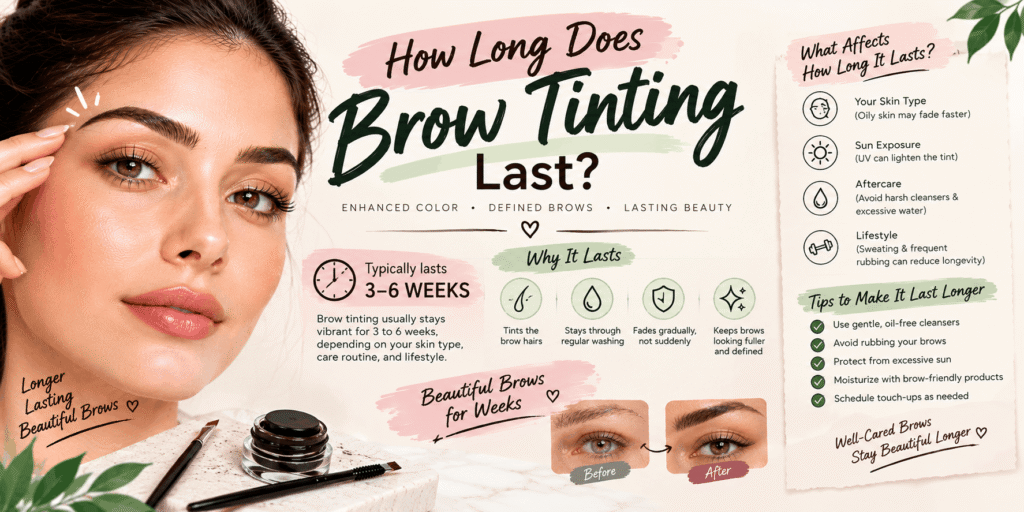
The results of brow tinting are temporary, and the colour gradually becomes less noticeable. How long it lasts depends on the formulation, your natural eyebrow hair cycle, the amount of skin staining produced, your skincare routine, and how frequently you cleanse the area.
Colour on the hairs may remain visible for a different length of time from any temporary stain on the skin. Skin staining often fades sooner as the skin naturally renews itself, while colour on the hairs gradually diminishes as the hairs are washed, exposed to daily wear, and eventually shed.
Factors That Affect How Quickly the Tint Fades
Your skincare habits can influence how quickly the colour loses its intensity. Frequent use of exfoliating acids, oil-based removers, or strong cleansers around the eyebrows may affect some tint formulas. However, the effect varies between products, so the manufacturer’s advice should take priority over general rules.
Natural skin type and hair characteristics also matter. Oily skin may cause certain skin stains to fade more quickly, while the colour retained by eyebrow hairs depends on the hair itself and the tint formulation. Sun exposure and repeated friction may also influence how the colour looks over time.
The initial colour choice can affect how noticeable fading becomes. A subtle brown shade may fade in a way that looks natural, while a very dark shade can make the difference between freshly tinted and faded brows more obvious.
When Should You Tint Your Brows Again?
There is no single schedule that suits everyone. It is better to consider the condition of your brows, the product’s recommended interval, and whether your previous treatment caused any irritation. Avoid repeating the treatment more frequently than the manufacturer or qualified professional recommends.
Tinting again too soon may increase exposure to ingredients that can irritate the skin or trigger an allergic reaction. If your brows still look balanced, you do not need to repeat the treatment simply because a certain number of days has passed.
If the colour fades unevenly, resist the temptation to apply additional tint immediately. Check the product instructions and allow the recommended interval before another application. If you have experienced redness, itching, swelling, or other unusual symptoms, do not tint again until you have received appropriate advice.
At-Home Brow Tinting: What You Need to Know
At-home brow tinting can be convenient for people who prefer to manage their beauty routine themselves. However, products used around the eyes require particular care. The area is delicate, and an unsuitable colouring product can cause irritation or injury. Choosing a product specifically intended for eyebrows and following its directions is essential.
Choosing a Suitable Brow Tint Product
Read the packaging carefully before purchasing a brow tint. Confirm that it is specifically designed for eyebrow use and check the ingredient list, application instructions, warnings, and any restrictions. Do not use ordinary scalp hair dye on your eyebrows unless the product is explicitly approved for that use.
Consider the colour range as well as the formula. A shade that is slightly softer than your desired result may be a more cautious starting point than choosing the darkest available option. Remember that the final appearance can depend on your natural brow colour and the amount of colour the product deposits.
Avoid products with unclear labelling or missing safety information. If you are uncertain whether a formula is appropriate for the eye area, ask a qualified professional rather than experimenting with it.
Performing a Patch Test and Preparing Your Skin
Follow the manufacturer’s patch-testing instructions before each use when required. A patch test can help identify some reactions, but it cannot guarantee that an allergic reaction will not occur during or after application.
Do not apply tint to broken, inflamed, or irritated skin. If you have a history of reactions to hair dyes or cosmetic colouring products, consult a healthcare professional before using another formula. Some hair dyes contain ingredients that can cause allergic reactions, and previous tolerance does not guarantee future tolerance.
Keep the product away from your eyes and use only the tools and application method specified by the manufacturer. Do not improvise with products designed for other body areas, and never leave a tint on longer than directed in an attempt to make the colour darker.
Applying the Tint Carefully
Work in a well-lit area where you can see the natural shape of your eyebrows clearly. Read all directions before opening the product so you understand how to mix, apply, and remove it if mixing is required. Use only the recommended amount and avoid spreading the product beyond the intended brow area.
Keep the application controlled rather than trying to colour a large area of skin. If the product enters your eye, follow the label’s first-aid instructions and rinse promptly as directed. Seek urgent medical advice if you develop eye pain, persistent irritation, or changes in vision.
After removing the tint, check the skin and brows for any unusual reaction. Do not immediately repeat the application if the colour looks lighter than expected. Repeated colouring can increase the risk of irritation and will not necessarily produce a more natural result.
Common Brow Tinting Mistakes and How to Avoid Them
One frequent mistake is choosing a shade that is much darker than the natural brows. Darker colour can create definition, but too much contrast may make the result appear harsh. If you are unsure, choose a colour based on your natural brow hairs and the finish you want rather than selecting a shade simply because it looks striking on the packaging.
Another mistake is applying the product outside the natural eyebrow shape. Uneven application can leave visible marks or make the brows appear wider than intended. Take time to understand the intended shape, and avoid attempting major reshaping during a simple tinting session.
Leaving tint on for longer than instructed is also risky. Development times are designed for a specific formula, and extra time does not guarantee a better result. It may instead increase the likelihood of irritation or an overly intense colour.
Some people try to correct an unexpectedly dark result with strong cleansers, exfoliants, or repeated rubbing. These methods can irritate the delicate skin around the eyes. Follow the product’s removal guidance and seek professional advice if you are unsure how to address the result.
Finally, do not assume that a natural-looking result means the treatment is risk-free. Cosmetic dyes can cause irritation or allergic reactions, and the eye area needs careful handling. Use an appropriate product, follow the instructions, and stop if a concerning reaction occurs.
Final Thoughts
Brow tinting can be a useful option for anyone who wants more defined eyebrows without relying entirely on daily makeup. By adding temporary colour to existing hairs, it can make natural brows look more noticeable and help create a balanced appearance. The result can be subtle or bold depending on your natural colouring, chosen shade, and preferred style.
Choosing an appropriate product, understanding the application process, and following aftercare instructions are essential parts of a successful treatment. At-home tinting requires particular caution because the product is used close to the eyes. Never substitute scalp hair dye for an eyebrow-specific product, and do not ignore warnings or extend the recommended development time.
The best brow tinting result is one that complements your natural features while keeping the skin comfortable and healthy. If you have sensitive skin, a history of dye reactions, or uncertainty about which product to use, seek professional or medical guidance before proceeding. With careful choices and realistic e
Brow tinting can make existing eyebrow hairs more visible, which may create the impression of fuller brows. However, it does not create new hairs or fill areas where no hair is present. If you have significant gaps, a brow pencil, powder, or another suitable cosmetic product may help provide additional coverage.
The colouring process itself is not generally intended to be painful. However, some people may experience irritation or discomfort if a product is unsuitable for their skin or comes into contact with sensitive areas. Burning, swelling, or persistent itching should not be treated as a normal part of the process. Stop using the product and seek appropriate advice if these symptoms occur.
Yes, tinting may make the existing hairs in sparse eyebrows more noticeable. However, the treatment cannot colour hair that is not there, so it may not create the filled-in appearance some people want. Combining a subtle tint with carefully applied brow makeup can provide more coverage.
People with sensitive skin need to be cautious because colouring products may cause irritation or allergic reactions. Check the product instructions and patch-test as directed, but remember that a patch test cannot guarantee complete safety. Avoid tinting irritated or broken skin, and consult a healthcare professional if you have a history of reactions to hair dyes.
One Comment