
A warm, sun-kissed complexion does not have to come from spending hours in the sun or applying a heavy layer of bronzer. Bronzing drops offer a simple way to add warmth, subtle radiance, and a more luminous appearance to your everyday makeup routine. Depending on the formula, you can mix them with moisturizer, wear them beneath foundation, or apply them directly to selected areas for a soft bronze finish.
What makes bronzing drops interesting is their versatility. Some formulas create a sheer tint that looks like a natural glow, while others provide visible shimmer or a deeper bronze effect. Certain products are designed primarily for temporary makeup results, whereas self-tanning drops contain ingredients intended to gradually develop colour in the skin. Understanding that distinction helps you choose a product that matches the finish you want.
What Bronzing Drops Actually Do for Your Skin
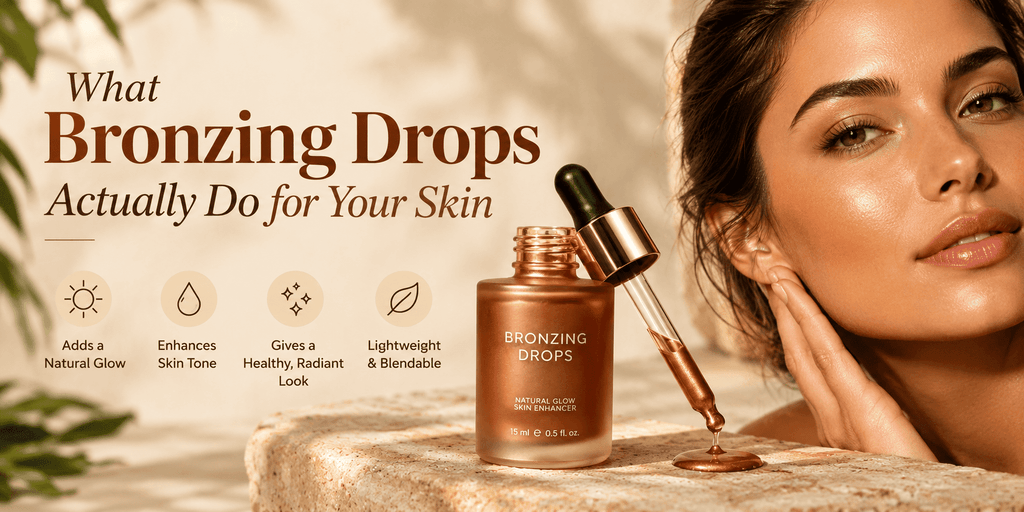
Bronzing drops are concentrated liquid complexion products designed to give the skin a warmer, more bronzed appearance. They may contain pigments, light-reflecting particles, moisturizing ingredients, or a combination of these. The exact result depends on the formula, the amount applied, and whether you use the drops alone or mix them with another product.
Unlike traditional powder bronzer, which is generally applied after foundation to add dimension, liquid bronzing drops can be incorporated into several steps of a routine. Mixing a small amount with moisturizer may create an all-over glow, while applying them over makeup can add warmth to particular areas. Some formulas work well as a subtle base, but others are more suitable for targeted highlighting because of their shimmer or pigment intensity.
It is important to understand that cosmetic bronzing drops do not necessarily change your natural skin colour. Most makeup-style formulas create a temporary effect that can be removed during cleansing. They should not be confused with products designed to develop a longer-lasting tan, and a bronzed appearance does not mean the skin has gained protection from ultraviolet radiation.
The finish can range from soft and natural to glossy and reflective. If you prefer a barely noticeable change, a sheer formula may be more suitable than a highly pigmented liquid. If you enjoy a luminous makeup look, a product with fine light-reflecting particles can make the complexion appear more radiant. The goal is to select a formula that complements your existing makeup rather than overpowering it.
Bronzing Drops vs. Self-Tanning Drops
Although the names sound similar, bronzing drops and self-tanning drops serve different purposes. Understanding the difference is particularly important if you want to avoid unexpected colour changes.
Traditional bronzing drops use cosmetic pigments to create a temporary bronze effect. Their colour is generally visible as soon as the product is applied, and it usually comes off when you remove your makeup. This makes them useful when you want to adjust your complexion for a particular look or occasion without committing to a longer-lasting change.
Self-tanning drops, by contrast, typically contain a tanning ingredient such as dihydroxyacetone (DHA), which reacts with components in the outermost layer of the skin to develop temporary colour over several hours. The result is not the same as a makeup pigment sitting on the skin’s surface, and it does not wash away as easily with a quick makeup-removal step.
Some products combine illuminating ingredients with a gradual tanning formula, so the label matters more than the name alone. Check the instructions to determine whether the product is intended for immediate cosmetic colour, gradual tanning, or both. Neither type should be treated as sunscreen.
Choosing Bronzing Drops That Suit Your Complexion
The best bronzing drops are not necessarily the darkest or most expensive ones. A suitable formula should work with your natural complexion, your preferred makeup finish, and the products you already use. Think about whether you want a subtle warmth, a noticeable bronze tint, or a reflective glow before choosing a shade.
For fair skin, a light bronze or soft golden tone may create a gentle sun-kissed effect without looking too orange or intense. Medium complexions may suit warmer bronze shades, depending on their undertones, while deeper skin tones can benefit from formulas with enough pigment to remain visible without leaving an ashy or chalky cast. These are general starting points rather than strict rules because undertones and individual preferences vary.
Undertones can also affect the final result. Golden or warm undertones may pair naturally with golden-bronze shades, while neutral undertones can often accommodate a wider range of colours. If your skin has cool or rosy undertones, a more balanced bronze may look more harmonious than a strongly orange shade.
Whenever possible, test the product in natural light. Indoor lighting can make a shade appear more golden, pink, or muted than it looks outdoors. Allow the product to settle before judging the colour, especially if you are mixing it with moisturizer or another complexion product.
Finding the Right Formula for Your Skin Type
For Dry Skin
If your skin tends to feel tight or flaky, look for a formula that works comfortably with your moisturizer and does not emphasize dry patches. Some bronzing drops contain moisturizing ingredients, but they should not automatically replace your regular skincare products.
Prepare your skin with a suitable moisturizer and allow it to settle before applying the drops. If the formula is designed to be mixed with skincare, follow the product’s directions rather than assuming every liquid bronzer can be blended into any cream. Applying too much pigment over uneven texture can make the finish look patchy.
For Oily or Combination Skin
A lightweight formula may be preferable if your skin becomes shiny throughout the day. Consider whether you want a natural sheen or a more reflective finish, since products with noticeable shimmer can make shine more apparent in some areas.
Try applying the drops sparingly and build the colour gradually. If you use foundation or setting powder, check how the products layer together. Some combinations may separate or become uneven, so testing your routine before an important event can help you identify a better application method.
For Sensitive Skin
People with sensitive skin should pay attention to the full ingredient list, particularly if fragrance or certain cosmetic ingredients have caused reactions in the past. A product marketed as gentle is not guaranteed to suit everyone.
Test a new product on a small area according to appropriate product guidance before applying it across your face. Avoid using it on irritated or broken skin, and stop if you experience persistent burning, swelling, itching, or a rash. Seek medical advice if a reaction is severe or does not settle.
Six Bronzing Drops and Glow Enhancers Worth Knowing
The products below represent different approaches to a bronzed or luminous complexion. They are not interchangeable: some emphasize bronze pigment, others focus on radiance or highlighting, and one option is designed around gradual self-tanning. Availability, shade ranges, and formulations can change, so check the current product information before purchasing.
1. Drunk Elephant D-Bronzi Anti-Pollution Sunshine Drops
Drunk Elephant D-Bronzi is known as a concentrated bronzing product designed to give the complexion a warmer appearance. It is generally used by mixing a small amount with a compatible moisturizer or another product according to the manufacturer’s instructions. This makes it appealing to people who prefer adjusting the intensity instead of applying a full-coverage bronzing base.
The main attraction is its flexible finish. You can start with a small amount and gradually find a level of warmth that suits your complexion. Because it is concentrated, using too much at once may create a stronger colour than you intended. Mixing should also be done in a way that follows the product directions and preserves the performance of your other skincare products.
D-Bronzi may appeal to someone who wants a bronze effect without using a traditional powder bronzer. However, the final colour depends on your skin tone, the amount used, and the products underneath. If you prefer a completely matte complexion, the finish may not match your usual makeup style.
2. Glow Recipe Watermelon Glow Niacinamide Hue Drops
Glow Recipe Watermelon Glow Niacinamide Hue Drops are positioned around a combination of complexion-enhancing colour and a radiant finish. They are an option to consider if you want your skin to look luminous rather than simply darker or more bronze.
The product’s appeal lies in the balance between tint and glow. Depending on the shade and amount applied, it may be used as part of a lightweight complexion routine or incorporated into a makeup look that favours a fresh, dewy appearance. Niacinamide is a skincare ingredient commonly used in cosmetic formulations, but its presence alone does not guarantee a particular result for every skin type.
If your main goal is a strong bronzed effect, check the available shades carefully before choosing this product. A luminous tint and a traditional bronzer serve different purposes, and the most flattering option depends on whether you prioritize warmth, radiance, or a combination of both.
3. Armani Beauty Fluid Sheer Glow Enhancer
Armani Beauty Fluid Sheer Glow Enhancer is a liquid complexion enhancer known for its luminous makeup effect. Rather than treating every shade as a traditional bronzing product, it is more useful to think of this type of formula as a way to add light, dimension, or a subtle tint, depending on the shade selected.
Its liquid format can suit people who prefer a fluid product over powder highlighting products. A small amount may be used on areas where you want more radiance, while a suitable shade may also complement a bronzed makeup look. The precise result depends on the shade and how it is applied.
Because a glow enhancer is not necessarily designed to deepen the complexion significantly, it may not be the best match if your priority is a noticeable bronze tint. Check the current shade descriptions and intended uses before purchasing, especially if you want to mix it with foundation or moisturizer.
4. Saie Glowy Super Gel
Saie Glowy Super Gel is a complexion product worth considering if your priority is a fresh, luminous finish rather than a strong bronze colour. Its lightweight gel texture makes it an option for people who enjoy a radiant makeup base and want their skin to look naturally glowing.
Depending on the shade selected, it can complement a bronzed makeup look or add light to areas where you want extra radiance. You can use a compatible product as a base or apply it selectively, following the brand’s directions. If you want more noticeable warmth, you may need a separate bronzing product because a glow enhancer is not always designed to provide the same depth of colour as a traditional bronzer.
This type of product may suit people who prefer a subtle glow for everyday wear. Those who dislike a dewy finish or have very oily skin may prefer applying it only to selected areas rather than across the entire face.
5. Charlotte Tilbury Hollywood Flawless Filter
Charlotte Tilbury Hollywood Flawless Filter is another complexion enhancer associated with a luminous, polished appearance. Although it is not simply a traditional bronzing drop, certain shades can complement a warm makeup look by adding radiance and a soft tint to the complexion.
Its main purpose is to enhance the appearance of the skin rather than create a deep, sun-tanned effect. It may be worn under foundation, mixed with complexion products where the manufacturer’s directions allow, or applied to specific areas for extra luminosity.
Shade selection is important because a product intended to brighten or illuminate the complexion may not provide the bronze effect you expect. Check the current shade descriptions and consider your skin tone before purchasing. If you want a distinctly sun-kissed result, pair a suitable glow enhancer with a separate bronzer rather than expecting every illuminating product to perform both jobs.
6. Isle of Paradise Self-Tanning Drops
Isle of Paradise Self-Tanning Drops differ from the temporary makeup-style products discussed above because they are designed to develop a gradual tan. Rather than providing only an immediate bronze pigment, self-tanning drops typically use an active tanning ingredient to create colour over several hours.
These drops are generally used with a compatible moisturizer according to the product’s directions. The amount used and frequency of application can affect the final depth of colour, so following the label is important if you want to avoid an uneven or overly dark result.
Because this is a self-tanning category, the application process differs from ordinary bronzing makeup. Prepare the skin as instructed, blend carefully around the hairline and other areas where colour can collect, and wash your hands after application if the directions recommend it. Allow the colour to develop as directed before deciding whether you need another application.
Self-tanning drops do not replace sunscreen. A developed tan does not mean your skin is protected from ultraviolet radiation, so continue using appropriate sun protection during the day.
How to Apply Bronzing Drops for a Natural Finish
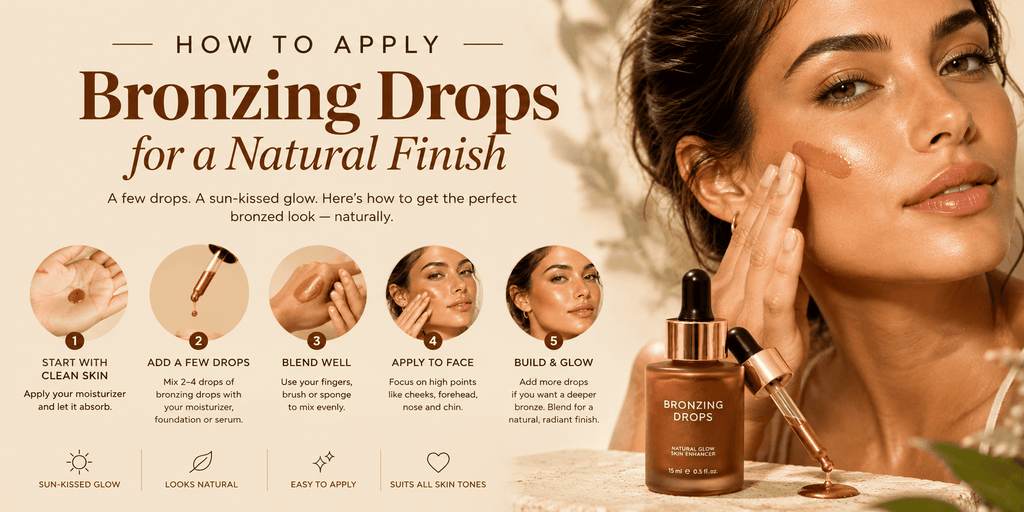
Even a good formula can look uneven if you apply too much product or layer it incorrectly. The easiest approach is to start with a small amount, blend thoroughly, and add more only if needed.
Start With Prepared Skin
Cleanse your face and apply the skincare products that suit your routine. If you use moisturizer, give it time to settle before applying makeup. This can help reduce the chance of products mixing unevenly or creating a slippery base.
During the daytime, apply sunscreen as a separate step when required. Do not assume bronzing drops provide sun protection unless the product is specifically labeled as sunscreen, and never rely on a bronzed appearance as evidence of UV protection.
Choose Your Application Method
If the product is designed to be mixed with moisturizer, follow the manufacturer’s directions and begin with a small quantity. Blend the products evenly before applying, and avoid mixing products together if their instructions advise against it.
For more targeted warmth, apply a small amount to areas where the sun would naturally create dimension, such as the upper cheek area and temples. Blend the edges carefully so there are no visible lines. Use a clean makeup sponge or brush if it helps you achieve an even finish.
If you plan to wear foundation, test the combination beforehand. Some liquid products layer well, while others may separate or change the texture of your base. Applying thin layers and allowing each product to settle can help you identify what works best.
Build the Colour Gradually
One of the biggest advantages of bronzing drops is that you can often control the intensity. Rather than applying a large amount immediately, start with a small quantity and assess the result in natural light. Add another thin layer only if the colour needs more depth.
Pay attention to your hairline, jawline, and neck. A warm face paired with a noticeably different neck can make the result look less natural. Blend any remaining product carefully and check the overall effect from different angles.
For a daytime look, keep the colour soft and concentrate on even blending. For evening makeup, you may prefer a more noticeable bronze effect, but a gradual application still gives you greater control.
Common Bronzing Drops Mistakes to Avoid
Using Too Much Product at Once
Concentrated formulas can become overpowering when applied heavily. Too much product may leave the complexion looking orange, excessively shiny, or uneven. Begin with a small amount and build the finish slowly instead of trying to achieve the final result in one application.
Choosing a Shade That Is Too Dark
A deeper shade does not necessarily create a more natural bronze. If the colour is too intense for your complexion, it may look muddy or leave an obvious contrast around the hairline and jaw. Select a shade that complements your undertone and intended makeup style rather than choosing solely by how dark it appears in the bottle.
Mixing Products Without Checking the Directions
Not every bronzing formula is designed to mix with every moisturizer, serum, or foundation. Combining products without checking their instructions may affect texture, spread, or performance. Follow the manufacturer’s guidance and test the combination before using it for a special event.
Forgetting to Remove Makeup Properly
Temporary bronzing pigments should be removed as part of your regular evening cleansing routine. Use a cleanser that suits your skin and follow with your usual skincare products. If you use self-tanning drops, remember that the developed colour may remain after ordinary makeup removal, so follow the product’s specific instructions.
Final Thoughts
Bronzing drops can be a useful addition to your makeup routine when you want a warm, luminous complexion without applying a heavy layer of bronzer. The right formula can add a subtle tint, create a radiant base, or provide a more noticeable bronze effect, depending on the product and how you apply it.
Start by deciding whether you want temporary cosmetic colour or a gradual self-tan. Then consider your skin type, undertone, preferred finish, and the products you already use. Begin with a small amount, blend carefully, and build the colour gradually for a result that looks balanced rather than overdone.
Most importantly, remember that bronzing drops are cosmetic products, not sun protection. Continue using suitable sunscreen and other protective measures, even when your skin looks naturally bronzed. With the right shade and a careful application technique, bronzing drops can help you achieve a soft, sun-kissed look that fits comfortably into your everyday routine.
Bronzing drops are liquid complexion products used to add warmth, a sun-kissed tint, or a radiant finish to the skin. Depending on the formula, they can be mixed with moisturizer, used beneath foundation, or applied to selected areas.
Yes, many cosmetic bronzing drops can be used daily if they suit your skin and are applied according to the product instructions. Remove makeup-style formulas during your evening cleansing routine and discontinue use if irritation develops.
No. Traditional bronzing drops generally create temporary colour using cosmetic pigments, while self-tanning drops usually contain ingredients such as DHA that develop colour over several hours. Check the product label to understand which type you are buying.
2 Comments