
Sun protection becomes much easier to maintain when the product fits naturally into your daily routine. For people who dislike thick creams, struggle to spread lotion evenly, or want a convenient option for outdoor activities, sunscreen spray can be an appealing alternative. Its lightweight application makes it easy to cover larger areas of the body, although getting reliable protection depends on more than simply spraying it over your skin.
Different sunscreen sprays offer different levels of protection, finishes, and application methods. Some are designed for the face, while others are intended primarily for the body. Understanding these differences can help you choose a product that suits your skin, climate, and daily activities without confusing convenience with effectiveness.
Why Sunscreen Spray Deserves a Place in Your Sun Care Routine
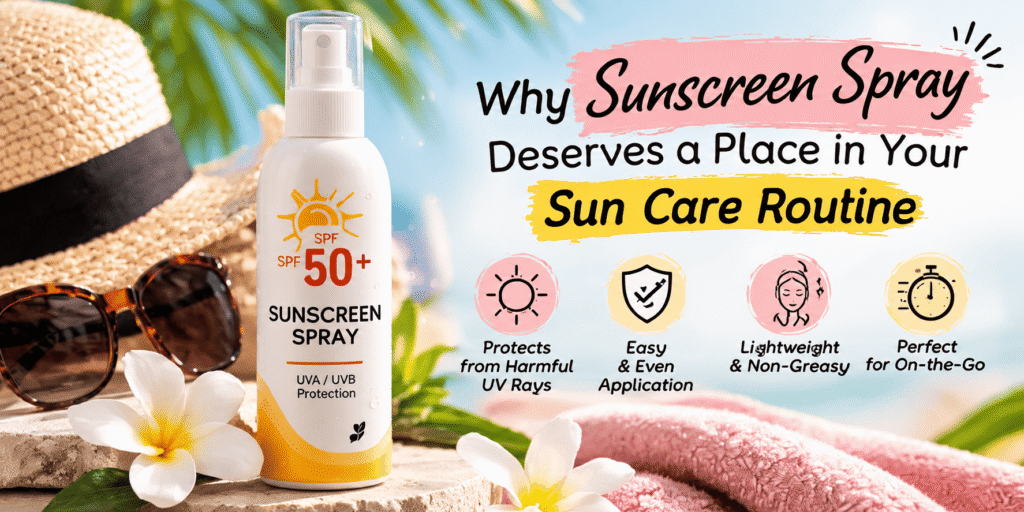
Sunscreen spray is a sun-protection product that comes in a spray container and is applied to the skin rather than spread directly from a tube or bottle. Depending on the formulation, it may release a fine mist, a more concentrated spray, or a sprayable lotion. Once applied correctly, it helps protect the skin against ultraviolet radiation according to the product’s labelled SPF and broad-spectrum claims.
One of its biggest advantages is convenience. Applying lotion to your arms, legs, shoulders, and back can take time, especially when you are getting ready for the beach, a walk, or a day outdoors. A spray can make these areas easier to reach, although you may still need to spread the product with your hands to achieve an even layer.
The format can also suit people who dislike the feeling of heavy skincare products. Many spray formulations are designed to feel light on the skin, making them appealing during warm weather. However, the finish depends on the ingredients, and not every spray dries quickly or feels completely invisible. Some may leave a shiny surface or a noticeable residue.
Sunscreen spray should not be considered automatically superior to lotion, sunscreen sticks, or creams. The most effective option is one that provides suitable protection and that you can apply generously and reapply as directed. A lotion may be easier for some people to measure and spread, while a spray may be more convenient for covering larger body areas. Both formats can be useful when used correctly.
Understanding SPF and Broad-Spectrum Protection
SPF stands for Sun Protection Factor. It primarily indicates how well a sunscreen protects against UVB radiation under standardized testing conditions. UVB rays are strongly associated with sunburn, but they are not the only type of ultraviolet radiation that matters for skin health.
UVA radiation can contribute to premature skin ageing and other forms of skin damage. For this reason, it is important to look for a sunscreen labelled broad-spectrum, which indicates protection against both UVA and UVB radiation under the applicable testing standards.
SPF 30 or higher is a common recommendation for everyday sun protection. A higher SPF does not mean you can apply a smaller amount or stay in direct sunlight indefinitely. No sunscreen blocks every ultraviolet ray, and the protection you actually receive can be reduced when the product is applied too thinly, missed in certain areas, rubbed away, or left unreapplied.
Water resistance is another label worth checking if you plan to swim, exercise, or spend time in hot weather. Products may be labelled water-resistant for a specified period, such as 40 or 80 minutes, depending on the applicable testing standard. Water resistance does not mean waterproof, and you should follow the directions on the particular product.
Finding a Sunscreen Spray That Fits Your Skin
Choosing a sunscreen spray should begin with your intended use rather than the packaging or fragrance. A product for everyday commuting may have different priorities from one used for swimming, hiking, or spending several hours outdoors. Consider the labelled protection, formulation, directions, and how comfortable it feels on your skin.
Your skin type can help guide the decision, but it should not be the only factor. People with oily skin may prefer a lightweight or non-greasy finish, while those with dry skin may appreciate a formula containing moisturizing ingredients. If your skin is sensitive, checking the ingredient list and avoiding known irritants can be especially helpful.
Fragrance is another consideration. A pleasant scent may make a product enjoyable to use, but fragranced formulas can irritate some people. If you are prone to skin reactions, a fragrance-free option may be worth considering. Even products labelled for sensitive skin can cause reactions in some individuals, so pay attention to how your skin responds.
The application method matters as much as the formula. Some sprays are aerosol products that release a fine mist, while others use a pump mechanism. Both can be convenient, but you should follow the product’s instructions carefully. Aerosol sprays require particular care around inhalation and ignition sources, and spraying directly into the face is generally not recommended.
Sunscreen Spray for Oily or Combination Skin
If your skin becomes shiny during the day, a lightweight formula labelled non-comedogenic may be worth considering. This label indicates that a product is designed to be less likely to clog pores, although it cannot guarantee that every user will avoid breakouts.
Allow the sunscreen to settle according to its directions before applying makeup or other products over it. Avoid assuming that a dry-touch or matte finish provides stronger UV protection than another finish. Protection depends on the product’s tested formulation and whether you apply enough of it.
Sunscreen Spray for Dry Skin
Dry skin may benefit from a sunscreen formula that includes moisturizing ingredients. However, a spray should not replace your regular moisturizer unless the product is specifically formulated to serve both purposes and meets your needs.
If your skin feels tight after application, review the full routine rather than layering several new products at once. A suitable moisturizer underneath your sunscreen may improve comfort, provided the products work well together and you allow each layer to settle according to its directions.
Sunscreen Spray for Sensitive Skin
Sensitive skin may respond better to a fragrance-free formula with ingredients you already know your skin tolerates. However, labels such as gentle or sensitive do not guarantee that a product will suit everyone.
Read the ingredient list carefully, especially if you have previously reacted to particular sunscreen ingredients. When introducing a new formula, test it on a small area of skin according to appropriate product guidance before using it more widely. Stop using the product if it causes persistent irritation, redness, or discomfort.
Sunscreen Spray Mistakes That Can Reduce Your Protection
Sunscreen spray is convenient, but convenience can sometimes lead to uneven application. Unlike a cream that you can see spreading across your skin, a fine mist may leave you uncertain about how much product has actually settled on each area. A skin surface that looks slightly shiny or feels covered does not necessarily have enough sunscreen to provide the labelled protection.
One frequent mistake is spraying too quickly. Moving the container across your body in a single pass may leave gaps, particularly around the shoulders, legs, and sides of the torso. Work methodically, follow the product’s application directions, and rub the sunscreen in when instructed. If you cannot confirm that a spray has covered an area adequately, consider using a lotion or cream for that section.
Another problem is relying on sunscreen only when the weather is hot or sunny. Ultraviolet exposure can occur on cooler days, and some UV radiation passes through clouds. Your need for sun protection depends on factors such as the UV index, time outdoors, location, and activities, rather than temperature alone. Making sunscreen part of your regular outdoor routine can help you avoid forgetting it when conditions change.
Some people also apply sunscreen once in the morning and assume the protection will last all day. Sunscreen can wear away through sweat, water, clothing friction, and ordinary activity. Reapplication is therefore essential, particularly during outdoor exercise or long periods in direct sunlight.
Finally, sunscreen should not be treated as permission to remain in the sun indefinitely. Even with correctly applied sunscreen, you should use shade and protective clothing and avoid unnecessary exposure when UV levels are high.
Why Spraying Over Makeup May Not Be Enough
Reapplying sun protection over makeup can be challenging because you may not want to disturb your foundation or other cosmetics. A fine mist can seem like an easy solution, but a light application may not provide the coverage needed to achieve the product’s labelled SPF.
If you choose a facial sunscreen spray, check whether its instructions specifically explain how to apply it over makeup. Follow the stated method and do not assume that a few sprays from a distance are sufficient. Some people prefer using a compatible sunscreen product that can be spread evenly without disrupting their makeup.
Another option is to plan your morning routine around sun protection. Apply an appropriate facial sunscreen before makeup, allow it to settle according to the instructions, and use additional protection during the day as required. A hat, sunglasses, and shade can also help reduce exposure without requiring you to repeatedly adjust your cosmetics.
Is Sunscreen Spray Safe for Children?
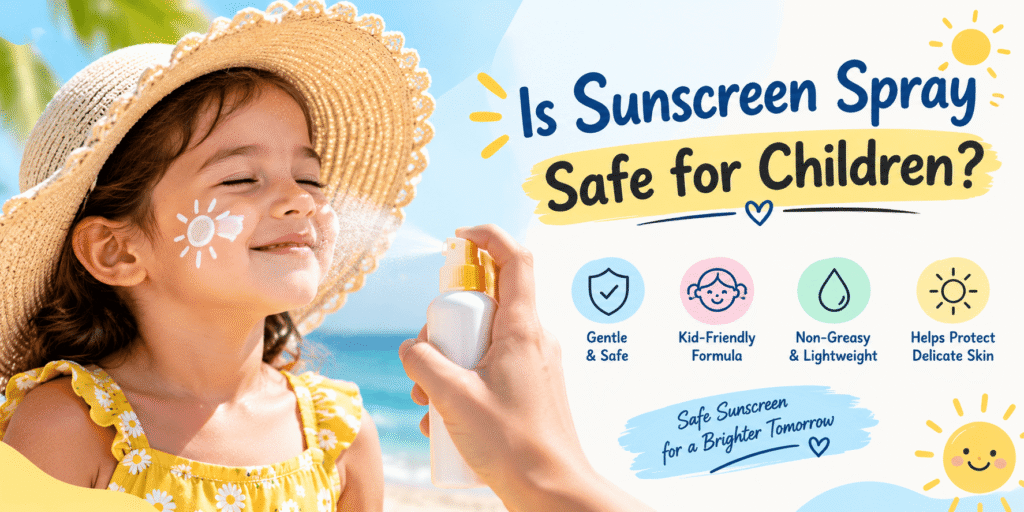
Sunscreen can be an important part of protecting children’s skin, but spray products require extra care. Children may move suddenly, turn their faces toward the mist, or accidentally inhale the product. For this reason, spraying directly onto a child’s face is not appropriate.
Follow the age recommendations and instructions on the product label. Apply the sunscreen carefully, keeping it away from the eyes and mouth, and use your hands to spread it when the directions call for that. For young children or anyone who cannot cooperate reliably during application, a lotion may be easier to control.
Infants younger than six months generally need special sun-protection precautions, including shade and protective clothing. Ask a healthcare professional for guidance before using sunscreen on an infant, particularly if the child will be exposed to direct sunlight. For older children, sunscreen should be combined with clothing, hats, shade, and regular reapplication.
Using Sunscreen Spray in Different Situations
The way you use sunscreen may change depending on where you are going and how long you expect to stay outside. A short walk, an afternoon at the beach, and an outdoor sports session place different demands on your sun-care routine. Choosing a suitable formula and planning for reapplication can make protection easier to maintain.
Sunscreen Spray for Hot and Humid Weather
Hot weather can make heavy skincare products feel uncomfortable, which is one reason some people prefer a spray. A lightweight formula may feel more pleasant during humid conditions, but sweat can still affect how long sunscreen remains on your skin.
Choose a product suited to your activity and follow its water-resistance claims. If you sweat heavily, reapply according to the label and after the activities specified by the manufacturer. Do not wait until your skin looks dry or until the product seems to have disappeared.
Humidity can also make skin feel sticky when several products are layered together. If that happens, review the amount and type of moisturizer you use underneath sunscreen rather than applying less sunscreen than recommended. Sun protection depends on adequate coverage, even when you want a lighter skincare routine.
Sunscreen Spray for Swimming and Outdoor Sports
Swimming, running, cycling, and other outdoor activities can involve extended sun exposure. For these situations, look for sunscreen with an appropriate SPF, broad-spectrum protection, and water-resistance labelling when relevant. A water-resistant product may be more suitable than one without that claim, but it still needs to be reapplied as directed.
Apply sunscreen before starting your activity, allowing the product to settle according to its instructions. Do not rely on a quick application immediately before entering the water if the label recommends applying it earlier. After swimming or towel-drying, check the directions for reapplication, even when the product is labelled water-resistant.
Sunscreen spray may be useful for covering exposed arms and legs, but it can be difficult to judge whether you have applied enough to areas such as the back of your neck or the tops of your feet. Ask for help with hard-to-reach areas or use another suitable sunscreen format when needed.
Outdoor sports also create opportunities for sun protection to wear away through clothing, equipment, and repeated contact with surfaces. Plan to reapply during breaks and combine sunscreen with appropriate clothing and shade whenever possible.
Sunscreen Spray for Everyday Commuting
You do not need to be spending the day at the beach to benefit from sun protection. Walking to work, travelling to school, running errands, or sitting outdoors for lunch can all contribute to your daily ultraviolet exposure.
For everyday commuting, choose a broad-spectrum sunscreen with an appropriate SPF that feels comfortable enough to use consistently. If you spend most of your time indoors, consider your outdoor exposure, time of day, and the amount of sunlight reaching your surroundings when deciding how to manage your routine.
Apply sunscreen to exposed areas before heading outside, following the product’s instructions. Pay attention to the face, ears, neck, hands, and any other skin not covered by clothing. If your journey includes prolonged outdoor activity, reapply as directed rather than assuming the morning application will last throughout the day.
A spray may be convenient when you are getting ready quickly, but do not sacrifice even coverage for speed. If applying a spray in a busy or windy outdoor setting makes it difficult to control the product, a lotion or another suitable format may be a better choice.
How to Apply Sunscreen Spray Correctly
Correct application is essential if you want to receive the protection indicated on the label. Even a high-SPF product may provide less protection than expected when too little is used or parts of the skin are missed.
Read the Label Before Spraying
Start by checking whether the sunscreen is intended for the face, body, or both. Read its directions, recommended application method, age guidance, and water-resistance information. Some products require specific instructions for use, so avoid assuming that every spray works in exactly the same way.
Apply It Generously and Evenly
Apply the spray according to the manufacturer’s directions, keeping the container at the recommended distance from your skin. Move methodically across the area instead of relying on a quick pass. When the label directs you to rub the product in, use your hands to distribute it evenly.
Do not inhale the mist, and avoid spraying near the eyes or mouth. When applying sunscreen to the face, spray it into your hands first if the product instructions permit that method, then spread it carefully over the skin. Avoid using aerosol products near flames, cigarettes, or other ignition sources.
Do Not Forget Commonly Missed Areast43
Certain areas are easy to overlook when applying sunscreen in a hurry. These include the ears, back of the neck, hairline, shoulders, tops of the feet, and the backs of the hands. If your hair is thin or your scalp is exposed, consider appropriate scalp protection as well.
Ask someone to help with hard-to-reach areas, such as the middle of your back. Alternatively, use a lotion or cream on those areas if it allows you to achieve more reliable coverage.
Reapply as Directed
Follow the product label for reapplication, including instructions related to swimming, sweating, and towel-drying. Many sunscreens recommend reapplying at least every two hours while outdoors, but you should also follow any additional directions that apply to your particular product and activities.
Do not rely on the appearance of your skin to judge whether protection remains effective. Sunscreen can wear away without leaving an obvious sign that it needs to be reapplied.
Sunscreen Spray vs. Lotion: Which Is Better?
Both sunscreen sprays and lotions can provide effective sun protection when they offer suitable labelled protection and are applied correctly. The main difference is how easily you can use each format to achieve an adequate, even layer.
Sprays are convenient for covering larger body areas and may be useful when applying lotion feels messy or time-consuming. They can also make it easier to reach certain parts of the body, although assistance may still be necessary. Wind can carry the mist away, and it can be difficult to judge how much product has settled on the skin.
Lotions make it easier to see and spread the product across the skin. This can be particularly helpful when applying sunscreen to the face or to smaller areas that require careful coverage. However, some people find lotions heavier or less convenient to use during outdoor activities.
There is no single format that works best for everyone. You might prefer a lotion for your face and a spray for your arms and legs, or choose a lotion for your entire routine if it helps you apply enough sunscreen consistently. The important thing is to prioritize protection, adequate coverage, and regular reapplication over packaging or texture alone.
How to Store and Maintain Your Sunscreen Spray
Proper storage can help preserve your sunscreen according to the manufacturer’s recommendations. Keep the product in a suitable environment and avoid leaving it in extreme heat, such as inside a hot car for extended periods. Excessive heat can affect some formulations and may be particularly concerning for pressurized aerosol containers.
Check the expiration date and follow any instructions about how long the product remains suitable after opening. If the container is damaged, leaking, or showing unusual changes, follow the manufacturer’s advice about whether it should still be used.
Keep sunscreen away from direct flames and other ignition sources when the label identifies it as flammable. Never puncture or burn an aerosol container, even when it appears empty. Store the product safely away from young children and follow any disposal instructions on the packaging.
Common Questions About Sunscreen Spray
Can Sunscreen Spray Replace Sunscreen Lotion?
Yes. Sunscreen spray can replace lotion if it provides suitable broad-spectrum protection and you can apply it evenly and generously according to its directions. However, lotion may be easier to control for some areas, especially the face and other places where spray application is difficult.
Is Sunscreen Spray Suitable for the Face?
Some sunscreen sprays are intended for facial use, but not every body spray is suitable for the face. Check the label and avoid inhaling the product or spraying it directly toward your eyes, nose, or mouth. If the directions permit it, spraying the product into your hands before applying it to your face may offer better control.
How Often Should You Reapply Sunscreen Spray?
Many sunscreen products recommend reapplication at least every two hours while outdoors and after swimming, sweating, or towel-drying as directed. Always follow the specific instructions on your product, as water resistance and application requirements can vary.
Does Sunscreen Spray Work on Cloudy Days?
Yes. Ultraviolet radiation can reach your skin even when the sky is cloudy. Consider the UV index and your expected outdoor exposure rather than using temperature or visible sunshine as the only guide to sun protection.
Final Thoughts
Sunscreen spray can make sun protection more convenient, especially when you need to cover larger areas of skin or prefer a lightweight application. However, the real value of any sunscreen depends on its labelled protection, how well it suits your skin and activities, and whether you apply enough to achieve even coverage.
Choose a broad-spectrum formula with an appropriate SPF, check the directions before using it, and pay attention to water resistance if you swim or exercise outdoors. Apply it carefully, avoid inhaling the mist, and reapply as directed throughout the day.
Most importantly, treat sunscreen as one part of a complete sun-protection routine. Protective clothing, sunglasses, shade, and limiting unnecessary exposure during periods of high UV radiation all contribute to better protection. When you choose a product you feel comfortable using correctly and consistently, sunscreen spray can become a practical part of your everyday skincare routine.
Yes, sunscreen spray can be as effective as lotion when it provides suitable broad-spectrum protection and is applied evenly and generously according to the product’s instructions.
SPF 30 or higher is commonly recommended for everyday sun protection. Choose a broad-spectrum formula to protect against both UVA and UVB radiation.
Yes, sunscreen spray can be used daily on exposed skin. Follow the product’s application instructions and reapply as directed, especially during extended outdoor activities.


2 Comments