Dark blonde hair sits in that fascinating space between light brown and traditional blonde, which is exactly why it can look so different from one person to another. In bright light, it can suddenly reveal golden tones; indoors, it may look deeper and more muted. That change in appearance is part of what makes the shade so interesting.
Unlike very light blonde colors that can dominate an entire hairstyle, dark blonde tends to leave more room for dimension. You can add warmer pieces, cooler ribbons, darker roots, or barely noticeable highlights without losing the deeper character of the base color.
The best part is that you do not have to completely transform your hair to make dark blonde feel new. A few strategically placed tones can change the way the whole hairstyle catches the light.
What Makes Dark Blonde Hair So Appealing?
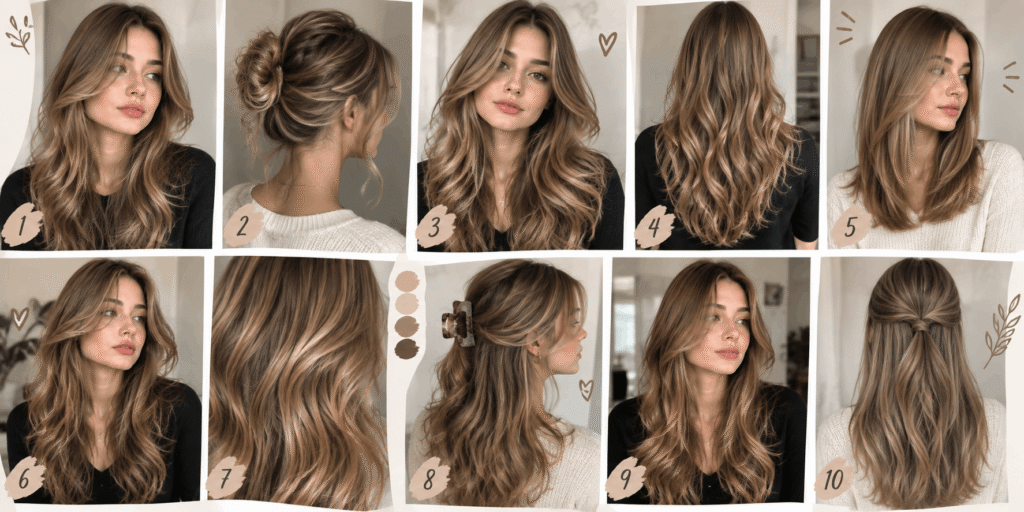
Dark blonde hair is not simply one exact shade. It can lean warm, cool, beige, golden, smoky, or slightly brown depending on the coloring technique and the starting hair color.
That flexibility makes it easy to personalize. Someone who loves warm colors might prefer honey or caramel tones, while someone who wants a quieter appearance may gravitate toward ash or smoky shades.
It can also create a particularly interesting effect when multiple tones are used together. Instead of one flat color from roots to ends, a stylist can build subtle differences that become visible when the hair moves.
Your natural hair color matters too. Dark blonde can be created as an all-over shade, blended gradually from darker roots, or introduced through highlights and balayage. The technique can make the same general color family feel completely different.
Here are 10 ideas that show just how much range this shade can have.
10 Dark Blonde Hair Ideas
1. Classic Dark Blonde
Sometimes the most interesting color is the one that does not try too hard. A classic dark blonde keeps the overall shade balanced between blonde and light brown, creating a natural-looking finish with enough brightness to keep the hair from appearing flat.
The appeal of this version comes from its simplicity. There are no dramatic streaks competing for attention, so the focus stays on the overall tone and healthy-looking shine.
It can work particularly well for someone who wants to move toward blonde gradually rather than jumping immediately to a very light shade. The result can feel polished while still looking believable.
You can also make the color slightly warmer or cooler depending on the effect you prefer. A beige direction gives it a soft appearance, while a subtle golden quality makes the hair look brighter when it catches the light.
If you want your first experience with dark blonde to feel versatile rather than extreme, this classic approach provides a useful starting point.
2. Honey Dark Blonde
Honey tones bring warmth into dark blonde hair without pushing the color all the way toward a bright golden blonde. The result can have a soft glow, particularly when the warmer pieces are placed through the mid-lengths and around the face.
The interesting thing about honey dark blonde is how differently it can appear under different lighting. Natural daylight can make the golden elements stand out, while indoor lighting may make the color look considerably deeper.
Instead of covering every strand with the same honey tone, you can ask for subtle variation. Keeping some deeper pieces underneath helps the warmer sections appear more dimensional.
This shade can also work beautifully with waves because movement allows the lighter honey sections to appear and disappear throughout the hairstyle. On straight hair, the placement of the color becomes more visible and can create a sleek, glossy effect.
If you like warm blonde but do not want an overly bright result, honey is one of the easiest ways to give dark blonde hair a little extra personality.
3. Dark Roots and Blonde Lengths
Dark roots can completely change the character of blonde hair. Rather than creating a uniform color from the scalp to the ends, the natural or intentionally deeper roots are allowed to remain visible before gradually transitioning into dark blonde lengths.
The contrast does not have to be dramatic. A soft transition can make the color look naturally grown-in, while a stronger difference creates a more noticeable, fashion-forward effect.
This idea is particularly interesting for people who like dimension because the darker root creates an immediate starting point for the lighter sections.
The transition can also be customized according to the length of your hair. On longer hair, the color can gradually develop through several tones before reaching the ends. On shorter hair, a closer transition may make the change more visible.
The result is a color that has depth at the top and brightness toward the bottom without making the entire hairstyle one uniform shade.
4. Iced Latte Blonde
Iced latte blonde takes dark blonde hair in a cooler, creamier direction. Rather than relying on strong yellow or golden tones, this look can combine beige, muted blonde, and soft brown elements.
The name fits the appearance because the color has the same kind of layered neutrality you might notice in a creamy coffee drink. It is not extremely light, but it can still look noticeably blonde when the light hits it.
This is a good option if you want something more understated than honey or caramel. The cooler quality can also make the color feel modern without requiring an extremely pale blonde base.
For an especially dimensional result, the stylist can keep some deeper pieces between the lighter sections. This prevents the color from looking like one solid block and gives the hair more visual depth.
Loose waves can highlight the different tones, while a straight finish can make the color appear smoother and more sophisticated.
5. Caramel Balayage
Caramel balayage adds warmer ribbons of color to a darker blonde foundation instead of changing every strand. The result can look surprisingly natural because the lighter pieces are blended rather than placed in obvious stripes.
The placement is what makes this design interesting. Caramel can be concentrated around the face for a brighter effect or distributed more subtly through the lengths for a softer transformation.
The ends can also be slightly lighter than the roots and middle sections, creating a gradual sense of brightness. Because the base remains darker, the caramel tones have something to contrast against.
This style works especially well when you want a visible color change but do not want your entire head to become a completely different blonde.
It can also be adapted as your preferences change. If you later want a stronger blonde effect, additional lighter pieces can be introduced. If you prefer a quieter look, the deeper base can remain more dominant.
How to Make Dark Blonde Hair Look Dimensional
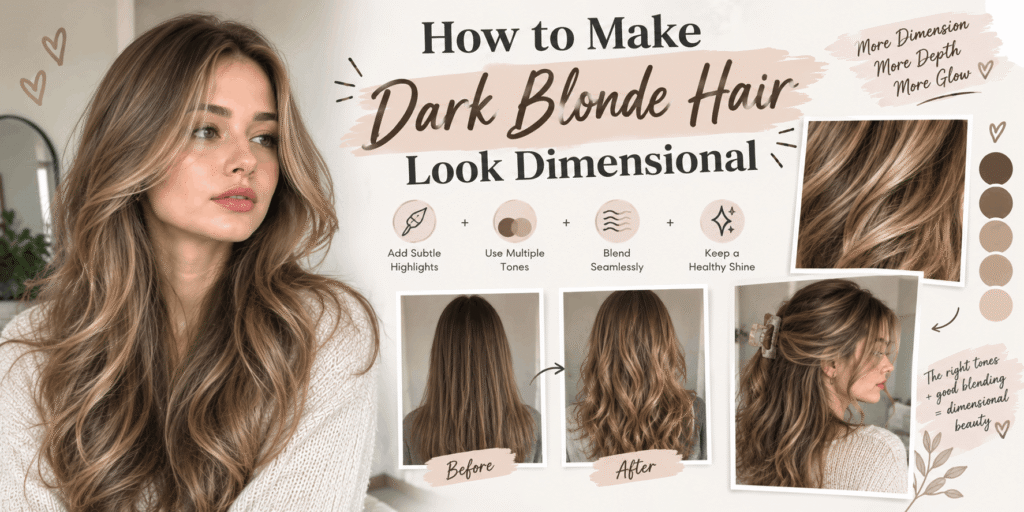
The secret to an interesting dark blonde shade is often not choosing one perfect color but combining tones that complement each other.
A completely uniform color can look beautiful, but subtle variation gives the hair another level of visual movement. Even a difference of a few tones between the base and highlights can become noticeable when the hair moves.
Placement matters just as much as color. Pieces around the face can brighten the overall appearance, while darker sections underneath can create depth. Highlights through the middle layers can become visible only when the hair shifts.
Your haircut can influence this too. Layers can reveal different tones as the hair moves, while one-length hair tends to display the color in a more continuous way.
The goal is not necessarily to add as many shades as possible. Too many competing tones can make the color look unclear. A carefully chosen combination usually creates a more natural and intentional result.
More Dark Blonde Hair Ideas
6. Deep Ash Blonde
Deep ash blonde gives dark blonde hair a cooler, more subdued personality. Instead of emphasizing golden or yellow tones, the color leans toward beige, muted blonde, and soft grayish undertones.
The result can look particularly striking when the hair has plenty of natural movement. As the strands shift, slightly different tones become visible rather than the entire hairstyle appearing like one flat color.
This shade can be a good choice if you prefer understated hair colors. It has enough brightness to read as blonde while retaining a deeper quality that keeps the overall appearance from becoming extremely light.
If your natural hair has strong warm undertones, achieving a cooler ash result may require professional color planning. Your stylist can determine how to reach the desired tone while keeping the hair in good condition.
A glossy finish can also make ash blonde look richer. Rather than relying on excessive brightness, the color gets much of its appeal from the contrast between its muted tone and healthy-looking shine.
7. Smoky Blonde Highlights
Smoky blonde highlights create dimension through cooler, softly blended pieces rather than obvious streaks. They can be placed throughout a darker blonde base to give the hair a subtle change that becomes more noticeable as it moves.
The smoky quality helps the highlights feel less intensely bright. This can be useful if you want blonde dimension but do not want strong golden or yellow-looking pieces.
For a natural result, the highlights can begin slightly away from the roots and become more visible through the mid-lengths. A few lighter pieces around the face can then connect the look without making the front dramatically brighter than the rest.
This design can look especially interesting on layered hair because different sections catch the light at different angles. On straight hair, the placement tends to look cleaner and more defined.
The finished color can be customized toward beige, neutral, or cooler tones depending on your preferred appearance.
8. Golden Dark Blonde Curls
Golden tones become especially noticeable when they are paired with curls. Instead of using one solid blonde color, the hairstyle can combine a deeper base with warm golden pieces that appear between the curls.
The movement of curly hair naturally changes how the color is seen. Some sections catch the light while others remain deeper, creating dimension without requiring extremely dramatic highlights.
The golden tones can be concentrated around the front for a brighter frame or spread throughout the curls for a more balanced result.
This idea can also work with loose waves. You do not need tightly defined curls to make the warmer pieces visible; even soft movement can reveal different sections of the color.
Keeping the curls moisturized is particularly important because dryness can make any color look less vibrant. A suitable conditioning routine can help the golden tones look smoother and more reflective.
9. Dark Dirty Blonde
Dark blonde hair sits closer to the natural-looking side of the blonde spectrum. It mixes deeper blonde and light brown qualities, often creating a muted color that does not look excessively warm or bright.
Its understated appearance is what makes it appealing. Instead of immediately announcing itself as a freshly colored blonde, it can have a more lived-in quality.
You can keep the color relatively uniform or add a few slightly lighter pieces through the lengths. Even subtle variation can make this shade look more dynamic.
It is also a flexible starting point if you eventually want to experiment with brighter blonde. A few highlights can gradually increase the overall brightness without completely changing the base.
For a softer finish, keep the roots slightly deeper and allow the lengths to become gradually lighter. This creates a natural transition that works particularly well with longer hair.
10. Chocolate-Rooted Dark Blonde
Chocolate roots introduce a noticeably deeper brown tone at the top before transitioning into dark blonde lengths. The contrast can be subtle and blended or more visible depending on how dramatic you want the color to look.
The darker root gives the hairstyle immediate depth. As the eye moves downward, the blonde becomes more noticeable, creating a gradient that can make long hair look especially dimensional.
This approach can also be adapted with different blonde tones through the lengths. A neutral dark blonde creates a soft transition, while caramel or honey pieces add additional warmth.
One reason this design stands out is that the deeper roots become part of the color rather than something that needs to be hidden. The contrast can actually make the blonde sections appear brighter.
For long hair, the transition can be extended through several inches so the colors blend gradually instead of creating a sharp dividing line.
Choosing the Right Dark Blonde Hair Shade
The right dark blonde depends largely on the effect you want rather than one universally perfect shade.
If you prefer warmth, honey and caramel tones can add a golden quality. If you want something more muted, ash, smoky, or dirty blonde directions may be more suitable. Neutral shades can sit somewhere between the two.
Your natural hair color should also be considered. The starting point affects how easily a particular shade can be achieved and whether the final result will appear warmer or cooler than expected.
Think about maintenance too. A color that requires frequent root appointments may not fit your routine if you prefer a more relaxed schedule. Blended roots, balayage, and softer transitions can make regrowth less noticeable.
It can also help to consider your usual hairstyle. Waves and curls naturally reveal multiple tones as the hair moves, while straight hair can make highlight placement more obvious.
Before making a major color change, show your stylist reference photos and explain what you like about them. Saying “I want dark blonde” can mean several different things, so mentioning whether you prefer golden, beige, ash, caramel, or neutral tones can make the consultation much clearer.
Keeping Dark Blonde Hair Looking Fresh
Colored hair usually benefits from a consistent care routine, especially when the coloring process involves lightening. Gentle washing, regular conditioning, and avoiding unnecessary heat can help the hair maintain a smoother appearance.
Water temperature can also affect how comfortable and manageable your hair feels. Extremely hot water may leave some hair types feeling drier, so a more moderate temperature can be preferable.
If your color has been created with cooler blonde tones, your stylist may recommend products designed to help maintain that tone. However, product choice should depend on the specific color formula rather than assuming every blonde needs the same routine.
Heat styling is another factor. Blow dryers, straighteners, and curling tools can make the hair look polished, but frequent high heat can put additional stress on colored hair. Using appropriate heat protection and avoiding unnecessary passes can help reduce that stress.
Regular salon visits are useful when the color has visible roots, highlights that need refreshing, or tones that have changed over time. You do not necessarily need a complete recolor every visit; sometimes a smaller refresh can bring back the original balance.
Final Thoughts
Dark blonde hair is much more versatile than its name might suggest. It can be warm and golden, cool and smoky, soft and natural, or noticeably dimensional depending on the tones and technique used.
The ten ideas in this guide show how much difference small changes can make. Honey and caramel bring warmth, ash and smoky tones create a cooler finish, curls can reveal golden dimension, while deeper roots add contrast and depth.
Instead of choosing a shade simply because it looks good in a photo, consider your natural hair color, texture, preferred maintenance level, and the overall effect you want. A thoughtful combination of tones can make dark blonde feel much more personal.
The most interesting results are often the ones that do not look like a single color at all. When the base, highlights, roots, and natural texture work together, dark blonde hair can change subtly with every movement and every change in lighting.
Dark blonde sits between traditional blonde and light brown. Depending on the formula, it can have warm golden, honey, beige, neutral, or cooler ash undertones.
Yes. Some people naturally have dark blonde hair, although natural shades can vary considerably. The color can also be created professionally using all-over color, highlights, balayage, or blended techniques.
It can be either. Honey, caramel, and golden dark blonde are warmer, while ash and smoky versions have cooler characteristics. Neutral dark blonde falls somewhere between these directions.

2 Comments