
White french tip nails have a reason they keep returning to manicure trends: the look is clean, recognizable, and surprisingly easy to personalize. The familiar white edge can be kept delicate, made bold, mixed with patterns, or paired with small decorative details without losing the polished character of a French manicure.
Instead of treating the classic French tip as one fixed design, think of it as a base for creativity. Your nail shape, tip thickness, finish, and extra details can completely change the result. From barely-there lines to statement-making accents, these ideas give the traditional manicure a more individual feel.
10 White French Tip Nail Ideas
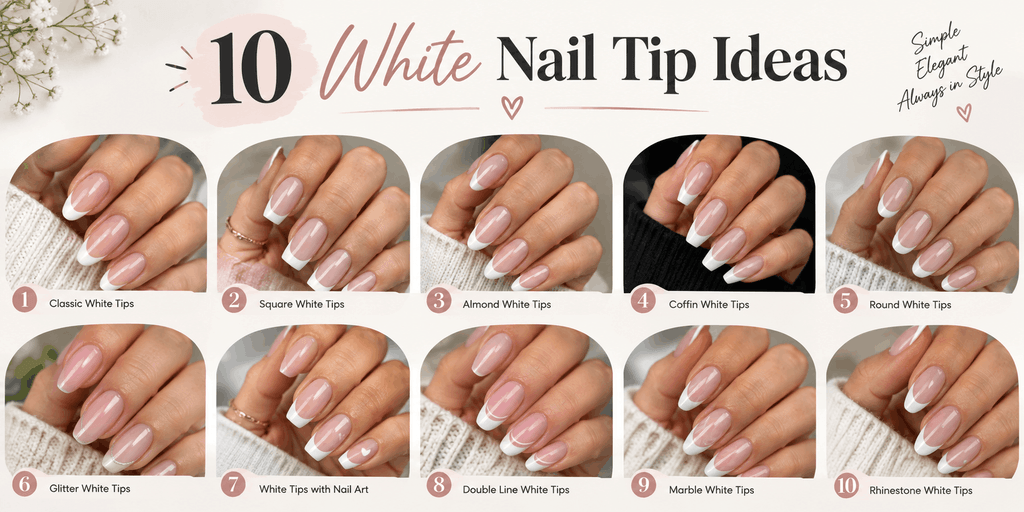
1. Classic Soft French
Start with the version that makes the French manicure so timeless: a sheer or softly tinted base with crisp white tips. Rather than making the white edge extremely thick, keep it proportional to the length of the nail.
A milky pink or translucent nude base can create a gentle transition into the white. This works especially well when you want your manicure to look polished without appearing overly decorated.
The beauty of this design is its flexibility. It can work with short nails just as easily as longer almond or oval shapes. For a softer finish, slightly round the white edge instead of creating an aggressively sharp smile line.
2. Swirled French Tips
A simple white French tip becomes much more playful when flowing curves are added to the design. Instead of keeping every line perfectly traditional, let thin white swirls travel slightly across the base.
The key is to leave plenty of negative space. Too many overlapping lines can make the manicure look busy, while a few carefully placed curves create movement without overwhelming the base.
This idea works particularly well on almond or oval nails because the curved artwork complements the natural shape. You can keep every nail similar or vary the placement slightly for a more artistic finish.
3. White-on-White Texture
For a manicure that looks subtle at first glance, combine different white finishes. Use a glossy white French tip over a milky base, then add a few matte or raised details.
Because the colors remain within the same family, the design doesn’t immediately look complicated. Instead, the differences in texture become visible as the nails catch the light.
A glossy top coat over the tips can make them stand out against a softer base. Small raised dots, thin lines, or minimalist shapes can provide another layer of detail without introducing additional colors.
4. Black and White Contrast
If pure white French tips feel too delicate, introduce small amounts of black for contrast. The white tip can remain the main feature while thin black lines or tiny graphic details sit underneath or beside it.
Keeping black as an accent rather than covering large portions of the nail helps preserve the French-inspired appearance. You can use a tiny dot, curved line, checker detail, or minimalist outline on selected nails.
This combination has a more graphic personality than a traditional French manicure while remaining easy to coordinate with different outfits.
For a balanced result, choose one or two accent nails rather than decorating every nail equally. The contrast becomes more noticeable when it has some space around it.
5. Pearl-Detail French
Pearls can give white French tips a more delicate, dimensional appearance. Start with a clean French base and add tiny pearl-like accents close to the cuticle or along selected areas of the nail.
The placement doesn’t need to be identical on every finger. A small cluster on one nail and a single accent on another can make the manicure feel intentionally designed rather than mechanically repeated.
This style works particularly well for celebrations, formal outfits, or anyone who likes understated decoration. The white base keeps the pearls from becoming too flashy, while the raised details add enough interest to make the manicure stand out.
6. Extra-Bold French
Traditional French tips don’t have to be ultra-thin. A wider white edge can completely change the proportions of the manicure and make the tips the main visual feature.
This approach is especially effective on longer nails because there is more surface area for the white section. Almond, coffin, and square shapes can all carry a wider tip, although the exact width should follow the nail’s proportions.
To prevent the design from looking heavy, keep the base relatively simple. A sheer pink, beige, or milky nude underneath the bold white edge gives the manicure enough contrast without introducing unnecessary decoration.
You can also soften the look with a rounded tip rather than a very angular one. This creates a modern interpretation of the classic French shape.
7. Tiny Floral French
Small flowers can turn an ordinary French manicure into something more playful while keeping the white tips as the foundation.
Rather than covering the nails with large floral artwork, place tiny blossoms near the sidewall, close to the cuticle, or just above the French line. Small petals can be created with simple dots, making the design suitable even for a minimalist manicure.
White flowers can blend into the tips for a subtle monochromatic effect, while tiny touches of pink, yellow, or another soft shade can make selected flowers stand out.
The placement is what makes this design work. Leave enough empty space around each flower so that the manicure still feels clean instead of crowded.
8. White French With Tiny Hearts
Tiny hearts offer another way to personalize the classic design. The French tips remain clean and white, while small heart shapes provide a delicate accent.
You don’t need a heart on every nail. A few strategically placed shapes can create a more refined result, especially when the rest of the manicure remains simple.
For a monochromatic appearance, use white hearts over a slightly darker sheer base. If you want a little more contrast, a soft pink or red heart can be placed on one or two accent nails.
The design can also be adapted to different occasions. Very small hearts create a subtle everyday manicure, while slightly larger artwork gives the nails a more noticeable decorative quality.
9. Gingham-Inspired French
Gingham can bring a patterned twist to white French tips without completely abandoning the classic look. Keep most nails simple and use the checkered pattern on one or two accent nails.
A soft pink, beige, pale blue, or gray can be paired with white to create the pattern. The remaining nails can feature standard French tips so the manicure doesn’t become visually overloaded.
This combination works particularly well when you want something more distinctive than a plain French manicure but don’t want every nail covered in artwork.
The pattern can also be made extremely fine for a delicate effect. Thin lines create a lighter appearance, while larger checks make the accent nail more noticeable.
10. Milky French With a Glazed Finish
A milky base and glossy finish can give white French tips a soft, luminous appearance. Instead of using a strongly contrasting nude, choose a semi-sheer base that allows some natural nail tone to show through.
The white tips should remain clearly visible but not look disconnected from the base. A glossy top coat can then bring the two sections together and create a smooth, reflective finish.
This design is ideal when you like the clean appearance of French nails but want something slightly softer than a sharply defined manicure. It also pairs naturally with different nail lengths and shapes.
The finished look is simple enough for everyday wear while still feeling more polished than a completely plain manicure.
Choosing the Right White French Tip Style
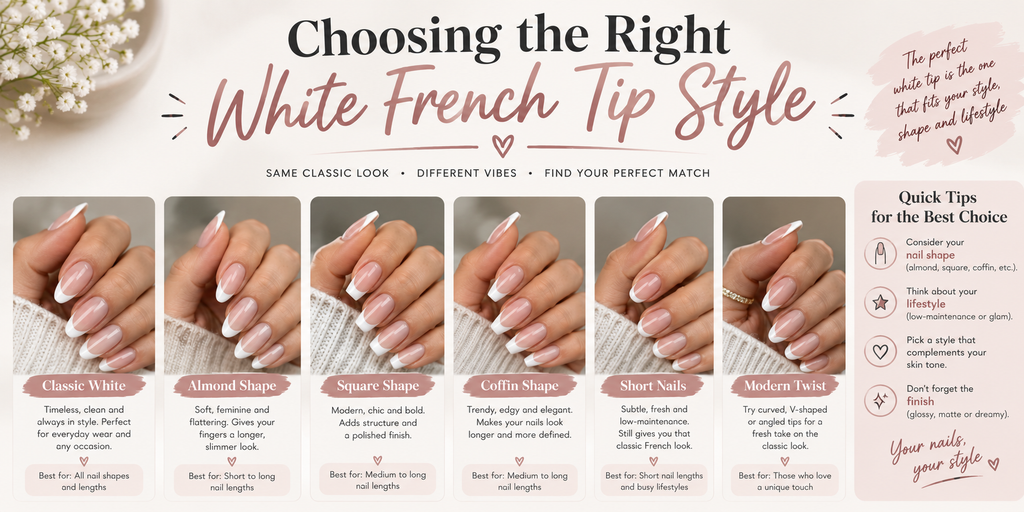
The easiest way to personalize white French tip nails is to start with the shape and length of your natural nails. A narrow tip can look delicate on shorter nails, while longer nails provide more room for wider tips, patterns, and decorative details.
Your preferred finish matters too. Glossy nails emphasize the crispness of the white edge, while a milky or semi-matte base can create a softer appearance. If you prefer nail art, keeping the French tips simple gives decorative accents more room to stand out.
You also don’t have to make every nail identical. One or two accent nails can carry flowers, pearls, hearts, or patterns while the remaining nails keep the traditional French design. This creates variety without turning the manicure into a collection of unrelated elements.
The most successful designs usually have one clear visual idea. If you combine several details, choose elements that share a similar color palette or level of delicacy. That helps the finished manicure look intentional rather than crowded.
White French tip nails are also easy to adapt as your preferences change. A classic base can be transformed with a new accent, a different finish, or a change in tip width at your next manicure appointment.
Making White French Tips Work for You
The shape of the French line can make a surprising difference. A shallow curve gives the manicure a softer appearance, while a deeper smile line creates a more noticeable contrast between the base and tip.
Short nails don’t need to be excluded from the trend. A thinner white edge can create the appearance of a longer, cleaner nail without taking up too much of the available surface.
On longer nails, you have more freedom to experiment with tip thickness and decorative elements. However, more space doesn’t mean you need more decoration. Sometimes a wider, perfectly clean white tip makes a stronger statement than several different patterns.
Your base color can also change the mood. A transparent base feels very natural, a milky base looks softer, and a pink-tinted base gives the manicure a warmer appearance. Even though the tips remain white, these small changes can make the final result look noticeably different.
How to Keep the Manicure Looking Fresh
A French manicure depends heavily on clean edges, so small chips can become noticeable. Avoid using your nails as tools for opening, scraping, or picking at objects, as this can damage both the polish and the natural nail.
Moisturizing the skin around the nails can also help the manicure look more polished. Dry cuticles can make even a fresh manicure appear less neat, while regular care keeps the surrounding area looking smoother.
If you use polish regularly, giving your nails appropriate breaks and avoiding unnecessary picking or peeling can help reduce mechanical damage. When a manicure begins to grow out, you can sometimes refresh its appearance with a new layer of top coat until you’re ready for a full change.
For intricate designs, professional application can make a noticeable difference because French lines and tiny artwork require precision. If you’re doing the manicure at home, using thin brushes and working slowly can make the details easier to control.
Choosing a Style for Different Occasions
One reason white French tip nails remain so versatile is that the same basic manicure can be adjusted for different situations.
For everyday wear, a classic French tip, milky base, or very small accent tends to keep the look simple. If you’re attending a celebration, pearl details, metallic lines, or delicate floral artwork can add something extra without completely changing the manicure.
For a more fashion-forward appearance, experiment with wider tips, split designs, graphic accents, or stone-inspired details. The important thing is to keep a visual connection between the different elements.
You can also match the manicure to the season without abandoning the white French foundation. Soft blue, gray, pastel, or floral accents can change the mood while the white edge keeps the design recognizable.
Final Thoughts
White french tip nails remain popular because they provide a simple starting point rather than a strict set of rules. A traditional white edge can look elegant on its own, but adding texture, tiny artwork, metallic accents, or a second neutral shade can give the manicure a completely different feel.
The best design doesn’t necessarily have the most details. A clean French line with a beautiful base can be just as eye-catching as an elaborate accent nail. If you prefer decoration, use it selectively so the manicure still has breathing room.
Before choosing your design, consider your nail length, natural shape, preferred maintenance level, and the type of finish you normally enjoy. These factors can help you choose a French style that feels natural rather than simply copying a trend.
Whether you stay with a classic white edge or experiment with pearls, lace, stone effects, or metallic details, the French manicure gives you plenty of room to create something personal while keeping that unmistakably clean finish.
What base color goes with white French tips?
Sheer pink, milky white, nude, beige, and transparent bases are common choices. The right option depends on whether you want a warmer, softer, or more natural-looking manicure.
How do I make white French tips look modern?
Try changing the traditional proportions or adding a small detail. Wider tips, mixed textures, accent nails, thin metallic lines, and minimalist artwork can give the classic manicure a more contemporary appearance.
Are white French tip nails good for everyday wear?
Yes. Their neutral color makes them easy to coordinate with different outfits and occasions. A simple design can be especially practical for everyday use.
3 Comments