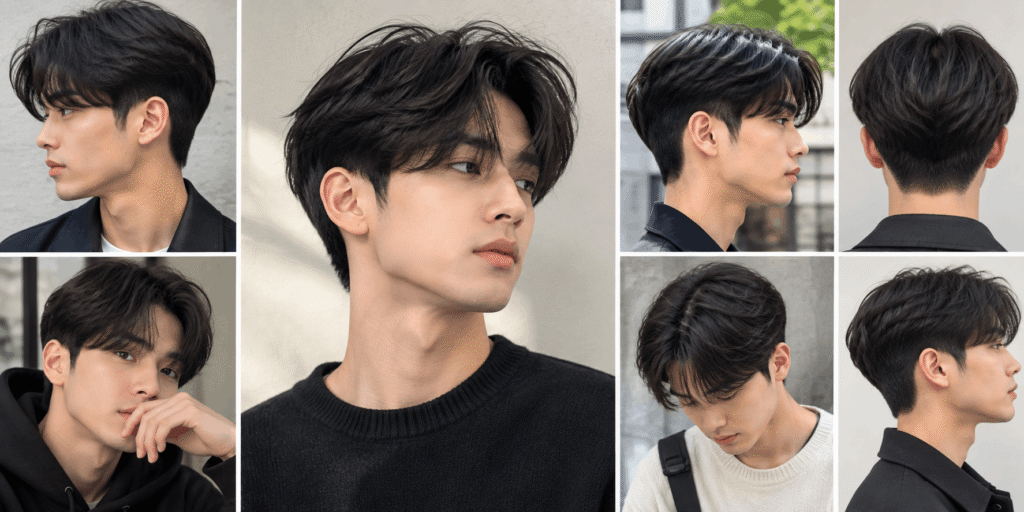
The two block haircut has become one of the most recognizable modern men’s hairstyles because it creates a deliberate contrast between the hair on top and the shorter sections around the sides and back. Unlike a standard short haircut, it leaves enough length above the ears and around the crown to create movement, texture, or a more styled silhouette.
What makes this haircut particularly flexible is that the longer top does not have to be worn one way. It can fall naturally over the forehead, separate down the middle, sweep sideways, become textured and messy, or be shaped into a softer Korean-inspired finish. The same basic haircut can therefore look quite different depending on the cut, hair type, and styling method.
What Makes a Two Block Haircut Different?
The name comes from the basic idea of dividing the hairstyle into two visual sections. The upper portion retains noticeably more length, while the lower portion around the sides and back is shortened. The transition between those areas can be subtle or obvious depending on the version you choose.
That difference is what gives the style its characteristic shape. Instead of gradually blending every section together, the haircut intentionally preserves a longer upper layer. The top can then be layered or textured so it falls naturally rather than appearing like one heavy mass of hair.
The two block haircut is often associated with Korean and wider East Asian hairstyle trends, but it isn’t restricted to one hair type or nationality. Straight hair makes the separation especially easy to see, while wavy or curly textures can give the same structure a more relaxed appearance.
Another advantage is that the haircut can be adjusted according to how much styling you want to do. Someone who prefers a simple morning routine might choose a shorter top, while someone who enjoys styling can keep additional length for a middle part, fringe, waves, or volume.
10 Two Block Styles Worth Trying
Rather than listing dozens of nearly identical variations, these ten options cover noticeably different ways to wear the cut.
1. Korean Two Block
The Korean-inspired version is one of the most recognizable interpretations of the haircut. It generally keeps enough length on top to create a soft, rounded appearance while the sides and back are reduced to create separation.
The top doesn’t have to be extremely straight or perfectly flat. A little movement can make the hairstyle look more natural. The front can fall toward the eyebrows or be divided slightly to expose part of the forehead.
This version is particularly useful if you want a hairstyle that looks styled without appearing extremely sharp or aggressive.
2. Two Block Middle Part
A middle part changes the entire character of the haircut. Instead of pushing the front forward, the longer top is separated into two sections that fall toward either side of the face.
The length around the front matters here. If the hair is too short, the part may not fall naturally. If it is longer, the sections can create a curtain-like effect with more movement around the temples.
For a softer appearance, keep the separation natural rather than creating an extremely precise line. A small amount of styling cream can help the two sections stay in place without making them look stiff.
3. Textured Two Block
The textured version is designed for men who don’t want their hair to look overly smooth. Layers and uneven separation through the top can create more visible movement.
This style works particularly well when the top has enough length to produce different directions rather than sitting as one solid shape. A lightweight styling product can emphasize individual sections while preserving some flexibility.
The goal isn’t to make every strand look perfectly separated. Slight irregularity is what gives this version its casual character.
4. Two Block With Fringe
Instead of exposing the forehead through a part, this variation lets the longer top move forward into a fringe. The fringe can be relatively short or left long enough to reach toward the eyebrows.
The shape of the fringe should take natural hair movement into account. Straight hair may create a cleaner edge, while wavy hair can produce a softer and less uniform result.
If you don’t want hair constantly falling into your eyes, tell your barber before the cut begins. A slightly shorter front can preserve the overall idea while making everyday styling easier.
5. Two Block Taper
A taper creates a more gradual reduction around selected areas such as the temples and neckline while leaving the upper section relatively full. It can make the haircut feel cleaner without producing the strongest possible contrast.
This is a useful choice for someone who likes the two block structure but doesn’t want an extremely disconnected appearance.
The top can still be styled with a part, fringe, loose texture, or natural volume, giving you several options without changing the basic haircut.
6. Two Block Mullet
The two block mullet combines the separated upper structure with additional length toward the back. The result has a more noticeable difference between the front, sides, and rear sections.
The amount of length left at the back determines how dramatic the style becomes. A shorter back can give you a subtle interpretation, while more length creates a stronger mullet influence.
Because the proportions are important, this is a style where showing your barber a reference photo can be particularly useful.
7. Wavy Two Block
Natural waves can make the two block shape appear softer and more dimensional. Instead of trying to flatten the texture, the haircut can be shaped around the movement already present in the hair.
Medium length on top usually gives the waves enough room to form. A small amount of styling cream can help control the shape while allowing the natural bends to remain visible.
This version can look especially different from the classic straight-haired interpretation because the transition between the two sections becomes less rigid.
8. Two Block Fade
A fade introduces a more noticeable gradient into the shorter portion of the haircut. The top remains longer, while the sides become progressively shorter as they move downward.
The height of the fade changes the overall appearance. A lower fade keeps more hair around the sides, whereas a higher fade creates greater contrast with the longer top.
If you want the hairstyle to retain a softer Korean-inspired character, explain that preference before your barber decides how high to take the fade.
9. Messy Two Block
The messy version uses the longer top to create a deliberately relaxed appearance. Instead of arranging the hair into a perfectly controlled shape, you can allow different sections to move in slightly different directions.
This doesn’t mean simply leaving the hair unstyled. The haircut itself should provide a good foundation, while a small amount of texture product can add separation and help prevent the top from becoming shapeless.
It is particularly useful for men who like a casual hairstyle that doesn’t look overly polished.
10. Curly Two Block
A two block haircut can also be adapted for naturally curly hair. The longer upper section allows curls to remain visible, while the shorter sides create a clear change in silhouette.
Curly hair can make the haircut look fuller than straight hair at the same length, so your barber should consider how much the curls contract after drying. Cutting based only on wet length can produce a shorter result than expected.
Instead of forcing the curls into a straight version of the haircut, let the natural texture become part of the design. This can turn the familiar two block structure into something considerably more individual.
Choosing the Right Version for Your Hair
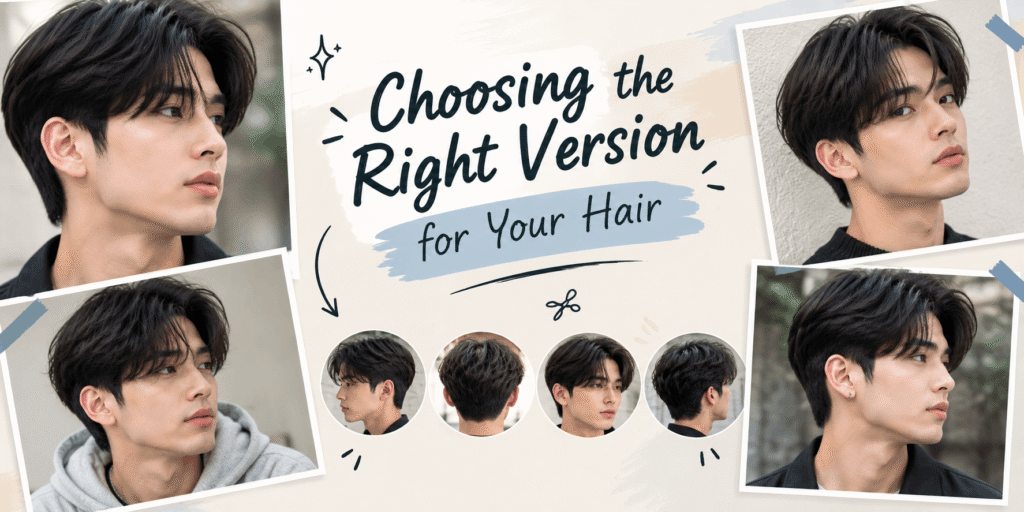
Your hair type should influence the version you choose, but it doesn’t have to restrict you to one option.
Straight, thick hair gives you plenty of control over the upper section and can support middle parts, fringes, textured layers, or a traditional Korean-inspired shape. Because thick hair can become bulky, strategic layering can make the top easier to arrange.
Fine or thinner-looking hair can benefit from keeping some movement and avoiding excessive weight on the top. Texture and volume can make the hairstyle appear more dimensional, although a haircut cannot change the underlying density of your hair.
Wavy hair naturally adds movement, which means you may not need as much styling to create texture. A medium-length top can allow the waves to form without requiring heavy products.
Curly hair requires more attention to shrinkage and volume. The same length can look very different once curls dry, so communicating your desired finished shape is important.
Your face shape can also influence the proportions. If you want more height, the top can be styled upward or given additional volume. If you prefer a more balanced appearance, a middle part or softer fringe may distribute the visual weight differently.
There is no single face shape that automatically determines whether you can wear a two block haircut. The proportions of the top, sides, fringe, and back can all be adjusted to create a version that feels comfortable and practical for you.
Two Block vs. an Undercut
These hairstyles can look similar because both may have longer hair above shorter sides. The main difference is how the transition is constructed.
A traditional undercut often creates a stronger separation between the longer top and the shorter sides. The contrast can be very obvious, with relatively little blending between the sections.
A two block haircut can also be disconnected, but many versions use shaping, layering, or a softer transition to make the overall silhouette feel more integrated. The top is usually treated as a major part of the hairstyle rather than simply being left long over extremely short sides.
If you’re unsure which one you want, don’t rely only on the haircut name. Show your barber a photo and point out exactly how you want the sides, back, and top to connect.
How to Explain a Two Block to Your Barber
The simplest way to avoid confusion is to describe the result rather than assuming the barber will interpret the name exactly as you do.
Start by saying that you want a two block haircut and then explain how much length you want to preserve on top. Tell them whether you want a fringe, middle part, textured finish, taper, or fade.
A reference image is especially helpful because two block haircuts can range from soft and rounded to sharply disconnected. Two people can say “two block” while imagining completely different cuts.
Also mention your normal styling routine. If you rarely use a blow-dryer or styling products, don’t ask for a version that depends heavily on daily styling unless you’re willing to add that step. Your haircut should make sense for how you actually wear your hair.
Finally, discuss the sides and back separately from the top. Explain whether you want them short, tapered, faded, or simply reduced in length. This gives the barber more useful information than relying on the haircut name alone.
Build a Styling Routine That Matches Your Hair
Start with freshly washed or slightly damp hair rather than immediately covering dry hair with styling product. Gently remove excess water with a towel and arrange the longer section in the direction you want it to eventually sit.
If you’re creating a middle part, separate the front while the hair is damp and guide each side away from the center. For a fringe, direct the front forward and allow it to settle naturally. If you’re going for a textured appearance, use your fingers to move different sections instead of combing everything into one uniform shape.
Blow-drying can make a noticeable difference, especially if your hair is straight or thick. Use your fingers or a brush to guide the top while drying. Directing the airflow from the roots toward the intended shape can help establish volume and direction before you add your finishing product.
For a softer two block look, don’t try to make every section perfectly smooth. A little natural movement can make the hairstyle appear more relaxed. If you want more definition, separate a few sections with your fingers after applying your styling product.
Match the Product to the Finish
A styling cream is useful when you want a flexible, natural appearance. It can help organize the longer hair without making it feel excessively stiff.
A texture clay can provide more separation and control. It may work particularly well for messy or textured versions where you want individual sections to stand out.
A sea salt spray can add texture and encourage a slightly tousled finish. Because formulas vary and some can feel drying, use it according to the product directions and pay attention to how your hair responds.
A pomade can create a more controlled finish, especially for slicked-back or clearly arranged styles. Use a modest amount at first. Adding more is easier than trying to remove excess product once the hair feels heavy.
Texture powder can provide lift and a less polished finish. It can be useful when you want the top to appear fuller without adding a wet-looking shine.
You don’t need all of these products. Pick one based on the style you actually want to wear.
Keeping the Two Block Shape Looking Fresh
The upper section is usually the most noticeable part of the haircut, but the shorter sides and back also determine whether the overall shape remains balanced. As those areas grow, the original contrast can gradually disappear.
How frequently you need a trim depends on how short your sides are and how quickly your hair grows. A very short fade may look noticeably different after a relatively short period, while a softer taper can remain presentable for longer.
When you return to the barber, don’t automatically ask for the exact same length everywhere. Tell them what you liked about the previous cut and what you want changed. Perhaps the top had the right length but the sides became too bulky, or maybe the fringe was difficult to keep out of your eyes.
This kind of feedback helps turn the haircut into something personalized instead of repeating a generic template every time.
Caring for the Longer Top
Because the top is longer than the sides, it can require more attention during washing and detangling. Be gentle when handling it, particularly if the hair is wet.
Avoid aggressively scrubbing the lengths. Focus cleansing on the scalp and allow the product to rinse through the rest of the hair. Conditioner can make the longer section easier to manage, particularly when the hair tends to tangle or feel rough.
If your hair is long enough to knot, work through tangles gradually rather than pulling forcefully. Start with the ends and move upward. For wavy or curly versions of the two block haircut, handling the hair while damp can make this process easier.
Drying technique also matters. Rough towel rubbing can create unnecessary friction and disturb the shape of textured hair. Gently squeeze out excess water and allow the hair to settle into its natural direction.
What to Do When Your Two Block Looks Too Flat
Flatness can be caused by several things, including heavy products, excess moisture, the wrong drying direction, or simply hair that naturally lies close to the scalp.
Start by examining the amount of product you’re using. If the top becomes greasy or loses movement shortly after styling, try reducing the quantity rather than adding another product.
For additional volume, lift sections at the roots while blow-drying. Instead of directing all the airflow downward, guide the roots upward or away from the scalp before allowing the hair to settle.
A layered top can also create more movement than a heavy, one-length section. If your haircut consistently collapses despite different styling methods, discuss the shape with your barber during your next visit.
When the Sides Become Too Bulky
One of the most common changes as a two block grows out is that the shorter section starts becoming fuller. This can make the hairstyle look less defined even though the top still has a good shape.
If you like the length on top, you don’t necessarily need to shorten it. Ask your barber to restore the shape around the sides and back while preserving the upper length.
The exact adjustment depends on whether your original haircut used a fade, taper, or a more disconnected approach. A barber can also decide whether removing some bulk is enough or whether the shape needs to be redesigned.
Avoid trying to correct a complicated two block shape yourself with clippers. Small differences between the sides can become much more obvious once the hair is styled.
Keeping a Two Block Comfortable Every Day
A hairstyle may look great but still be impractical if the front constantly falls into your eyes or the sides feel uncomfortable around your ears.
If the fringe keeps bothering you, experiment with directing it slightly to one side or using a small amount of flexible product. If that doesn’t work, ask your barber about adjusting the front length.
For longer versions, avoid keeping the hair tightly pulled back for extended periods. If you use a hair tie, choose one that holds the hair comfortably rather than requiring excessive tension.
Your daily hairstyle should also fit your activities. Someone who spends most of the day outdoors may want a more controlled finish, while someone who prefers a relaxed look may simply let the top fall naturally.
Growing Out a Two Block Haircut
Eventually, you may decide that you want to grow the hairstyle longer. This doesn’t mean you have to stop getting haircuts completely.
During the growing process, small shape adjustments can keep the haircut from becoming awkward. Your barber can preserve the direction of the top while managing excess bulk around the sides and neckline.
The growing stage can take patience because the original proportions gradually change. A version that looked sharply defined at a shorter length may become softer as everything grows.
If your goal is a longer hairstyle, tell your barber from the beginning. They can avoid removing unnecessary length from areas you are intentionally trying to grow.
Is a Two Block Haircut High Maintenance?
It depends on the version.
A simple two block with a natural top can be relatively easy to manage. A heavily textured style, defined middle part, fade, or carefully shaped fringe may require more daily attention.
Your hair type also matters. Straight hair can often be directed into place quickly, while thick, wavy, or curly hair may need additional drying or styling time.
The good news is that you can choose a version according to your routine. If you don’t enjoy spending a long time in front of the mirror, tell your barber. A simpler cut that naturally falls into place may be more practical than a dramatic version that requires extensive styling every morning.
Final Thoughts
The two block haircut works because its basic structure gives you plenty of room to personalize the top. You can keep it soft, textured, parted, messy, wavy, or more controlled without abandoning the defining contrast between the upper and lower sections.
The easiest way to keep it looking good is to avoid overcomplicating the routine. Use a suitable amount of product, dry the hair in the direction you want it to sit, and maintain the shorter sections before they lose their shape.
Most importantly, choose the version according to your real lifestyle. A haircut that naturally works with your hair will usually be easier to maintain than one that requires constant correction. Once you find the right proportions, the two block can become a versatile everyday style rather than a haircut you only enjoy immediately after leaving the barber.
2 Comments