
You might think a sports massage is only something athletes need after an exhausting competition. But the real reason people seek it may surprise you. From easing muscle tension to supporting movement and recovery, sports massage can be useful for people with very different activity levels.
What happens during a session depends on your body, your goals, and the techniques a qualified therapist chooses. It can involve lighter strokes, compression, stretching, or more focused work on areas that feel particularly tight.
Whether you train regularly, spend long hours at a desk, run occasionally, or simply want to understand this type of massage, knowing what it can and cannot do is important. This guide explores the techniques behind sports massage, different approaches, potential benefits, what a session is like, and the situations where professional advice may be more appropriate.
Where Sports Massage Fits Into Modern Recovery
Sports massage is generally designed around the needs of physically active people, but it does not require someone to be a professional athlete. The approach can be adapted according to activity level, training habits, areas of muscle tension, and personal goals.
Unlike a single standardized massage routine, sports massage may involve several techniques during the same appointment. The therapist may focus on particular muscle groups that are heavily used during a person’s activities rather than treating the entire body in exactly the same way.
The purpose is also not simply to make a massage feel intense. A qualified therapist should consider what the client is trying to achieve and adjust pressure and techniques accordingly.
The Four Moments When Sports Massage May Be Used
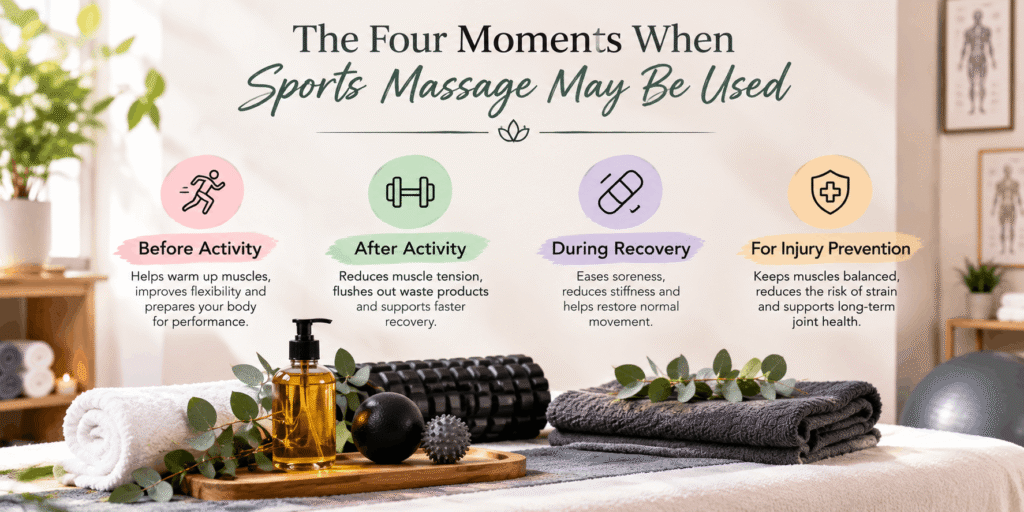
Timing can change the purpose of a sports massage. A session scheduled before an event is approached differently from one booked after strenuous activity or as part of longer-term maintenance.
Before an Event
A pre-event massage is generally intended to prepare the body for activity rather than provide an extremely deep or exhausting treatment.
The techniques may be relatively brief and focused on helping the person feel prepared to move. The exact approach depends on the sport, activity, timing, and individual needs.
After an Event
Post-event massage is commonly used after demanding physical activity. The focus may be on relaxation and addressing areas that feel tense or fatigued.
It should not be viewed as a guaranteed way to prevent every form of post-exercise soreness or injury. Recovery also depends on sleep, nutrition, hydration, training load, and other factors.
Ongoing Maintenance
Some physically active people schedule massage as part of their regular routine rather than waiting until something feels wrong.
Maintenance sessions can give a therapist an opportunity to work with recurring areas of tension and discuss movement or recovery concerns. The appropriate frequency varies considerably from person to person.
During Rehabilitation
Sports massage may sometimes be included alongside other rehabilitation approaches when appropriate.
However, massage should not replace medical assessment or a rehabilitation plan for a significant injury. A healthcare professional or physical therapist may need to determine what treatment is appropriate first.
Techniques You May Encounter During a Session
There is no single technique that defines every sports massage. Therapists can combine different methods depending on the person’s goals and the areas being treated.
Effleurage
Effleurage involves smooth, gliding strokes. It can be used at different points during a massage and may help the therapist assess tissues while gradually preparing an area for more focused work.
Petrissage
Petrissage uses kneading, lifting, or compressing movements. It is often applied to larger muscle areas and can feel different depending on the amount of pressure used.
Friction
Friction involves more focused movements over a particular area. Because concentrated pressure can feel intense, communication between the client and therapist is especially important.
Tapotement
Tapotement refers to rhythmic percussive movements. Different forms can be used depending on the therapist’s training and the purpose of the session.
Compression
Compression involves applying pressure to muscle tissue, often with hands or other parts of the therapist’s body.
The amount of pressure should be appropriate for the person and the treatment goal. More pressure does not automatically mean better results.
Trigger Point Work
Focused pressure may be applied to areas described as trigger points or particularly tense spots.
A therapist should work within a reasonable level of comfort and should not deliberately cause unnecessary pain.
Stretching
Some sports massage sessions incorporate gentle stretching. The type and intensity depend on the person’s mobility, activity, and circumstances.
Stretching should never be forced, particularly when there is an existing injury or unexplained pain.
What Actually Happens During Sports Massage?
A session normally begins with a conversation about your activity level, goals, areas of concern, and relevant health information.
The therapist may ask about recent workouts, recurring muscle tension, previous injuries, or movements that cause discomfort. This information helps determine how the session should be approached.
During the massage, you may be positioned differently depending on which areas are being treated. The therapist can use several techniques and adjust pressure throughout the appointment.
Good communication matters. If the pressure feels uncomfortable, painful, or otherwise inappropriate, tell the therapist. You do not need to remain silent simply because you assume sports massage is supposed to hurt.
How Sports Massage May Support Active Bodies
Research on sports massage has produced mixed findings depending on the outcome being measured. Some evidence suggests it may provide short-term improvements in perceived soreness, flexibility, or recovery-related measures, while it should not be treated as a guaranteed performance enhancer or injury-prevention method.
Its potential value may come from several factors, including temporary changes in muscle sensation, relaxation, perceived recovery, and range of motion.
The important distinction is between supporting recovery and fixing an injury. Massage can be one part of a broader recovery routine, but it cannot replace appropriate diagnosis, rehabilitation, rest, or training adjustments.
Possible Benefits People Seek From Sports Massage
Muscle Soreness
After demanding physical activity, people commonly seek massage because their muscles feel sore or tense. Massage may help some people feel more comfortable during recovery.
However, soreness can have many causes, and persistent or severe pain should not automatically be treated as something massage can solve.
Flexibility and Range of Motion
Some studies have reported short-term improvements in flexibility following massage. This may be useful for people whose activities require a particular range of movement.
The effect is not necessarily permanent, so regular mobility work and appropriate exercise may still be important.
Muscle Tension
Focused massage can provide temporary relief from the sensation of tight or tense muscles.
The underlying reason for recurring tension still matters. Training load, technique, posture, stress, sleep, and other factors can all contribute.
Relaxation
Although sports massage is associated with physical recovery, the experience can also be relaxing.
A calm environment and hands-on treatment may help some people feel less stressed after demanding physical activity.
Body Awareness
Regular sessions can also make people more aware of areas that repeatedly feel tense or uncomfortable.
That awareness may encourage someone to pay closer attention to movement habits, recovery, warm-ups, or training volume.
Sports Massage Across Different Activities
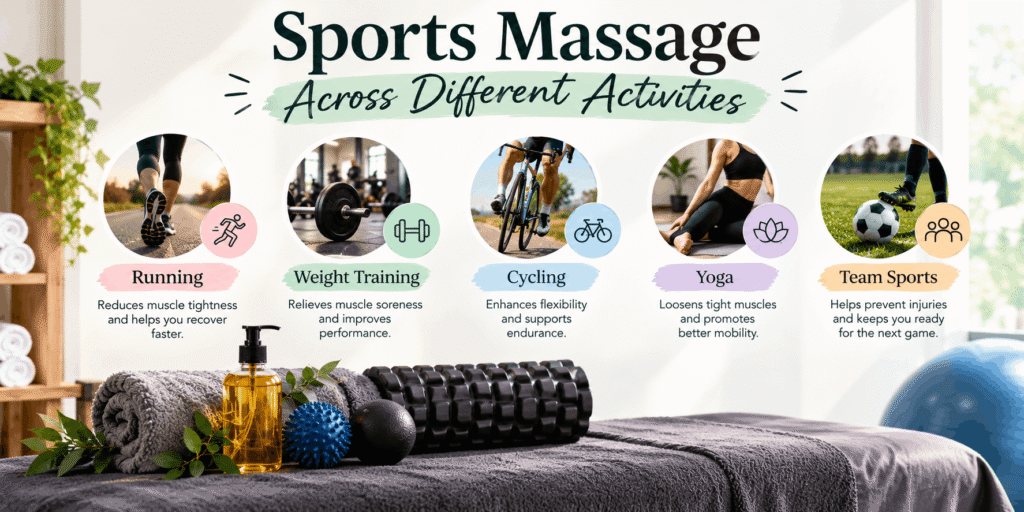
Different sports place different demands on the body, so massage may be adapted accordingly.
Running
Runners often place repeated demands on the legs and feet. A therapist may therefore focus on areas that receive substantial workload, depending on the runner’s individual needs.
Cycling
Cycling involves prolonged positioning and repetitive lower-body movement. A session may address areas that feel tight after longer rides while taking the cyclist’s normal posture into account.
Weight Training
Strength training can place substantial demands on individual muscle groups. Massage may be used as one component of recovery, particularly when someone notices recurring muscular tightness.
Swimming
Swimming involves repetitive movement of both the upper and lower body. The treatment approach can vary according to stroke technique, training volume, and areas that feel restricted.
Football and Soccer
Running, acceleration, direction changes, and repeated kicking create different demands than endurance sports. Massage may therefore be tailored to the player’s training schedule and activity.
Tennis
Tennis involves repeated swings, rapid movement, and changes in direction. A therapist may consider the shoulders, arms, hips, and legs depending on the player’s individual needs.
Preparing for Your Appointment
A little preparation can make the session easier and more productive.
Before your appointment, think about what you want from the massage. Are you recovering from training, dealing with recurring tension, preparing for an event, or simply interested in relaxation?
Tell the therapist about recent changes in your activity, areas that feel uncomfortable, and any relevant medical or physical concerns.
It is also useful to arrive with enough time to discuss your goals rather than rushing directly into the treatment.
What to Expect Afterward
You may feel relaxed or temporarily different in the treated areas after a massage. Some people experience mild soreness, particularly after more focused work.
Drink according to your normal hydration needs and give your body time to recover. You do not need to assume that intense post-massage discomfort means the treatment was more effective.
If you experience significant or persistent pain, unusual swelling, weakness, or another concerning symptom, seek appropriate medical advice rather than simply booking another massage.
When Sports Massage May Not Be Appropriate
Massage is not suitable for every situation. Certain injuries, infections, unexplained swelling, significant pain, or other medical conditions may require evaluation before massage is considered.
If you are unsure whether massage is appropriate, speak with a healthcare professional.
A massage therapist can provide hands-on care within their professional scope, but they should not be expected to diagnose an unexplained medical problem.
Sports Massage vs. Other Massage Styles
Sports massage shares some techniques with other forms of massage, but the main difference is often the purpose and customization.
Sports Massage vs. Deep Tissue Massage
Deep tissue massage generally emphasizes focused pressure and work on deeper layers of tissue. Sports massage can include firm pressure, but it is not automatically a deep-tissue treatment.
Sports Massage vs. Swedish Massage
Swedish massage commonly emphasizes flowing strokes and relaxation. Sports massage is more likely to be tailored around physical activity, movement demands, and particular muscle groups.
The names do not necessarily tell you exactly what a session will feel like. The therapist’s approach and your individual goals matter.
How Often Should You Get Sports Massage?
There is no universal schedule that works for everyone.
Someone training frequently may choose a different schedule from someone who exercises occasionally. Your training volume, recovery, budget, preferences, and response to massage can all influence how often you book a session.
More frequent massage is not automatically better. It should complement, rather than replace, sleep, appropriate exercise programming, rest, and other recovery habits.
Can Sports Massage Treat an Injury?
Massage may sometimes be incorporated into a broader rehabilitation plan, but it should not be assumed to treat the underlying cause of an injury.
If you have significant pain, reduced function, swelling, weakness, or an injury that is not improving, professional assessment may be more appropriate.
A qualified healthcare provider can determine whether massage, physical therapy, rest, exercise, or another intervention is suitable.
The Bottom Line
Sports massage can be a useful part of a broader approach to physical recovery, particularly for people who regularly place demanding workloads on their bodies.
Its value is not about how much pressure a therapist can apply. A well-planned session considers your activity, goals, comfort, and individual circumstances.
Possible Reactions After a Sports Massage
A sports massage can leave you feeling relaxed and comfortable, but some people may notice temporary soreness or tenderness afterward. This can happen when areas of muscle tension receive focused attention. Usually, these sensations settle with normal rest and hydration.
The experience can vary from person to person. Factors such as activity level, muscle tension, the type of massage used, and individual sensitivity can all influence how someone feels afterward.
If discomfort is severe, persistent, or unusual, it is better to stop and seek advice from a qualified healthcare professional rather than assuming it is a normal part of recovery.
When Sports Massage May Not Be the Right Choice
Sports massage is not automatically appropriate for every situation. Someone dealing with an unexplained injury, significant swelling, infection, certain skin conditions, or another medical concern may need professional guidance before receiving massage.
People recovering from an injury should also consider whether massage fits their current stage of recovery. A healthcare professional or qualified therapist can help determine whether massage is suitable or whether another approach would be more appropriate.
The goal should not simply be to tolerate a more intense massage. A suitable session should take the person’s comfort, health situation, and individual needs into account.
Sports Massage for Everyday Active People
You do not have to compete in sports to be interested in sports massage. People who walk regularly, cycle, exercise recreationally, dance, or participate in fitness activities may also seek massage as part of their general wellness routine.
Even people who are not highly active sometimes explore sports massage because they experience muscle tightness associated with everyday movement. However, massage should be viewed as one possible supportive practice rather than a replacement for sleep, balanced nutrition, appropriate exercise, or medical care.
Sports Massage vs. Deep Tissue Massage
Sports massage and deep tissue massage can overlap, but they are not exactly the same. Sports massage generally focuses on the needs of physically active people and may be adapted around training, competition, or recovery.
Deep tissue massage tends to focus more specifically on areas of persistent muscle tension and may use slower, more targeted pressure.
The names alone do not tell you exactly what a session will feel like. Therapists may combine different techniques depending on the person’s needs, so discussing your goals before a session is important.
Sports Massage vs. Swedish Massage
Swedish massage is generally associated with relaxation and broad, flowing massage movements. Sports massage, meanwhile, is more commonly adapted to physical activity and specific areas that may need attention.
Neither approach is automatically better. The right choice depends on what someone wants from the session. If relaxation is the main goal, a gentler approach may be preferable. If the focus is related to physical activity, a sports-focused session may make more sense.
How Often Should You Get a Sports Massage?
There is no universal schedule that works for everyone. Someone who exercises occasionally may have very different needs from someone who trains frequently.
Instead of following a fixed routine simply because someone else does, consider factors such as activity level, recovery, comfort, and the advice of a qualified professional.
More massage is not necessarily better. Giving the body enough time to recover between activities remains an important part of staying active.
Can Sports Massage Prevent Injuries?
This is one area where expectations should remain realistic. Sports massage may support relaxation, mobility, and recovery, but it should not be treated as a guaranteed way to prevent injuries.
Injury prevention usually involves several factors, including appropriate training, technique, gradual progression, rest, strength, mobility, and suitable equipment.
Massage can potentially be one part of that broader approach, but it cannot replace good training habits or professional medical care when needed.
What Research Says About Sports Massage
Research on sports massage has explored areas such as perceived muscle soreness, flexibility, recovery, and athletic performance. Results can vary depending on the technique, timing, participants, and outcome being measured.
Some evidence suggests massage may help people feel less sore or more recovered, while claims about dramatically improving athletic performance should be treated more cautiously.
This is why sports massage is best understood as a supportive option rather than a guaranteed performance enhancer. Individual experiences can also differ considerably.
Making Your Session More Useful
Communication can make a sports massage session more comfortable and relevant. Before beginning, a person can explain their general activity level, areas that feel uncomfortable, recent training, and what they hope to get from the session.
It is also reasonable to communicate if something feels uncomfortable. Massage should not be approached as a test of how much pressure someone can tolerate.
A qualified therapist should be willing to discuss the session and adjust their approach according to appropriate professional considerations.
Common Myths About Sports Massage
One common misconception is that sports massage has to be painful to work. More pressure does not automatically mean better results.
Another myth is that only professional athletes need it. In reality, people with different activity levels may choose massage for different reasons.
There is also a tendency to think massage can fix every sports-related problem. It cannot. Persistent pain, significant injuries, or symptoms that do not improve may require assessment from an appropriate healthcare professional.
The Bigger Picture of Recovery
Recovery is rarely about one technique. Sleep, hydration, nutrition, appropriate training loads, rest days, mobility, strength work, and medical care when necessary can all contribute to how the body handles physical activity.
Sports massage can fit into this picture as one optional tool. Its value may come from helping someone relax, feel less tense, or manage the general demands of an active lifestyle.
Keeping expectations realistic makes it easier to understand where massage can actually be useful.
Final Thoughts
Sports massage can be a useful part of an active lifestyle when its purpose and limitations are clearly understood. It may support relaxation, help people manage the feeling of muscle tension, and complement other recovery habits.
However, it is not a substitute for proper training, adequate rest, or professional medical care. The most sensible approach is to view sports massage as one piece of a much bigger recovery picture.
Whether you exercise competitively or simply enjoy staying active, choosing an appropriate massage approach and communicating clearly with a qualified professional can make the experience more comfortable and practical.






2 Comments