
When researching Sculptra before and after results, one of the most important things to understand is that this treatment does not work like a traditional filler that creates an immediate change in facial volume. Sculptra is designed to stimulate the body’s natural collagen production, helping improve the appearance of certain wrinkles, folds, and areas of facial volume loss over time. The transformation is gradual, which means the results develop over several weeks and months rather than appearing overnight.
Before considering treatment, it helps to understand what happens immediately after the injections, why early swelling can be misleading, when visible improvements may begin, and what a realistic final result can look like. Every person’s experience is different because age, skin condition, facial structure, treatment area, and individual collagen response all influence the outcome.
What Is Sculptra?
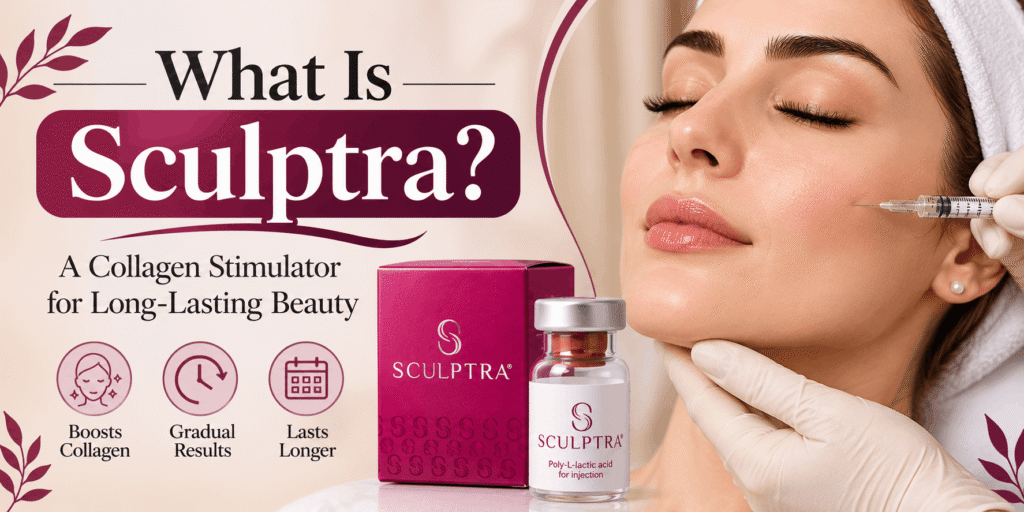
Sculptra before and after is an injectable treatment made with poly-L-lactic acid (PLLA), a biocompatible and biodegradable synthetic material. It is commonly described as a collagen stimulator because its purpose is to encourage the body to produce more of its own collagen in the treated areas. Collagen is a structural protein that helps support the skin, contributing to its firmness, thickness, and overall appearance.
As people age, natural collagen production gradually decreases. This process can contribute to changes such as reduced facial fullness, more noticeable folds, and a less supported appearance in certain areas. Sculptra is intended to address some of these changes by encouraging a gradual collagen response rather than simply adding an immediate volume effect.
The treatment involves injecting the prepared product into carefully selected areas by a trained medical professional. The exact injection technique, depth, quantity, and number of sessions depend on the patient’s facial anatomy and treatment goals. Sculptra is used for certain facial wrinkles and folds, including nasolabial fold contour deficiencies and cheek wrinkles, according to its approved labeling in the United States.
It is important to distinguish Sculptra from hyaluronic acid fillers. Hyaluronic acid fillers generally provide a more immediate visible change because they add volume directly. Sculptra works differently: its visible effects develop as the body responds to the treatment and produces collagen. This makes it a gradual approach rather than an instant facial enhancement.
Sculptra Before and After: Understanding the Transformation
The difference between Sculptra before and after photographs can be noticeable, but the most meaningful changes usually develop gradually. Before treatment, someone may have visible facial volume loss, deeper-looking folds, or a less supported appearance in certain areas. After a successful treatment plan, the treated areas may appear smoother, fuller, and more balanced.
However, photographs should be interpreted carefully. Lighting, camera angles, facial expressions, makeup, and image editing can all influence how dramatic a result appears. A photograph taken immediately after an appointment may also show temporary swelling that does not represent the final outcome.
A more realistic way to evaluate Sculptra is to compare photographs taken under similar conditions at different stages of the treatment process. The goal is not necessarily to make the face look dramatically different. Many patients seek a gradual improvement that preserves their natural facial features.
Immediately After Treatment: What You May Notice
Immediately after Sculptra injections, the treated area may look fuller than expected. This early appearance can create the impression that the treatment has already produced its final result. In reality, some of the initial fullness comes from the liquid used to prepare the product and temporary swelling caused by the injections.
As the body absorbs the liquid and the swelling settles, much of this early volume may disappear. The face may then look closer to its original appearance. This is an expected part of the process and does not automatically mean the treatment has failed.
Common short-term reactions include redness, tenderness, swelling, bruising, itching, and discomfort around the injection sites. These effects vary between individuals and generally depend on the treatment area, injection technique, and personal healing response.
During this early stage, it is important not to judge the final outcome. Your practitioner may recommend specific aftercare instructions, including whether and how to massage the treated areas. Follow the instructions given for your particular treatment rather than applying a routine you found online.
Weeks 1 to 4: The Early Recovery Stage
During the first few weeks, temporary swelling generally becomes less noticeable, allowing the treated area to settle. This is often the stage when people begin to understand why Sculptra is different from traditional fillers. The immediate fullness may have reduced, while the longer-term collagen response is still developing.
Some individuals may notice subtle changes during this period, but visible improvement is not guaranteed at this early stage. The amount of change depends on several factors, including the treatment plan, the area treated, and the body’s individual response.
It is also possible to experience mild tenderness or bruising during the recovery period. Most temporary injection-related reactions improve, but persistent, worsening, or unusual symptoms should be discussed with the treating professional.
Patience is particularly important here. Repeatedly comparing your face with photographs taken immediately after treatment can create unrealistic expectations because those images may reflect temporary swelling rather than lasting improvement.
Weeks 4 to 12: Gradual Collagen Development
Over the following weeks, the collagen-building process may become more noticeable. Some patients begin to see improvements in skin support, facial fullness, or the appearance of certain wrinkles and folds. The changes are usually gradual rather than sudden.
This period is often important when evaluating early progress. The treated areas may begin to look more balanced, and some people notice that their skin appears less hollow or that certain facial lines look softer.
Nevertheless, results are not identical for everyone. A person with mild volume changes may notice a different type of improvement from someone seeking correction of more significant facial volume loss. The number of sessions and the amount of product used also influence the overall treatment plan.
A follow-up appointment allows the practitioner to assess the response and determine whether additional treatment is appropriate. It is generally better to evaluate progress with professional guidance than to request more product simply because the first few weeks did not create a dramatic change.
Months 3 to 6: More Noticeable Changes
For many patients, the results become easier to evaluate over the following months. As collagen development continues, the treated areas may appear smoother and more supported. Changes can include improved-looking cheek contours, softer facial folds, and a more refreshed appearance.
This does not mean every patient will experience a dramatic transformation by month six. Some people develop visible improvements earlier, while others may need additional sessions or more time to assess their outcome.
The best way to understand the progress is to compare consistent before-and-after photographs. Use similar lighting, camera distance, facial expressions, and angles whenever possible. This makes it easier to identify genuine changes instead of confusing photographic differences with treatment results.
At this stage, your practitioner can also discuss whether the original treatment goals have been achieved. If the improvement is not as expected, they can review the treatment plan and explain whether further treatment is suitable.
Six Months and Beyond: Evaluating the Longer-Term Result
Sculptra is designed to produce results that develop over time and may last longer than many temporary cosmetic treatments. The duration varies according to individual factors, the treatment plan, and the body’s response. In the United States, product information describes results lasting up to two years in some patients, but this should not be interpreted as a guaranteed duration for everyone.
Longer-term photographs can help show how the face has responded after the initial treatment period. The goal is generally a gradual improvement rather than a completely different facial appearance.
Natural aging continues even after treatment. Changes in weight, sun exposure, lifestyle, and skin condition can also influence how the face looks over time. Sculptra does not stop aging or permanently prevent future volume changes.
A consultation with your practitioner can help determine whether maintenance treatment is appropriate. The decision should be based on your actual results, medical history, and personal goals rather than a fixed schedule advertised by a clinic.
What Can You Realistically Expect From Sculptra?
Sculptra should be approached as a treatment process rather than a one-visit solution. Although some people notice improvement after an initial session, the final outcome may require a series of treatments. The number of sessions varies according to facial anatomy, the degree of volume loss, the desired result, and the practitioner’s assessment.
One of the most important expectations is that the early appearance will change as temporary swelling settles. This is why an immediate after photograph may not accurately represent the eventual result. Patients who understand this difference are less likely to mistake the normal early recovery process for an unsuccessful treatment.
The gradual nature of Sculptra may appeal to people who prefer subtle improvements. Instead of creating an obvious change in facial shape overnight, the treatment aims to support the skin’s structure through collagen stimulation. Some patients may notice a refreshed appearance without others immediately recognizing that they have had a cosmetic procedure.
However, natural-looking results are not automatic. They depend on appropriate patient selection, correct injection technique, suitable treatment planning, and realistic expectations. An inexperienced injector or an unsuitable treatment approach can increase the likelihood of complications or an unsatisfactory appearance.
Another consideration is that Sculptra is not designed to correct every facial concern. It may help improve certain wrinkles and areas of volume loss, but it cannot replace surgery when significant skin laxity or excess tissue is the main concern. It is also not a substitute for skincare treatments that address pigmentation, surface texture, or sun damage.
For this reason, the consultation should focus on the specific concern you want to improve. A qualified practitioner can explain whether Sculptra is appropriate or whether another approach may better match your goals.
Which Areas Can Show a Difference Before and After Sculptra?
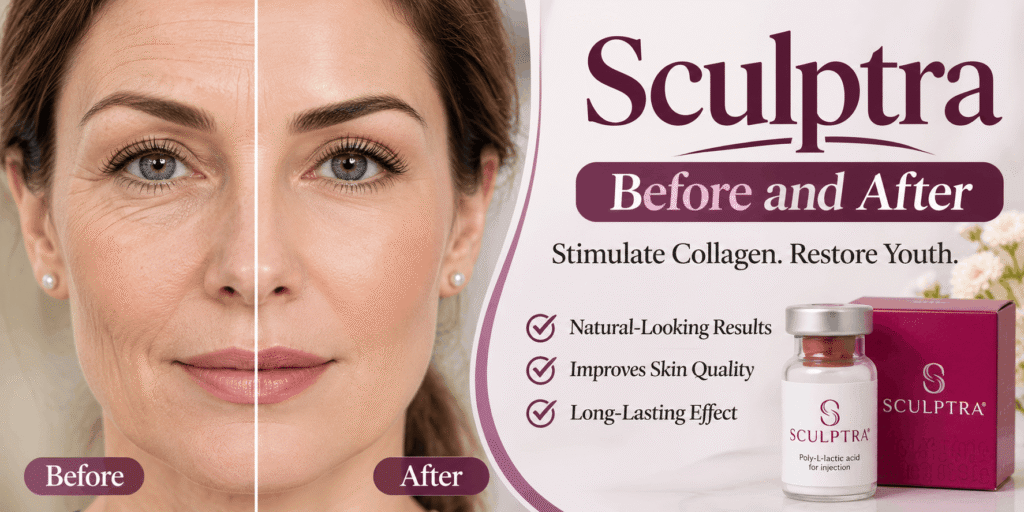
The visible changes depend on the area being treated and the reason for choosing the procedure. Sculptra is not intended to create the same result in every part of the face, so treatment goals should be discussed individually.
The cheeks are one area where patients may seek improvement in the appearance of volume loss and wrinkles. When appropriate, treatment may help create a more supported appearance without relying on an immediate gel-like volume effect.
Nasolabial folds, which run from the sides of the nose toward the corners of the mouth, may also be treated when the patient’s concern is suitable for Sculptra. The goal is to improve the appearance of the folds rather than erase every natural facial line.
Some patients are interested in improving the appearance of marionette lines or other facial wrinkles. Whether Sculptra is appropriate depends on the specific concern, product labeling, practitioner expertise, and individual anatomy.
It is important not to assume that every area can be treated safely with the same product or technique. Sculptra should not be injected into certain areas, including the lips and the area around the eyes, according to its product safety information. A medical professional should explain the appropriate treatment areas and alternatives.
Who May Be a Suitable Candidate?
A suitable candidate is someone who has a concern that Sculptra is designed to address and understands that the results develop gradually. People who want subtle improvement in certain facial wrinkles, folds, or signs of volume loss may wish to discuss the treatment with a qualified professional.
A consultation should include a review of medical history, previous cosmetic procedures, allergies, current medications, skin condition, and treatment expectations. The practitioner should also examine the face and explain whether the expected benefit is realistic.
Sculptra may not be suitable for everyone. Product information lists important restrictions, including known hypersensitivity to its ingredients and a history of keloid formation or hypertrophic scarring. Safety has not been established for certain groups, including people who are pregnant or breastfeeding and individuals under 18.
People with active skin infections, sores, rashes, or inflammation in the proposed treatment area may need to postpone treatment until the issue has resolved. Anyone with a significant medical condition or a history of severe allergic reactions should discuss this before proceeding.
The decision should never be based only on social media photographs or promotional offers. A proper medical assessment is essential to determine whether the procedure is appropriate.
Sculptra Aftercare: Supporting Recovery
Following aftercare instructions is an important part of the treatment process. Your practitioner will explain how to care for the treated areas and what reactions to expect during recovery.
Mild swelling, tenderness, redness, and bruising can occur after injections. Depending on your individual situation, the practitioner may recommend simple measures to manage temporary discomfort. Avoid applying pressure or manipulating the treated area unless you have been specifically instructed to do so.
Massage is sometimes recommended after Sculptra treatment to help distribute the product. The commonly discussed 5-5-5 approach involves massaging the treated area for five minutes, five times a day, for five days. However, the exact instructions should come from your treating professional because aftercare may vary according to the treatment and current product guidance.
It is also sensible to ask when you can return to exercise, intense physical activity, and your usual skincare routine. Avoid making assumptions about recovery times, especially if you have bruising, swelling, or skin irritation.
Keep follow-up appointments even if the early results seem satisfactory. Your practitioner needs to evaluate how the treated areas are responding and whether further treatment should be considered.
Possible Risks and Side Effects to Understand
Although Sculptra is used for cosmetic improvement, it is still an injectable medical treatment and carries potential risks. Common reactions include swelling, redness, tenderness, bruising, pain, itching, and bleeding at the injection site. These effects are often temporary, but their duration and intensity can vary.
Small lumps or bumps may develop under the skin. Some may be felt only when pressing the treated area, while others can become visible. Larger or delayed-onset nodules have also been reported, sometimes with inflammation or changes in skin color.
More serious complications can occur if the product is accidentally injected into a blood vessel. This can lead to vascular blockage and tissue injury, and in rare circumstances may cause severe complications. The risk makes proper anatomical knowledge and injection technique essential.
Seek prompt medical attention if you experience severe or increasing pain, unusual skin discoloration, changes in vision, or other unexpected symptoms after treatment. Do not wait for a routine follow-up if you suspect a serious complication.
Choosing an appropriately trained and licensed healthcare professional is one of the most important steps in reducing avoidable risks. Ask about their experience with Sculptra, the product being used, expected results, possible complications, and how they manage emergencies.
How to Evaluate Sculptra Before and After Photos
Before-and-after photographs can help you understand the type of changes that may be possible, but they should not be treated as a promise of your own results. Every face has different proportions, skin characteristics, and patterns of volume loss.
Start by checking whether the photographs were taken under similar conditions. Lighting can make skin appear smoother or more textured, while camera angles can change how full the cheeks or lower face look. Facial expressions can also influence the appearance of wrinkles and folds.
Look for photographs that show realistic changes rather than dramatic transformations that appear inconsistent with a gradual collagen-stimulating treatment. It is useful to ask when the after photograph was taken and how many treatment sessions were completed.
You should also ask whether the images represent actual patients treated by the practitioner and whether they have been edited. A trustworthy provider should be willing to explain the limitations of before-and-after photography.
Most importantly, compare your own treatment goals with the examples. Someone else’s outcome cannot predict exactly how your face will respond. Your practitioner should create a treatment plan based on your anatomy and individual needs.
Final Thoughts
Sculptra before and after results are best understood as a gradual process rather than an instant transformation. The treatment uses poly-L-lactic acid to stimulate collagen production, which may improve the appearance of certain facial wrinkles, folds, and areas of volume loss over time.
Temporary swelling can make the face appear fuller immediately after treatment, but this early change is not the final result. More meaningful improvements may become visible over the following weeks and months, with individual outcomes depending on the treatment plan and personal response.
Before choosing Sculptra, learn about its benefits, limitations, possible side effects, and recovery requirements. Consult a qualified medical professional who can assess your suitability, explain realistic expectations, and provide a safe treatment plan. A thoughtful approach is more valuable than chasing dramatic photographs or expecting overnight results.
Sculptra results develop gradually as collagen production increases. Some people begin noticing changes within several weeks, while more noticeable improvements may take a few months.
Sculptra may create temporary fullness immediately after injections due to the preparation liquid and swelling. This initial effect usually settles and should not be confused with the final collagen-related results.
The number of sessions depends on facial volume loss, treatment goals, and individual response. Your practitioner will recommend a treatment plan after assessing your needs.



One Comment