
Abstract
Nail lacquer is a topical formulation designed to apply active ingredients directly to the nail surface. Beyond its cosmetic applications, medicated nail lacquer has become an important area of research for managing onychomycosis, a fungal infection that affects fingernails and toenails. Treating this condition can be challenging because the nail plate forms a protective barrier that limits the penetration of many medications.
Transungual drug delivery refers to the movement of therapeutic substances through the nail plate to reach the infected area. Medicated nail lacquers are being developed to improve drug retention, support penetration, and provide prolonged contact between the medication and the nail. Different approaches, including mechanical preparation, chemical penetration enhancers, and physical techniques, may help improve the delivery of antifungal agents.
This article explores the causes of onychomycosis, the challenges associated with nail drug delivery, methods for improving nail penetration, and the role of medicated nail lacquers in antifungal treatment. It also discusses existing treatments, emerging technologies, and future opportunities for developing more effective topical therapies.
1. Introduction
Nail lacquer is commonly associated with decorative nail products used to add color, shine, and protection to fingernails and toenails. However, specialized pharmaceutical nail lacquers serve a different purpose. They are formulated to deliver medication to the nail and may be used to treat certain nail conditions, particularly fungal infections.
One of the most common fungal nail conditions is onychomycosis. It can cause discoloration, thickening, brittleness, separation of the nail from the nail bed, and changes in nail appearance. Although the condition is not usually life-threatening, it can persist for long periods and may cause discomfort, difficulty with footwear, and concerns about appearance.
Treating fungal nail infections is difficult for several reasons. The nail plate is made primarily of keratin, a tough structural protein that creates a relatively dense barrier. Many topical medications have difficulty passing through this structure in sufficient quantities to reach the underlying infection. Furthermore, infected nails may become thicker or more irregular, making drug delivery even more challenging.
Oral antifungal medicines are sometimes prescribed, depending on the severity of the infection, the organism involved, and the patient’s medical circumstances. However, these medicines may cause side effects, interact with other medications, or be unsuitable for certain individuals. Topical treatments therefore remain valuable options, particularly for selected cases involving limited nail disease.
Medicated nail lacquer offers a practical approach because it can form a film over the nail, maintain contact with the surface, and gradually release an antifungal ingredient. Researchers are investigating improved formulations that can enhance penetration without unnecessarily irritating surrounding skin.
Understanding the science behind nail lacquer can help explain how pharmaceutical formulations differ from ordinary cosmetic nail polish and why specialized drug-delivery systems are important for managing onychomycosis.
2. Onychomycosis and Its Etiology
Onychomycosis is a fungal infection of the nail unit. It can affect toenails or fingernails, although toenails are commonly involved. The infection develops when fungi enter and grow within nail structures, potentially causing visible changes and progressive nail damage.
Causes of Onychomycosis
Several types of fungi can cause nail infections. The main groups include:
- Dermatophytes: These fungi commonly cause infections involving keratin-rich tissues, including skin, hair, and nails. Trichophyton rubrum is a well-known cause of fungal nail infections.
- Yeasts: Certain yeasts, including species of Candida, can affect the nails, particularly in some fingernail infections.
- Non-dermatophyte moulds: Other environmental fungi can occasionally cause nail infections, although distinguishing true infection from contamination may require careful testing.
Identifying the responsible organism can be important because nail changes are not always caused by fungi. Trauma, psoriasis, and other nail disorders may produce similar symptoms.
Risk Factors
Several factors can increase the likelihood of developing onychomycosis. These include older age, repeated nail trauma, excessive moisture, athlete’s foot, poorly fitting footwear, and sharing contaminated nail-care equipment. Certain health conditions, including diabetes and impaired circulation, can also increase the risk of complications or persistent infection.
The infection may spread through direct contact with infected skin or contaminated items such as nail clippers and files. Warm, damp environments can encourage fungal growth, making appropriate foot hygiene and footwear practices useful preventive measures.
Common Symptoms
The appearance of onychomycosis varies from person to person. Common signs include yellow, white, or brown discoloration; thickened nails; crumbling edges; an irregular surface; and separation of the nail plate from the nail bed.
Some infections produce only minor cosmetic changes, while others can affect a large portion of the nail. Severe cases may cause tenderness or difficulty walking when toenails become thickened.
Why Treatment Can Be Difficult
Nails grow slowly, particularly toenails, so visible improvement may take months even when treatment is effective. The nail plate also limits the movement of many topical medicines. A treatment must reach the relevant site and remain effective for an appropriate period.
For this reason, treatment selection depends on the extent of infection, the number of affected nails, the suspected fungal organism, and the patient’s overall health. A healthcare professional may recommend laboratory confirmation when the diagnosis is uncertain or when systemic treatment is being considered.
3. Transungual Drug Delivery
Transungual drug delivery is a pharmaceutical approach designed to transport therapeutic substances through the nail plate. The term combines the idea of movement across a barrier with the anatomical term for the nail. Its purpose is to improve the amount of medication that reaches the affected nail tissues.
Understanding the Nail Barrier
The nail plate consists of compact layers of keratinized cells. Although it appears solid, it contains microscopic pathways through which certain substances may move. However, the tightly packed keratin structure and the nail’s chemical properties can restrict the penetration of many drugs.
The ability of a medication to pass through the nail depends on several factors, including its molecular size, solubility, concentration, and interaction with keratin. The thickness and condition of the nail also influence delivery.
In fungal infections, thickening and structural damage may change these properties. Consequently, a formulation that performs well on an intact nail may behave differently on an infected nail.
Importance of Transungual Delivery
The main objective of transungual delivery is to provide an effective concentration of an antifungal ingredient at the infection site while minimizing unnecessary exposure elsewhere in the body.
Topical delivery may offer several potential advantages:
- It applies medication directly to the affected nail.
- It can reduce exposure to the digestive system compared with oral administration.
- It may be suitable for selected localized infections.
- It can provide a convenient treatment option when systemic medicines are unsuitable.
- It allows researchers to develop formulations that control drug release and improve nail contact.
These advantages do not mean that topical treatment is appropriate for every case. Medication penetration may remain limited, and extensive infections can be difficult to treat with topical products alone.
Factors Affecting Drug Penetration
Drug characteristics: Molecular size, solubility, concentration, and chemical structure influence the movement of a substance through keratin.
Formulation design: The type of solvent, film-forming polymer, and other ingredients can affect how a lacquer spreads, dries, and releases its active ingredient.
Nail condition: Nail thickness, hydration, damage, and fungal involvement can influence permeability.
Contact time: A formulation that remains on the nail may provide a longer opportunity for drug release than one that is removed quickly.
Application consistency: Following the prescribed schedule is important because nail treatment generally requires prolonged use.
Researchers evaluate these factors when designing and testing new nail lacquers. The ultimate goal is not simply to increase penetration, but to deliver an appropriate amount of active medication safely and consistently.
4. Approaches for Transungual Drug Delivery
Different strategies are being studied to improve the movement of antifungal medicines through the nail plate. These approaches are commonly grouped into mechanical, chemical, and physical methods. Each works differently, and its suitability depends on the formulation, the treatment objective, and safety considerations.
4.1. Mechanical Methods
Mechanical methods involve physically reducing the nail barrier or preparing its surface to improve medication access.
Nail trimming and filing: Removing excess nail length and carefully reducing thickened areas may help topical medication reach the affected region. Professional debridement can be useful in selected cases, especially when the nail is unusually thick.
Nail plate thinning: Controlled thinning may reduce the distance a medication must travel. However, excessive filing can injure the nail bed or surrounding skin, so it should be performed carefully.
Surface preparation: Cleaning the nail and removing loose material can improve contact between the formulation and the nail surface.
Mechanical methods can complement topical treatment, but they do not independently eliminate a fungal infection. Improper tools or aggressive filing may cause injury or spread contaminated material.
4.2. Chemical Methods
Chemical methods use formulation ingredients known as penetration enhancers to change the interaction between a drug and the nail barrier. These substances may improve hydration, influence keratin interactions, or help the active ingredient move through the nail plate.
Potential formulation components include suitable solvents, humectants, and other excipients selected for their compatibility with the active ingredient and the intended route of administration.
Solvents can help dissolve an antifungal drug and support its distribution within a formulation. After application, evaporation may leave a film containing the active ingredient.
Hydration-promoting ingredients can alter the water content of the nail plate. Changes in hydration may influence the nail’s permeability, although the effect depends on the formulation and conditions.
Keratin-interacting agents are investigated for their ability to modify drug transport through the nail structure. Their use must be balanced against the risk of irritation or damage.
Chemical enhancers are not interchangeable, and an ingredient that improves penetration in a laboratory experiment may not necessarily improve clinical outcomes. Safety, stability, drug compatibility, and effectiveness all require evaluation.
4.3. Physical Methods
Physical methods use energy or specialized technologies to help medication pass through the nail barrier. Several techniques are being investigated for pharmaceutical and clinical applications.
Iontophoresis: This technique uses a controlled electrical current to assist the movement of certain charged or suitable drug molecules through biological barriers. Researchers are exploring its potential for improving nail drug delivery.
Ultrasound-assisted delivery: Ultrasound may influence transport across certain tissues or barriers under controlled conditions. Its effectiveness for nail delivery depends on the specific equipment, treatment settings, and formulation.
Laser-assisted techniques: Selected laser technologies can create controlled changes in nail structure or assist other treatment approaches. The procedure and its risks depend on the device and intended use.
Microneedle-based approaches: Specialized microscopic structures are being researched as a way to create pathways through barriers that otherwise limit medication penetration. Their application to nail treatment remains an area of technological development.
Physical techniques may improve delivery in particular circumstances, but they can require specialized equipment, trained professionals, and additional safety testing. They should not be treated as universally established replacements for approved antifungal therapies.
5. Nail Lacquers for Transungual Drug Delivery
Medicated nail lacquers are designed to keep an antifungal ingredient in contact with the nail for an extended period. Unlike ordinary cosmetic polish, pharmaceutical nail lacquer is formulated around a therapeutic purpose, with attention to drug release, nail penetration, stability, and safety.
How Medicated Nail Lacquer Works
After application, the liquid formulation spreads over the nail and forms a thin film as its volatile components evaporate. The remaining layer contains the active ingredient and other formulation components.
Depending on the product, the antifungal agent may gradually move into the nail plate. The film can help maintain contact with the surface and may reduce the need for repeated application compared with some conventional topical preparations.
The precise application schedule depends on the specific medicine. Some products require regular reapplication, while others have instructions for removing accumulated layers or cleaning the nail. Users should follow the product label and the advice of their healthcare professional rather than applying a generic schedule to every lacquer.
Important Formulation Components
A pharmaceutical nail lacquer may contain several types of ingredients:
- Antifungal active ingredient: The substance responsible for acting against the targeted fungus.
- Film-forming polymer: Helps create a continuous layer on the nail after application.
- Solvent system: Dissolves or distributes the ingredients and supports application.
- Plasticizer: May improve the flexibility of the dried film.
- Penetration enhancer: May help improve movement of the active ingredient through the nail plate.
- Stabilizing or supporting ingredients: Help maintain the formulation’s quality during storage and use.
Not every product contains all these components. Formulation choices depend on the active drug, intended release characteristics, compatibility, and regulatory requirements.
Potential Benefits and Limitations
Medicated nail lacquer can be convenient for certain localized infections and may reduce systemic exposure compared with oral therapy. Its film-forming properties can also support prolonged contact with the nail.
However, topical treatment has limitations. The nail barrier may prevent enough medication from reaching deeper infected areas, and treatment may need to continue for months. Results can vary depending on the extent of infection, the active ingredient, adherence to treatment, and the patient’s nail growth.
A healthcare professional can help determine whether a medicated lacquer is suitable or whether another treatment, including oral medication or a combination approach, should be considered. Ordinary cosmetic nail polish should not be assumed to treat onychomycosis unless it is specifically formulated and authorized for that purpose.
6. Delivery of Antifungal Drugs: Treatment of Onychomycosis
The effectiveness of onychomycosis treatment depends on selecting an appropriate antifungal agent and delivering it to the infected nail tissues. Because the nail plate restricts the penetration of many substances, pharmaceutical researchers continue to investigate formulations that improve drug transport and maintain therapeutic activity.
Antifungal treatments are generally divided into topical and systemic therapies. Topical products are applied directly to the affected nail, whereas systemic medicines are taken orally and reach the nail through the bloodstream. The choice depends on the extent of infection, the patient’s health, the organism involved, and the potential benefits and risks of treatment.
Common Antifungal Treatments
Several antifungal medicines are used in the management of onychomycosis. Their suitability varies according to the product’s approved indication and the patient’s circumstances.
- Ciclopirox: Available in certain medicated nail lacquer formulations. It acts against susceptible fungi and is used for selected nail infections.
- Amorolfine: A topical antifungal available as a medicated nail lacquer in some countries. Availability and approved uses vary by location.
- Efinaconazole: A topical antifungal solution developed for treating particular cases of toenail onychomycosis.
- Tavaborole: A topical antifungal solution used for selected toenail infections.
- Terbinafine: An oral antifungal frequently used for dermatophyte nail infections when systemic treatment is appropriate.
- Itraconazole: An oral antifungal that may be prescribed for certain fungal nail infections, depending on the organism and patient-specific considerations.
These medicines are not interchangeable. Some topical treatments are intended for particular degrees of nail involvement, while oral medicines require consideration of possible drug interactions, contraindications, and other safety factors.
Table 2. Overview of Selected Antifungal Treatments
| Antifungal | Formulation | General role |
|---|---|---|
| Ciclopirox | Medicated nail lacquer | Topical treatment for selected nail infections |
| Amorolfine | Medicated nail lacquer | Topical treatment where approved |
| Efinaconazole | Topical solution | Treatment of selected toenail infections |
| Tavaborole | Topical solution | Treatment of selected toenail infections |
| Terbinafine | Oral medicine | Systemic treatment, particularly for dermatophytes |
| Itraconazole | Oral medicine | Systemic treatment for selected fungal infections |
Note: Availability, approved indications, treatment duration, and prescribing requirements vary by country and product. This table is an educational overview, not a personalized treatment recommendation.
Challenges in Antifungal Drug Delivery
The presence of a drug in a formulation does not guarantee that an effective amount will reach the infection. A topical medicine must pass through the nail plate or reach the relevant infected area in sufficient concentration.
The drug’s chemical properties, nail thickness, formulation design, and application consistency all affect its performance. In addition, the slow growth of nails means that recovery may take considerable time, even after fungal activity has been controlled.
Researchers therefore evaluate both drug penetration and clinical outcomes. A formulation that performs well in a laboratory test still needs appropriate clinical evidence before its effectiveness in patients can be established.
Table 3. Factors Influencing Antifungal Delivery Through the Nail
| Factor | Potential influence |
|---|---|
| Nail thickness | A thicker nail may make penetration more difficult |
| Drug solubility | Influences how the active ingredient is incorporated and released |
| Molecular characteristics | Can affect movement through the keratin structure |
| Film formation | Influences contact time and drug release |
| Application consistency | Affects how reliably the prescribed treatment is used |
| Infection severity | May influence whether topical treatment alone is suitable |
| Nail growth rate | Affects how quickly healthy nail becomes visible |
7. Clinical Status of Antifungals
The clinical status of an antifungal medicine depends on the evidence supporting its safety and effectiveness, its approved indications, and the regulatory requirements in the relevant country. Several topical antifungal treatments have been developed specifically for nail infections, but no single product is appropriate for every patient.
Medicated nail lacquers containing agents such as ciclopirox or amorolfine are available in certain markets. Other topical formulations, including efinaconazole and tavaborole, are also used for selected cases of onychomycosis. Their formulation types and application instructions differ.
Oral antifungal medicines, particularly terbinafine, may be more suitable for some infections involving a larger portion of the nail or multiple nails. However, systemic treatment can involve safety considerations, including interactions with other medicines and potential effects on the liver. A clinician may review medical history, current medication use, and relevant tests before recommending treatment.
Assessing Clinical Effectiveness
Clinical studies may evaluate several outcomes:
- Mycological cure: Laboratory testing no longer detects the causative fungus according to the study’s criteria.
- Clinical improvement: The nail shows reduced discoloration, thickening, or other visible signs of disease.
- Complete cure: Both the study’s specified clinical and mycological criteria are met.
- Recurrence: The infection returns after treatment or apparent improvement.
- Safety and tolerability: Researchers monitor adverse effects, irritation, and treatment discontinuation.
These outcomes are not equivalent. A nail may look healthier while fungal testing remains positive, or laboratory findings may improve before the nail’s appearance changes significantly.
Table 4. Important Measures in Clinical Studies
| Measure | What it evaluates |
|---|---|
| Mycological cure | Evidence of fungal clearance using specified tests |
| Clinical response | Improvement in the nail’s appearance |
| Complete cure | Achievement of combined clinical and laboratory criteria |
| Adverse effects | Unwanted reactions associated with treatment |
| Treatment adherence | Whether participants follow the prescribed schedule |
| Recurrence rate | Return of infection during the study’s follow-up period |
Clinical evidence should be interpreted in the context of study design, sample size, infection severity, and follow-up duration. Results from one medicine or formulation should not automatically be applied to another.
8. Patent Reports on Nail Lacquer
Patents provide information about proposed inventions and technological developments in pharmaceutical formulations. In the field of medicated nail lacquer, patent applications may describe new combinations of active ingredients, film-forming polymers, solvents, penetration enhancers, or controlled-release systems.
A patent generally describes an invention that meets applicable legal requirements. However, a granted patent does not automatically establish that a formulation is clinically effective, commercially available, or approved as a medicine.
Areas of Innovation
Researchers and developers have explored several areas of nail lacquer technology.
Improved film-forming systems: New polymers may be investigated to improve film flexibility, adhesion, and drug release after application.
Penetration-enhancing formulations: Patent documents may describe combinations intended to increase movement through the nail plate while maintaining acceptable tolerability.
Controlled-release systems: Some proposed formulations aim to release an active ingredient gradually, potentially maintaining contact with the nail for longer periods.
Alternative drug carriers: Research may involve specialized carriers designed to improve drug solubility, stability, or distribution within nail tissues.
Combination approaches: Formulations may explore combinations of active substances or delivery technologies to address different challenges associated with nail infection.
Table 5. Patent Research Areas for Medicated Nail Lacquer
| Research area | Development objective |
|---|---|
| Polymer systems | Improve film formation and adhesion |
| Solvent combinations | Support drug dissolution and application |
| Penetration enhancers | Improve movement through the nail barrier |
| Controlled release | Modify the rate at which medication becomes available |
| Advanced carriers | Improve formulation stability or drug distribution |
| Combination technologies | Explore complementary delivery strategies |
To investigate a specific patent, readers should review its title, inventors, publication number, claims, filing date, legal status, and supporting technical information. Official patent databases can help identify whether a document is pending, granted, expired, or otherwise no longer active.
9. Emerging Topical Therapies for Onychomycosis: Future Perspective
Research into topical treatment for onychomycosis continues to focus on improving the delivery of antifungal agents through the nail plate. The central challenge is to achieve sufficient drug exposure at the infection site without creating unnecessary irritation or damage.
Nanotechnology-Based Formulations
Nanotechnology-based systems are being studied for their potential to improve the solubility, stability, and distribution of certain antifungal agents. Examples include lipid-based carriers and polymeric nanoparticles. Their usefulness depends on the active ingredient, carrier composition, and ability to release the drug in the intended location.
Although these systems offer promising research opportunities, laboratory findings alone cannot establish that a product will outperform existing treatments. Appropriate safety testing and clinical trials are necessary.
Hydrogels and Advanced Film-Forming Systems
Hydrogels and other specialized materials can be designed to retain moisture or provide controlled release of an active substance. Researchers are examining whether these properties can support nail hydration and improve the movement of selected drugs.
Advanced film-forming formulations may also be developed to balance adhesion, flexibility, drying time, and drug release. The best design will depend on the intended medicine and the practical needs of patients.
Combination Delivery Strategies
Future treatments may combine formulation improvements with carefully selected nail-preparation techniques. For example, reducing excessive nail thickness under professional guidance may complement a prescribed topical medicine in suitable cases.
Researchers are also investigating whether physical delivery technologies can improve the performance of topical agents. These approaches require further assessment of effectiveness, accessibility, cost, and safety before routine use can be recommended.
Personalized Treatment Approaches
Not all nail infections have the same cause or severity. Future treatment strategies may increasingly consider the fungal organism, the extent of nail involvement, previous treatment outcomes, and patient-specific risks.
Accurate diagnosis remains essential. Nail discoloration and thickening can result from conditions other than fungal infection, so using antifungal products without a clear diagnosis may delay appropriate care.
10. Development of Penetration Assays and Their Comparative Analysis
Penetration assays are laboratory methods used to investigate how a drug moves through the nail plate. They help researchers compare formulations, understand drug distribution, and identify factors that may influence transungual delivery.
These tests are important during formulation development because they provide information before a product is evaluated in clinical studies. However, the results must be interpreted carefully: a laboratory model cannot fully reproduce the complexity of a living nail and its surrounding tissues.
Common Testing Approaches
In vitro diffusion studies: Researchers use nail samples and diffusion cells to measure the movement of a substance across the nail under controlled conditions. These studies can help compare formulations and estimate drug transport.
Drug-content analysis: Analytical methods can measure how much active ingredient remains in the nail after treatment. This helps distinguish drug retention within the nail from drug that has passed through it.
Microscopic examination: Imaging techniques may help researchers investigate where a substance is distributed within a nail sample, depending on the properties of the drug and method used.
Ex vivo nail studies: Human or animal nail samples may be examined outside the living body to assess penetration and retention. The relevance of the results depends on the sample source, preparation, and experimental conditions.
Clinical assessments: Patient studies evaluate real-world outcomes, including changes in nail appearance, fungal test results, tolerability, and recurrence. These outcomes are necessary to determine whether improved laboratory penetration translates into meaningful benefits.
Comparing Penetration Assays
Different tests answer different questions. Diffusion studies estimate movement across a barrier, while drug-content measurements indicate how much substance remains within the nail. Imaging can provide information about distribution, but it may not independently quantify therapeutic activity.
Reliable comparisons require consistent experimental conditions, including similar nail samples, application quantities, exposure periods, and analytical procedures. Researchers should also consider the drug’s stability and the possibility that the testing method may influence the measured result.
Limitations of Laboratory Testing
Laboratory results may not reflect the effects of nail growth, natural wear, washing, daily activities, or variations between patients. In addition, detecting a drug within a nail does not automatically demonstrate that the concentration is sufficient to eliminate the fungus.
A strong development program therefore combines laboratory penetration tests with appropriate safety evaluations and clinical evidence. This integrated approach helps determine whether a new nail lacquer offers a genuine advantage over existing treatment options.
11. Concluding Remarks
Nail lacquer represents an important approach to topical drug delivery, particularly in the management of selected cases of onychomycosis. Its ability to form a film over the nail can support prolonged contact between an antifungal ingredient and the nail surface. However, the dense keratin structure of the nail remains a significant barrier to effective drug delivery.
Mechanical preparation, chemical penetration enhancers, and physical technologies are among the strategies being investigated to improve transungual delivery. Advances in polymers, specialized drug carriers, and controlled-release systems may also contribute to the development of improved formulations.
Nevertheless, promising formulation characteristics do not automatically translate into better clinical outcomes. Laboratory penetration studies, safety assessments, and well-designed clinical trials are all needed to establish the value of new products. Treatment selection should also account for the extent of infection, the likely fungal cause, and the patient’s health.
As research progresses, the goal is to create nail lacquers that are effective, convenient, well tolerated, and supported by reliable evidence. For people experiencing possible fungal nail infections, professional assessment can help confirm the diagnosis and identify an appropriate treatment.
Competing Interests
This article is an educational overview. No specific commercial product is endorsed, and no financial or professional conflict of interest is declared in this independently prepared text. Readers should consult the original research and relevant product information for detailed evidence.
References and Further Reading
For evidence-based information about nail lacquer and onychomycosis, consult reputable medical and scientific resources, including:
- National Library of Medicine (PubMed): Research articles and clinical studies on onychomycosis, topical antifungals, and transungual drug delivery.
- U.S. Food and Drug Administration (FDA): Official prescribing information and product information for approved antifungal treatments in the United States.
- National Health Service (NHS): Patient guidance on fungal nail infections and available treatment options.
- American Academy of Dermatology (AAD): Dermatology information about nail fungus, diagnosis, and treatment.
- World Health Organization (WHO): General information and resources on fungal diseases and antifungal treatment.
For academic or clinical publication, specific references should be verified against the original papers and formatted according to the required citation style. The resources above are starting points for further research rather than a substitute for a verified, article-specific bibliography.
Final Thoughts
Nail lacquer plays an important role in the development of topical treatments for onychomycosis, a fungal infection that can affect the appearance and health of fingernails and toenails. Medicated nail lacquers are designed to deliver antifungal ingredients directly to the nail, offering a convenient option for certain infections. However, the nail plate presents a significant barrier that can limit the penetration of medication and affect treatment outcomes.
Advances in transungual drug delivery, including improved film-forming formulations, chemical penetration enhancers, and emerging delivery technologies, may help address these challenges. Nevertheless, promising laboratory results do not always translate into better clinical outcomes, so further research and clinical evaluation remain essential.
Choosing the right treatment depends on the severity of the infection, the causative fungus, and individual health factors. Anyone experiencing persistent nail discoloration, thickening, or damage should consider consulting a healthcare professional for an accurate diagnosis and appropriate treatment.
As pharmaceutical research continues, the goal is to develop nail lacquers that provide effective drug delivery, good tolerability, and convenient application. These improvements may contribute to better management of fungal nail infections and expand the future potential of topical antifungal therapy.
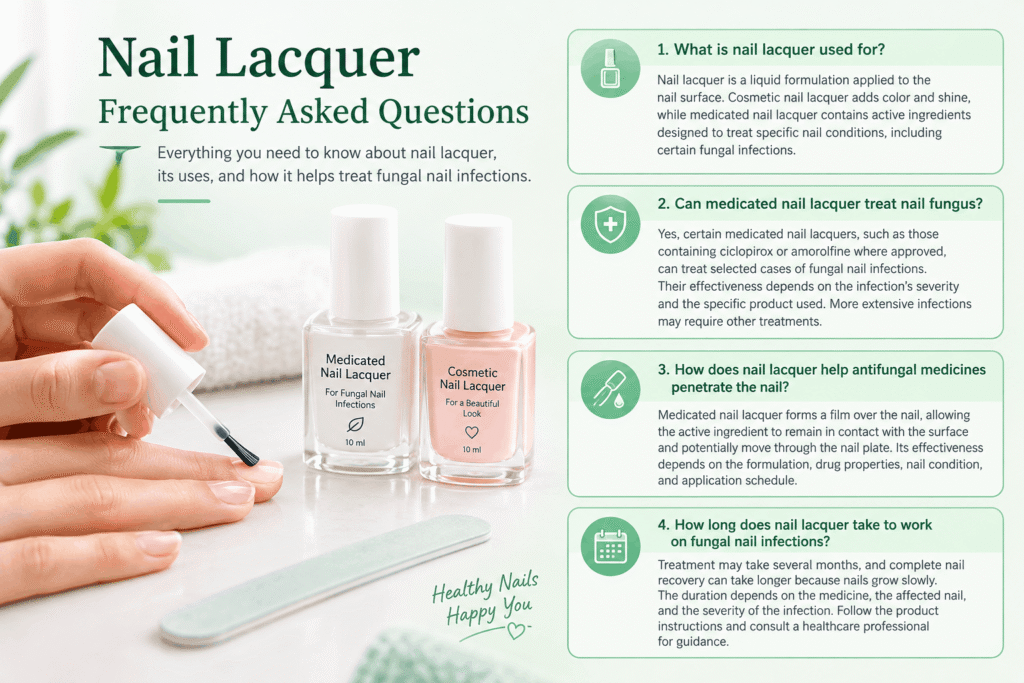
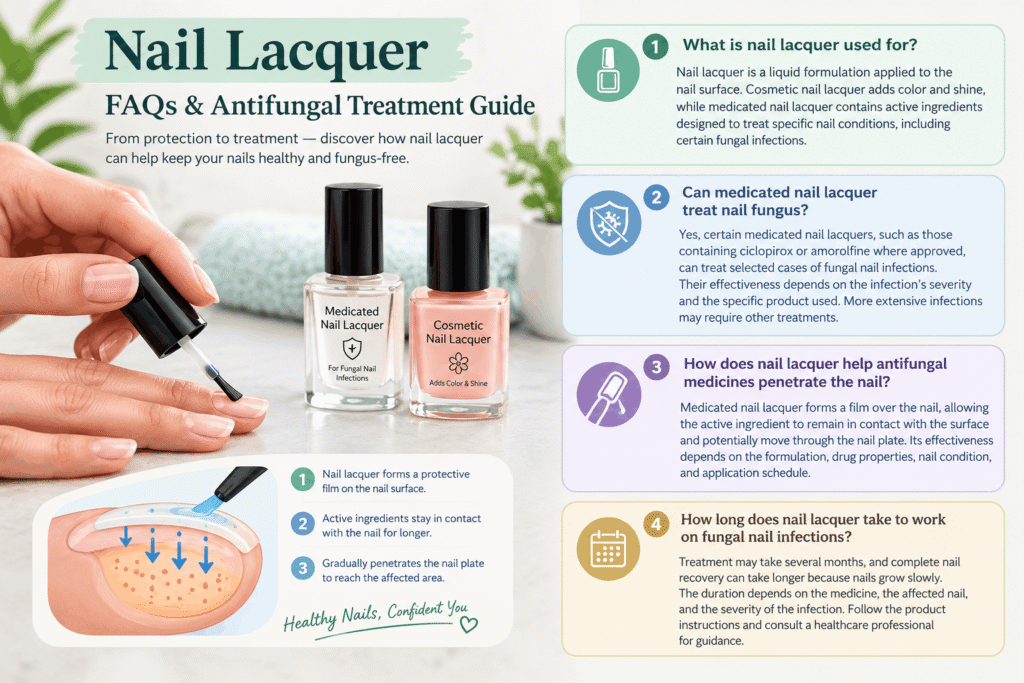
Nail lacquer is a liquid formulation applied to the nail surface. Cosmetic nail lacquer adds color and shine, while medicated nail lacquer contains active ingredients designed to treat specific nail conditions, including certain fungal infections.
Yes, certain medicated nail lacquers, such as those containing ciclopirox or amorolfine where approved, can treat selected cases of fungal nail infections. Their effectiveness depends on the infection’s severity and the specific product used. More extensive infections may require other treatments.
Medicated nail lacquer forms a film over the nail, allowing the active ingredient to remain in contact with the surface and potentially move through the nail plate. Its effectiveness depends on the formulation, drug properties, nail condition, and application schedule.
Treatment may take several months, and complete nail recovery can take longer because nails grow slowly. The duration depends on the medicine, the affected nail, and the severity of the infection. Follow the product instructions and consult a healthcare professional for guidance.


One Comment