
A Russian manicure is a highly detailed nail-care technique known for creating an exceptionally clean-looking area around the nail plate. Unlike a conventional manicure, which may focus mainly on shaping the nails, moisturizing the hands, and gently tidying the cuticle area, a Russian manicure places much greater emphasis on precision around the skin bordering the nail.
The technique is particularly recognizable for its dry preparation method and detailed work around the cuticle area. The goal is to create a very neat transition between the natural nail and the surrounding skin, which can make polish or gel appear especially close to the cuticle line.
Its popularity has grown alongside minimalist nail trends, structured manicures, and clean-looking gel designs. At the same time, the technique has generated discussion among nail professionals because aggressive or improperly performed cuticle work can compromise the skin’s protective barrier.
Understanding what a Russian manicure actually involves, how it differs from a regular manicure, and why professional technique matters is important before deciding whether this style of manicure is right for you.
What Is a Russian Manicure?
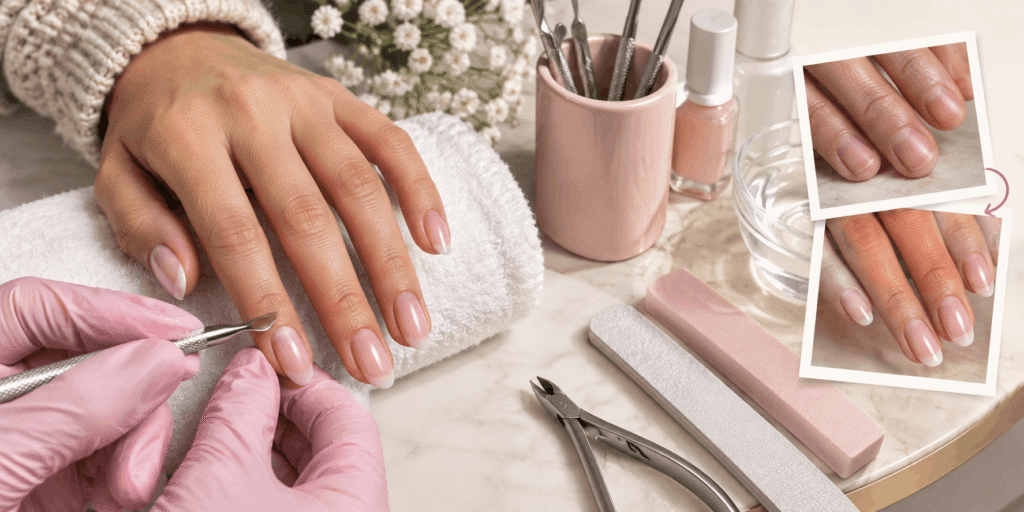
A Russian manicure is a detailed dry manicure technique that focuses heavily on preparing the nail plate and cleaning the surrounding cuticle area. It is often performed using professional electric nail files, commonly called e-files, along with specialized bits designed for different stages of nail preparation.
The word “Russian” refers to the technique’s association with a particular style of highly precise nail preparation rather than meaning that every manicure performed in Russia follows exactly the same process.
One of its most noticeable characteristics is how closely the finished polish or gel can appear to sit near the cuticle line. By carefully preparing the area, a nail technician can create a very seamless-looking result.
However, the goal should not simply be to remove as much cuticle as possible. Healthy tissue around the nail has an important protective function, and excessive removal can cause irritation or create opportunities for infection.
What Makes It Different From a Regular Manicure?
A russian manicure can involve soaking or softening the hands, shaping the nails, gently pushing back the cuticles, trimming loose non-living tissue when appropriate, and finishing with moisturizer or polish.
A Russian manicure generally takes a more specialized approach. Instead of soaking the nails, the technician works on dry skin and uses precision tools to prepare the cuticle area.
The detailed preparation can take considerably longer than a basic manicure because the technician is working carefully around a small and sensitive area.
Another difference is the emphasis on the final polish placement. Because the nail surface and surrounding area are meticulously prepared, gel or other nail products can be applied very close to the cuticle line without intentionally placing product onto living skin.
This can create the extremely clean appearance associated with Russian manicures.
What Happens During a Russian Manicure?
The exact procedure varies between nail professionals and product systems, but the service usually begins with an assessment of the nails and surrounding skin.
The technician considers the condition of the nail plate, the amount and type of cuticle tissue present, the nail shape, and the desired finished manicure.
The nails are then shaped and the cuticle area is carefully prepared while dry.
Nail Preparation
The technician may use different e-file bits to perform specific preparation tasks. One bit may be used to gently lift or separate non-living tissue from the nail plate, while another may be used for controlled removal of loose tissue.
This is a precision process rather than something that should be rushed.
The technician needs to maintain control over the tool and understand the difference between non-living cuticle tissue and living skin. Going too deeply or applying excessive pressure can cause unnecessary trauma.
After the nail plate has been properly prepared, the surface may be cleaned and prepared for the chosen coating.
Applying the Nail Product
Russian manicures are not limited to one type of nail product. A client might choose regular polish, gel polish, builder gel, or another compatible enhancement system depending on the salon and desired result.
Gel is particularly common because the precision of the manicure can make the finished coating appear extremely neat.
The product is applied carefully around the cuticle area while avoiding contact with the surrounding skin. Proper application is important because gel products should be kept on the nail rather than allowed to cure onto the skin.
The finished nails can therefore have a very crisp appearance, with minimal visible space between the product and the cuticle line.
Why Does a Russian Manicure Look So Clean?
The visual appeal comes largely from the detailed preparation.
When loose non-living tissue is carefully cleared from the nail plate and the product is placed neatly, the manicure can appear exceptionally precise.
This is particularly noticeable with minimalist designs. A sheer nude, milky color, French tip, or glossy neutral shade leaves little room for imperfections, so a carefully prepared nail can make the entire manicure look more refined.
The appearance can also remain polished as the nail begins to grow because the initial application is placed close to the cuticle line.
However, a clean appearance should never be achieved by damaging healthy skin. Precision is about control and accuracy, not aggressive removal.
Russian Manicure vs. Gel Manicure
These terms describe different things, so they are not direct alternatives.
A Russian manicure describes a manicure preparation technique, particularly the detailed dry work around the nail and cuticle area.
A gel manicure describes a type of nail coating that is cured under an appropriate lamp.
This means someone can have a Russian manicure with gel polish, provided the technician uses the appropriate products and technique.
Can You Have Russian and Gel Techniques Together?
Yes, they can be combined.
The Russian-style preparation can create the carefully groomed foundation, while gel polish provides the color and durable finish.
The two should not be confused as competing nail systems. One primarily describes how the nail and surrounding area are prepared, while the other describes the coating used afterward.
This distinction is useful because a manicure can look “Russian-style” while using different finishing products.
Benefits of a Russian Manicure
The technique has become popular for several reasons, particularly among people who prefer extremely neat and detailed nail designs.
Precise Cuticle-Line Appearance
The most obvious benefit is the visual precision.
A carefully prepared nail can make polish appear to extend closer to the natural edge of the nail plate. This can create the impression of a longer-lasting, freshly finished manicure.
The difference is especially noticeable with single-color manicures where the boundary between the product and natural nail is easy to see.
Suitable for Minimalist Nail Designs
Clean nail preparation works particularly well with simple designs.
A neutral manicure does not have glitter, large decorations, or complex patterns to distract from uneven application. As a result, the quality of the nail preparation becomes a major part of the overall appearance.
Russian-style preparation can complement looks such as:
- Sheer nude nails
- Milky white manicures
- Micro-French tips
- Soft pink nails
- Minimal line art
- Glossy natural-looking designs
- Subtle chrome finishes
A Highly Detailed Finish
For people who appreciate precision, the technique offers an exceptionally polished result.
The process focuses on small details that may be overlooked during a quicker manicure. Nail shape, surface preparation, cuticle appearance, and product placement can all receive individual attention.
That attention to detail is one reason professional Russian manicures can take longer and cost more than basic manicure services.
Are Russian Manicures Safe?
The answer depends heavily on how the technique is performed.
A Russian manicure is not automatically unsafe simply because it uses an e-file or involves detailed cuticle preparation. However, working close to living tissue requires substantial training and control.
The biggest concern is excessive removal or injury of the skin around the nail.
The cuticle area is part of the nail’s protective environment. Removing healthy living tissue unnecessarily can weaken that barrier and potentially increase the risk of irritation or infection.
The Importance of Professional Training
An experienced nail professional should understand how different e-file bits behave, how much pressure is appropriate, and which tissue can safely be removed.
An e-file is a precision instrument, not simply a faster version of a nail buffer.
The technician should also maintain proper hygiene and use appropriately disinfected or sterilized equipment according to professional standards and local regulations.
If a technician causes bleeding, significant pain, or obvious injury during a manicure, that should not be considered a normal sign of a successful treatment.
Potential Risks to Consider
Like many beauty treatments, Russian manicures have potential drawbacks.
The most important concerns involve the skin barrier and improper tool use.
Aggressive cuticle removal can cause soreness, redness, or small injuries. Excessive filing can also irritate the surrounding skin or weaken the nail plate if the technique extends beyond what is appropriate.
Another concern is contamination. Tools that are not properly cleaned and processed between clients can potentially transfer microorganisms.
This is why hygiene is just as important as technical skill.
Why Cuticle Removal Needs Care
The word “cuticle” is sometimes used to describe several different structures around the nail, which can create confusion.
The thin layer of non-living tissue attached to the nail plate can be carefully removed as part of professional nail preparation. The living skin surrounding and sealing the nail should not simply be treated as disposable material.
A professional should be able to distinguish between these areas.
The objective of a precise manicure should therefore be to tidy the nail area while preserving healthy surrounding tissue.
Signs You Should Stop the Treatment
A manicure should not be continued through significant pain or burning.
If the surrounding skin becomes visibly injured, if there is bleeding, or if the client experiences intense discomfort, the service should be stopped and the situation assessed appropriately.
After a manicure, persistent swelling, worsening redness, warmth, discharge, or significant pain can indicate a problem that deserves medical attention rather than another cosmetic treatment.
Who Should Avoid or Postpone a Russian Manicure?
A professional should assess the condition of the nails and surrounding skin before beginning.
If the skin around the nail is already irritated, cracked, inflamed, injured, or showing signs of infection, performing detailed cuticle work may not be appropriate.
People with unexplained nail changes should also avoid using cosmetic treatments to cover up the issue without first finding out what is causing it.
The same principle applies to nails that have recently experienced significant trauma. Allowing the area to recover may be more sensible than immediately applying another manicure.
A good technician should be willing to postpone a service rather than perform it simply because an appointment has already been booked.
How to Choose a Russian Manicure Safely
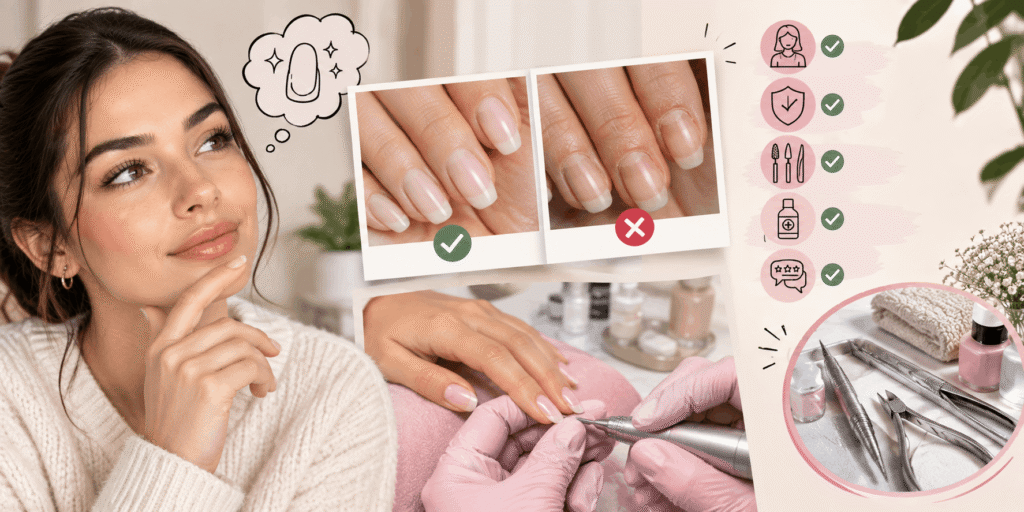
The quality of a Russian manicure depends heavily on the person performing it. Because the technique involves detailed work around the nail and cuticle area, choosing a trained professional is more important than simply finding a salon that advertises the service. A neat-looking result is not enough if hygiene, technique, or nail health is being overlooked.
Before booking, look for a nail technician who can clearly explain how they prepare the nails, what products they use, and how they maintain their tools between clients. A professional should be comfortable answering questions rather than rushing through the appointment.
What to Ask Before Your Appointment
You can ask whether the technician has specific training in Russian manicure techniques and how tools are cleaned and disinfected. It is also reasonable to ask what happens if your nails or surrounding skin appear irritated before the service begins.
Pay attention to the overall salon environment. Work surfaces should appear clean, disposable items should be handled appropriately, and reusable instruments should be processed according to professional hygiene standards. The technician should also examine your nails instead of treating every client exactly the same way.
If a salon promises an extremely deep cuticle removal without discussing nail or skin health, that can be a reason to reconsider. Precision should never mean unnecessary aggression.
Russian Manicure Aftercare and Maintenance
A Russian manicure can create a very polished appearance, but maintaining healthy nails should remain the priority after the appointment. Your nails and the skin around them still need normal care even when the manicure looks flawless.
Keep the area moisturized according to your technician’s recommendations, especially if the skin around your nails tends to become dry. Avoid picking at lifting product or trying to remove stubborn material yourself, since this can unnecessarily disturb the natural nail.
Your manicure will also need maintenance as your natural nails grow. How often you return depends on your nail growth, the product used, and how long you want the finished look to remain neat.
When It Is Time for a Break
There is no rule that says you have to keep your nails covered continuously. If your nails become unusually sensitive, painful, visibly damaged, or irritated, it is sensible to stop cosmetic treatments and have the issue assessed.
A professional manicure should not require you to ignore discomfort simply because you want the appearance to last longer. Healthy nails are more important than maintaining a particular finish.
Common Misconceptions About Russian Manicures
Russian manicures have become popular partly because photographs of the finished result can look exceptionally clean. That popularity has also created some confusion about what the technique actually involves.
One common misconception is that a Russian manicure is simply another name for a gel manicure. They are different concepts. A Russian manicure describes a detailed nail-preparation technique, while gel refers to the type of nail product or manicure system being used. The two can be combined, but they are not interchangeable terms.
Another misconception is that removing more cuticle automatically creates a better manicure. The cuticle area has an important protective role, so more removal does not necessarily mean a higher-quality result. The goal should be controlled, careful preparation rather than removing as much tissue as possible.
It is also worth remembering that a social-media photo cannot show everything about a manicure. A picture may demonstrate how clean the polish line looks, but it cannot tell you whether the preparation was hygienic or whether the natural nail was treated appropriately.
Who May Prefer a Russian Manicure?
Russian manicures may appeal to people who particularly enjoy a very refined nail appearance. The technique can work well for minimalist looks where the polish or enhancement is placed close to the natural-looking nail edge.
It can also be attractive to people who prefer understated designs. A sheer pink, nude, milky finish, French-style design, or simple solid color can look especially crisp when the surrounding nail area has been carefully prepared.
However, the technique is not automatically necessary for everyone. Someone who prefers a quick, simple manicure may find a conventional manicure more suitable. The right choice depends on personal preference, nail condition, budget, appointment time, and access to a properly trained technician.
final thoughts
A Russian manicure is best understood as a precision-focused nail-preparation technique rather than simply a particular polish style. Its signature appearance comes from meticulous work around the nail, creating a clean base for polished, minimalist, or more detailed designs.
The technique can produce an exceptionally refined finish, but the appearance should never be the only consideration. Professional training, hygiene, appropriate preparation, and respect for the natural nail all matter. A skilled technician should know when to be precise and, just as importantly, when not to overwork the nail or surrounding skin.
If you are considering a Russian manicure, focus on finding a qualified professional rather than choosing a salon based only on impressive before-and-after photographs. Ask questions, pay attention to hygiene, communicate any discomfort, and prioritize the condition of your natural nails.
A beautiful manicure does not have to come at the expense of healthy nails. When precision is combined with responsible technique, a Russian manicure can be an elegant option for anyone who loves an exceptionally clean and polished finish.
No. A Russian manicure generally involves more detailed nail preparation, particularly around the cuticle area. A regular manicure may use a simpler preparation method and can vary considerably from salon to salon.
No. Russian manicure describes the preparation technique rather than a specific polish type. Depending on the salon, it may be paired with gel polish, another nail coating, or a different finishing system.
The name is associated with a detailed manicure style that became particularly recognized through nail technicians and beauty trends originating from Russia and surrounding regions. Today, the term is used internationally for this precision-focused approach.
One Comment