
False lashes can transform the appearance of your eyes in minutes, but getting them to sit neatly along the lash line is not always easy. One corner may lift before you finish your makeup, the strip may slide out of position, or a thin line of dried adhesive may become visible when you look closely. These small frustrations can make an otherwise beautiful lash style look unfinished.
The product holding everything in place deserves more attention than it usually receives. Lash glue affects how easily you position a strip, how discreetly its band blends with your makeup, and how comfortably you can remove it afterward. Yet choosing an adhesive is not simply a matter of picking the one advertised as extra strong. Your lash design, application habits, skin sensitivities, and the product’s intended use all influence which option makes sense.
Whether you are buying your first tube or trying to solve a problem with lashes that never seem to stay put, understanding the details behind eyelash adhesives can help you make a more informed choice.
Why Your False Lashes May Not Behave as Expected
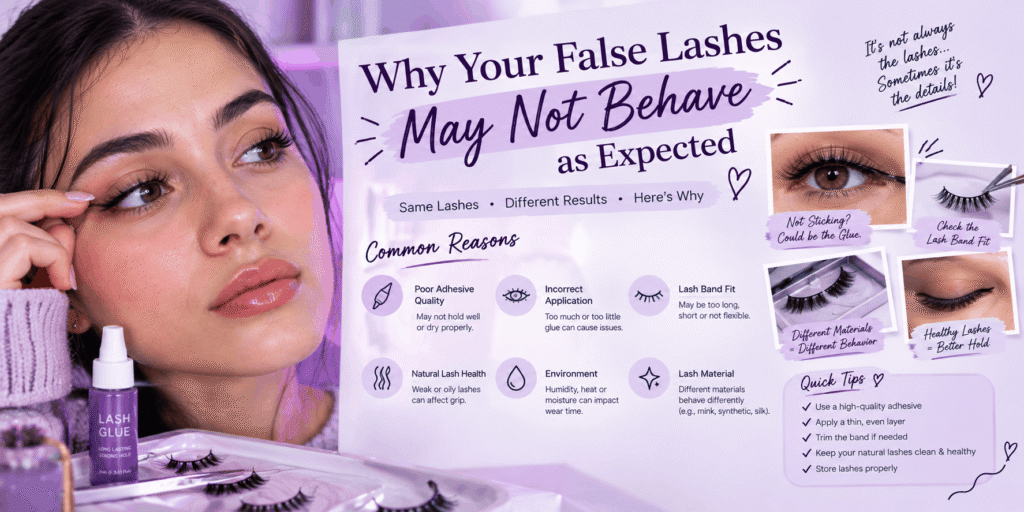
A pair of false lash glue can look perfect in its packaging and still prove difficult to apply. Sometimes the issue is the adhesive, but the shape of the lash band and the way it sits against your eyelid can be equally important.
Consider a strip that repeatedly lifts at its outer corner. Applying more product may seem like the obvious solution, but the band could be too long for your eye shape or may be pressing against the skin in an uncomfortable position. A strip that fits properly is generally easier to secure than one that needs constant adjustment.
The formula’s working time matters, too. If you position the lashes while the adhesive is still too wet, the band may move when you try to adjust it. If you wait too long, the product may no longer behave as intended. Different formulas have different application requirements, so following the packaging instructions is more useful than relying on a universal waiting time.
There is also a difference between an adhesive that holds well and one that simply feels difficult to remove. A stubborn bond is not automatically a sign of better performance. For temporary strip lashes, the goal is dependable placement during the intended wear period, followed by careful removal without unnecessary pulling on your natural lashes.
Before replacing a product that seems unreliable, examine the complete process. Check whether the strip fits, whether the band is clean, whether the adhesive is still usable, and whether you are applying an appropriate amount. Identifying the actual problem can prevent you from repeatedly buying products that do not address it.
The Main Differences Between Eyelash Adhesives
Not every adhesive is designed to create the same finish or serve the same purpose. Some are intended for traditional strip lashes, while others are formulated for individual lash clusters or professional extension applications. Selecting a product according to its intended use is one of the most important steps in avoiding an unsuitable purchase.
Clear Formulas and Dark Formulas
Clear-drying adhesives are useful when you want the attachment line to remain discreet. Some appear pale during application and become transparent as they dry, making them a convenient option for makeup looks that do not include a strong eyeliner line.
Dark formulas are often chosen when the lash band will sit against black eyeliner or when a more defined upper lash line is part of the finished look. They may blend visually with dark bands, although accurate placement remains important because visible mistakes can be harder to disguise.
Neither finish is automatically superior. A clear formula can still leave noticeable residue if too much is applied, while a dark formula can look seamless when used carefully. Think about the makeup you usually wear and the appearance you want along the lash line before choosing between them.
Latex and Latex-Free Options
Some lash glue adhesives contain latex, whereas others use alternative ingredients. This distinction matters for people who have a known latex allergy or have experienced reactions to certain cosmetic products.
A latex-free label may help narrow your choices, but it does not mean a product is guaranteed to be irritation-free. Other components can also cause sensitivity, and individual reactions vary. Check the ingredient information where available and avoid any formula that has previously caused a reaction.
If products applied near your eyes regularly trigger itching, redness, or swelling, do not keep switching brands and testing them on your eyelids. Speak with a qualified healthcare professional about the recurring symptoms before trying another adhesive.
Temporary Strip Adhesive Is Not Extension Adhesive
This distinction is especially important because products that appear similar may be designed for very different applications. Traditional strip-lash adhesives are made for attaching temporary lash bands, while professional extension adhesives are intended for a different technique and require appropriate training.
Do not use extension adhesive to attach ordinary strip lashes, and never substitute nail glue, hair glue, craft adhesive, or household glue for an eye-area product. These materials are not appropriate alternatives and can cause serious injury around the eyes.
If you want semi-permanent extensions, consult a trained lash technician who understands the products, application procedure, and precautions involved. For temporary makeup, select an adhesive specifically labeled for the type of false lashes you are wearing.
What to Check Before Buying a New Product
Packaging can make almost any cosmetic product sound appealing, so it helps to look beyond promotional phrases. Instead of choosing solely by popularity or price, examine the information that tells you how the adhesive is intended to work.
First, confirm that the product is specifically made for your lash type. A formula designed for strip lashes may not be appropriate for clusters or professional extensions. Clear instructions about application and removal are a useful sign that you can understand how to use the product correctly.
Next, review the ingredient list and warnings. This is particularly important if you have sensitive skin, known allergies, or a history of irritation around your eyes. Claims such as gentle or suitable for sensitive users should not replace reading the available product information.
Pay attention to the container as well. Adhesives can change when stored incorrectly or kept beyond their recommended period of use. A damaged package, unusual change in consistency, or product that has passed its stated expiry date is a reason to replace it rather than risk using it near your eyes.
Finally, think about how often you wear false lashes. Someone who uses strips for occasional events may prefer a compact product with straightforward instructions, while a frequent user may pay closer attention to packaging, storage, and the manufacturer’s guidance on use after opening. Buying more than you can reasonably use before the recommended expiry period is not necessarily economical.
A suitable lash glue does not need to be the most expensive option on the shelf. What matters is whether it is intended for your application, provides clear usage instructions, and works with your routine without causing discomfort.
A More Controlled Way to Apply False Lashes
Good application begins before the adhesive leaves the tube. Hold the strip against your natural lash line first and check its length. If it extends beyond the appropriate area, trim it carefully according to the lash manufacturer’s instructions. Avoid placing the band so close to the inner corner that it rubs against the eye.
Once the strip fits, make sure the eyelid and lash band are clean and dry. Oily residue or leftover makeup may affect placement, while an unclean band can make the process less predictable. Clean the band only with a method suitable for that lash material.
Apply a thin, even layer of adhesive along the band, paying attention to the ends without creating large blobs. Too much product can make the strip slippery and increase the chance of visible residue. More adhesive is not necessarily better, and it should never be applied directly into the eye or along the waterline.
Follow the product’s stated waiting time before positioning the strip. Then place it gently along the lash line, adjusting the middle and ends without pushing tools or the band into the eye. If the strip shifts repeatedly, stop and reassess rather than continuing to layer on fresh adhesive.
Do not rush to add mascara, eyeliner, or other products before the adhesive has set as directed. Extra makeup can make an already difficult application messier, particularly if the band has not settled into position.
If you experience burning, pain, swelling, or unusual watering, stop using the product. Remove the lashes carefully if you can do so safely, and seek medical advice when symptoms persist. Significant pain, changes in vision, or suspected adhesive exposure inside the eye require prompt medical attention.
The most useful rule is simple: choose an adhesive for its intended purpose, not just its advertised strength.
How to Choose the Right Formula for Your Lash Style
Before purchasing a product, consider how you normally wear false lashes. Someone who uses lightweight strips for an occasional event may have different needs from someone who wears fuller lashes regularly. The most suitable lash glue should match the product’s intended use, offer a manageable application time, and provide instructions that you can follow confidently.
For everyday makeup, a small tube of strip-lash adhesive may be practical because it is designed for temporary wear. If you prefer dramatic lashes with a heavier band, check that the adhesive is suitable for the particular strip rather than assuming every formula will perform equally well. A heavier design can place different demands on the band, so correct sizing and placement remain important.
If you wear lashes only for celebrations, travel, or occasional photographs, consider how easily the product can be stored and whether you can use it within its stated period after opening. Buying a large quantity does not necessarily offer better value if you rarely wear lashes and the product expires before you finish it.
People with sensitive eyes should be particularly careful with cosmetic adhesives. Look for clear ingredient information and avoid products that have previously caused discomfort. Labels such as gentle, sensitive, or hypoallergenic can be useful starting points, but they are not a guarantee that a product will suit everyone. If you have a known allergy or repeated reactions, professional advice is safer than testing several formulas on your eyelids.
Price alone is not a reliable measure of quality. An affordable product from a reputable manufacturer may work perfectly well for your needs, while an expensive formula may still be unsuitable. Compare the intended use, ingredient information, packaging, application directions, and expiry guidance before deciding.
Removing Adhesive Without Damaging Your Natural Lashes
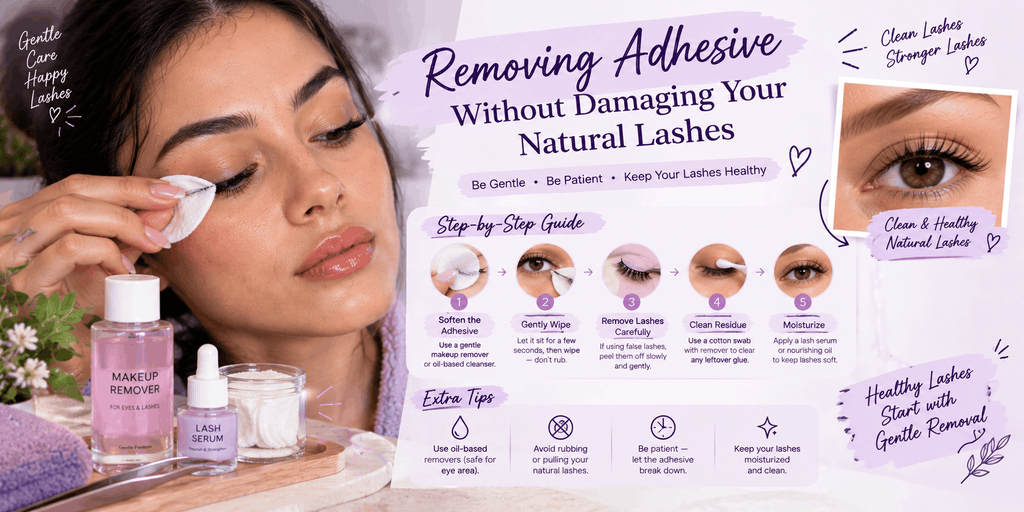
Taking false lash glue carefully is just as important as applying them. Pulling a strip away quickly can tug at natural lashes and irritate the delicate skin around your eyes. If you wear false lashes often, repeated rough removal may contribute to breakage or loss of natural lashes.
Begin by following the removal instructions supplied with your adhesive. Some temporary strip-lash products can be loosened gently after makeup removal, while others specify a particular remover. Use only a product suitable for the eye area, and keep it out of your eyes. Do not assume that every makeup remover will dissolve every adhesive.
Once the bond has loosened, gently lift the strip away without pulling against your natural lashes. If it resists, stop rather than forcing it. Follow the manufacturer’s guidance for loosening the remaining product. Avoid scraping the lash line with fingernails, tweezers, or other sharp tools.
After removing the strip, clean away makeup and residue using a gentle product intended for the area. Be careful not to rub aggressively or get cleanser into your eyes. If you experience persistent burning, swelling, or pain, stop using the products involved and seek appropriate medical advice.
Never use acetone, household solvents, nail-polish remover, or strong cleaning chemicals near your eyes to dissolve adhesive. These substances are not appropriate substitutes for an eye-area remover and may cause serious injury.
Keeping False Lashes Clean and Ready for Reuse
Reusable strip lashes can last through multiple applications when their manufacturer permits reuse and they are handled carefully. However, reusing the lash strip is different from reusing old adhesive. Adhesive should be applied and stored according to its own directions; dried residue on a lash band should never be treated as a substitute for a fresh, appropriate application.
After removing your lashes, inspect the band and gently remove residue using a method recommended for that lash material. Avoid soaking the entire strip unless the manufacturer says it is safe, because some styles can lose their shape or become damaged. Place cleaned lashes in a clean case and allow them to dry completely before storage.
Do not share false lashes, applicators, or eye makeup with other people. Sharing can transfer microorganisms and increase the risk of eye infections. Replace lashes that are damaged, misshapen, contaminated, or difficult to clean properly.
Your adhesive also needs suitable storage. Keep the cap securely closed and follow the packaging instructions regarding temperature, moisture, and use after opening. Do not leave the product exposed to air unnecessarily or use it after its stated expiration date. If its consistency changes noticeably or the container appears damaged, replacing it is a safer choice.
Ingredients, Product Claims, and Eye-Area Safety
Beauty products are often promoted with claims about extended wear, waterproof performance, or suitability for sensitive users. These descriptions may help you compare options, but they should not replace a careful look at the product’s instructions and intended application.
Water-resistant or waterproof formulas may be useful for certain occasions, but they can also require a specific removal method. Do not scrub harder simply because an adhesive is designed to resist moisture. Choose an appropriate remover and allow the bond to loosen before lifting the strip.
Similarly, a claim of long-lasting hold does not mean you should leave temporary lashes on longer than recommended. Follow the manufacturer’s directions for wear and removal, and do not sleep in strip lashes unless the product is specifically intended for that purpose and its instructions permit it. For ordinary temporary strips, removing them before sleeping is the more cautious approach.
The ingredient list deserves attention, especially if you have allergies. Some cosmetic adhesives contain latex or other ingredients that may cause reactions in susceptible individuals. Fragrances and other components can also be unsuitable for some users. If a product does not provide adequate ingredient or safety information, consider choosing one with clearer labeling.
A patch test, when recommended by the manufacturer, should be performed only as directed and away from the eye itself. A negative result does not guarantee that a reaction will never occur, and you should never deliberately put adhesive on your eyelid or close to your eye to test it. People with previous severe allergic reactions should consult a healthcare professional before trying a new product.
If adhesive enters your eye, follow appropriate first-aid guidance immediately: rinse the eye gently with clean, lukewarm running water and seek urgent medical advice, especially if pain, redness, or blurred vision continues. Do not try to dissolve material inside the eye with another chemical.
Final Thoughts
Choosing an adhesive should involve more than searching for the strongest hold or the lowest price. Your preferred lash style, application technique, ingredient sensitivities, and removal routine all contribute to the final result. A product that is suitable for one person may not be appropriate for another, so clear labeling and correct use matter more than bold marketing promises.
A dependable lash glue routine starts with selecting an adhesive intended for your specific lash type, applying a thin layer as directed, and allowing enough time for correct placement. Removing the strip gently, cleaning reusable lashes properly, and storing products according to their instructions can also make your routine more manageable.
Most importantly, never treat burning, pain, or swelling as a normal part of wearing false lashes. Stop using a product that causes a reaction, and seek professional guidance when symptoms are persistent or severe. With careful product selection and good application habits, you can enjoy your preferred lash look while giving eye-area comfort and safety the attention they deserve.
Drying time depends on the formula, the amount applied, and the manufacturer’s directions. Some products need a brief waiting period to become tacky before the strip is placed, while others work differently. Follow the instructions on your specific product instead of using the same timing for every adhesive.
Some people wear temporary lashes frequently, but daily use can increase exposure to adhesive and repeated pulling during removal. Take breaks if the skin around your eyes becomes irritated, and avoid continuing if you notice swelling, itching, redness, or loss of natural lashes. If symptoms recur, consult a qualified healthcare professional.
Not necessarily. Water resistance describes how a product responds to moisture; it does not establish that it will be the best choice for every lash style or user. Choose an adhesive designed for your intended use and consider how you will remove it safely.


3 Comments