A hair spa treatment is often described as a way to make tired hair feel softer, smoother, and easier to manage, but it is more than simply putting a conditioner on your hair. A typical salon hair spa combines cleansing, conditioning, a nourishing treatment, massage, and controlled heat or steam to give the hair and scalp a more intensive care session than an ordinary wash-day routine.
The exact experience can vary considerably from one salon to another. Some treatments focus mainly on dry lengths, while others are designed around scalp buildup, frizz, chemically treated hair, or loss of softness. That is why understanding what a hair spa actually does is more useful than choosing a treatment simply because the word “spa” sounds luxurious.
A good hair spa should leave the hair feeling conditioned and manageable without treating the service as a magical repair solution. Hair that has already suffered significant chemical or heat damage may still need a carefully planned hair-care routine beyond a single salon appointment.
What Is a Hair Spa Treatment?
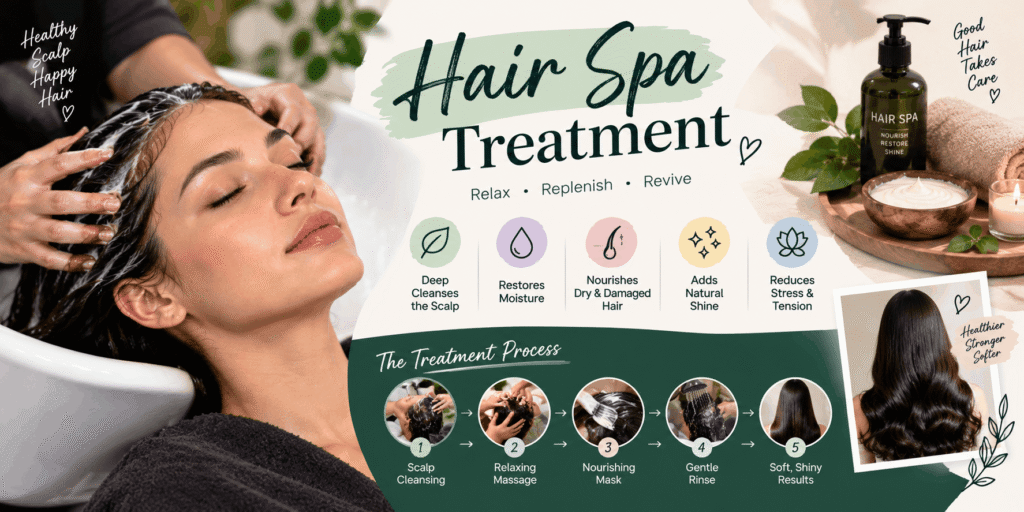
A hair spa is an intensive conditioning and hair-care service performed to give the hair more attention than it usually receives during a normal shampoo-and-condition routine. The treatment commonly begins with cleansing, followed by the application of a conditioning or nourishing product. Depending on the salon, the hair may then receive massage and gentle heat or steam before the treatment is rinsed away.
The purpose is usually to improve the feel and appearance of the hair. After the service, the strands may feel softer, smoother, less rough, and easier to comb. Some people also notice that their hair looks more polished because the conditioning treatment temporarily improves the surface feel of the strands.
It is important to separate those cosmetic benefits from permanent repair. Hair that has already grown out of the scalp is made of keratinized material, so a salon treatment cannot literally restore a damaged strand to its original biological condition. Instead, conditioning ingredients can coat and soften the hair, helping it behave and feel better.
The scalp may also be included in the experience, particularly during the massage stage. However, a hair spa should not automatically be considered a medical scalp treatment. Persistent itching, severe flaking, pain, unusual shedding, or other ongoing scalp problems may require a different type of professional assessment.
What Happens During a Hair Spa?
There is no single universal hair spa procedure. Salons use different products and techniques, and the treatment may be customized according to hair texture and condition.
A session commonly starts with a thorough shampoo to remove oil, styling residue, and everyday buildup. Clean hair allows the conditioning product to be distributed more evenly through the lengths.
The stylist then applies a treatment product selected according to the intended result. A formula designed for dry hair may focus on softness and conditioning, while another treatment may be chosen for frizz-prone or chemically processed hair.
Massage is often part of the experience. When performed gently, it can make the appointment feel relaxing while helping distribute products around the scalp and hair. The exact massage technique varies between salons.
Some services use steam or controlled warmth during the conditioning stage. The purpose is generally to create a warm environment while the treatment sits on the hair rather than simply exposing the hair to high heat.
After the processing period, the product is rinsed out and the hair may be dried or styled. The finished appearance depends on the natural texture of the hair, the treatment selected, and the styling performed afterward.
How It Differs From Your Normal Hair Routine
A regular hair-care routine is designed to maintain the hair between more intensive treatments. Shampoo removes dirt and excess oil, while conditioner helps improve softness, detangling, and manageability.
A hair spa usually gives the conditioning stage more attention. Instead of applying a standard conditioner for a short period and immediately rinsing it away, the salon may use a richer treatment and allow additional time for it to sit.
The massage and steam components can also make the appointment feel different from an ordinary wash. The experience is partly about hair care and partly about creating a relaxing salon service.
That does not mean a hair spa should replace everyday care. Your normal routine remains the foundation. A salon treatment works best as an occasional addition rather than something that compensates for consistently harsh washing, excessive heat styling, or unsuitable products.
What Can a Hair Spa Do for Your Hair?
The most noticeable changes after a hair spa are often related to texture and manageability. Hair may feel more conditioned when you run your fingers through it, and strands that normally feel rough can temporarily seem smoother.
People often seek these treatments when their hair looks dull, feels dry after repeated styling, or becomes difficult to detangle. A conditioning-focused service can make these problems less noticeable for a period of time.
The result is not identical for everyone. Hair that is naturally fine may respond differently from thick, coarse, curly, or chemically treated hair. A product that makes one person’s hair feel beautifully soft could make another person’s hair feel heavy.
This is why the treatment should be chosen according to the condition of the hair rather than the promise written on a salon menu.
Dryness and Rough Texture
Dry-feeling hair is one of the most common reasons people consider a hair spa. Frequent washing, hot tools, coloring, chemical services, sun exposure, and environmental conditions can all contribute to hair feeling less smooth.
A conditioning treatment can help the strands feel more supple by depositing conditioning ingredients onto the hair surface. This can improve combability and make the hair appear healthier temporarily.
However, there is a difference between hair that feels dry and hair that is structurally damaged. A treatment may make damaged hair feel considerably better without reversing the underlying damage.
If your hair becomes dry repeatedly, it is worth looking at the routine causing the problem rather than depending on repeated salon treatments alone. Water temperature, washing frequency, heat styling, chemical processing, and product choice can all influence how your hair feels.
Frizz, Tangles and Lack of Manageability
Frizz is not caused by one single problem. Humidity, hair texture, dryness, breakage, chemical processing, and the natural structure of the hair can all contribute to an uneven appearance.
A hair spa can make the surface of the hair feel smoother and can improve how easily strands move against one another. This may make the hair appear more controlled after the appointment.
The effect can be particularly noticeable when the hair has been difficult to comb or becomes tangled easily. Better conditioning can reduce the rough feeling that makes detangling frustrating.
Curly and wavy hair may also benefit from additional conditioning, although the ideal treatment should preserve the natural pattern rather than simply trying to make every texture straight and flat.
Hair That Looks Dull or Stressed
Hair can lose its polished appearance for many reasons. Product buildup, excessive styling, environmental exposure, dryness, and repeated chemical processing can all affect how light reflects from the strands.
A salon treatment can temporarily improve the surface feel of the hair, which may make it appear smoother and shinier after styling.
This does not mean a hair spa changes the natural color or permanently increases the health of the hair. The improved appearance is primarily connected with conditioning, smoothing, and styling.
For this reason, the most useful way to judge a treatment is not simply by how glossy the hair looks immediately after leaving the salon. Consider how manageable it remains over the following days.
Scalp and Product-Buildup Concerns
The scalp is often included in the overall salon experience, but this area needs a little more care than the lengths of the hair.
If a person regularly uses dry shampoo, styling creams, oils, gels, sprays, or other products, buildup can make the hair feel coated or heavy. Proper cleansing can help remove some of that residue.
However, a hair spa should not be confused with a treatment for scalp diseases. A persistent scalp concern cannot necessarily be solved by a moisturizing mask or massage.
If the scalp is irritated, painful, severely flaky, or unusually sensitive, it is better to identify the underlying issue before booking repeated cosmetic treatments.
Finding the Right Hair Spa for Your Hair
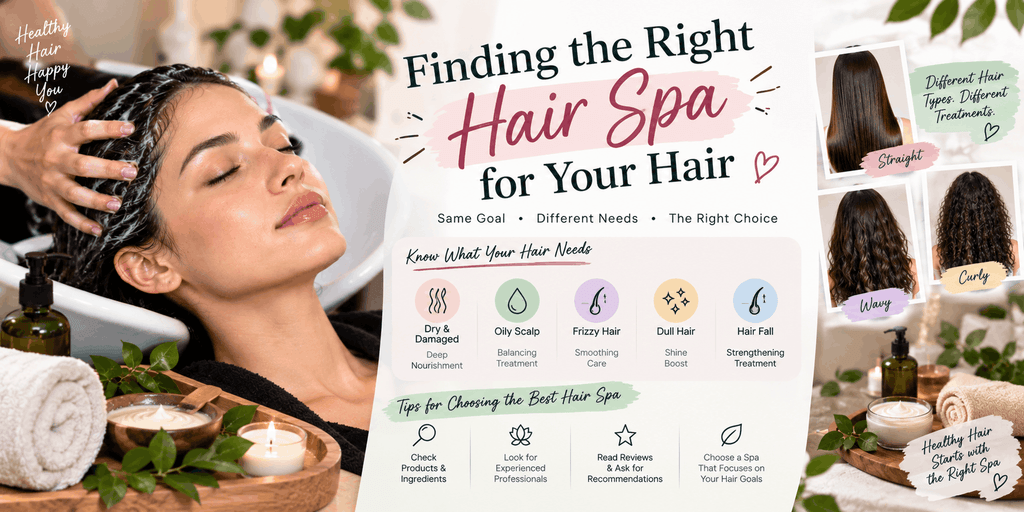
There is no single hair spa formula that is ideal for everyone. Hair texture, chemical history, moisture needs, scalp condition, and styling habits should all influence the choice.
Someone with untreated, fine hair may need a lighter conditioning approach, while thick or highly processed hair may tolerate or benefit from a richer treatment. The objective is to improve the condition and feel of the hair without leaving it unnecessarily coated or weighed down.
A good stylist should ask about your recent treatments and daily routine before recommending a service. If you regularly color your hair, use straightening treatments, bleach the lengths, or rely heavily on heat tools, that information can change which treatment is appropriate.
Choosing Based on Hair Condition
Hair should be assessed based on what it actually needs rather than choosing a treatment simply because it contains a fashionable ingredient.
Dry or Damaged Hair
Hair that feels rough, brittle, or difficult to detangle may benefit from a conditioning-focused treatment. The goal is to improve softness and manageability while reducing unnecessary mechanical stress during brushing and styling.
If the ends are severely split or breaking, however, a spa treatment cannot permanently seal them back together. Trimming and reducing the source of damage may be more important for long-term improvement.
Curly or Frizzy Hair
Curly and textured hair often needs enough conditioning to remain flexible without becoming weighed down. A suitable treatment can make curls easier to detangle and may help them look more controlled after washing.
The ideal result is not necessarily the straightest or glossiest hair possible. For naturally curly hair, preserving the texture while improving softness and manageability may be a better goal.
Colored or Chemically Treated Hair
Coloring, bleaching, relaxing, perming, and other chemical services can change how the hair behaves. Chemically treated hair may need more careful conditioning and gentler handling.
A stylist should know which services you have recently had before recommending a hair spa. Some treatments may be perfectly suitable, while others may not be ideal immediately after a particular chemical service.
The timing matters as well. Hair that has recently undergone a demanding chemical process may need a carefully chosen maintenance routine rather than repeated intensive treatments without assessment.
Finding the Right Hair Spa for Your Hair
Choosing a hair spa should begin with a simple question: what do you actually want to improve? A treatment chosen for someone else’s hair may not give you the same result, even if your hair appears similar at first glance.
A salon may offer several versions of a hair spa, but the names on the menu do not always tell you exactly what the service involves. One treatment may be heavily focused on moisture, another on smoothing, and another on scalp cleansing or product buildup.
Before booking, explain what your hair has been through recently. Mention coloring, bleaching, straightening, relaxing, perming, frequent heat styling, or any other chemical service. This information gives the stylist a better idea of how cautious the treatment needs to be.
It is also useful to describe what happens to your hair at home. If your roots become oily quickly while the lengths remain dry, you may need a different approach from someone whose entire head of hair feels dry. Similarly, someone with fine hair may not want a heavy mask designed for very coarse strands.
How Often Should You Get a Hair Spa?
There is no universal schedule that everyone needs to follow. The ideal frequency depends on your hair’s condition, styling habits, product use, and the type of treatment you receive.
Someone with relatively healthy, untreated hair may only want an occasional salon treatment when the hair starts feeling particularly dry or difficult to manage. Someone who regularly colors, bleaches, heat-styles, or chemically processes the hair may choose professional conditioning treatments more often.
More frequent appointments are not automatically better. If a rich treatment repeatedly leaves fine hair limp, greasy, or coated, increasing the frequency will not solve the problem.
Instead of following a fixed calendar, pay attention to how your hair responds. If the treatment continues to improve softness and manageability without making the hair heavy, it may be useful as part of your maintenance routine.
Your stylist can also recommend an interval based on your particular hair condition. A professional assessment is especially helpful when the hair has been heavily processed.
Hair Spa Aftercare and Maintenance
The way you treat your hair after a salon service can affect how long the improved feel lasts. You do not need an elaborate routine, but gentle handling can help you maintain the benefits of the treatment.
Follow any product-specific instructions provided by the salon, particularly if the service included a specialized formula. Different treatments may have different recommendations regarding washing, heat styling, or additional products.
Avoid immediately undoing the conditioning effect with aggressive washing or excessive heat. Hair that feels beautifully soft after an appointment can quickly become rough again if it is repeatedly exposed to high temperatures or handled roughly.
When washing at home, concentrate shampoo mainly where cleansing is needed rather than repeatedly scrubbing the lengths. Conditioner can then be applied through the areas that need additional softness.
Small Habits That Can Make a Difference
Your everyday habits often matter more to long-term hair condition than an occasional salon appointment. Detangle gently, especially when the hair is wet, and avoid pulling through knots with excessive force.
If you regularly use straighteners, curling irons, or blow dryers, pay attention to how much heat your hair receives. Using appropriate heat protection and avoiding unnecessarily high temperatures can help reduce additional stress.
Your hair also benefits from being treated according to its texture. Curly hair may need more moisture and careful detangling, while fine straight hair may become weighed down by products that are too rich.
A hair spa can complement these habits, but it cannot replace them.
How Hair Spa Fits Into a Realistic Hair-Care Routine
A salon hair spa works best when it has a specific purpose within your routine. Think of it as an extra conditioning session rather than the foundation of your entire hair-care strategy.
Your regular shampoo, conditioner, detangling habits, styling choices, and approach to heat all contribute to the condition of your hair between appointments. If those basics are working well, an occasional hair spa can provide an additional boost when your hair needs more intensive conditioning.
On the other hand, if your hair continually feels dry or damaged despite repeated spa appointments, the solution may be somewhere else. You may need to reconsider your washing routine, reduce chemical processing, adjust heat styling, or have persistent scalp concerns professionally assessed.
This is also why expensive treatments are not automatically superior. A service should solve a relevant problem rather than simply provide a longer list of ingredients or a more luxurious salon experience.
Final Thoughts
A hair spa treatment can be a worthwhile addition to a hair-care routine when your main goal is improving softness, manageability, smoothness, and overall appearance. It gives the hair more intensive conditioning than an ordinary wash-day routine and can also turn basic maintenance into a more relaxing salon experience.
The most important thing is to choose the treatment according to your actual hair needs. Dry ends, frizz, thick curls, fine strands, colored hair, and chemically processed hair do not all require the same approach.
It is also worth keeping expectations realistic. A hair spa can make hair feel dramatically better after an appointment, but it cannot permanently reverse every form of damage or guarantee faster growth. Its benefits are best understood as part of ongoing hair maintenance.
How often you need one depends on your hair condition and lifestyle. Some people may enjoy an occasional appointment, while others with heavily processed or particularly dry hair may find professional conditioning useful more regularly. There is no need to follow a rigid schedule if your hair does not need it.
Finally, the salon itself matters. Look for a stylist who asks about your hair history instead of immediately recommending the most expensive treatment. A thoughtful professional should be able to explain what the service is intended to do and whether it actually suits your hair.
When combined with gentle washing, sensible heat use, appropriate conditioning, and regular trimming when needed, a hair spa can be a useful supporting treatment rather than a quick fix. The goal is not simply to leave the salon with shiny hair for one day, but to build a routine that keeps your hair feeling manageable and looking its best over time.
It can be useful for hair that feels dry because many hair spa treatments focus on conditioning and improving softness. The treatment may make the strands easier to detangle and more comfortable to style.
A conditioning-focused hair spa may temporarily make frizzy hair feel smoother and look more controlled. Better conditioning can reduce some of the roughness that contributes to an unruly appearance.
It cannot permanently eliminate frizz because factors such as humidity, natural texture, hair damage, and moisture levels continue to affect the hair.
The appointment length depends on the salon, treatment formula, hair length, and additional services included. Some sessions can be relatively quick, while more detailed treatments may take longer.
When booking, ask the salon how much time they normally allow for the specific service rather than assuming every hair spa takes the same amount of time.
One Comment