A fresh hair color can look completely different after a few washes. Blonde hair may start looking yellow, highlighted hair can become warmer, brunette shades may develop unwanted orange tones, and previously cool colors can gradually lose their original balance. This is where hair toner becomes useful. Rather than completely changing your hair color, toner is generally used to adjust the tone that is already present.
Hair toner is often associated with blonde hair, but its use goes far beyond traditional blonde shades. Depending on the formula and starting color, it can help refine blondes, soften unwanted warmth, refresh highlighted hair, or add a subtle tonal shift to certain brunette shades. The result is usually more about controlling the overall appearance of the color than dramatically changing its depth.
Understanding what toner can and cannot do is important before booking a salon appointment or choosing a product at home. The starting hair color, porosity, previous chemical treatments, desired result, and type of toner all influence the outcome.
Understanding Hair Toner and What It Changes
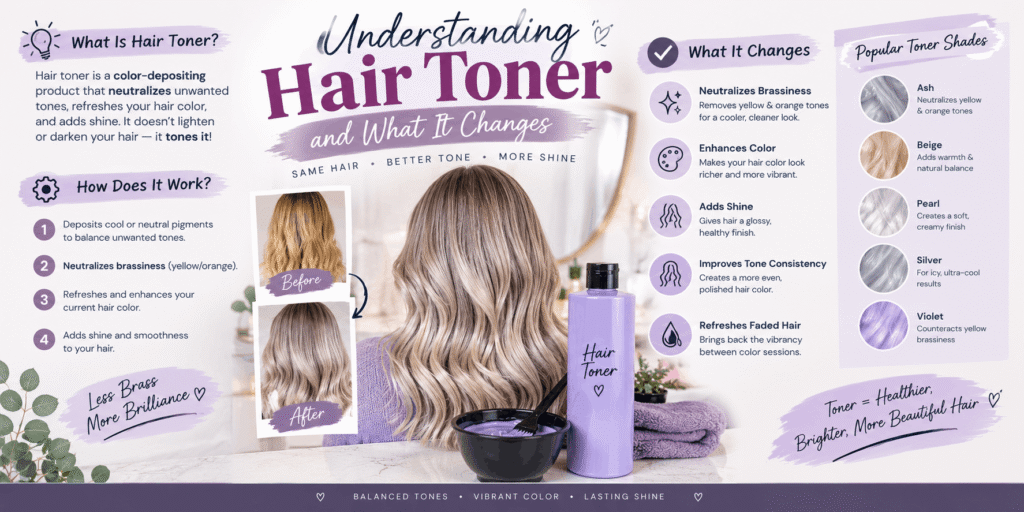
Hair toner is a color-depositing or color-adjusting product used to modify the visible tone of the hair. It is commonly applied after lightening services, although certain toners can also be used to refresh previously colored hair.
The easiest way to understand toner is to think of it as a refinement step. Imagine that your hair has already been lightened to the general shade you want, but the result contains more warmth than you prefer. A suitable toner can add another tone that visually balances that warmth.
For example, hair that appears overly yellow may be toned with a violet-based formula, while unwanted orange warmth may be addressed with a blue-based tone. The exact formula depends on the level and undertone of the hair.
Toner doesn’t work like a magic eraser. If the hair is significantly darker than the target shade, applying toner generally won’t transform it into a dramatically lighter color. Lightening and toning are different stages of the coloring process.
This distinction is particularly important when someone expects toner to fix a color that is several levels away from their desired result. Toner is most effective when the underlying hair is already light enough or otherwise suitable for the tone being applied.
Toner Is About Tone, Not Simply Going Lighter
One of the most common misunderstandings about hair toner is assuming that it works like bleach.
Bleach removes or reduces natural and artificial pigment so the hair can become lighter. Toner, by comparison, is generally used after or alongside a coloring process to adjust the visible tone.
If blonde hair looks too warm, toner may make it appear cooler. If a light brown shade has developed an unwanted orange cast, a suitable toning formula may help neutralize some of that appearance.
Because toner works with the existing color, the starting point matters enormously. Two people can use the same toner and get noticeably different results because their underlying hair colors are different.
This is one reason professional colorists usually assess the hair before selecting a formula. They need to consider not just the desired final color but also what pigments are currently visible underneath it.
Why Blonde Hair Often Needs Toner
Blonde hair is particularly associated with toning because lightening exposes underlying warm pigments.
When dark hair is lightened, the process doesn’t necessarily reveal a perfectly neutral blonde immediately. Depending on the starting level and the amount of lightening, the exposed pigment can appear reddish, orange, yellow, or a combination of these tones.
As the hair becomes lighter, yellow tones often become more noticeable. After a blonde service, a toner can be used to refine the result and create a cooler, warmer, beige, creamy, or more neutral appearance depending on the desired outcome.
This doesn’t mean every blonde needs a cool toner. Some people intentionally want golden or honey tones. In that case, toning can be used to enhance the warmth rather than remove it.
The important point is that toning is about choosing the direction of the color, not automatically making every head of blonde hair icy or ash-toned.
How Hair Toner Works on Different Hair Colors
The visible color of hair comes from a mixture of underlying pigments. When you change the color, those pigments influence what you see.
Color theory helps explain why certain toner shades are used for particular unwanted tones. Colors opposite each other on the traditional color wheel can visually counterbalance one another.
Violet is commonly associated with reducing the appearance of yellow tones. Blue can be used to counteract orange warmth, while certain green-based formulas may be used in specific situations involving unwanted red tones.
However, professional toning is more complicated than simply choosing the opposite color from a chart.
The exact level of the hair matters. A formula suitable for pale yellow blonde hair may not be appropriate for strongly orange hair. Applying a very cool toner to hair that isn’t light enough can produce an uneven or unexpected result.
Hair porosity also affects how color is absorbed. More porous sections may grab pigment faster than healthier sections, potentially creating differences in tone.
Toner on Blonde Hair
Blonde hair provides perhaps the widest range of toning possibilities.
A toner can help create shades such as cool blonde, beige blonde, creamy blonde, pearl blonde, or warmer golden blonde, depending on the underlying level and formula.
For highlighted hair, toner can also help blend different blonde sections so the overall result looks more cohesive.
The final appearance isn’t determined by the toner alone. Lighting can dramatically change how blonde hair appears, which is why a shade that looks neutral indoors might appear warmer or cooler in sunlight.
Toner on Brunette Hair
Brunettes can use toning products too, particularly when unwanted warmth becomes visible.
For example, chemically lightened brunette hair may develop orange or reddish tones. A suitable toning formula can help make the color appear more neutral or cooler.
There are also glossing and demi-permanent color services that can refresh brunette shades while adding shine and tonal richness.
This is one reason the terms toner, gloss, and demi-permanent color can sometimes become confusing. Different salons and brands use these terms differently, and the chemistry of the product matters more than the marketing name.
Toner on Highlighted Hair
Highlights can look very different several weeks after the original appointment.
As the toner fades and the hair is exposed to washing, heat, sunlight, minerals, and styling products, the highlighted sections can gradually appear warmer.
A new toning service can refresh those sections without necessarily repeating the entire lightening process.
This can be particularly useful when the underlying highlights are still light enough and the main issue is simply that the tone has changed.
Getting a Hair Toner and Making the Color Last
The application process varies depending on the product and the desired result, but professional toning usually begins with an assessment.
A colorist looks at the current hair rather than relying solely on a reference picture. They may consider the natural root color, previous color, level of lightness, visible warmth, porosity, and condition.
This assessment helps determine which direction the toner should take.
The hair may then be cleansed and prepared before the toner is applied. Depending on the formulation, it may be applied to damp or dry hair and processed for a specified period.
Timing matters. Leaving a toner on longer doesn’t necessarily mean the result will be better or cooler. Different formulas deposit pigment at different rates, and porous sections may process faster.
Once the desired tone has developed, the product is rinsed according to the system’s instructions, followed by appropriate conditioning and styling.
Why Professional Toning Can Look More Even
One advantage of professional application is the ability to treat different sections differently.
Hair isn’t always equally porous from root to tip. Previously lightened ends may absorb pigment differently from newer sections closer to the roots.
A colorist can account for these differences by adjusting the formula, application order, or processing time.
This can be difficult to replicate at home, particularly when someone has highlights, balayage, previous color, or multiple levels of damage.
What Happens When Toner Fades?
Toner is generally not permanent.
With washing and normal environmental exposure, the deposited tone gradually becomes less noticeable. How quickly this happens varies according to the product, hair condition, washing routine, water quality, heat styling, and other factors.
As the toner fades, the underlying color becomes visible again. This can make previously neutral blonde hair appear warmer or cause a refreshed brunette to gradually return to its earlier tone.
That doesn’t necessarily mean the original coloring service has failed. Toner fading is a normal part of many coloring routines.
How to Make a Toned Color Last Longer
Aftercare can make a noticeable difference in how long the desired tone remains visible.
Washing the hair excessively can cause color to fade more quickly. Many people with color-treated hair choose a washing schedule that works with their scalp and hair type while avoiding unnecessary washing.
Water temperature can also influence the overall hair-care experience. Very hot water may leave the hair and scalp feeling dry, so a comfortably warm temperature is often preferable.
Color-safe hair products can also be useful. Look for products designed for color-treated hair if maintaining your color is a priority.
Heat styling deserves attention as well. Frequent high-temperature styling can affect the condition and appearance of chemically treated hair. Using appropriate heat protection and avoiding unnecessary heat can help reduce additional stress.
Sun exposure can also affect cosmetic hair color. If you spend significant time outdoors, protective measures such as hats can help limit exposure.
Purple Shampoo Isn’t the Same as Professional Toner
Purple shampoo is often recommended for blonde hair, but it isn’t identical to a salon toning service.
Purple shampoo deposits a small amount of violet pigment during washing and is primarily used as a maintenance product. It can help reduce the appearance of unwanted yellow tones in suitable blonde or lightened hair.
A professional toner is generally a more concentrated and controlled color service.
Using purple shampoo too frequently can also make some hair appear dull or overly cool, especially if the hair is porous and absorbs pigment readily.
The best maintenance routine depends on the specific blonde or color you’re trying to preserve.
Hair Toner for Different Hair Types and Situations
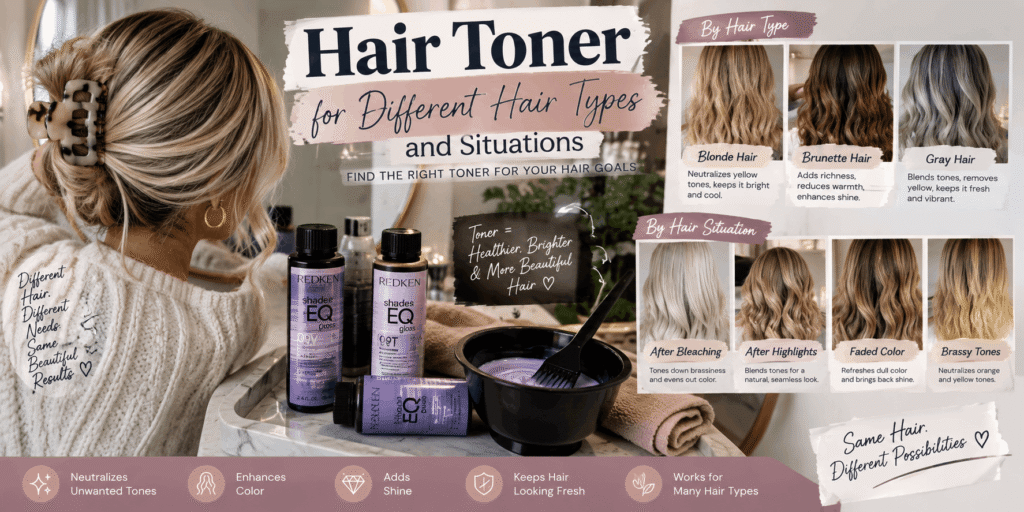
Hair toner can influence how toner behaves, but the condition and history of the hair are often just as important.
Fine hair may absorb certain formulas quickly, particularly if it has been chemically processed. Thick hair may require more careful saturation to achieve an even result.
Curly and textured hair can also be toned, but previous chemical processing and porosity should be considered. Lightened curls may have different absorption patterns throughout the hair.
Virgin hair behaves differently from heavily processed hair as well. Hair that has never been colored may have a more uniform structure, while previously bleached sections can be considerably more porous.
This is why simply choosing a toner because it produced a beautiful result on someone else isn’t always reliable.
The same formula can look noticeably different depending on the starting level and condition of the hair.
Choosing Between Salon Toning and At-Home Options
Using a hair toner at home can be convenient, especially when you already understand how your hair reacts to color and which tones you are trying to control. However, toning is more than simply picking a purple, blue, beige, or ash-colored product from a shelf. The result depends on your current hair color, how light the hair is, its porosity, previous chemical treatments, and the undertone that needs to be adjusted. A product that works beautifully on one person’s blonde hair may create a completely different result on another person’s hair.
At-home toners are generally easier to manage when the goal is subtle maintenance rather than a major color correction. For example, someone who already has cool blonde highlights may use a suitable toning product to keep unwanted warmth from becoming too noticeable. On the other hand, hair with several different shades, uneven highlights, strong brassiness, or previous color treatments can be much harder to tone evenly at home. In those situations, professional application gives the colorist more control over the formula and processing time.
One common mistake is assuming that toner can fix every unwanted color problem. It cannot. Hair toner works by adjusting the visible tone of the existing color, so it is not a replacement for lightening, permanent color correction, or a completely new dye job. If hair is significantly darker than the desired result, toner will not simply transform it into a much lighter shade. Understanding this difference can prevent unrealistic expectations and unnecessary chemical processing.
Another issue is choosing a toner based only on the color shown on the packaging. The same toner can appear different depending on the starting shade underneath it. Hair that is pale yellow may react differently from hair that is yellow-orange, while highly porous ends may absorb pigment more quickly than healthier sections. This is why professional colorists usually consider the underlying pigment before deciding which tonal direction to use.
If you decide to tone your hair yourself, following the manufacturer’s instructions matters. Leaving a product on longer than recommended does not automatically make the result better or longer-lasting. It can instead create an overly cool, dull, uneven, or unexpected appearance. A strand test can also be useful when you are uncertain about how your hair will respond, particularly if the hair has been bleached or chemically treated.
Keeping the Result Fresh Without Overprocessing
Hair toner is temporary in many situations, which is both one of its advantages and one of the reasons people eventually need another application. Washing, heat styling, sun exposure, swimming, and the natural fading of cosmetic pigments can gradually change the appearance. Instead of waiting until the color looks completely different, many people maintain their preferred tone through a combination of gentler washing habits and occasional toning.
How long a toner lasts varies considerably. Some results may remain noticeable for several weeks, while others fade sooner depending on the formula and the condition of the hair. Porous hair can sometimes absorb pigment strongly but also release it quickly during washing. Hair that is washed frequently may lose a temporary tone faster than hair that is cleansed less often. There is therefore no universal schedule that works for everyone.
Water temperature can also affect how quickly a color-treated result fades. Very hot water can make the hair feel drier and may contribute to faster color loss. Using lukewarm or cooler water when practical can help maintain the appearance of toned hair while making the overall routine gentler.
The products used between toning appointments matter as well. A shampoo designed for color-treated hair can be helpful for maintaining cosmetic color, while toning shampoos or conditioners can provide occasional pigment refreshment. These products should not automatically be treated as substitutes for salon toner. They are generally intended for maintenance and can produce different results from a professionally formulated toning service.
Overusing toning products is another mistake worth avoiding. If hair already looks balanced, repeatedly adding pigment can eventually make the color appear overly muted or uneven. This is especially noticeable on porous sections that grab onto pigment more readily. Instead of automatically reaching for another toner whenever the hair looks slightly different, it is better to identify whether the issue is actually unwanted warmth, fading, dryness, buildup, or uneven color.
Hair care after toning should also include attention to moisture and heat. Color-treated hair can benefit from conditioning and reasonable heat protection, particularly when it has also been lightened. Keeping the hair in better condition can make the color look smoother because healthy-looking strands tend to reflect light more evenly.
What Can Go Wrong With Hair Toner?
Although hair toner is generally used to refine color rather than create a dramatic transformation, results can still go wrong. An uneven application may leave some sections looking cooler or warmer than others. Applying too much pigment can also make certain areas look noticeably darker or duller, especially when the hair is highly porous.
Temporary dryness or changes in how the hair feels can occur after chemical services, particularly when toning is combined with bleaching, highlighting, or other treatments. The toner itself is not necessarily responsible for every change in hair condition. The overall chemical history of the hair is important. Hair that has already been heavily processed may need a more cautious approach than untreated hair.
Scalp sensitivity is another reason to follow product directions carefully. If a product causes significant burning, swelling, or another concerning reaction, it should not simply be left on in the hope that the sensation will disappear. Following the product’s safety instructions and seeking appropriate professional or medical advice when necessary is important.
The biggest practical problem, however, is often a mismatch between expectations and the starting hair color. Someone may want an icy blonde result while their hair still has a strong golden or orange underlying pigment. Applying more toner is not necessarily the answer. The hair may first require a different color process to reach the appropriate level before the desired tone can be created.
Cost can vary considerably depending on where the service is performed, the stylist’s experience, the length and thickness of the hair, and whether toner is being added to another service such as highlights or balayage. A simple toning appointment may cost less than a larger color transformation, but prices differ between salons and locations. At-home products can reduce the immediate expense, although correcting an unsuccessful DIY result can sometimes require a professional color appointment.
For that reason, the cheapest option is not always the simplest option. If the hair has been bleached, highlighted multiple times, or colored with several different formulas, professional assessment can help avoid repeated experimentation. A stylist can examine the actual starting color and determine whether toning is enough or whether another type of color service is needed.
Final Thoughts
Hair toner is a useful part of modern color maintenance because it can change the way an existing shade looks without requiring a completely new color transformation. Instead of thinking of toner as a product that simply makes hair “blonder” or “ashier,” it is more helpful to view it as a way of refining the balance between warm and cool tones.
The most successful results usually begin with understanding the color underneath. Whether the hair is blonde, brunette, highlighted, balayaged, or previously colored, the starting shade determines what a toner can realistically accomplish. Choosing a formula based on the actual undertone rather than the name printed on the bottle can make a major difference.
Maintenance is equally important. Washing habits, heat styling, product choice, hair condition, and natural fading all influence how long the result remains visible. A good toning routine should therefore be about maintaining the color rather than repeatedly processing the hair whenever a small change appears.
For anyone considering a hair toner for the first time, the key is to keep the goal realistic. Toning can add polish, balance unwanted warmth, refresh faded color, and help a carefully created shade look more intentional. But when the underlying color needs a major change, toner alone is unlikely to provide the desired transformation. Understanding that difference can help you choose the right approach while keeping your hair-care routine more controlled and predictable.
Hair toner is primarily designed to change or refine the tone of existing color rather than significantly lighten the hair. If the hair needs to become substantially lighter, a separate lightening process may be necessary before toning can produce the intended shade.
Toner may help neutralize certain unwanted orange or warm tones when the hair is already light enough for the selected formula to work effectively. It cannot simply turn very dark or strongly orange hair into pale blonde without the appropriate underlying level.
Many toners are temporary or semi-permanent, meaning their visible effect gradually fades with washing and time. The exact longevity depends on the formula, hair condition, washing routine, and other factors.

One Comment