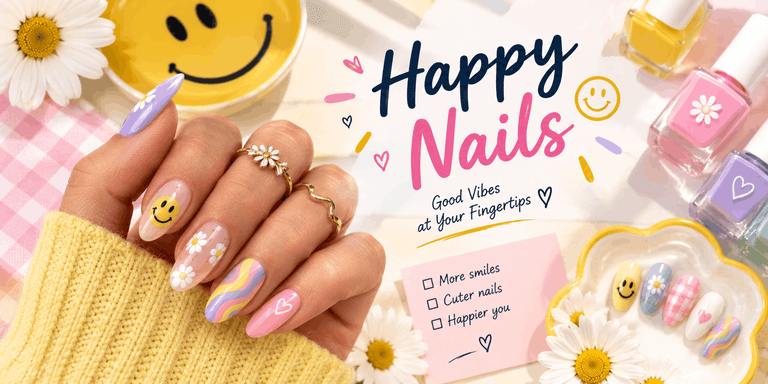
Oval nails have a way of making almost any manicure look instantly more polished. Their softly curved edges create a balanced silhouette that feels classic without looking predictable, which is exactly why this shape keeps finding its way back into modern nail trends. But the real fun begins when you stop treating the oval shape as just a basic canvas and start using its curves to make the design itself more interesting.
From barely-there details to colors that demand attention, oval nails can take on surprisingly different personalities. A delicate pearl finish can make them look refined, while bold green or high-contrast artwork can push them into a completely different direction. The shape gives you plenty of freedom, whether you prefer short nails that are easy to wear or a longer oval that makes every detail more noticeable.
What makes the following ideas especially interesting is that they do not all rely on the same idea of what “pretty” nails should look like. Some are quiet and sophisticated, some are playful, and others are designed to catch the light from across the room.
Minimalist Approach
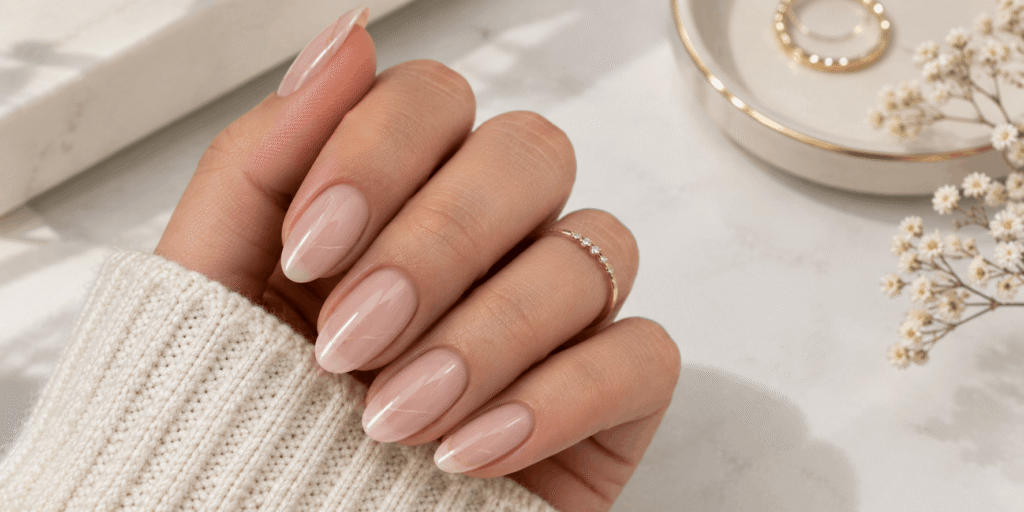
Minimalist oval nails prove that you do not need a complicated design to make the shape noticeable. A sheer nude, milky pink, soft beige, or nearly transparent base can allow the natural curve of the nail to become part of the overall look.
The trick is in the details. Instead of covering every nail with artwork, you might add an extremely thin line, a tiny dot, or a subtle accent near the cuticle. Because oval nails already have a naturally smooth appearance, minimal decoration can make the manicure feel intentional rather than unfinished.
This approach is particularly easy to adapt. You can keep the nails completely neutral for an everyday manicure or introduce one small metallic detail when you want something more noticeable.
Perfectly Pearlescent
Pearl finishes can make oval nails look almost luminous. Rather than relying on obvious glitter, this style catches light with a soft reflection that changes as your hands move.
A milky white or pale pink base works especially well beneath a pearlescent finish. The result can resemble the smooth surface of a pearl without becoming overly formal.
For something slightly more interesting, the pearl effect can be paired with a barely visible French tip or a few tiny accents. Keeping the design restrained allows the reflective finish to remain the main attraction.
Geometric Spin
Oval nails have soft curves, so adding geometric artwork creates an interesting contrast. Straight lines, small squares, angled sections, and abstract shapes can introduce structure without making the manicure feel harsh.
One way to approach this design is to use a neutral base and add thin lines in black, white, silver, or another contrasting shade. You could also divide individual nails into different sections using two or three complementary colors.
The key is not making every nail identical. Slight variations can make the manicure feel more artistic while still keeping the overall design connected.
Midas Touch
Gold details can completely change the mood of oval nails. Even a small amount of metallic gold can make a simple manicure feel richer and more deliberate.
Instead of covering every nail in gold, consider using it as an accent. A thin French tip, a delicate curved line, tiny flakes, or a small detail near the cuticle can be enough.
Gold also works with an unusually wide range of base colors. Nude and cream create a soft combination, while burgundy or deep green make the metallic detail feel more dramatic. The same basic idea can therefore move from subtle to bold simply by changing the base.
Silver Lining
Silver offers a cooler alternative to gold and can make oval nails feel sleek and contemporary. A silver French tip is an easy starting point, but there are plenty of ways to make the finish more distinctive.
Try pairing a sheer base with thin silver lines that follow the natural curve of the nail. Another option is a chrome-inspired silver accent on just a few nails while keeping the remaining nails neutral.
Because silver reflects light strongly, small amounts can have a surprisingly noticeable effect. This makes it useful when you want something eye-catching without adding elaborate nail art.
Confetti Swirls
Confetti swirls bring movement into the manicure. Instead of placing small pieces of color randomly, the details can be arranged into curved lines that echo the shape of the oval nail.
You can use several colors for a playful appearance or limit the palette to two or three shades for something more coordinated. Pastels create a softer effect, while brighter colors can make the design feel energetic.
A transparent or nude base works especially well because it gives the swirls enough space to stand out. The result feels decorative without covering the entire nail.
Deconstructed Design
A deconstructed manicure does not have to follow a predictable pattern. Instead of repeating one design across every nail, each nail can feature a different section of lines, shapes, curves, or color blocks.
The important part is finding one element that connects everything. That might be the same base color, a repeated metallic detail, or one color that appears throughout the set.
Oval nails are especially suitable for this idea because their curved outline softens the irregularity of the artwork. Even when the individual designs look different, the manicure can still feel cohesive.
Precious Gems
Gem-inspired nails can take oval manicures in a more glamorous direction. Instead of relying entirely on rhinestones, you can create the impression of gemstones through rich colors and reflective finishes.
Emerald green, sapphire blue, ruby red, amethyst purple, and deep burgundy are natural choices. A glossy finish can make these colors look deeper and more dimensional.
For an actual gem detail, place a small stone or crystal on one or two nails rather than decorating every surface. This creates a focal point while allowing the color itself to remain important.
Butterfly Effect
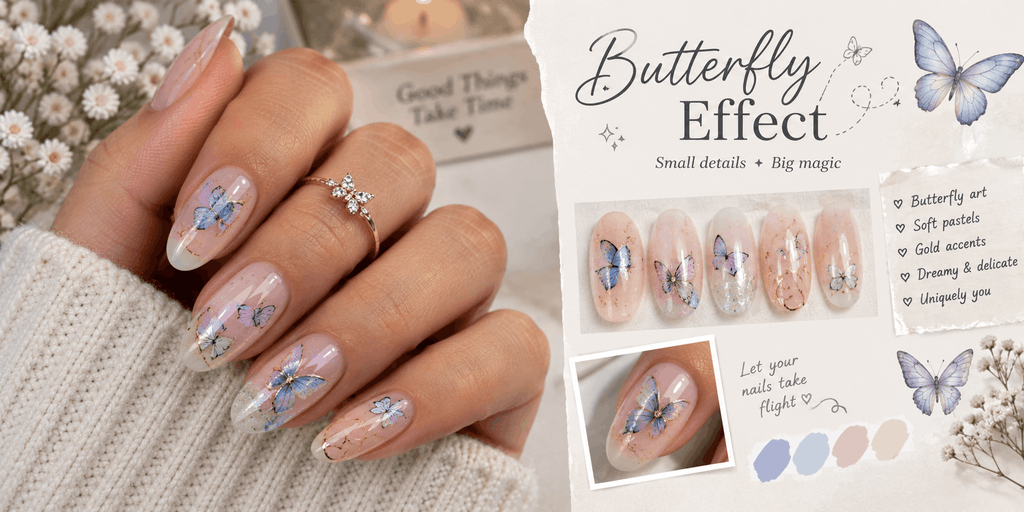
Butterfly-inspired oval nails can be delicate without looking overly childish. The wings can be suggested through thin outlines, soft gradients, or tiny sections of color rather than drawing a detailed butterfly on every nail.
Pastel pink, lavender, blue, and white can create a dreamy effect, while black outlines can give the artwork more definition. If you prefer something subtle, use butterfly-inspired shapes on only one or two accent nails.
The curved shape of oval nails also works naturally with wing-like artwork, making the design feel integrated rather than simply placed on top.
Starry Sky
A starry-sky manicure can turn oval nails into a tiny night scene. A deep navy, midnight blue, or sheer dark base provides the perfect background for small stars, dots, and crescent-inspired details.
You do not need to fill every nail with stars. Leaving areas of the base visible can make the design feel more spacious and atmospheric.
For a softer version, use a muted blue or lavender base with tiny silver or pearl accents. For a stronger effect, a deep glossy base with reflective stars can create much more contrast.
Playful Print
Print-inspired oval nails are perfect when you want something less predictable. Animal-inspired patterns, tiny checks, abstract spots, or colorful shapes can all work depending on the mood you want.
Rather than choosing one print for every nail, consider using different variations from the same color family. This can create the feeling of a coordinated collection rather than a random mix.
A neutral base can also make colorful prints easier to wear. If the artwork is already bold, keeping the background simple gives the design room to breathe.
Neapolitan Swirls
Neapolitan swirls take inspiration from the familiar combination of chocolate, vanilla, and strawberry, but the idea can be translated into a much more modern manicure. Instead of creating literal stripes, use three complementary shades in curved sections that flow across each oval nail.
The rounded shape of the nails makes the swirls feel especially natural. Cream, soft pink, and chocolate brown create an easy color combination, but you can adjust the shades to make the look lighter, deeper, or more unexpected.
For a cleaner finish, keep the lines thin and let the three colors remain distinct. The result has enough personality to stand out while still feeling surprisingly wearable.
Abstract Art
Abstract nail art gives you permission to stop worrying about perfect symmetry. Curved lines, uneven shapes, color blocks, and tiny unexpected details can come together to create a manicure that feels more like miniature artwork.
Oval nails provide a smooth background for this style, allowing sharp shapes and flowing curves to exist together without making the manicure feel too rigid.
A good way to keep abstract nails from becoming chaotic is to choose a limited color palette. Two neutrals with one stronger accent color can be enough to create plenty of visual interest.
Chrome Pastels
Pastel colors can sometimes look soft and understated, but adding a chrome finish gives them a completely different personality. Lavender, baby blue, pale pink, mint, or creamy yellow can all become more reflective and dimensional with the right finish.
The oval shape works particularly well with chrome because the curved surface catches light from different angles. This can make the color appear to shift slightly as your hands move.
You can keep all the nails in one pastel shade or create a different shade on each nail while keeping the same chrome effect across the set.
Subtle Shine
Not every manicure needs to sparkle from a distance. Subtle shine focuses on the small amount of reflection that becomes visible when light hits the nails.
A glossy nude, translucent pink, or milky base can be enough. You can also add a fine shimmer that is almost invisible in ordinary lighting but becomes noticeable when your hands move.
This is a particularly useful style when you want oval nails that look polished for everyday situations without appearing heavily decorated.
Light-Catching Lavender
Lavender becomes especially interesting when it is given a finish designed to catch the light. Instead of a flat pastel purple, look for a slightly reflective or glazed effect that gives the color more depth.
A sheer lavender base can create a delicate manicure, while a stronger purple can make the look more noticeable. You can also combine the color with tiny silver details if you want an additional reflective element.
Because lavender sits between soft and colorful, it can work as an alternative to traditional nude or pink manicures without becoming too bold.
Sleek Silver
Sleek silver takes the metallic idea further by allowing the entire manicure to become the statement. A reflective silver finish can make oval nails look futuristic, especially when the shape is kept smooth and consistent.
If a full metallic manicure feels too intense, use silver on alternating nails and pair it with a sheer neutral on the others. Another option is a silver French tip over a translucent base.
The important detail is the surface. A smooth, even finish allows the metallic effect to look intentional rather than uneven.
Seaside Set
A seaside-inspired manicure can bring together soft blues, sandy neutrals, white, and tiny details that suggest the coast without turning the nails into literal beach illustrations.
Try a pale blue base on some nails, creamy white on others, and subtle wave-like lines across one or two accent nails. Small pearl details can also add a watery effect.
The oval shape complements this theme because its smooth edges echo the movement of waves. The final look can feel relaxed, fresh, and slightly unexpected.
Brat Green
Brat green makes oval nails impossible to overlook. The bright shade creates a strong contrast with the classic shape, proving that oval nails do not have to be delicate or traditional.
A full set of vivid green can create the strongest impact, while a green French tip offers a more restrained interpretation. You can also combine the shade with nude or translucent nails to create contrast.
If you choose an intense green, keeping the artwork simple can actually make the manicure look more modern. The color itself already provides enough visual energy.
Pop of Red
Red is one of those colors that can completely transform the appearance of oval nails. A glossy red manicure feels classic, but a small red detail can create an entirely different effect.
Try a red French tip over a neutral base, tiny red dots, curved red lines, or a single red accent nail. The amount of color can be adjusted depending on how noticeable you want the final manicure to be.
For a particularly clean appearance, choose one shade of red and repeat it consistently throughout the set. This creates a strong visual connection between the individual nails.
High Contrast
High-contrast oval nails are designed around colors that clearly stand apart from one another. Black and white is the obvious combination, but you can also use navy and cream, deep brown and pale pink, or another pairing with a noticeable difference in tone.
Contrast can be introduced through French tips, color blocks, outlines, abstract shapes, or alternating nails. The oval shape keeps the overall manicure from feeling too severe because its edges remain soft.
If the colors are already dramatic, simple artwork can be more effective than adding several different patterns.
Final Thoughts
Oval nails prove that a classic shape does not have to feel boring or predictable. Whether you prefer a soft pearl finish, delicate minimalist details, bold prints, or playful artwork, the curved silhouette gives almost every design a polished foundation. The best part is how easily the same shape can move between subtle and eye-catching styles simply by changing the colors, finishes, or amount of detail.
If you are looking for a manicure that feels timeless but still leaves plenty of room for creativity, oval nails are an easy shape to experiment with. Start with a design that matches your everyday style, then add a small unexpected detail to make it feel more personal.
Fair skin generally refers to lighter natural complexions, although the exact appearance can vary considerably. Undertone, genetics, sun exposure, and individual pigmentation all influence how fair skin looks.
Not necessarily. Your routine should mainly depend on your skin type and concerns. Fair complexion alone does not determine whether you need products for dryness, oiliness, acne, or sensitivity.
Changes in surface color can sometimes be more visible against a lighter complexion. Temporary redness can have many causes, while persistent redness may have an underlying cause that requires professional evaluation.