Purple hair color offers far more variety than one bright, all-over shade. From soft lavender and lilac to rich plum, cool violet, magenta, and multidimensional blends, there is a purple hair color idea for almost every style preference. The right shade depends on your current hair color, previous treatments, desired intensity, and how much maintenance you are willing to do.
Before choosing a purple shade, it helps to understand how different tones behave on different hair bases. Whether you want a subtle purple accent, a vivid transformation, or a blended balayage, knowing what to expect can help you choose a color that looks closer to your inspiration photo and fits realistically into your hair-care routine.
How to Choose the Perfect Purple Hair Color
Before choosing a purple hair shade, think about the depth and undertone you want. Light purples such as lavender and lilac tend to create a softer result, while plum and deep violet look richer and more intense. Warmer purple shades can lean toward pink, red, or magenta, while cooler purples can have blue, silver, or violet undertones.
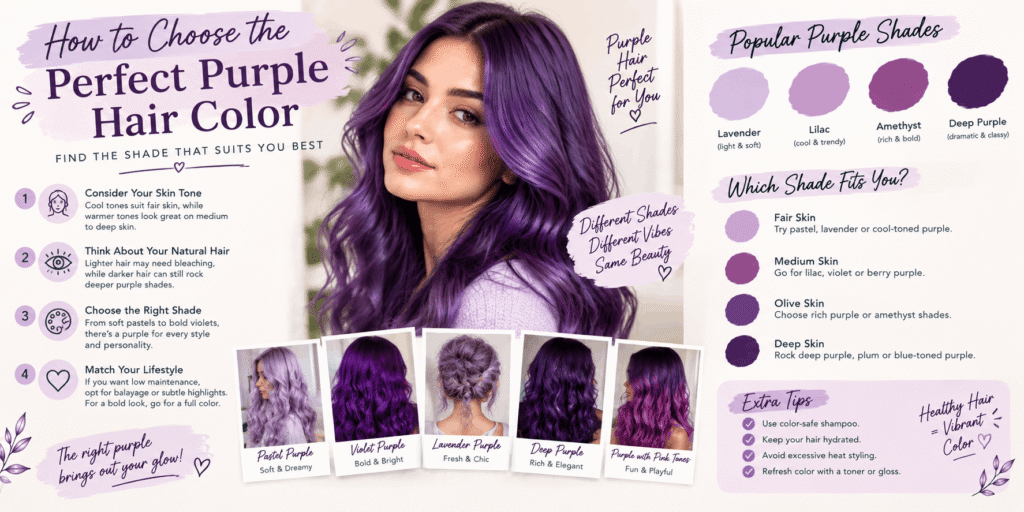
Your starting hair color also matters. Pastel and very light purple shades generally show more clearly on lighter bases, while deeper purple shades can work with a wider range of starting colors. If your hair is naturally dark and you want a very bright or pastel purple, significant lightening may be required first.
Consider the Tone Before the Dye
Cool-toned purple can have an icy, blue-violet character, while warm-toned purple may appear closer to orchid, magenta, or reddish violet. Neutral purple shades sit somewhere between these directions.
Instead of choosing a shade only by its name, look at several examples of the actual color. Names such as “violet,” “plum,” and “lavender” can vary considerably between different brands and formulas.
Think About Maintenance
Vivid fashion colors usually require more attention than natural-looking shades because color can gradually fade with washing and other environmental factors. Your washing routine, heat styling, and the condition of your hair can all affect how long the color looks fresh.
If you want something easier to maintain, a darker purple, balayage, or purple accents can offer a different approach than coloring the entire head in a bright shade.
Popular Shades of Purple Hair Color
There is no single version of purple hair. The color can be adjusted to look delicate, smoky, vibrant, deep, cool, or warm. Understanding the main shade families makes it easier to narrow down the huge number of purple color ideas available.
Light Purple Hair: Lavender and Lilac
Lavender and lilac are among the softest versions of purple. Lavender usually has a delicate violet appearance, while lilac can appear slightly warmer or pinker depending on the formula.
These lighter shades can create an airy, pastel-inspired result and work particularly well when the desired look is more subtle than a deep violet. Because pastel colors can be affected by the underlying hair color, the starting base is especially important.
If your hair has been lightened, talk with a professional colorist about the condition of your hair before making another major color change. Hair that has already undergone chemical processing may need a more careful approach.
Cool-Toned Purple: Icy Purple and Silver Lavender
Cool purple shades combine violet with cooler blue or silvery tones. Icy purple can look especially striking when paired with a pale base, while silver lavender creates a softer, muted interpretation of purple.
These colors can be useful if you want purple that does not look strongly pink or red. However, cool tones can sometimes appear different depending on lighting, the underlying color, and how the dye fades.
For a more dimensional result, a stylist can combine different violet and silver tones rather than applying one flat shade throughout the hair.
Dark Purple Hair: Deep Plum and Violet
Dark purple is an option for anyone who prefers a richer interpretation of the color. Deep plum can have red or wine-like undertones, while dark violet usually leans more toward blue-purple.
A deeper shade can also be easier to incorporate into a more understated hairstyle because the purple may become more noticeable under brighter lighting rather than appearing extremely vivid in every setting.
Deep Purple Color Options
When choosing a dark purple formula, compare the swatches carefully. A color labeled “deep purple” can look dramatically different depending on the brand and your starting hair color.
For example, an intense purple formula may produce a stronger result on lightened hair than it does on a darker natural base. Following the product’s instructions and performing any recommended strand or allergy testing is important when using hair color.
Warm-Toned Purple: Orchid, Magenta, and Amethyst
Warm-toned purple moves toward pink, red, or reddish-violet territory. Orchid can provide a softer warm purple, while magenta creates a brighter and more energetic interpretation. Amethyst can sit between warmer and cooler purple depending on the specific formula.
Warm purple can also be incorporated into dimensional color rather than used as one uniform shade. A stylist might combine violet with pink or berry-inspired tones to create more variation throughout the hair.
Unique Purple Hair Color Ideas
Once you have chosen a general purple family, you do not have to stop at one all-over shade. Techniques such as ombré, balayage, money pieces, and two-tone color can make purple hair more dimensional while giving you more control over how much of the color is visible.
Purple Ombré Hair: Blended Gradients
Purple ombré creates a gradual transition from one shade to another rather than placing the same color throughout the hair. The darker color can begin higher up and transition into a lighter purple toward the ends, or the colors can be reversed depending on the desired effect.
One advantage of an ombré approach is that the color placement itself becomes part of the design. Different combinations can be used, such as deep violet transitioning into lavender or plum fading into a softer lilac.
Because the transition needs to look blended rather than sharply divided, this technique is often best handled by a professional colorist, particularly when lightening is involved.
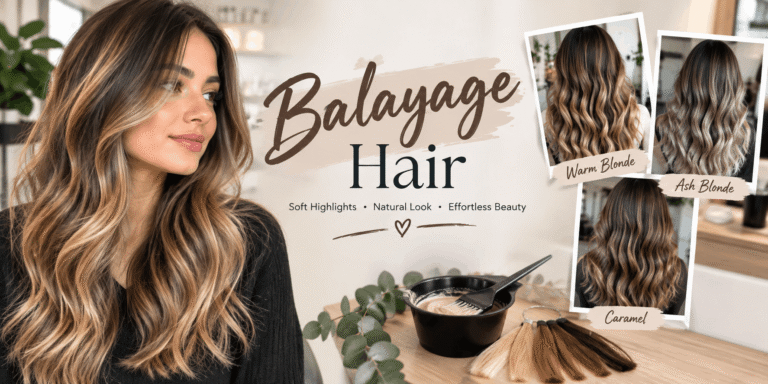
Purple Balayage: Natural-Looking Color Placement
Purple balayage uses strategically placed sections of color instead of covering every strand equally. This can create a more varied result, with purple appearing throughout the hair while some of the original base remains visible.
The amount of purple can be adjusted depending on how noticeable you want the color to be. Softer violet pieces can create a subtle effect, while stronger sections can make the purple much more prominent.
Balayage can also be combined with multiple purple shades. For example, a deeper violet near the roots can transition into brighter purple or lavender through selected lengths.
Money Piece Purple Hair Color
A purple money piece places contrasting color around the front sections of the hair. It can be a simple way to experiment with purple without immediately committing to an all-over color.
The front pieces can be bright violet, lavender, magenta, or a deeper purple depending on the overall look. The rest of the hair can remain its existing color or include additional purple sections for a more connected result.
Because the front of the hair is highly visible, color placement and blending are particularly important. A professional can help determine how wide the sections should be and where the color should begin.
Two-Tone Purple Hair: Creative Combinations
Two-tone purple hair combines two distinct shades to create contrast. The colors can be similar, such as lavender and violet, or more dramatic, such as magenta and deep purple.
Another approach is to combine purple with a neighboring shade. Purple and pink can create a warmer result, while purple and silver can produce a cooler appearance.
The key is choosing shades that work together rather than simply selecting two colors independently. Similar tones can create a blended effect, while contrasting depths can make the color combination more noticeable.
How to Care for Purple Hair After Coloring
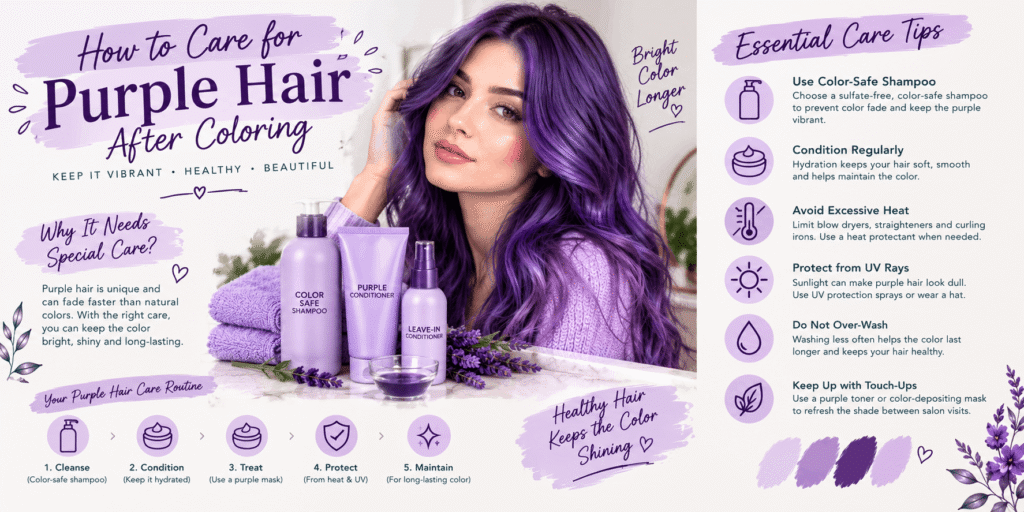
Once you choose a purple shade, maintaining the color becomes an important part of the overall look. A simple routine can help reduce unnecessary fading while keeping colored hair feeling manageable.
A Simple Purple Hair Maintenance Routine
- Wait before your first wash: Follow the instructions provided with your specific color treatment rather than washing immediately after coloring.
- Use color-safe products: Choose shampoo and conditioner formulated for color-treated hair.
- Avoid very hot water: Cooler or lukewarm water can be a better option for maintaining colored hair.
- Wash only as often as needed: Frequent washing can contribute to faster fading, especially with vivid shades.
- Use heat protection: Apply an appropriate heat protectant before using hot styling tools.
- Limit unnecessary heat styling: Air-drying and low-heat styling can help reduce stress on processed hair.
- Protect the hair from excessive sun exposure: Strong environmental exposure can contribute to changes in color and hair condition.
- Refresh the shade when needed: Depending on the formula, a professional may recommend a toner or color-refreshing treatment.
- Keep the hair conditioned: Colored and lightened hair may benefit from a consistent conditioning routine.
- Follow product instructions: If using a color-depositing product at home, check its directions carefully before applying it.
The exact routine depends on whether your purple is permanent, semi-permanent, pastel, or part of a creative color combination. Light lavender shades can require more attention because they often rely on a lighter starting base, while deeper plum and violet shades may create a stronger result on darker or pre-lightened hair.
Refreshing Faded Purple
Purple does not necessarily have to disappear completely before you refresh it. Depending on the type of color used, a stylist may recommend a color-refreshing treatment or toner to bring back some of the original tone.
Always check the specific product instructions before using a color-depositing product at home. Different formulas can produce very different results, especially when your hair has multiple shades or has been previously lightened.
Protecting Colored Hair From Heat
Heat styling can make already processed hair feel drier, so use appropriate heat protection when using hot tools. You can also experiment with hairstyles that require less frequent heat styling.
This is especially useful for light purple, lavender, and silver-purple shades, where maintaining the overall condition of the hair can be just as important as maintaining the color itself.
Purple Hair Styling Ideas That Make the Color Stand Out
Purple hair can look completely different depending on the haircut and styling technique. A layered haircut can make multiple purple tones more noticeable, while a sleek style can emphasize the overall richness of a single shade.
Waves and curls can also show off balayage or ombré effects because the different tones move through the hair instead of appearing as one flat color. Straight styling, meanwhile, can make carefully placed highlights or money pieces look particularly defined.
For a softer result, combine a deeper purple with a lighter shade rather than covering the entire head in one extremely bright tone. If you prefer something more noticeable, contrasting purple and magenta tones can create a much stronger color effect.
Purple Hair With Layers
Layers can give multi-tonal purple hair more movement. When different shades are placed throughout the lengths, the color can appear lighter or darker as the hair moves.
Purple Hair With Waves and Curls
Waves and curls can emphasize color variation, especially in balayage and ombré designs. The texture naturally separates sections of hair, allowing different purple tones to become more visible.
Short Purple Hairstyles
Short hair can work well with both subtle and vivid purple shades. A single deep violet color can create a polished look, while smaller sections of lavender or magenta can add contrast.
Things to Consider Before Going Purple
Purple hair is a creative color choice, but the final result depends heavily on your starting hair color and previous treatments. If your hair is already colored, damaged, or has several different tones, the final shade may not look exactly like the picture you use for inspiration.
Light pastel purples usually require a much lighter base than deeper shades. Achieving that base may involve chemical processing, so it is worth discussing the condition of your hair with a qualified stylist before making a major color change.
A consultation can also help you choose between a full-head color, balayage, ombré, money piece, or smaller accent sections. You do not necessarily have to commit to an all-over purple look to enjoy the color.
Bring a Reference Photo
A reference image can help communicate the shade, placement, brightness, and overall effect you want. However, remember that the same color may look different depending on lighting, hair texture, starting color, and previous treatments.
Think About Maintenance
Ask yourself how often you want to refresh your color before choosing a shade. A subtle purple accent may require less commitment than an all-over vivid color, while pastel shades can need more careful upkeep to maintain their delicate appearance.
Final Thoughts on Purple Hair Color
Purple hair gives you a huge range of possibilities, from soft lavender and icy lilac to rich plum, violet, orchid, and magenta. You can choose a complete color transformation or simply add purple through balayage, ombré, money pieces, or smaller accent sections.
The most important things to consider are your starting hair color, the condition of your hair, the shade you want, and how much maintenance you are comfortable with. A good reference photo and a consultation with a professional can make it easier to create a result that matches your expectations.
Whether you prefer a subtle lavender effect or a bold deep-violet look, purple hair can be adapted to different lengths, textures, and personal styles. The key is choosing a color and maintenance routine that works realistically for you.