Finding a cute hairstyle that looks polished without feeling overly complicated can make getting ready much easier. The right look can turn an ordinary hair day into something special, whether you are heading to a casual outing, a celebration, dinner, a formal event, or simply want to try something different.
The best part about cute hairstyles is that they do not have to involve complicated techniques or hours in front of a mirror. A simple braid, twist, ponytail, bun, or a few loose waves can completely change the feel of your look. You can also adjust many of these ideas for short, medium, or long hair depending on what you already have.
From relaxed messy buns to detailed braided styles, these 26 ideas offer plenty of inspiration. Some are quick enough for everyday wear, while others have the extra detail that makes them suitable for special occasions.
Cute Hairstyles That Work for Almost Any Occasion
1. Side Braid Into Sleek Pony
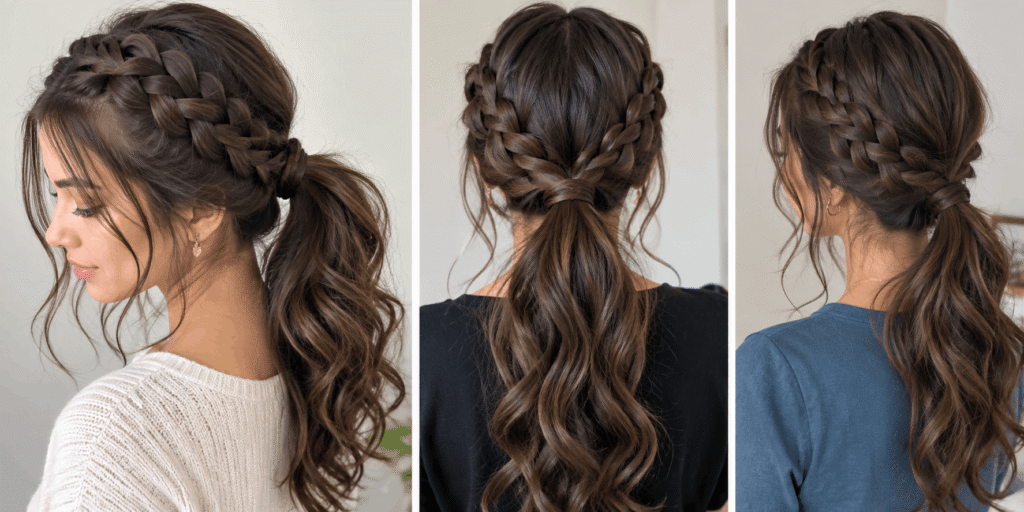
A side braid leading into a sleek ponytail is an easy way to combine two classic styles. Instead of leaving the braid as the main feature, it becomes a subtle detail that flows into the ponytail.
Start by creating a clean side section and braid a small portion of hair close to the face. Pull the rest of the hair into a smooth ponytail and secure everything together. You can keep the ponytail straight for a polished finish or add loose waves to make it softer.
This style works particularly well when you want something neat but not overly formal. A simple hair tie can keep it casual, while a decorative accessory can make the same hairstyle feel more event-ready.
2. Messy Bun
The messy bun remains one of the easiest options when you want your hair off your face without creating a perfectly structured style. Its charm comes from the slightly undone finish.
Pull your hair into a loose ponytail, twist it around the base, and secure it without worrying about every strand being perfectly placed. A few natural-looking pieces around the face can make the result feel relaxed rather than unfinished.
For a more polished version, smooth the crown before creating the bun. For a casual version, leave a little texture throughout the hair.
3. French Braid Crown
A French braid crown creates a beautiful frame around the head while keeping much of the hair controlled. It can look intricate even though the basic idea is simply carrying a braid around the head.
Begin near one side and gradually incorporate sections as you move around. Depending on your hair length, you can continue the braid toward the opposite side and secure the remaining hair underneath.
The finished look is especially suitable for events where you want your hairstyle to have visible detail without relying on heavy accessories.
4. Multi-Braid Updo With Accessories
If you enjoy hairstyles with several layers of detail, a multi-braid updo is worth trying. Rather than creating one large braid, divide the hair into several sections and use different braid sizes before gathering them into an updo.
The contrast between smaller and larger braids gives the style dimension. You can leave the finish smooth or gently loosen a few sections for a softer appearance.
A small clip, ribbon, pearl-style accessory, or decorative pin can add another element without overwhelming the hairstyle. Keep the accessory simple if the braids are already detailed.
5. Waterfall Braid
The waterfall braid has a flowing appearance because selected strands are released as the braid moves across the head. This gives it a lighter look than a traditional braid.
It works particularly well with naturally wavy hair because the loose sections blend into the rest of the hairstyle. If your hair is straight, adding a few soft waves afterward can create a similar sense of movement.
You can wear the braid across the back or position it slightly to one side. Either way, it gives loose hair a little more structure.
6. Side Braided Bun
A side braided bun combines the neatness of an updo with the visual interest of a braid. The braid can begin near one side of the head and continue toward the bun.
Once the braid reaches the back, gather the remaining hair and form a low bun. You do not need to make every strand perfectly smooth; a little softness around the edges can make the finished style feel more natural.
This is a useful choice for dinners, celebrations, and other occasions where you want your hair secured while still having an elegant detail.
7. Twisted Braid Half-Up With Face-Framing Layers
A half-up style is ideal when you want to keep some hair down while adding detail around the crown. Twisting two sections from each side and combining them with a braid creates a layered effect.
Leave the lower portion of the hair loose and allow the front pieces to fall naturally around the face. The rest can remain straight, wavy, or lightly curled.
This style is versatile because it does not completely hide the natural length of your hair. It also works well when you want a hairstyle that looks finished without feeling too formal.
8. Double Dutch to Single Braid
Two Dutch braids can begin separately before joining into one longer braid at the back. This creates a hairstyle that looks more elaborate than a basic single braid.
Keep the first sections close to the scalp and gradually bring them together as they reach the back. Once combined, continue braiding the remaining length.
For a softer finish, gently loosen the outer edges of the braids. For a cleaner result, keep the sections tighter and more defined.
9. Twisted Crown With Bubble Waves
This hairstyle combines a twisted crown with loose bubble-like waves through the remaining hair. The crown keeps the upper portion controlled while the lower section provides movement.
Create twists from both sides and secure them toward the back. Then use loose sections or gentle styling to give the rest of the hair a rounded, textured appearance.
It is a fun choice when ordinary waves feel too simple but a full updo feels like too much.
10. Dual Dutch Braids With Scarf Tie
Dutch braids already create a strong pattern, while a scarf adds a completely different finishing touch. After creating two braids, you can tie a small scarf around the ends or use it as an accent near the base.
Choose a lightweight scarf that does not overpower the braid pattern. A simple print can add personality without making the hairstyle look crowded.
This is especially useful for casual outfits because the accessory gives the hairstyle a playful quality without requiring complicated styling.
11. Braided Crown With Soft Ponytail Curls
A braided crown can also be paired with a ponytail instead of leaving the rest of the hair down. Once the crown is secured, gather the remaining hair into a ponytail and add loose curls or waves.
The contrast between the structured braid and softer ponytail creates balance. Keep the curls loose rather than extremely defined if you want a relaxed finish.
For an evening event, you can add a simple clip at the base of the ponytail to make the style feel more finished.
12. Chic V-Part Pony Braid
The V-shaped part gives a regular ponytail a more distinctive starting point. Once the hair is divided, the ponytail can be braided from the base downward.
The shape of the part becomes the main visual detail, so you do not need many additional accessories. Keep the sides smooth and allow the braid to remain the focus.
This hairstyle can be adjusted easily. A tighter braid creates a cleaner appearance, while gently loosening the braid gives it more volume.
13. Looped Rope Twist Braid
A rope twist uses two sections that are twisted around each other to create a simple spiral effect. Adding loops along the length can make the style look fuller.
It is a useful alternative when you want the appearance of a braid but prefer a simpler technique. The finished look can be worn down the back or pulled into a low ponytail.
Adding a small ribbon at the end is an easy way to personalize it without changing the basic hairstyle.
14. Crowned Braided Waves
For a softer look, pair a small crown braid with loose waves. The braid provides structure around the upper part of the head, while the waves keep the overall style relaxed.
You can make the braid narrow and subtle or slightly wider if you want it to be more noticeable. The rest of the hair can be left naturally wavy or styled with gentle movement.
This combination is especially practical when you want your hair down but still want a visible styling detail.
15. Side-Braided Curled Pony
A side braid can make an ordinary curled ponytail much more interesting. Begin with a small braid on one side, then bring the rest of the hair together into a ponytail.
Adding curls to the ponytail gives it movement and helps soften the structured braid. You can also leave a few strands loose around the front.
The result is simple enough for a casual gathering but detailed enough to work for a more dressed-up occasion.
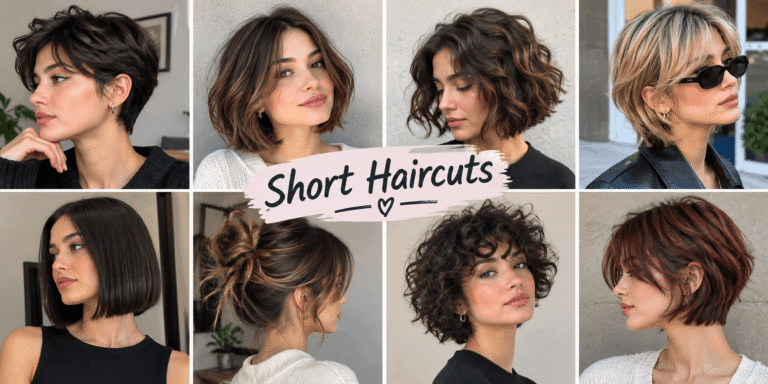
16. Short Textured Bob With Braid
Short hair does not need a large number of styling options to look interesting. A textured bob with a small braid can create a noticeable change without sacrificing the haircut’s shape.
Take a narrow section near the front and braid it backward, securing it discreetly. Add texture to the rest of the bob so the braid does not look disconnected.
This works particularly well when you want to experiment with styling without needing enough length for a ponytail or bun.
17. Side-Twisted Chignon for Medium Hair
A side-twisted chignon is a practical option for medium-length hair. Twist sections from one side toward the back and gather the remaining hair into a low chignon.
Because medium hair may not have enough length for an oversized bun, keeping the shape compact can actually make the hairstyle look more intentional.
A few loose pieces around the front can soften the style, while a clean finish gives it a more formal appearance.
18. Criss-Cross Braid Ponytail
The criss-cross technique creates overlapping sections that make a simple ponytail look much more detailed. Instead of braiding the entire length, the crossed sections can remain concentrated around the crown.
After securing the upper portion, gather the rest into a ponytail. You can leave it straight or add gentle waves depending on the occasion.
The main advantage is that the hairstyle looks complicated without requiring every strand of hair to be incorporated into a braid.
19. French Braid Low Pony
A French braid leading into a low ponytail is a classic combination that can be adapted for both casual and formal settings.
Start the braid near the crown and gradually incorporate hair as you move downward. Once you reach the lower section, gather the remaining hair into a ponytail.
Keeping the ponytail sleek gives the style a cleaner appearance, while adding texture creates a softer and more relaxed result.
20. Braided Side Ponytail With Full Bangs
A side ponytail can feel completely different when paired with a braid. Keep the bangs or front section loose while directing the rest of the hair toward one side.
Add a braid through the ponytail or along the side before securing it. The full front section provides contrast against the controlled ponytail.
This is a particularly useful option when you want to keep some framing around the face rather than pulling everything backward.
Choosing the Right Hairstyle for the Occasion
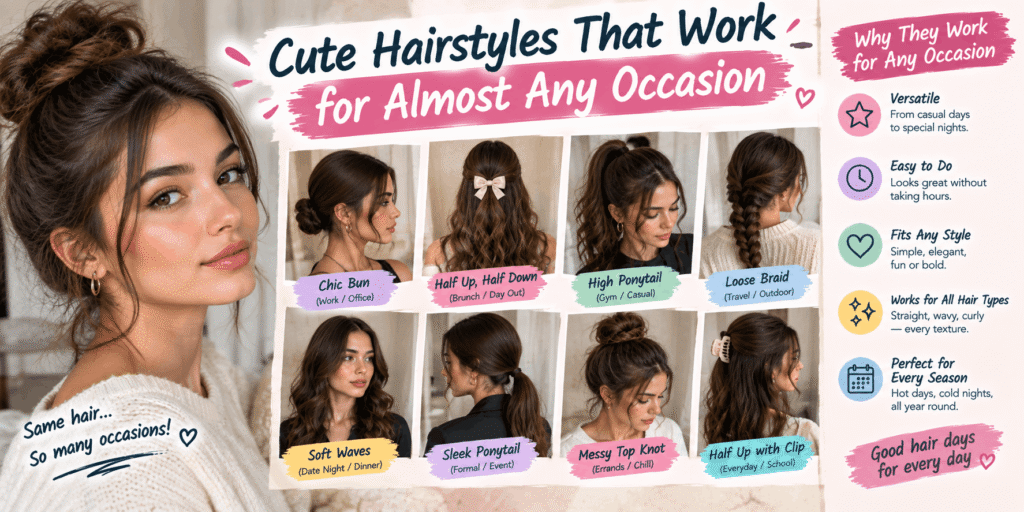
The easiest way to choose among cute hairstyles is to think about the setting before thinking about the technique. A hairstyle for an ordinary day does not need the same level of detail as one for a formal celebration.
For casual plans, a messy bun, soft braid, textured bob, or simple ponytail can be enough. These styles are comfortable and can usually be adjusted throughout the day without starting over.
For parties or celebrations, you can add more texture, braids, twists, or accessories. A waterfall braid, braided crown, or curled ponytail gives the hair more visual interest while still keeping the overall style wearable.
Formal events often benefit from cleaner shapes. A chignon, braided updo, or structured crown can look more intentional when paired with a simple outfit and understated accessories.
Hair length should also influence your choice. Short hair can work beautifully with small braids and twists, while medium hair offers enough length for ponytails and compact buns. Longer hair gives you more room for elaborate braids, waves, and updos.
Most importantly, choose a style that you can comfortably maintain. A hairstyle may look beautiful in a photo, but if it requires constant adjustment, it may not be the best choice for a long event.
Wide Side Braids With Loose Ponytail
Wide side braids can add structure to a loose ponytail without making the entire hairstyle feel too formal. Create one or two wider braids along the side and bring them toward the back before gathering the remaining hair.
Keep the ponytail loose rather than pulling it tightly against the head. You can also add gentle waves to the length for a softer finish.
This style works nicely when you want something noticeable from the front but still want the comfort of a simple ponytail.
Side Waterfall Braid on a Blunt Bob
A blunt bob can look completely different with a small waterfall braid placed along one side. Since shorter hair has less length to work with, keeping the braid narrow helps maintain the clean shape of the haircut.
Let the remaining bob stay straight for a sharper appearance or add slight texture for a softer result. The braid itself becomes a small decorative detail rather than taking over the whole hairstyle.
It is a particularly good option for days when you want to style short hair without changing its natural silhouette.
French Side Braid With Bubble Pony
This hairstyle combines the structure of a French side braid with the playful shape of a bubble ponytail. Start with the braid near one side, then gather the remaining hair into a ponytail.
Use small hair ties at intervals down the ponytail to create the bubble sections. Keep the bubbles similar in size for a neat appearance, or vary them slightly for a more relaxed effect.
The combination works because the braid gives the upper section definition while the bubble pony adds volume and personality.
Textured Braid Ponytail With Scrunchie
A scrunchie can completely change the mood of a braided ponytail. Instead of using a plain elastic, finish the hairstyle with a fabric scrunchie that complements your outfit.
Begin with a textured braid or loosely braided ponytail. Once secured, gently loosen a few sections to create more movement.
A simple scrunchie makes this hairstyle especially easy to adapt. Choose a neutral one for everyday wear or a more decorative option when you want the accessory to become part of the look.
Full Crown Braid With Loose Waves
A full crown braid creates a stronger statement than a small crown detail. The braid travels around the head while the remaining hair falls underneath in loose waves.
Because the braid already provides plenty of visual detail, the waves do not need to be extremely defined. A soft, flowing finish usually keeps the hairstyle balanced.
This is a beautiful choice for celebrations and formal occasions when you want your hair down but still want an obvious styling feature.
Soft Dutch Braid Flow
A soft Dutch braid flow takes the traditional Dutch braid and makes it less structured. Instead of keeping every section extremely tight, gently loosen the braid after it is finished.
The result has more movement and feels less rigid. You can leave the braid as the main style or allow it to transition into a loose ponytail.
This version is especially useful when you like braided hairstyles but prefer a relaxed finish rather than a highly precise one.
Making the Style Feel More Personal
Once you have chosen one of these looks, small changes can make it feel more suited to you. The easiest adjustment is texture. Straight hair can make braids and twists appear crisp, while natural waves can give the same hairstyle a softer appearance.
You can also change where the style begins. Moving a braid slightly higher, lowering a ponytail, or shifting a bun toward one side can create a surprisingly different result.
Accessories are another simple way to personalize a hairstyle. Ribbons, clips, scrunchies, decorative pins, and small hair ties can add detail without requiring a completely different technique.
Try not to add too many elements at once. If the hairstyle already contains several braids or twists, one simple accessory may be enough. If the hair itself is fairly simple, a decorative piece can become the main feature.
Getting Better Results From Simple Styling
Preparation can make a bigger difference than the complexity of the hairstyle. Hair that is extremely slippery may make braids and twists difficult to secure, while overly tangled hair can make sections look uneven.
Before styling, gently detangle the hair and decide whether you want a smooth or textured finish. If you want a sleek ponytail, concentrate on creating a clean surface. If you want a loose braid, keeping some natural texture can actually make the finished style easier to shape.
Do not worry about making every strand identical. Many relaxed hairstyles look better when they have slight variation. The goal is to create an intentional overall shape rather than perfect every individual section.
It can also help to secure each major section as you go. Trying to hold an entire complicated hairstyle together at once can make the process frustrating. Working in smaller stages gives you more control.
Small Details That Can Change the Whole Look
The front of the cute hairstyle deserves special attention because it is usually the first part people notice. You can keep the front smooth, create a center or side part, or leave a few soft pieces around the face.
The ponytail or bun position also changes the character of the style. A high ponytail usually feels more energetic, while a low ponytail can look calmer and more polished. Similarly, a low bun often creates a more refined finish than a high messy bun.
Another easy adjustment is volume. Gently loosening a braid can make it appear fuller, while keeping it tight creates a more defined pattern. The same principle applies to buns and ponytails.
These small changes mean you do not have to learn dozens of completely different techniques. Once you understand how placement and texture affect the final result, you can create many variations from a few basic styles.
Matching Your Hairstyle With Your Plans
For everyday activities, comfort should be a major consideration. A simple braid, low ponytail, textured bob, or relaxed bun can keep the hair manageable while still looking styled.
For a party, you can increase the amount of detail. Braided crowns, bubble ponytails, curled ponytails, and decorative accessories can make the hairstyle feel more special without requiring an elaborate updo.
For formal occasions, consider styles that stay secure for longer periods. A chignon, crown braid, or carefully arranged braided ponytail can work well when you want the hairstyle to remain organized throughout the event.
If you are attending an outdoor event, weather can also influence your choice. Wind and humidity may affect loose styles, so a braid or partially secured hairstyle can sometimes be more practical than completely loose hair.
The most useful approach is to think about how long you will be wearing the hairstyle and what you will actually be doing. A beautiful hairstyle that needs constant fixing may become inconvenient, while a slightly simpler style can remain comfortable and attractive for much longer.
Final Thoughts:
There is no single formula for creating a great hairstyle. A simple braid can become more interesting with a ponytail, a basic bun can feel completely different with texture, and even a short bob can be transformed with one small braid.
These 26 ideas give you plenty of ways to experiment with different combinations without needing an entirely new routine every time. Start with a technique you already feel comfortable with, then change the placement, texture, accessories, or finish.
The best hairstyle is ultimately one that fits the occasion and feels manageable for you. Once you become comfortable with a few basic braids, twists, buns, and ponytails, creating new variations becomes much easier.
2 Comments