Rainbow hair brings multiple shades into one hairstyle, ranging from soft pastel blends to bold neon colors that instantly stand out. Whether you want a subtle hint of color or a full transformation, there is a rainbow hair idea for almost every style, length, and texture.
The exciting part is that rainbow color does not have to look the same on everyone. The placement, intensity, and combination of shades can completely change the final result, so the perfect rainbow look might be much more subtle—or much bolder—than you expect.
Subtle Rainbow Hair Color Ideas
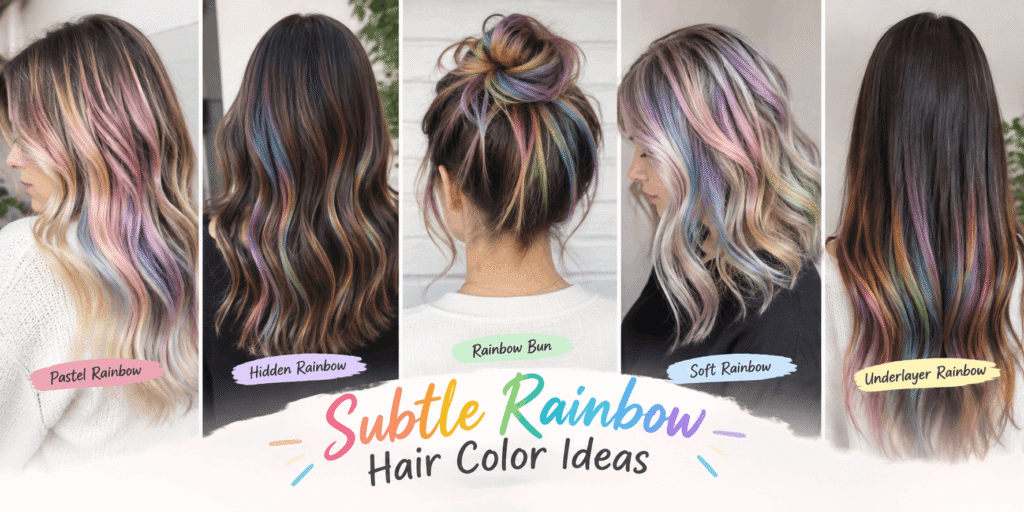
If you love the idea of rainbow hair but are not ready for an intense, all-over transformation, subtle color placement can be a great starting point. Instead of covering every strand, these techniques allow small sections of color to appear naturally as the hair moves.
Pastel Rainbow Highlights
Pastel rainbow highlights create a softer interpretation of the traditional rainbow look. Shades such as lavender, pale pink, mint, baby blue, peach, and soft yellow can blend together without creating an overly dramatic contrast.
The lighter shades can give the hairstyle a dreamy appearance, especially when the colors are blended rather than separated into obvious sections. This approach can work particularly well when you want colorful hair that still feels delicate and wearable.
Oil Slick Hair Colors
Oil slick hair takes inspiration from the shifting colors you might see across an oil-slick surface. Instead of using the classic rainbow in a predictable order, deeper shades can be blended to create flashes of purple, blue, green, pink, and other jewel-like tones.
Because the colors are often darker and more dimensional, this idea can feel more understated than a bright rainbow while still giving the hair plenty of visual interest.
Rainbow Peekaboo Layers
Peekaboo rainbow hair keeps the brightest colors underneath the top layer of hair. When the hair is down, the colors may remain partially hidden, but they become much more noticeable when the hair moves, is tied back, or is styled differently.
This makes peekaboo coloring one of the most versatile options for someone who wants to experiment with rainbow hair without making the color the most obvious feature of their hairstyle.
Rainbow Money-Piece Highlights
A colorful face-framing section can bring rainbow-inspired shades closer to the front of the hairstyle. You can use several tones along the face-framing pieces or choose a smaller selection of colors for a more controlled effect.
Because the placement is concentrated around the face, even a limited amount of color can make the overall hairstyle feel dramatically different.
Bold Full Rainbow Hair Color Transformations
For those who want rainbow hair to be the main attraction, a full-color transformation creates much stronger visual impact. These styles can use traditional rainbow shades or reinterpret them with unusual combinations and finishes.
Traditional Roy G. Biv Rainbow
The classic rainbow approach uses the familiar sequence of red, orange, yellow, green, blue, indigo, and violet. The colors can be arranged in sections, blended together, or distributed throughout the hair.
A traditional rainbow is instantly recognizable, which makes it a fun choice for anyone who wants a bright and expressive hairstyle.
Neon Rainbow Hair Colors
Neon rainbow hair replaces soft shades with intensely vibrant colors. Bright pink, electric blue, vivid green, orange, yellow, and purple can create an energetic appearance.
The contrast between the shades is what makes this look so eye-catching. Even when the colors are arranged in clean sections, the overall result can feel dynamic because of their intensity.
Galaxy Rainbow Blend
A galaxy-inspired rainbow combines deeper shades to create a multidimensional effect. Rich blues, purples, pinks, and flashes of brighter colors can be blended together rather than separated into obvious rainbow bands.
This style works especially well if you want something colorful but prefer a darker, more atmospheric appearance instead of a classic bright rainbow.
Rainbow Mermaid Hair
Mermaid-inspired rainbow hair usually focuses on aquatic shades such as turquoise, blue, teal, lavender, and purple. Warmer colors can be added for contrast, but the overall palette tends to remain cool and fluid.
Long hair can make this idea particularly dramatic because the different shades have more room to transition into one another.
Cotton Candy Rainbow
Cotton-candy rainbow hair uses soft pink, blue, lavender, peach, and other sugary pastel shades. Rather than creating sharp blocks of color, the shades can be blended for a soft transition.
The result is playful without necessarily being as intense as neon rainbow hair.
Jewel-Toned Rainbow
Jewel tones offer a richer alternative to traditional rainbow shades. Think deep emerald, sapphire blue, ruby red, amethyst purple, and warm amber-inspired tones.
These colors can make rainbow hair feel more sophisticated while still maintaining the multi-colored concept.
Creative Rainbow Hair Placement Techniques
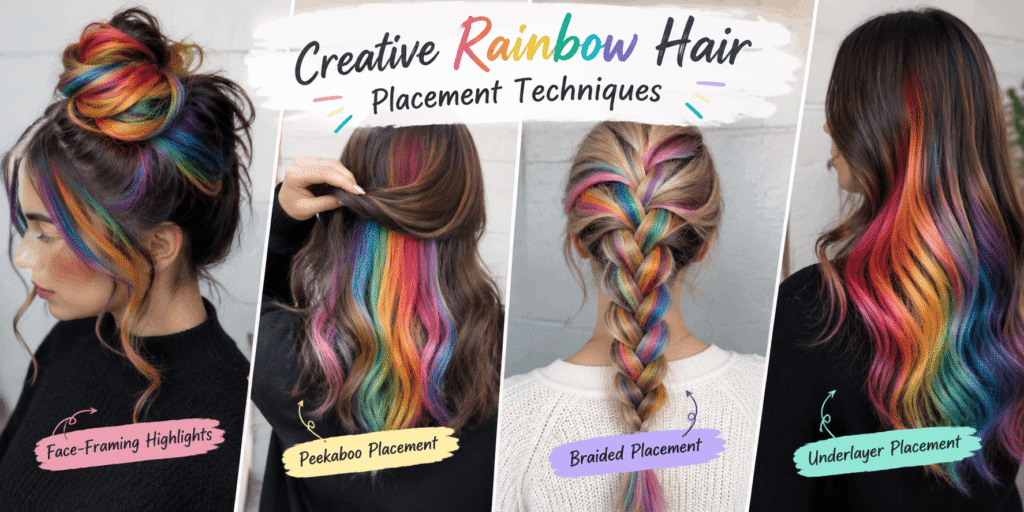
You do not need to color your entire head to create rainbow hair. Placement can completely change how the colors appear, which means the same palette can produce several very different hairstyles.
Rainbow Underlayers
Rainbow underlayers place colorful sections underneath the main layer of hair. The colors can remain mostly hidden when the hair is worn naturally and become visible when you move or style it.
This is a particularly interesting option if you like having a more traditional-looking top layer while still wanting a colorful surprise underneath.
You can also choose how much of the underlayer is visible. A small section can create a subtle flash of color, while a larger area can make the rainbow effect much more noticeable.
Rainbow Hair Tips and Ends
Coloring only the ends gives you another way to experiment without changing the appearance of the entire hairstyle. The rainbow shades can begin at different points or gradually transition from the natural hair color into brighter tones.
Rainbow tips can look especially striking on longer hair because the different colors have enough space to become visible. On shorter hair, smaller sections can create a similarly playful effect.
Rainbow Crown and Halo Effects
A rainbow crown effect concentrates color around the upper portion of the hairstyle. The shades can be arranged around the crown or blended outward to create a halo-like impression.
This type of placement can be customized significantly. You might choose soft pastels for a subtle effect or saturated shades if you want the crown to become the main focal point.
Rainbow Color Blocking
Color blocking separates the rainbow into more noticeable sections rather than blending everything together. Each area can feature one dominant shade, creating a graphic and modern appearance.
This technique works particularly well when you want the individual colors to remain clearly visible rather than merging into one another.
Rainbow Face-Framing Sections
Instead of distributing color evenly throughout the hairstyle, you can focus on sections that frame the face. This creates a concentrated pop of color while allowing much of the natural hair to remain unchanged.
Face-framing rainbow color can be adapted to both subtle and dramatic looks. A few pastel shades create a softer result, while bright contrasting colors produce a much stronger statement.
Rainbow Hair Ideas for Different Lengths
Hair length can influence how much space you have to display different colors. Longer hair naturally provides more room for gradual transitions, while shorter cuts can make individual color placements appear more concentrated.
Short Hair Rainbow Styles
Short hair can make rainbow colors look particularly bold because there is less length for the shades to become diluted visually. Pixie cuts, short bobs, and cropped hairstyles can all be adapted with colorful sections.
A few carefully placed shades may be enough to transform a short haircut. You do not necessarily need all seven traditional rainbow colors to create the effect.
Medium-Length Rainbow Designs
Medium-length hair offers a balance between subtle and dramatic rainbow styles. There is enough space for several colors while still keeping the overall hairstyle relatively easy to manage.
Lobs, shoulder-length layers, and medium shags can all provide interesting areas for peekaboo sections, face-framing color, or blended rainbow shades.
Long Rainbow Hair Cascades
Long hair provides the most room for experimenting with multiple shades and gradual transitions. Colors can move from one section into another, creating a cascading effect as the hair falls down.
Long layers can also make the colors appear more dynamic because different sections become visible as the hair moves.
Rainbow Hair Ideas for Different Textures
Rainbow hair can look completely different depending on the natural texture of the hair. The same color combination may appear soft and blended on wavy hair but much more defined on straight or curly hair.
The key is choosing a color placement that works with the way the hair naturally moves. Instead of trying to make every strand look identical, a good rainbow design can use the texture itself to create dimension and movement.
Rainbow Colors for Straight Hair
Straight hair provides a smooth surface where individual color sections can be especially noticeable. This makes it a great option for clean color blocks, rainbow stripes, face-framing pieces, and carefully blended gradients.
If you prefer something more subtle, hidden rainbow sections can add unexpected color underneath the top layer. The result can look relatively understated when the hair is down but much more colorful when the hair moves or is styled differently.
Rainbow Styles for Wavy Hair
Waves naturally create movement between different shades, making them particularly interesting with multicolored designs. Pastel combinations, soft rainbow balayage, and blended jewel tones can work beautifully with this texture.
Rather than choosing too many sharply separated shades, a blended color palette can allow the waves to create a softer transition between colors.
Rainbow Ideas for Curly Hair
Curly hair can make rainbow colors appear dimensional because curls naturally catch light from different angles. Strategic sections of contrasting shades can emphasize the movement of curls without requiring an overly complicated design.
A rainbow underlayer or colorful ends can also be a fun choice if you want the color to appear selectively rather than throughout the entire hairstyle.
Rainbow Hair That Fits Different Lifestyles
Not everyone wants a dramatic rainbow transformation. Fortunately, rainbow hair does not have to mean coloring the entire head in six or seven highly saturated shades.
Subtle Rainbow Balayage
Rainbow balayage offers a softer interpretation of the trend. Instead of obvious stripes, different shades can be blended through sections of the hair to create a colorful effect that feels more gradual.
Pastel rainbow balayage can be particularly understated, while deeper jewel tones can create a richer appearance without looking neon.
Hidden Rainbow Sections
Hidden rainbow hair is one of the easiest ways to make a colorful style feel more flexible. The colorful sections sit underneath the main layer of hair, allowing you to reveal or conceal them depending on how you style your hair.
This can be especially appealing if you want a creative look without making the color the most noticeable part of your everyday appearance.
Temporary Rainbow Hair Colors
Temporary color products can provide a way to experiment with colorful shades without committing to a long-term change. Depending on the product, temporary color may appear as a wash of color, a few bright sections, or a more noticeable transformation.
Always check the product instructions and suitability for your hair before using it, especially if your hair has already been chemically treated.
How to Keep Rainbow Hair Looking Vibrant
Rainbow hair is eye-catching partly because of its variety of colors, but maintaining that visual impact requires some attention. Different shades can fade at different rates, meaning the original color balance may gradually change.
Choose Color-Safe Hair Care
Using hair products designed for color-treated hair can help support the appearance of dyed hair. Gentle cleansing and avoiding unnecessary heat can also help the color remain attractive for longer.
The exact maintenance routine depends on the colors, coloring technique, and condition of the hair. Some vibrant shades may need attention sooner than others.
Protect the Color From Fading
Sun exposure, frequent washing, heat styling, and other factors can contribute to color fading. If your rainbow design contains several shades, fading may also make the colors look less distinct over time.
Keeping the hair-care routine simple can help. Avoid constantly changing products and pay attention to how your particular hair responds to washing, styling, and environmental exposure.
Know When Your Color Needs a Refresh
There is no universal touch-up schedule for rainbow hair. Some people may want to refresh their colors as soon as they notice fading, while others may prefer the softer appearance that develops over time.
A professional colorist can help determine when a refresh makes sense, particularly when several different shades need to remain balanced.
Seasonal Rainbow Hair Color Combinations
Rainbow hair can be adapted throughout the year simply by changing the intensity and temperature of the shades.
Spring Pastel Rainbow
Soft pink, lavender, mint, pale blue, and peach can create a light spring-inspired palette. These colors can be incorporated into highlights, underlayers, or blended sections rather than covering the entire hairstyle.
Summer Bright Rainbow
Summer is naturally suited to brighter combinations. Saturated pink, orange, yellow, green, blue, and purple can create a playful rainbow effect, especially when used as distinct sections.
Fall Jewel-Toned Rainbow
For fall, consider deeper versions of rainbow shades. Emerald, ruby, sapphire, plum, and rich orange can create a colorful palette that feels warmer and more dramatic.
Winter Cool-Toned Rainbow
Cooler combinations such as icy blue, violet, silver-inspired tones, and cool pink can create a winter-like effect. These shades can look especially striking when blended rather than divided into obvious blocks.
DIY vs. Professional Rainbow Hair Coloring
Rainbow hair can be more complicated than a single-color transformation because several shades may need to work together. The final result depends on the starting hair color, existing color, texture, and desired intensity.
What to Consider Before Coloring at Home
At-home products can seem convenient, but rainbow coloring involves more variables than choosing one shade from a box. Multiple colors can produce unexpected results when placed next to each other, and previously colored hair may respond differently from untreated hair.
For that reason, it is important to follow the product’s instructions and avoid experimenting with aggressive chemical processes or complicated corrections at home.
When a Professional Colorist Makes Sense
A professional can evaluate the current condition and color history of the hair before recommending a rainbow design. This can be particularly helpful when you want several contrasting shades, a blended rainbow effect, or a major color change.
Professional colorists can also help plan color placement so that the finished result works with your haircut, texture, and preferred level of visibility.
Understanding the Cost
Rainbow hair can require more time and products than a simple single-color service. Pricing can vary depending on the salon, hair length, amount of hair being colored, existing color, technique, and number of shades involved.
Instead of focusing only on the starting price, consider the entire maintenance commitment. A design with many vivid shades may require more frequent color refreshes than a subtle hidden rainbow.
Final Thoughts
Rainbow hair is no longer limited to one dramatic, all-over style. In 2026, the trend can be adapted in countless ways, from pastel highlights and hidden underlayers to bold neon combinations and rich jewel-toned blends.
The best rainbow hair idea is one that matches your preferred level of color, hairstyle, natural texture, and everyday routine. You can make the look highly visible with full rainbow sections or keep it more flexible with peekaboo pieces and colorful ends.
Before choosing a design, think beyond the initial reveal. Consider how the colors will look as they fade, how much maintenance you are comfortable with, and whether the style needs to fit particular school, work, or everyday preferences.
Whether you choose a subtle pastel rainbow or a bold spectrum of vibrant shades, thoughtful color placement can turn an ordinary hairstyle into something much more distinctive.
2 Comments