
African hair braiding is a beautiful and versatile hairstyling tradition with a long history of creativity, cultural expression, and practical hair care. From classic cornrows and box braids to knotless braids, Fulani-inspired styles, twists, and intricate braided designs, there are countless ways to wear braided hair.
Braiding can be adapted to different hair lengths, textures, occasions, and personal preferences. Some styles are simple and practical for everyday wear, while others feature detailed patterns, accessories, colors, or decorative elements that make them especially striking. The variety of available styles means you can often find a braided look that matches your preferred level of maintenance and styling.
One of the reasons African hair braiding remains so popular is its versatility. Braids can be worn in different lengths and sizes, combined with buns or ponytails, decorated with beads, or created with different parting patterns. You can also choose between traditional techniques and modern variations that provide a fresh take on familiar styles.
At the same time, good preparation and proper care are important. A beautiful braid style should not be excessively tight or uncomfortable. Taking care of the scalp and natural hair before, during, and after braiding can help make the experience more comfortable and support healthy-looking hair.
This guide explores popular African braiding styles, how to prepare for an appointment, factors to consider when choosing a style, maintenance tips, and common questions about braided hairstyles. Whether you are looking for inspiration for your next salon visit or simply want to learn more about different braid styles, these ideas can help you choose a look that suits your preferences.
What Is African Hair Braiding? 🌍
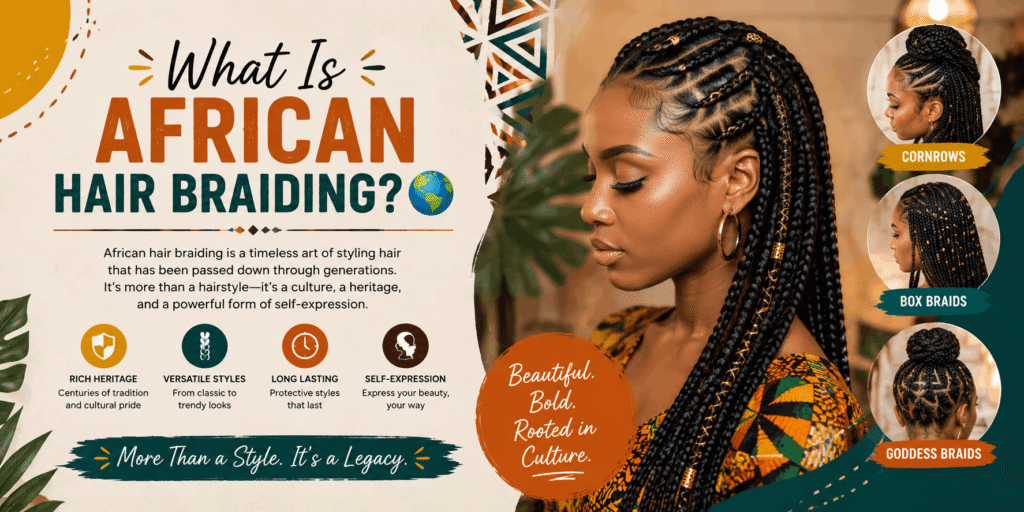
African hair braiding refers to a broad range of braiding techniques and hairstyles associated with African communities and the African diaspora. These styles include both traditional and contemporary approaches, and they vary considerably between regions, communities, and individual hairstylists.
Braiding can involve natural hair alone or additional hair for length, volume, or creative styling. The result can range from very fine, detailed braids to larger, more relaxed sections.
Traditional and Modern Styles
Some braided hairstyles have deep cultural and historical significance, while modern styles continue to evolve through creativity and individual expression.
Today, people may combine traditional techniques with contemporary colors, patterns, accessories, and silhouettes. This has created an enormous variety of styles suitable for everyday wear and special occasions.
Popular African Hair Braiding Styles 💇
Box Braids
Box braids are divided into individual sections, creating a recognizable square or rectangular parting pattern. They can be created in different sizes and lengths, from small braids to larger statement styles.
One advantage of box braids is their versatility. They can be worn loose, gathered into a ponytail, arranged into a bun, or styled in other ways depending on their length.
Knotless Braids
Knotless braids use a technique in which added hair is gradually incorporated rather than beginning with a prominent knot at the base.
The result can create a flatter appearance at the scalp. Knotless braids are available in many sizes and lengths and can be customized according to personal preference.
Cornrows
Cornrows are braids created close to the scalp. They can follow straight lines or form intricate curves, geometric patterns, and other designs.
Cornrows can also be combined with loose hair, ponytails, buns, or other braided sections to create more elaborate styles.
Fulani-Inspired Braids
Fulani-inspired braided styles often feature distinctive parting, central braids, side details, and decorative elements such as beads.
Modern interpretations can vary significantly, allowing the style to be adapted to different lengths, colors, and preferences.
Goddess Braids
Goddess braids generally feature larger, more prominent braids and can be styled in different patterns.
They may be worn in a relatively simple design or combined with smaller braids and loose sections for additional texture.
Feed-In Braids
Feed-in techniques gradually incorporate additional hair into a braid, helping create a smooth transition from the natural hair into the added hair.
This technique can be used to create various patterns and sizes.
Choosing the Right Braid Size 📏
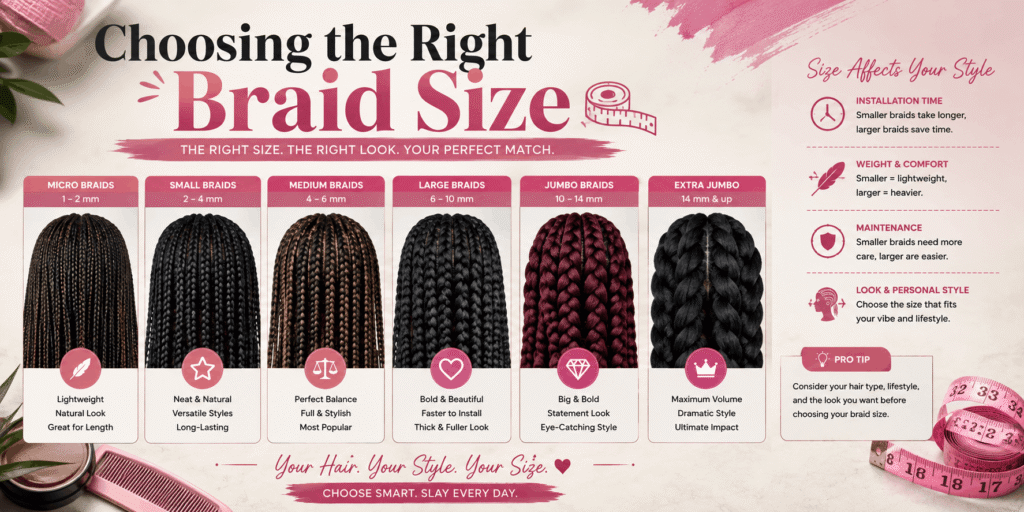
Braid size can dramatically change the overall appearance of a hairstyle.
Small Braids
Small braids can create detailed and intricate looks. They may also provide numerous styling possibilities, but they can take considerably longer to install.
Medium Braids
Medium-sized braids offer a balance between detail and installation time. They are a popular choice for people who want versatility without choosing extremely small sections.
Large Braids
Large braids can create a bold appearance and may require less installation time than smaller styles.
The best size depends on your preferred appearance, hair characteristics, and the amount of time you want to spend on installation and maintenance.
Preparing Your Hair for Braiding 🧴
Preparation can make the braiding process more comfortable and organized.
Start with clean hair and follow your usual gentle hair-care routine. Detangling the hair carefully before the appointment can make sectioning easier.
Avoid doing anything that leaves the scalp irritated immediately before braiding. If your scalp feels uncomfortable or sensitive, tell the stylist before beginning.
Communicate With Your Braider 💬
Before the appointment, show your stylist a reference photo and explain the length, size, color, and overall appearance you want.
Also discuss how long you expect to wear the style and whether you have any concerns about comfort.
How Long Does African Hair Braiding Take? ⏰
The installation time depends on the style, braid size, hair length, amount of added hair, and experience of the stylist.
Large braids may take less time than very small, detailed braids. Intricate patterns and styles with extensive parting can require additional time.
If you are booking an appointment, ask the stylist for an estimated duration beforehand so you can plan accordingly.
African Hair Braiding Maintenance and Care 🧴
Once your braids are installed, proper maintenance can help keep the style looking neat and comfortable. Your routine will depend on the type of braids, the products used, your scalp, and how long you plan to keep the hairstyle.
One of the simplest habits is keeping the scalp clean without excessively disturbing the braids. If you wash your hair while wearing braids, use a gentle approach and follow the recommendations of your stylist or the product manufacturer. Make sure the hair and scalp are allowed to dry properly afterward.
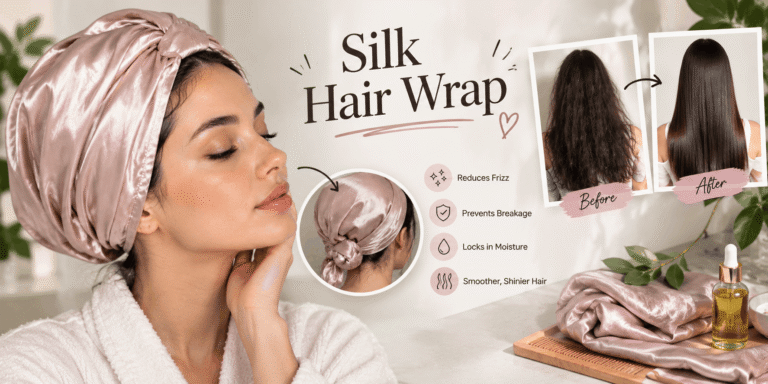
At night, protecting your braids with a satin or silk scarf or bonnet can help reduce friction between the hair and your pillow. A smooth pillowcase can also be useful if you prefer not to wear a head covering.
Keeping Your Scalp Comfortable 🌿
Pay attention to how your scalp feels after installation. A little adjustment period may be normal, but braids should not cause persistent or significant discomfort.
If your braids feel excessively tight, especially around the hairline, communicate with your stylist. Avoid assuming that uncomfortable braids simply need time to loosen.
Moisturizing Braided Hair 💧
Natural hair underneath braids can still benefit from appropriate moisture. However, avoid applying excessive amounts of heavy products that may build up around the scalp or between the braids.
Choose products that are appropriate for your hair and follow a simple routine rather than layering many different products.
How Long Can You Keep African Braids? ⏳
The ideal wearing time depends on the specific hairstyle, your natural hair, scalp comfort, and how well the braids are maintained.
There is no universal timeframe that applies to every braided style. Smaller braids, larger braids, natural-hair styles, and styles using added hair can all have different maintenance needs.
Instead of keeping a style simply because it still looks presentable, pay attention to your natural hair and scalp. Excessive new growth, tangling, buildup, or discomfort may be signs that it is time to remove the style.
Give Your Hair a Break 🌱
After removing a long-lasting braided style, gently cleanse and care for your natural hair. Allowing time between protective styles can make it easier to monitor your scalp and hair.
Your next style does not necessarily need to be installed immediately after removing the previous one.
African Hair Braiding With Extensions ✨
Many popular braided hairstyles can be created with added hair. Extensions can provide additional length, volume, and color options.
Synthetic braiding hair is commonly available in a wide variety of shades and textures. Some people prefer natural-looking colors, while others choose bright or blended shades for a more expressive appearance.
Before adding extensions, discuss the amount of hair being used with your stylist. More hair does not automatically create a better hairstyle, and excessive weight may make a style less comfortable.
Choosing Extension Colors
Natural black and brown shades are versatile choices, but highlights and blended colors can create additional dimension.
You can also use a combination of shades to create an ombré effect or a subtle color transition.
If you want a temporary change, colorful extensions can provide a way to experiment without permanently coloring your natural hair.
African Braids for Different Occasions 👗
Braided hairstyles can be adapted for everyday activities, formal events, celebrations, and vacations.
For an everyday look, medium box braids, knotless braids, cornrows, or simple feed-in designs can be practical choices.
For a special event, you might choose a more intricate pattern, decorative beads, a braided updo, or a style that combines different braid sizes.
The best choice depends on your outfit, the event, your preferred maintenance level, and how comfortable you want the hairstyle to be.
Braids for Everyday Wear
Simple designs can be easier to maintain when you have a busy schedule. Medium-sized braids can offer flexibility while avoiding extremely intricate patterns.
Braids for Special Events
Special occasions provide an opportunity to experiment with decorative details. Beads, cuffs, patterns, and mixed braid sizes can add visual interest.
African Hair Braiding for Different Hair Lengths 💇
Braiding techniques can be adapted to different natural hair lengths, although the available styles may vary.
Shorter hair may work well with cornrows, smaller braided patterns, or styles that use carefully selected extensions.
Medium-length hair offers numerous possibilities, including individual braids and combination styles.
Longer hair can provide additional flexibility for ponytails, buns, long braids, and other designs.
Your stylist can recommend techniques based on your current hair length and the style you want.
How to Choose an African Hair Braider 📍
Finding the right braider can make a major difference in your experience. Look for a stylist who has experience with the specific technique you want.
Before booking, review examples of their previous work. Pay attention to parting, consistency, finishing, and the overall neatness of the styles.
Check Reviews and Previous Work
Customer reviews can provide useful information about communication, appointment times, pricing, and overall experience.
Photos and videos of previous work can also help you determine whether the stylist’s technique matches your expectations.
Discuss Pricing Before Your Appointment
Braiding prices can vary depending on braid size, length, style complexity, and whether extensions are included.
Ask for a complete price estimate before booking. Also clarify whether you need to bring your own braiding hair or whether it is included.
How Much Does African Hair Braiding Cost? 💰
There is no single price for African hair braiding. Cost can vary considerably depending on location, stylist experience, hair length, braid size, amount of added hair, and complexity of the design.
Simple styles may cost less than highly detailed designs that require several hours of work.
When comparing prices, consider what is included. A lower price may not include extensions, washing, styling, or other services.
Instead of choosing based entirely on cost, consider the stylist’s experience, communication, hygiene practices, and the quality of previous work.
Common African Hair Braiding Mistakes to Avoid ⚠️
One of the most important things to avoid is choosing a style that is excessively tight or heavy for your comfort.
Another mistake is failing to explain what you want before installation. Bring reference pictures and discuss size, length, color, and parting beforehand.
Ignoring your scalp after installation can also create problems. If you notice persistent discomfort or irritation, do not simply ignore it.
Finally, avoid leaving a hairstyle in place indefinitely just because it still looks attractive. Your natural hair and scalp still need regular care.
Tips for Making Your Braids Last Longer 🌸
Protecting your braids at night can help reduce friction and keep the style looking neater. A satin or silk covering can be useful.
Avoid excessive manipulation throughout the day. Constantly pulling, twisting, or restyling braids can cause unnecessary wear.
Keep the scalp and hair reasonably clean according to your hair-care routine. If you use products, avoid excessive buildup.
The ends of the braids may also become frizzy over time. Gentle maintenance and appropriate products can help keep them looking neat.
Final Thoughts 🌿
African hair braiding offers an incredible variety of hairstyles, from classic cornrows and box braids to knotless braids, Fulani-inspired designs, feed-in braids, and creative modern combinations. The wide range of techniques makes it possible to find a style that fits different preferences, occasions, and hair lengths.
Choosing the right hairstyle is only part of the process. A comfortable installation, appropriate braid size, suitable extensions, and good maintenance can all contribute to a better experience. Communication with your braider is especially important, so explain exactly what you want and speak up if something feels uncomfortable.
When looking for a braider, consider their experience, previous work, reviews, pricing, and familiarity with the specific technique you want. Do not choose a stylist based only on the lowest price.
After installation, protect your braids at night, maintain a reasonable cleaning routine, avoid excessive manipulation, and pay attention to your scalp and natural hair. If a style causes significant or persistent discomfort, it should not simply be ignored.
The best braided hairstyle is one that combines the look you love with comfort and practical maintenance. With thoughtful preparation and proper care, African braiding can provide a versatile and expressive way to style your hair.
One Comment