
A luxury watch is more than an accessory that tells you whether it is morning or evening. It is a small piece of engineering, a reflection of personal taste, and sometimes an object that carries memories from one generation to another. While smartphones can display the time instantly, a beautifully crafted watch offers something different: the pleasure of wearing an object designed with patience, precision, and attention to detail.
The appeal of luxury watches does not come from price alone. It comes from the relationship between mechanical performance, thoughtful design, material selection, and the identity of the person wearing one. Some watches are admired for their complicated movements, others for their understated appearance, and some become recognizable because of a design that remains attractive for decades.
Choosing a luxury watch is therefore a personal decision. A bold sports watch may suit someone who enjoys expressive accessories, while a slim dress watch may feel more appropriate for someone who prefers quiet elegance. Understanding what makes these timepieces special can help you look beyond brand names and choose a watch that genuinely matches your lifestyle.
What Gives a Watch Its Luxury Status?
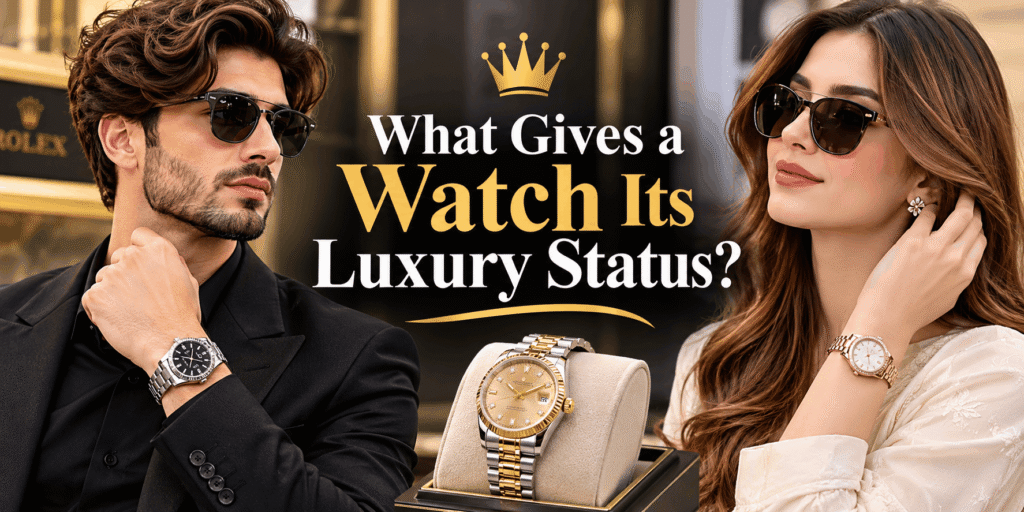
Luxury watches is often associated with expensive materials and recognizable logos, but a genuinely impressive timepiece usually involves much more than either of these things. Its quality is influenced by how carefully the movement is constructed, how well the case is finished, how the components work together, and how consistently the watch performs.
Traditional watchmaking requires an unusual combination of technical knowledge and craftsmanship. Even relatively small components must be manufactured and assembled with precision. In mechanical watches, tiny gears, springs, wheels, and other parts work together to measure the passing of time.
The exterior deserves equal attention. A carefully finished case, polished edges, precisely applied markers, and a well-designed bracelet can change how a watch looks and feels. These details may not be immediately noticeable from a distance, but they often become more interesting when the watch is examined closely.
Luxury also involves design identity. Certain watchmakers develop visual characteristics that make their products recognizable without requiring oversized logos. The shape of the hands, arrangement of the dial, proportions of the case, and design of the crown can all contribute to a distinctive appearance.
The Movement Behind the Dial
The movement is the mechanism responsible for keeping a watch running. It is often described as the heart of a timepiece because it controls the functions displayed on the dial.
Mechanical movements operate through a system of springs and carefully arranged components. They may be powered manually or through an automatic winding mechanism that uses the movement of the wearer’s wrist.
Quartz watches work differently. They use an electronic system regulated by a quartz crystal and typically require a battery or another electrical power source. Quartz technology can provide excellent accuracy and practical convenience, although traditional mechanical movements are especially admired by collectors for their intricate construction.
Neither movement type automatically makes a watch superior in every situation. Someone who values mechanical craftsmanship may prefer an automatic model, while a person who prioritizes convenience and accurate timekeeping may appreciate quartz technology.
The Details That Separate Ordinary From Exceptional
A luxury watches can contain hundreds of components, but its overall character is often influenced by small design decisions.
The way light moves across a polished bezel, the texture of the dial, the alignment of the markers, and the smooth operation of the crown can all affect the wearing experience. Even the sound and feel of a bracelet clasp may reveal something about the attention given to construction.
Some manufacturers also invest considerable effort in finishing components that are not immediately visible. Collectors may appreciate decorative techniques used on movement bridges, screws, and other internal parts.
These details explain why two watches with similar appearances can offer very different levels of craftsmanship. Looking beyond the dial can reveal a much more interesting side of luxury watchmaking.
Exploring the Different Personalities of Luxury Watches
Luxury watches do not follow one universal design language. Some are created for formal occasions, some are built around outdoor functionality, and others focus on artistic expression.
Understanding these categories makes it easier to recognize which type of watch belongs in your collection.
Dress Watches: Elegance Without Excess
Dress watches are generally designed around simplicity and balanced proportions. They often feature relatively slim cases, clean dials, restrained detailing, and leather straps.
Their appearance is intended to complement formal clothing rather than compete with it. A dress watch can look particularly refined with a tailored suit, an evening outfit, or traditional formalwear.
Many designs avoid unnecessary complications and decorative elements. Instead, they focus on readability, proportion, and subtle finishing.
A classic dress watch does not need a large case or a complicated dial to attract attention. Its appeal often comes from how naturally it fits into a polished appearance.
Sports Watches: Luxury With a Practical Edge
Sports watches combine a more relaxed appearance with features intended for everyday use. Depending on the design, they may include stronger cases, enhanced water resistance, luminous markers, and rotating bezels.
Their versatility is one reason they have become popular beyond athletic settings. A well-proportioned sports watch can work with casual clothing, smart-casual outfits, and certain business looks.
Some models feature integrated bracelets that create a continuous visual connection between the case and the wristband. Others use rubber or metal straps to emphasize their practical character.
A sports watch does not necessarily mean that it is suitable for every extreme activity. Water resistance, shock protection, and other technical specifications should always be checked before using a luxury timepiece in demanding conditions.
Dive Watches: Built Around Underwater Function
Dive watches are recognizable for their practical construction and strong visual identity. Traditional features include a rotating timing bezel, highly visible markers, luminous hands, and a case designed for water resistance.
The rotating bezel helps divers track elapsed time, although modern diving requires appropriate equipment and training beyond simply wearing a watch.
Even people who never enter the water often appreciate dive watches because of their bold proportions and easy-to-read dials.
Their design can also work with everyday clothing, particularly when paired with simple outfits that allow the watch to become the main accessory.
Pilot Watches: A Connection to Aviation
Pilot watches developed around the need for clear timekeeping in aviation environments. Their designs commonly feature large numerals, highly legible hands, and uncomplicated displays.
Some models have oversized crowns that were historically easier to operate while wearing gloves. Modern interpretations may preserve these details as part of their visual identity.
The appeal of pilot watches often comes from their practical appearance. They can look particularly good with leather straps, textured clothing, and understated casual outfits.
Statement Watches: When Design Becomes the Main Attraction
Some luxury watches are intentionally created to stand out. Their cases may use unusual shapes, skeletonized dials, striking colors, or unconventional materials.
These timepieces are often chosen by people who treat accessories as an extension of personal style. They may be less versatile than traditional designs, but they offer an opportunity to wear something visually distinctive.
A statement watch works best when the rest of the outfit allows it to remain the central detail. Wearing several equally bold accessories can make the overall appearance feel crowded.
Materials That Shape the Look and Feel of a Luxury Watch
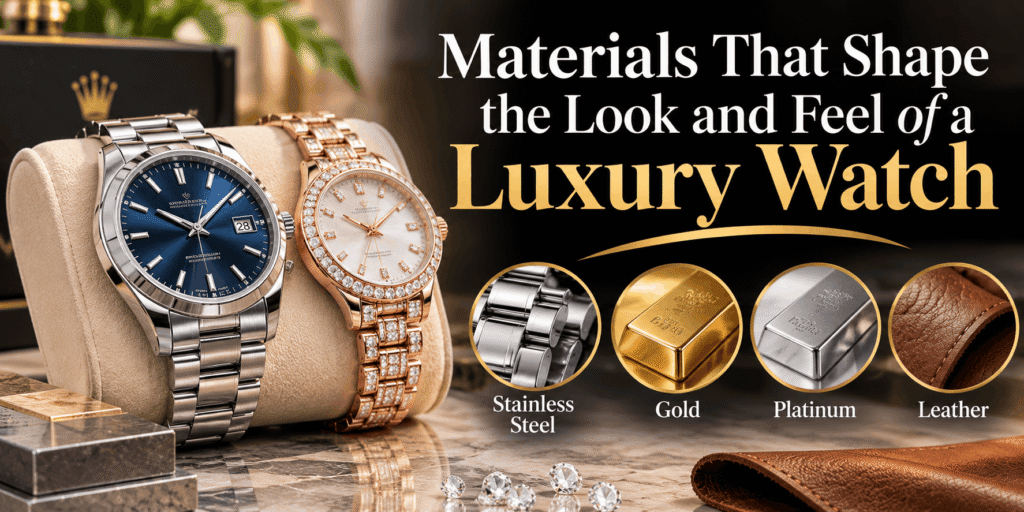
The material of a watch influences more than its appearance. It affects weight, durability, maintenance, and how the timepiece feels during everyday wear.
Stainless Steel for Timeless Versatility
Stainless steel is widely used in luxury watchmaking because it offers a practical combination of strength, durability, and visual flexibility.
Steel watches can have polished, brushed, or mixed finishes. A brushed surface often creates a more understated appearance, while polished sections reflect light and add visual contrast.
Steel bracelets are especially versatile because they can complement casual and formal-inspired outfits. They are also available in many different designs, from fine links to bold integrated constructions.
However, stainless steel can develop scratches through everyday use. These marks are a normal part of wearing a watch and do not automatically indicate poor quality.
Gold for Traditional Luxury
Gold has a long association with fine jewelry and luxury watchmaking. Yellow gold creates a warm, recognizable appearance, while white gold offers a more restrained metallic finish.
Rose gold has become another popular aesthetic choice because of its softer, warmer tone. It can add character without looking as traditional as yellow gold.
The type of gold matters. Solid gold cases and bracelets are different from gold-plated or gold-coated alternatives. Buyers should understand exactly what material a manufacturer is describing rather than assuming every gold-colored watch contains solid gold.
Titanium for Lightweight Comfort
Titanium is appreciated for its relatively low weight and useful strength-to-weight characteristics. A titanium watch can feel noticeably lighter than a similar steel model.
Its appearance is often more muted, with a grey metallic tone that suits modern and technical designs.
Some titanium surfaces also develop scratches differently from stainless steel, depending on the grade and finishing method. It is not completely scratch-proof, so proper care is still important.
Ceramic for a Modern Finish
Ceramic watch cases and bracelets offer a distinctive appearance and are valued for their hardness and resistance to many everyday scratches.
Black, white, and other colored ceramic designs can look particularly clean and contemporary. Their smooth surfaces also create a different visual character from traditional metal.
One consideration is that ceramic can be more brittle than metal under certain impact conditions. A hard knock or accidental drop may cause damage even when the surface appears highly scratch-resistant.
Sapphire Crystal for Dial Protection
The crystal is the transparent covering that protects the dial. Sapphire crystal is widely used in higher-end watches because of its excellent scratch resistance compared with many other common watch-glass materials.
Its clarity helps the dial remain visible while offering protection against everyday contact.
However, sapphire is not indestructible. Strong impacts can still cause damage, and the cost of replacement may vary depending on the watch.
How to Recognize a Watch That Matches Your Lifestyle
The most impressive watch on display may not be the most suitable one for your daily routine. A luxury timepiece should make sense in the context of how you dress, where you go, and how often you intend to wear it.
Consider Your Everyday Clothing
Start by looking at the clothing you wear most frequently. If your wardrobe mainly consists of tailored outfits, neutral colors, and formal pieces, a slim dress watch may fit naturally.
Someone who prefers denim, sneakers, relaxed shirts, and casual layers may find a sports watch more practical.
If your wardrobe changes between professional and casual settings, consider a versatile design with balanced proportions and a neutral dial.
Choose a Comfortable Case Size
Case diameter is one of the most visible measurements, but it should not be considered in isolation. Case thickness, lug length, bracelet width, and wrist proportions also influence how a watch sits.
A large watch may look impressive in product photographs but feel oversized on a smaller wrist. Similarly, an extremely small watch may appear unbalanced on someone with a broader wrist.
Whenever possible, try the watch on before purchasing. Pay attention to whether the lugs extend beyond your wrist and whether the case feels comfortable when moving your hand.
Think About Color Coordination
Watch colors can influence how easily a timepiece fits into an existing wardrobe.
Silver-toned steel is generally versatile and works with many clothing colors. Gold can create a warmer appearance, while black watches often have a more contemporary character.
Blue, green, brown, and champagne-colored dials can add personality without necessarily becoming difficult to style.
A useful approach is to choose a watch that complements the colors and accessories you already wear rather than selecting a design that only looks attractive on its own.
Decide How Often You Will Wear It
Some people want one watch that works for almost every occasion. Others enjoy maintaining a small collection with different designs for different situations.
If you intend to wear one luxury watch regularly, versatility and comfort should be major priorities. If you are building a collection, each new addition can serve a different purpose rather than repeating the same style.
Understanding Luxury Watch Features Beyond Appearance
A luxury watch can offer functions beyond displaying hours and minutes. These additional features are commonly called complications, and they represent another area where mechanical watchmaking becomes especially interesting.
A complication does not automatically make a watch more valuable or more suitable. Its usefulness depends on the person wearing it.
Date Displays and Day Indicators
Date displays are among the most practical watch features. They show the current date through a small window or another display arrangement.
Some watches also include the day of the week. These functions can be convenient for everyday use, especially for people who prefer not to check their phones constantly.
Chronographs for Measuring Elapsed Time
A chronograph is a watch function that allows the wearer to measure elapsed time using additional controls and subdials.
It is often associated with motorsport and aviation-inspired designs. The extra indicators can also create a more technical-looking dial.
Although chronographs may appear complicated, their basic purpose is straightforward: they provide a timing function separate from the ordinary display of time.
Moonphase Displays for Visual Character
A moonphase complication represents the changing appearance of the moon during its lunar cycle.
Some watches use a small illustrated display, adding an artistic element to the dial. Others incorporate more elaborate astronomical details.
For many buyers, the attraction is not everyday practicality but the combination of technical construction and visual beauty.
Perpetual Calendars for Complex Timekeeping
A perpetual calendar is a more advanced complication designed to account for variations in month lengths and leap years.
Its mechanism requires careful engineering because the calendar must recognize different month durations over an extended period.
This complexity makes perpetual calendar watches particularly interesting to enthusiasts who appreciate mechanical innovation.
Buying Luxury Watches With Confidence
Purchasing an expensive timepiece requires more care than choosing an ordinary fashion accessory. The watch may represent a substantial financial commitment, and its authenticity, condition, service history, and documentation deserve attention.
Understand the Difference Between Retail and Pre-Owned Watches
Buying a new watch from an authorized retailer provides a clearer route to manufacturer-backed documentation and warranty coverage, subject to the brand’s terms.
The pre-owned market can offer access to discontinued models, older designs, and different price points. However, it also requires more careful verification.
A used watch may have replacement parts, previous repairs, polishing, or other changes that affect its originality and condition. Ask for a detailed description and examine the available service records.
Verify Authenticity Before Paying
Luxury watches are frequently targeted by counterfeit manufacturers. Some imitation products may look convincing in photographs, making it difficult to evaluate authenticity through appearance alone.
Buy from authorized retailers or reputable specialists with established verification procedures. Ask for relevant documentation, serial information where appropriate, and a clear return policy.
A box and certificate can be useful, but packaging alone does not prove authenticity. The watch itself must be properly examined.
Avoid sellers who refuse reasonable inspection, offer suspiciously low prices, or pressure you to complete a transaction quickly.
Do Not Treat Every Luxury Watch as an Investment
Some watches may retain value or attract collector interest, but this is not guaranteed. Market demand changes, and resale prices can be affected by model popularity, condition, production numbers, servicing, and broader economic factors.
Buying a watch solely because someone promises future profit can lead to disappointment.
A more sensible approach is to purchase a timepiece because you appreciate its design, craftsmanship, and usefulness. Any potential resale value should be considered uncertain rather than guaranteed.
Final Thoughts
Luxury watches bring together engineering, design, material craftsmanship, and personal expression in a way that few everyday accessories can match. Their appeal is not limited to famous names or expensive price tags. The most meaningful details are often found in the movement, finishing, proportions, and thoughtful decisions behind the design.
Whether you prefer a traditional dress watch, a practical sports model, or an unconventional statement piece, the right choice should feel natural on your wrist and fit the way you live.
Instead of following every trend, take time to understand what makes a particular watch special. Consider its movement, materials, comfort, authenticity, and long-term maintenance before making a purchase. A well-chosen luxury watch is not simply something you wear to display the time; it is an object you can enjoy for years because its character continues to matter long after the excitement of buying it has passed.
A luxury watch is distinguished by its craftsmanship, movement quality, materials, finishing, design, and brand heritage. Many are carefully assembled and undergo detailed quality checks.
They can be worthwhile for people who appreciate fine watchmaking, durability, design, and long-term ownership. However, not every luxury watch increases in value, so buy one primarily because you enjoy wearing it.
Some internationally recognized names include Rolex, Patek Philippe, Audemars Piguet, Omega, Cartier, and Jaeger-LeCoultre.


One Comment