
A full coverage foundation can create a more even-looking complexion, soften the appearance of discoloration, and help conceal blemishes without requiring several layers of makeup. But the secret to a beautiful result is not simply choosing the foundation with the strongest coverage. It is finding a formula that works with your skin, blends comfortably, and gives you control over how much product you actually need.
Some foundations are designed to create a soft matte finish, while others leave the skin looking naturally radiant. Certain formulas are better suited to oily complexions, and others feel more comfortable on dry or mature skin. The right choice depends on your preferred finish, skin texture, daily routine, and the kind of coverage you want.
Instead of treating full coverage as a one-size-fits-all category, it helps to understand how different formulas behave. From liquid foundations and powder options to convenient foundation sticks, there are several ways to achieve a polished complexion without making your makeup look unnecessarily thick.
Understanding Full Coverage Beyond the Label
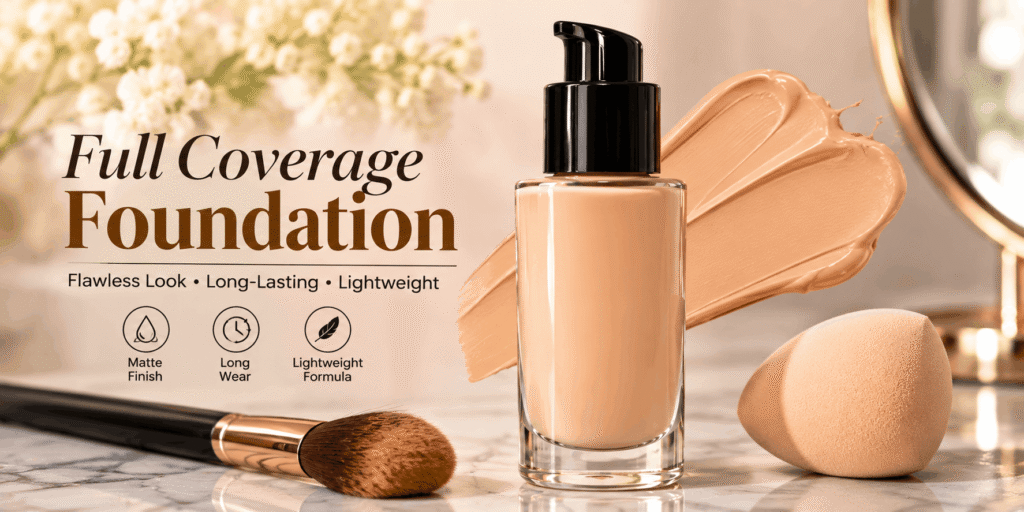
Full coverage foundation is designed to provide substantial pigment that helps reduce the visible appearance of uneven skin tone, redness, dark spots, blemishes, and other complexion concerns. Unlike sheer or lightweight skin tints, it generally offers more noticeable correction with a smaller amount of product.
However, full coverage does not automatically mean heavy coverage. Formula texture, pigment concentration, application technique, and skin preparation all influence the final result. A highly pigmented foundation applied in a thin layer may look more natural than a medium-coverage product applied repeatedly across the face.
Another important distinction is the finish. Matte foundations are usually preferred by people who want to reduce visible shine, while radiant formulas create a more luminous appearance. Natural and satin finishes sit somewhere between the two, offering a balanced look that does not appear excessively flat or glossy.
What Makes a Foundation Look Natural?
A natural-looking foundation does not necessarily have to disappear completely. It should blend into the complexion without creating obvious lines around the jaw, nose, or hairline. The skin should still look like skin, even when the foundation provides substantial coverage.
Several details influence this effect:
- Pigment distribution: A formula that spreads evenly can create consistent coverage without requiring excessive product.
- Texture: A flexible formula is often more comfortable than one that dries into a stiff layer.
- Skin preparation: Proper moisturization can help reduce the appearance of dry patches and uneven application.
- Shade accuracy: A close match to your natural skin tone prevents the foundation from looking like a separate layer.
- Application method: Thin, controlled layers generally provide a more refined result than applying a large amount at once.
The goal is not to hide every natural feature of your face. It is to create the level of coverage you enjoy while maintaining a comfortable finish.
10 Full Coverage Foundations Worth Knowing About
There is no full coverage foundation that works perfectly for everyone. A formula that looks beautiful on oily skin may feel uncomfortable on a dry complexion, while a radiant foundation that works well for everyday makeup may not be the preferred option for someone who wants a soft matte finish.
The following products offer different approaches to complexion coverage. Their suitability depends on individual skin preferences, shade availability, and application technique. Product formulas and shade selections can also vary by market, so check the current packaging and brand information before purchasing.
1. Lancôme Teint Idole Ultra Wear Foundation: For a Polished Everyday Base
Lancôme Teint Idole Ultra Wear Foundation is worth considering if you prefer a refined complexion with a more controlled finish. Its appeal comes from the balance between coverage and a polished makeup appearance, making it a recognizable option for people who enjoy a more perfected base.
This type of foundation can be particularly useful when you want to reduce the appearance of uneven tone without relying on concealer across every part of your face. Instead of spreading a thick layer everywhere, begin around the centre of the face, where redness and discoloration are often more noticeable, and blend outward.
The application technique matters because a full coverage formula can become visually heavy when too much is applied. A small amount distributed with a damp sponge or foundation brush gives you more control over the result.
For someone who enjoys a neat, finished complexion for work, events, or longer makeup days, Teint Idole Ultra Wear is a product worth exploring. Your preferred finish and skin preparation will determine how comfortable it feels throughout the day.
2. Dior Forever Skin Glow Foundation: When You Prefer a Radiant Finish
Not everyone wants a completely matte complexion. Some people prefer foundation that makes their skin look fresh, luminous, and naturally healthy. Dior Forever Skin Glow Foundation belongs in the conversation for those who enjoy a more radiant makeup appearance.
A glowing finish can be especially appealing when your skin looks dull or when you want your makeup to complement soft, natural-looking blush and highlighting products. Rather than creating a flat surface, a radiant foundation aims to maintain a sense of brightness across the complexion.
The important thing is to distinguish radiance from excess shine. If your T-zone becomes oily during the day, you may prefer to apply a small amount of setting powder around the forehead, nose, and chin while leaving the cheeks more luminous.
This approach creates a balanced appearance without removing the finish that attracted you to the foundation in the first place. It can also make the overall makeup look more dimensional instead of overly powdered.
3. Gucci Éternité de Beauté Foundation: For a More Refined Makeup Look
Gucci Éternité de Beauté Foundation is an option to consider if you enjoy luxury makeup and want your complexion product to feel like part of a carefully selected beauty routine.
When choosing a full coverage foundation from a premium range, it is easy to become distracted by packaging and brand presentation. However, the most important considerations remain the same: Does the shade match your skin? Does the texture suit your preferences? Can you apply it comfortably without creating an uneven finish?
For a more refined result, prepare the skin with a moisturizer that suits its needs and allow it to settle before applying foundation. Use a brush to distribute the product, then gently press over areas that need additional blending.
People with dry areas should pay attention to how the foundation sits around the nose, mouth, and cheeks. Those with oily skin may want to test the finish over several hours before deciding whether it fits their routine.
A luxury foundation is not automatically the right foundation. Its real value depends on whether the formula, shade, and finish deliver the experience you want.
4. Fenty Beauty Soft’Lit Naturally Luminous Longwear Foundation: For Shade Choice and Radiance
Fenty Beauty Soft’Lit Naturally Luminous Longwear Foundation is an interesting option for people who prefer a luminous complexion and want a broad selection of shades. The brand lists 50 shades and describes the formula as suitable for all skin types, with a natural, luminous finish.
One useful detail is that the formula can be applied differently depending on the amount of coverage desired. Fenty describes using one pump for medium coverage and one to two pumps with a foundation brush when building toward fuller coverage. This makes application technique an important part of the result.
The luminous finish can work well with makeup styles that emphasize fresh-looking skin rather than a completely matte appearance. If you have combination skin, you can also use a little powder in areas that tend to become shiny.
Before buying, check your shade in natural lighting whenever possible. A shade that looks correct under artificial store lighting may appear different outdoors. Compare the colour along your jawline and allow it to settle before making a final decision.
For people who want flexibility between a lighter everyday base and more noticeable coverage, this buildable approach is worth considering.
5. Charlotte Tilbury Airbrush Flawless Foundation: For a More Defined Finish
Charlotte Tilbury Airbrush Flawless Foundation is associated with a more perfected makeup look. It may appeal to people who prefer a smooth, polished complexion for special occasions, photography, or a more structured makeup routine.
A foundation with substantial coverage can help reduce the appearance of unevenness, but it needs to be applied thoughtfully around areas where facial movement is frequent. The corners of the nose, smile lines, and under-eye area can look heavier if too much product collects there.
Start with a light layer and check the coverage before adding more. If a particular blemish or discolored area remains visible, use a small amount of concealer rather than increasing the foundation across the entire face.
For mature skin, preparation is especially important. A comfortable moisturizer and a suitable primer can help create a smoother starting surface. Avoid applying excessive powder over areas where you notice fine lines or dryness.
The best result is not necessarily the most covered complexion. It is a balanced finish that looks appropriate in person and under different lighting conditions.
6. NARS Soft Matte Complete Foundation: For a Shine-Controlled Appearance
People with oily skin often prefer foundations that create a soft matte finish. NARS Soft Matte Complete Foundation is a product worth exploring if you want a complexion that looks less shiny and more controlled.
Oil production can make makeup look different several hours after application. A foundation that initially appears smooth may begin to separate around the nose or forehead when excess oil mixes with the product.
This is why preparation and setting technique matter just as much as the foundation itself. Begin with a lightweight moisturizer, allow it to absorb, and avoid applying too many rich skincare layers immediately before makeup.
Use a brush or sponge to spread the foundation evenly. If your skin becomes shiny during the day, blot gently before adding more powder. Applying powder directly over excess oil can sometimes create a thick or uneven surface.
A soft matte finish does not need to look dry. Keeping the cheeks comfortable while controlling shine around the centre of the face can create a more natural balance.
7. Make Up For Ever HD Skin Hydra Glow Foundation: For a Brighter-Looking Complexion
Make Up For Ever’s HD Skin Hydra Glow Foundation is worth considering if you prefer makeup that supports a fresh, luminous appearance. Its name and positioning make it relevant to people who enjoy a glow-focused complexion rather than a flat matte effect.
A radiant base can complement makeup styles built around cream blush, subtle bronzer, and soft highlighting. It can also be useful when you want your complexion to look less dull without depending on a separate highlighter across the entire face.
However, people with oily skin should consider where they want shine to appear. A glowing foundation combined with oily skin may produce more shine than expected, particularly around the forehead and nose.
For a more controlled finish, use a small amount of powder only where necessary. Leave the areas where you naturally prefer radiance less powdered.
When applying any luminous foundation, avoid using too much product around textured areas. A thin, even layer generally creates a more attractive result than trying to cover every visible skin detail.
8. Armani Beauty Power Fabric+ Foundation: For a More Structured Base
Armani Beauty Power Fabric+ Foundation is another name that may interest people looking for a more refined complexion product. It belongs to the category of foundations that appeal to those who enjoy a carefully finished makeup appearance.
A structured base is useful when you want your makeup to look consistent across the face, especially for occasions when you are wearing more defined eye makeup or a stronger lip colour.
The key is to avoid treating every area of the face equally. Some parts may need more coverage than others. For example, you may want additional product around discoloration but very little around the forehead or cheeks.
This targeted approach prevents the foundation from becoming unnecessarily thick. It also gives other makeup products a smoother surface to blend into.
Before purchasing, check the current product availability and exact formula name in your region. Product ranges can change, and older versions may not have the same formulation or shade selection as newer releases.
9. Maybelline New York Super Stay 24H Hybrid Powder-Foundation: For a Powder-Based Option
Liquid foundation is not the only way to achieve a more covered complexion. Maybelline New York Super Stay 24H Hybrid Powder-Foundation offers a different format for people who prefer powder-based makeup.
Powder foundations can be convenient because they are easy to carry, quick to apply, and useful for touch-ups. They may also appeal to people who dislike the feeling of liquid foundation on their face.
However, powder products require attention to skin texture. If your cheeks have dry patches or visible flaking, applying powder directly over them may make those areas more noticeable.
For a smoother result, moisturize first and allow your skincare to settle. Apply the powder gradually with the appropriate applicator, concentrating on areas where you want more coverage.
A powder foundation can also be used selectively rather than across the whole face. For example, you might use a liquid base on the cheeks and a powder product around the T-zone when you want additional shine control.
Always check the current product version and instructions, as product names and availability can differ across markets.
10. Westman Atelier Vital Skin Foundation Stick: For Targeted, Convenient Coverage
A foundation stick offers a different experience from traditional liquid formulas. Westman Atelier Vital Skin Foundation Stick is an option for people who like controlled application and want a compact product that can be used for targeted complexion work.
The stick format makes it easy to place product directly where coverage is needed. Rather than applying foundation everywhere, you can use small strokes around discoloration, redness, or areas where the complexion looks uneven.
Blend immediately with a brush or sponge to avoid leaving visible lines. The amount of product matters: applying several thick strokes can make the finish look heavier than intended.
This format may also be convenient for travel, quick makeup routines, or touch-ups. However, the best application method depends on the texture of the formula and your skin’s needs.
If you have dry skin, prepare the complexion carefully and avoid dragging the stick across areas that feel rough or flaky. For combination skin, use it selectively and adjust the amount of powder according to where shine appears.
How to Make Full Coverage Foundation Look Like Your Skin
Choosing a suitable product is only one part of achieving a good complexion. The way you prepare, apply, and finish your foundation can completely change how it looks.
A common mistake is assuming that more foundation will always produce better coverage. In reality, applying too much product can emphasize texture, settle around expression lines, and make the face look different from the neck.
A more controlled routine begins with a clean, comfortable skin surface. Apply moisturizer according to your skin type and give it time to absorb. If you use primer, choose one that works with your foundation rather than layering products simply because they are popular.
Build Coverage in Thin Layers
Start with a small amount of foundation around the centre of your face. Blend it toward the hairline and jawline, using gentle movements to distribute the pigment evenly.
Look at your complexion before applying another layer. You may discover that the first application has already created enough coverage for your everyday routine.
If you still notice discoloration or blemishes, add a little more product only to those areas. This technique keeps the rest of the face lighter and helps preserve a natural appearance.
A damp makeup sponge can create a softer finish by pressing and blending the product. A foundation brush may provide more coverage and precise placement. Neither tool is automatically better; the right choice depends on the formula and the finish you prefer.
Match Your Foundation to Your Skin Type
Different skin types can respond differently to the same foundation. Understanding your skin’s usual behaviour makes it easier to choose a formula that feels comfortable.
Dry skin: Look for formulas that feel comfortable and do not emphasize flaky areas. Moisturize properly before applying foundation, and be cautious with excessive powder.
Oily skin: A soft matte or natural finish may be more comfortable if your face becomes shiny quickly. Use lightweight preparation and set only the areas that need it.
Combination skin: You may need different finishing techniques across your face. Keep the cheeks more natural while controlling shine around the forehead, nose, and chin.
Sensitive skin: Check the ingredient list and choose products that suit your personal sensitivities. Patch testing can help identify potential irritation before applying a new formula across the face.
Mature skin: Focus on comfortable texture and careful application. Use less product around fine lines and avoid creating a thick layer under the eyes.
Choose the Right Shade and Undertone
A foundation can have an excellent formula and still look wrong if the shade does not match your complexion. Shade selection should consider both skin depth and undertone.
Skin depth refers to how light or deep your complexion appears. Undertone describes the subtle colour beneath the surface and is commonly categorized as cool, warm, or neutral.
- Cool undertones: Often have pink, red, or bluish qualities.
- Warm undertones: Often have golden, yellow, or peachy qualities.
- Neutral undertones: Usually sit between clearly warm and cool shades.
Do not choose a shade only because its name sounds suitable. Test a few options along the jawline and compare them in natural daylight. The shade that blends most naturally into both the face and neck is often the better match.
If you are shopping online, use the brand’s shade finder as a starting point, but remember that screens can display colours differently.
Common Mistakes That Can Ruin a Full Coverage Finish
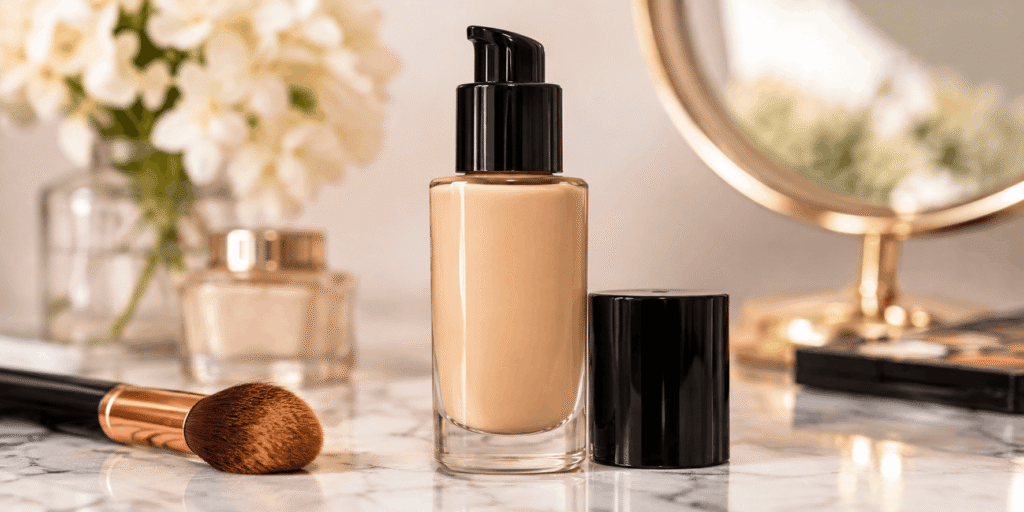
Even a well-formulated foundation can look disappointing when the application is rushed. A few small adjustments can make your makeup look more balanced.
One frequent mistake is applying foundation immediately after skincare. If moisturizer or sunscreen has not settled, the layers may move around and create an uneven surface. Give your skincare time to absorb before continuing.
Another mistake is using too much powder. Setting every part of the face can remove natural dimension and make the complexion look dry. Focus on areas where makeup tends to move or where excess shine develops.
Choosing the wrong primer can also affect the result. If your foundation separates or forms patches, review the products underneath it. You may be using too many layers or formulas that do not work well together.
Finally, avoid selecting a foundation shade based on your hand alone. The skin on your hand may be a different colour from your face and neck, so it is not always a reliable shade-matching area.
Final Thoughts
Full coverage foundation should give you options, not make you feel as though you need to hide your natural complexion. Whether you prefer a matte finish, a radiant base, a powder formula, or the convenience of a stick, the right product is the one that fits your skin and your everyday habits.
Start by deciding what you want your foundation to do. Consider the areas where you need the most coverage, the finish you enjoy, and how your skin behaves throughout the day. Then apply the product gradually instead of covering your face with a thick layer from the beginning.
A comfortable foundation, a close shade match, and thoughtful application can create a polished result without sacrificing the natural appearance of your skin. The most successful makeup routine is not necessarily the one with the most products. It is the one that makes you feel confident wearing it.
Full coverage foundation is a makeup product designed to conceal the appearance of blemishes, redness, dark spots, and uneven skin tone while creating a more even-looking complexion.
Yes. You can wear it daily if you choose a comfortable formula and apply a thin layer. You do not need to use maximum coverage across your entire face.

2 Comments