Healthy-looking skin is not always about having a complicated skincare routine or using dozens of beauty products. Sometimes, the real goal is to improve how the skin looks and feels from within its deeper layers. Skin boosters have become an increasingly popular aesthetic treatment because they focus on hydration, texture, and overall skin quality rather than dramatically changing facial features.
Unlike traditional dermal fillers, which are commonly used to restore volume or enhance specific facial areas, skin boosters are designed to improve the appearance of the skin itself. Depending on the formulation, they may contain hyaluronic acid or other ingredients intended to support hydration and skin quality. They are generally administered through small injections into selected areas by qualified professionals.
The growing interest in skin boosters reflects a shift toward subtle cosmetic treatments. Many people want their complexion to appear fresher, smoother, and more hydrated while maintaining their natural facial structure. However, understanding the treatment, its limitations, possible side effects, and the importance of professional assessment is essential before considering it.
What Makes Skin Boosters Different From Traditional Skin Treatments?
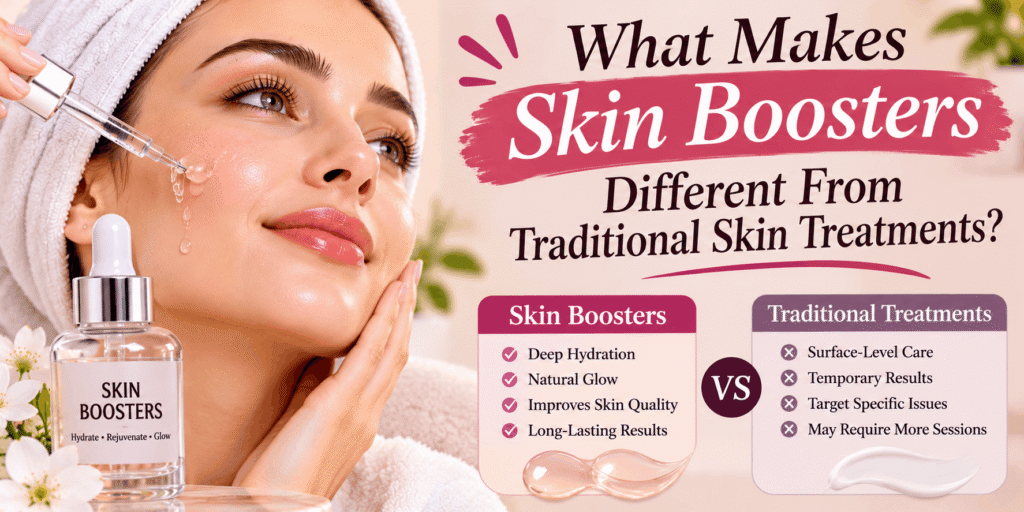
Skin boosters are injectable aesthetic treatments designed to improve selected aspects of skin quality. They are commonly associated with hydration, a smoother-looking surface, and improvements in the appearance of fine lines caused partly by dryness.
The term covers different products and formulations, so not every skin booster works in exactly the same way. Some are based on hyaluronic acid, a substance naturally present in the body that helps retain water. Others may contain additional components intended to support the skin’s appearance.
The treatment approach also differs from topical skincare. Moisturizers and serums work on the skin’s surface or within its outer layers, depending on their ingredients and formulation. Injectable skin boosters are administered by trained practitioners into specific skin layers using an appropriate technique.
This does not mean injections are automatically better than skincare. The two approaches serve different purposes. A good topical routine remains important for everyday skin maintenance, while injectable treatments may be considered when someone wants an additional aesthetic option.
Skin Hydration Without Dramatic Facial Changes
One of the main reasons people explore skin boosters is the desire for a hydrated appearance without adding noticeable facial volume. Traditional fillers are often selected to enhance lips, cheeks, chin, or other areas where structural support or volume is desired.
Skin boosters have a different objective. They are generally used to improve the overall appearance and feel of the treated skin rather than reshape facial features.
Some formulations can help improve the appearance of skin hydration and fine surface lines. The final outcome depends on the product, injection technique, treatment area, and individual response.
The Role of Hyaluronic Acid
Hyaluronic acid is widely used in aesthetic medicine and skincare because of its ability to bind water. It is naturally found in skin and other connective tissues, where it contributes to moisture and tissue structure.
In injectable skin booster formulations, hyaluronic acid is used to support hydration and improve skin quality. Different products may use different molecular characteristics, concentrations, and degrees of modification.
Not all hyaluronic acid injections are skin boosters. Some are designed as volumizing dermal fillers, while others are formulated specifically for skin-quality treatments. Understanding the intended purpose of a product is important before agreeing to any procedure.
What Skin Boosters May Improve
Skin boosters are usually considered by people who want their complexion to look healthier and more refreshed. Their potential benefits vary, and realistic expectations are essential.
A More Hydrated Appearance
Skin that looks dehydrated may appear dull, less supple, or marked by more noticeable fine surface lines. Hydration plays an important role in maintaining a comfortable and healthy-looking complexion.
Hyaluronic acid-based skin boosters are intended to improve moisture-related aspects of skin quality. Some people may notice a fresher appearance after treatment, although the degree of improvement differs from person to person.
Injectable hydration should not be confused with treating medical dehydration. Drinking enough water and maintaining healthy daily habits remain important for general well-being.
Smoother-Looking Texture
Uneven texture can result from several factors, including natural aging, environmental exposure, previous acne, and changes in skin elasticity. Some skin boosters are used to improve the appearance of fine surface irregularities.
The treatment may make the skin look more refined, but it cannot erase deep acne scars, major wrinkles, or significant structural changes. Those concerns may require different treatments selected after a professional assessment.
A Fresher Complexion
A dull complexion can make the face appear tired, even when someone is getting enough rest. Changes in hydration, skin texture, and environmental stress may all influence how the skin looks.
Skin boosters are often marketed as treatments that help create a refreshed appearance. However, the results should not be described as guaranteed radiance or an instant transformation.
Fine Lines Related to Skin Quality
Small lines can become more noticeable when skin is dry or has lost some of its natural elasticity. Treatments designed to improve skin quality may help soften the appearance of certain superficial lines.
Deeper expression lines are different. They are influenced by repeated muscle movement and other factors, so a skin booster may not be the most appropriate option for addressing them.
Different Types of Skin Booster Treatments
The term skin boosters includes several formulations and treatment approaches. Choosing between them should involve more than comparing brand names or advertised results.
Hyaluronic Acid-Based Boosters
Hyaluronic acid-based products are among the most recognized options in this category. They are designed to support hydration and improve the appearance of skin quality.
Some formulations are more fluid, while others have different characteristics depending on their intended use. A qualified practitioner should explain the specific product, its approved indications, and whether it is suitable for the proposed treatment area.
Polynucleotide-Based Treatments
Polynucleotide treatments have also attracted attention in aesthetic clinics. They use purified DNA-derived fragments in formulations intended to support skin-quality improvement.
These products are not identical to hyaluronic acid boosters, and their proposed mechanisms and evidence base differ. Research is continuing, and results should not be assumed to be the same across brands or treatment protocols.
Anyone considering this category should ask about the exact formulation, clinical evidence, regulatory status, and potential risks.
Combination Formulations
Some injectable products combine multiple ingredients, such as hyaluronic acid with other components. They are marketed for different skin-quality goals.
A longer ingredient list does not automatically make a treatment more effective. The product’s safety information, clinical evidence, intended use, and practitioner experience are more important than promotional claims.
Who Might Consider Skin Boosters?
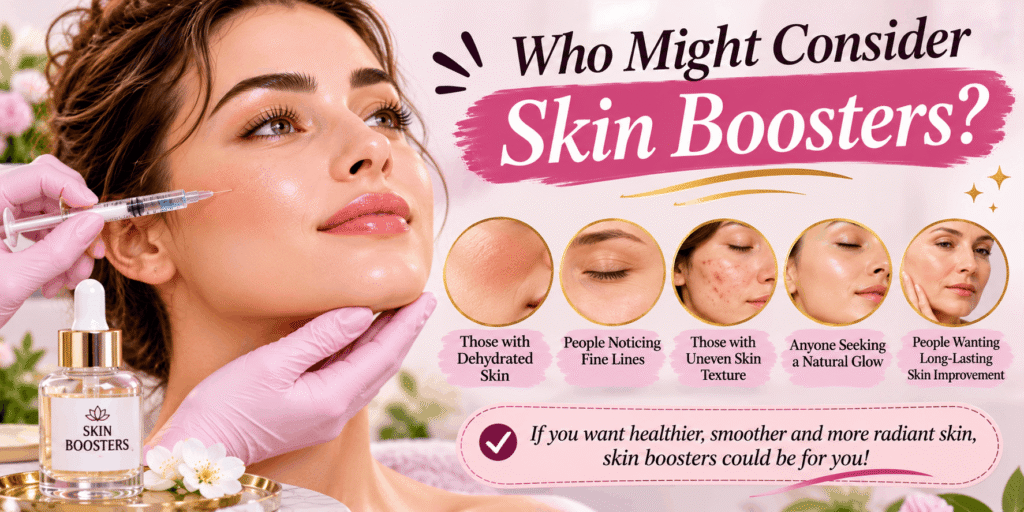
Skin boosters may interest adults who want to improve the appearance of dehydrated, dull, or uneven-looking skin without seeking major changes in facial volume.
People concerned about fine surface lines or a loss of skin freshness may also ask an aesthetic professional whether this treatment is appropriate.
However, suitability is not determined by age alone. Skin condition, medical history, allergies, previous cosmetic procedures, medications, and personal expectations all matter.
Individuals with active skin infections, inflammation, certain medical conditions, or a history of severe reactions to injectable products may need to avoid treatment or receive specialist assessment first. Pregnancy and breastfeeding are also situations in which elective injectable cosmetic procedures should generally be postponed unless a qualified healthcare professional advises otherwise.
A consultation should include a discussion of expected benefits, alternatives, possible complications, and whether the treatment is suitable for the person’s specific concerns.
What Happens During a Skin Booster Appointment?
A professional appointment usually begins with an assessment of the skin and a discussion about the desired outcome. The practitioner should ask about relevant medical history, allergies, previous injections, medications, and any current skin concerns.
The product and treatment area should be explained before the procedure begins. Patients should be able to ask questions and receive clear information about the expected recovery period and possible side effects.
Preparing for the Procedure
Preparation depends on the product and the individual’s circumstances. The practitioner may provide instructions about skincare, medication, and activities before the appointment.
It is important to disclose all medications and supplements, especially those that may affect bleeding or bruising. Never stop prescribed medication without advice from the clinician responsible for your care.
Arrive with clean skin if instructed, and avoid undergoing treatment when the intended area has an active infection, rash, or unexplained irritation.
During the Injection Process
The treatment area is cleaned, and injections are administered using an appropriate technique. The number of injection points and depth depend on the product and the practitioner’s treatment plan.
A topical numbing product may be offered when appropriate. Even with numbing, some people experience brief discomfort, stinging, or pressure during the procedure.
The appointment length varies according to the area being treated and the product used. Patients should never feel pressured to proceed without understanding the procedure.
What Happens Immediately Afterwards?
Temporary redness, small raised areas, tenderness, swelling, and bruising can occur after injectable treatments. These reactions vary in severity and usually improve over time, but the recovery experience is not identical for everyone.
The practitioner should provide written aftercare instructions and explain which symptoms require urgent medical attention.
Understanding Results, Downtime, and Maintenance
One of the biggest misconceptions about skin boosters is that every person will experience the same results after one appointment. In reality, outcomes depend on the product, treatment plan, skin condition, and individual response.
Some people may notice changes in hydration or skin appearance relatively soon, while other improvements may develop gradually. Certain products are used in a series of sessions, but the number and timing should be based on the manufacturer’s instructions and professional assessment.
How Long Can Results Last?
There is no single duration that applies to every skin booster. Different formulations have different characteristics, and the body’s response can influence how long the visible effects remain.
Maintenance appointments may be suggested for certain products, but repeated treatment should never be automatic. A practitioner should review the skin and determine whether another session is genuinely appropriate.
Is There Recovery Time?
Most skin booster procedures involve some degree of temporary recovery. Small injection marks, redness, swelling, and bruising may be visible after treatment.
Some people return to normal daily activities relatively quickly, while others prefer to allow additional time for visible injection marks to settle. The recovery period depends on the product, technique, and individual response.
Avoid scheduling treatment immediately before an important event if you would be uncomfortable with temporary swelling or bruising.
When Should You Expect to See Changes?
Results are not necessarily immediate. The appearance of the treated area may change as temporary swelling settles and the skin responds to the treatment.
Follow-up appointments should be used to assess the outcome rather than assuming that additional injections are required. Taking photographs under similar lighting conditions can help make comparisons more meaningful.
Safety Matters More Than the Brand Name
Skin boosters are medical aesthetic procedures, not ordinary beauty treatments. Even when a product is marketed as gentle or non-surgical, injections carry risks.
Possible side effects include bruising, swelling, redness, tenderness, infection, lumps, and inflammatory reactions. Rare but serious complications can occur, including vascular occlusion, where injected material interferes with blood flow. This can damage tissue and, in certain facial injection situations, threaten vision.
For this reason, the person performing the procedure should have appropriate medical qualifications, relevant injection training, and the ability to recognize and manage complications.
Questions to Ask Before Choosing a Clinic
Do not choose a clinic based only on attractive photographs, discounts, or social media popularity. A professional consultation should provide clear answers about the treatment.
Ask which exact product will be used, whether it is authorized for the intended purpose in your location, and what evidence supports its use. You should also ask about the practitioner’s qualifications, experience, hygiene procedures, and emergency management arrangements.
Check that the product comes from a legitimate supply chain and is opened and prepared appropriately. Avoid procedures involving unidentified products, unlabelled syringes, or unusually low prices that raise questions about product authenticity.
Warning Signs That Need Immediate Attention
Severe or increasing pain, unusual skin discoloration, pale or mottled patches, rapidly worsening swelling, or changes in vision after facial injections require urgent medical assessment.
Do not wait for symptoms to disappear on their own. Contact the treating practitioner immediately and seek emergency medical care when serious symptoms occur.
A responsible clinic should explain these risks before treatment and provide a clear contact process for post-procedure concerns.
Final Thoughts
Skin boosters offer an additional option for people interested in improving hydration and the overall appearance of their skin without seeking dramatic changes to facial shape. Their growing popularity reflects a preference for subtle aesthetic treatments that focus on skin quality rather than volume enhancement.
However, the treatment is not suitable for everyone, and its results are not guaranteed. Understanding the formulation, choosing a qualified medical professional, and discussing realistic expectations are essential steps before proceeding.
Healthy-looking skin also depends on everyday habits. Sun protection, appropriate skincare, adequate sleep, and consistent hydration remain important regardless of whether someone chooses an injectable treatment. Skin boosters may complement these habits, but they cannot replace them.