
Brows can change the overall impression of a face without requiring a dramatic makeup look. Sometimes, the goal is simply to make sparse areas less noticeable, give the arches a clearer shape, or spend less time filling in gaps each morning. Brow henna is one option for achieving a more defined appearance because it can leave color on both the brow hairs and, temporarily, the skin underneath them.
The results depend on your natural brow color, skin type, application technique, and the formula being used. Some people prefer a soft, powder-like finish, while others want a more noticeable outline. Understanding how brow henna works, what it can realistically achieve, and how to use it carefully can help you decide whether it suits your routine.
Why Brow Henna Creates a Different Brow Effect

Traditional brow makeup usually sits on the surface of the hairs or skin until it is removed. Brow henna works differently. Depending on the product, its pigments can color the brow hairs while also leaving a temporary stain on the skin beneath them. This can make the eyebrows look fuller, particularly where small gaps interrupt the natural shape.
Imagine someone whose eyebrows grow thickly near the center but become lighter toward the tails. A pencil can fill those areas, but the person may need to recreate the same shape every morning. A suitable brow henna treatment can add temporary color to the lighter sections, making the brows appear more even without requiring daily drawing.
The effect is not identical for everyone. Skin staining may be more noticeable immediately after application and gradually fade as the skin naturally sheds its outer cells. Color on the hairs can remain visible for a different length of time. The final appearance also depends on how much product reaches the skin and how long it remains there.
Brow henna should not be confused with a permanent eyebrow tattoo or microblading. It does not create permanent pigment beneath the skin, and it cannot change the direction in which your brow hairs grow. Its purpose is cosmetic coloring rather than permanent reshaping.
What Brow Henna Can and Cannot Do
A well-chosen treatment may help you:
- Make naturally pale eyebrow hairs easier to see.
- Give sparse sections a more continuous appearance.
- Emphasize the arch and tail of the eyebrows.
- Reduce the amount of brow pencil or powder needed each day.
- Experiment with a more defined shape without committing to permanent cosmetic work.
However, the treatment cannot create real hair where follicles are absent. The temporary stain may make a thin area look more filled in, but it will not restore hair growth or treat the reason behind eyebrow thinning.
That distinction matters if your brows have recently become noticeably thinner. Overplucking, skin irritation, certain medical conditions, and other factors can contribute to hair loss. If the change is sudden, unexplained, or accompanied by itching, scaling, or other symptoms, consider seeking advice from a healthcare professional instead of relying solely on cosmetic coloring.
Choosing a Shade That Fits Your Natural Features
One of the easiest ways to make tinted brow henna look unnatural is to choose a color that is too dark or too warm for the rest of the face. A shade may look attractive on a product chart but appear much stronger when applied to your own eyebrows.
Start by looking at the color of your natural brow hairs in daylight. Consider your hair color, skin undertone, and usual makeup style, but do not assume that your eyebrows must match your hair exactly.
For example, someone with medium brown hair and soft facial features may prefer a neutral brown brow shade rather than a deep, almost-black color. The lighter option can provide definition without making the eyebrows dominate the face. Someone with naturally dark brows may prefer a deeper brown for a more noticeable result.
The desired finish matters, too. A person who rarely wears makeup may be happiest with a subtle enhancement, while someone who regularly wears defined eyeliner or fuller coverage may prefer a stronger brow.
Understanding Common Brow Color Families
Light brown: This can suit naturally light brows or people who want a gentle change. It may be less noticeable on very dark hair, so the expected result should be checked before application.
Medium brown: A flexible choice for many people with brown eyebrows. The finished shade depends on the underlying hair color and the product formula.
Dark brown: Often considered by people with naturally deep brown brows who want a more defined appearance. Careful application is important because a dense, dark result can look severe.
Ash or cool brown: These shades may appeal to people whose natural brow hairs have a cooler appearance. They can help avoid an overly reddish finish when the product is suitable for that purpose.
Warm brown: A possible choice for brows that naturally have golden or warm undertones. The result should still complement the person’s complexion and hair color.
Product shade names are not standardized across every manufacturer. One brand’s medium brown may look different from another brand’s version. If a professional is applying the treatment, explain the look you want rather than relying on a shade name alone.
For a first appointment, it is often sensible to prioritize a balanced, believable result over the darkest possible color. You can discuss adjustments at a later appointment once you know how the formula behaves on your skin and hair.
The Shape Matters as Much as the Color
Color attracts attention, but shape determines how the brow henna frame the face. A well-colored eyebrow can still look awkward if its front is too square, its arch is exaggerated, or its tail extends beyond a flattering position.
Before applying brow henna, look at the existing growth pattern. Notice where the brows naturally begin, where they rise, and where the hair becomes thinner. These details provide a useful starting point.
If your brows are naturally straight, adding a very high arch may create a look that feels unfamiliar. Similarly, someone with a pronounced natural arch may not need extra height. The aim is not to force every eyebrow into the same fashionable outline. It is to work with the features already present.
Start With the Brows You Have
A useful approach is to decide which areas need the most attention before choosing a shape. Perhaps the inner sections are already dense, but the tails are faint. Perhaps one brow has a slightly higher arch than the other. Identifying these differences can prevent unnecessary coloring in areas that already look balanced.
Avoid removing large amounts of hair simply to create a crisp outline. Natural eyebrows are rarely perfectly symmetrical, and trying to make them identical can lead to overplucking. A slightly different curve on each side is normal.
If you are uncertain about shaping, a trained brow professional can help map a shape that suits your existing growth. This can be particularly helpful before your first henna treatment because the color may make the outline appear more prominent than it does with bare skin.
Remember that henna changes the appearance of the brows, not their underlying structure. It cannot lift a low arch or permanently alter the position of the tail. The effect comes from the visual contrast created by the colored hairs and, when present, the skin stain.
What Happens During a Brow Henna Appointment?
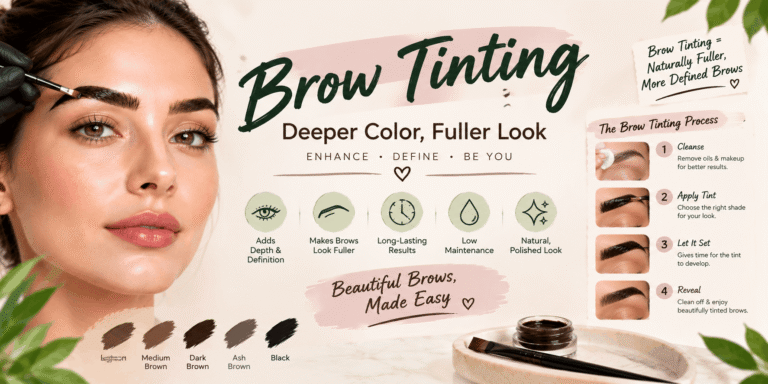
A professional treatment usually begins with a discussion about the desired shape, color intensity, and any previous reactions to brow products. This conversation is important because a shade that looks subtle on a sample may produce a stronger result on your skin.
The practitioner should also ask about relevant allergies, sensitive skin, and previous experiences with coloring products. Do not skip this step simply because the treatment is marketed as plant-based or natural.
After discussing the desired result, the practitioner may clean the brow area and remove surface oil or makeup. They then assess the natural shape and prepare the product according to its instructions. Application methods vary by brand, so the exact process and development time should follow the manufacturer’s directions.
The formula is placed carefully within the intended brow outline. Once the appropriate processing period has passed, the product is removed as directed, and the color is assessed.
You may notice that the skin beneath the brows looks more strongly stained immediately afterward. This does not necessarily represent the final appearance several days later. The skin stain can soften as the skin renews itself, while the hairs may retain color for longer.
A good appointment should not involve unnecessary discomfort, aggressive skin preparation, or pressure to accept a shade that feels too dark. You should be able to discuss the result and ask questions before the treatment begins.
Questions Worth Asking Before Your Appointment
If you are booking brow henna for the first time, ask the practitioner:
- Which product and color formula will be used?
- Is the product specifically intended for eyebrows?
- What allergy-screening instructions does the manufacturer provide?
- How will the shape be agreed upon before coloring?
- What aftercare does the product require?
- What should you do if redness, itching, or swelling develops?
These questions help establish what to expect and whether the practitioner takes product safety seriously. A professional setting does not eliminate the possibility of an allergic reaction, so careful screening remains important.
Can You Apply Brow Henna at Home?
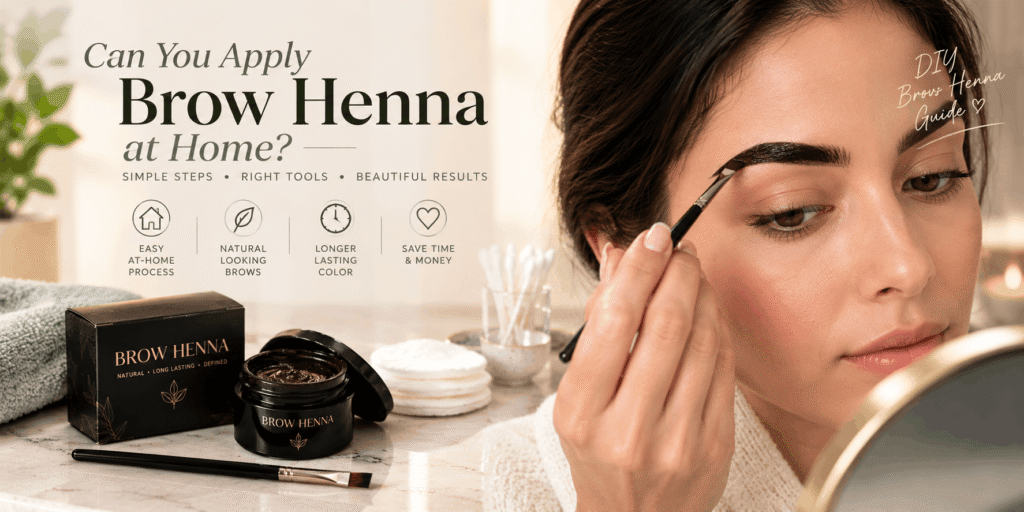
Home application may appeal to people who prefer managing their own beauty routine, but brow coloring requires precision. The product is used close to the eyes, and an uneven application can leave the eyebrows darker in some places than others.
If you choose to use a home kit, select a formula explicitly labeled for eyebrow use. Do not assume that henna intended for hair, body art, or other cosmetic purposes is appropriate for the brow area. Ingredients, concentrations, and intended applications can differ.
Read the complete instructions before opening the product. Check the required mixing method, development time, removal process, and allergy-test guidance. Avoid improvising with household ingredients or mixing different products to create a custom color.
Prepare Before You Begin
Set aside enough time to work carefully. Good lighting makes it easier to see the natural brow outline and notice areas where product has spread beyond the intended shape.
Begin with clean skin, following the product’s preparation instructions. Avoid experimenting on irritated, broken, or inflamed skin. If you have recently used a strong exfoliating treatment or another product that has left the brow area sensitive, postpone coloring until the skin has recovered and check the product guidance.
Before applying anything, decide how much definition you actually want. If your main concern is a pale tail, concentrate on understanding how the product should be placed in that area rather than automatically coloring the entire brow heavily.
Use only the amount and processing time recommended by the manufacturer. Leaving a formula on longer than instructed is not a reliable way to improve the result; it may instead create an unwanted shade or increase irritation risk.
Keep the product away from the eyes and follow the instructions for removal. If it enters the eye, rinse immediately with plenty of clean water and seek medical advice if pain, redness, blurred vision, or other symptoms persist.
Why an Allergy Test Is Important
Henna and brow-coloring products are not automatically safe for every person. Plant-derived ingredients can cause reactions, and some products contain additional dyes or other substances that may irritate the skin or trigger an allergy.
Follow the manufacturer’s specific allergy-test instructions and timing before every treatment when required. A test performed too shortly before application may not reveal a delayed reaction. Also, a previous uneventful treatment does not guarantee that a future application will be reaction-free.
Do not apply a product if you have reacted to it before or if the instructions advise against using it with your allergy history. Avoid testing the formula directly on the eyebrows or near the eyes unless the manufacturer explicitly directs you to do so.
If you experience swelling, widespread hives, difficulty breathing, or throat tightness after exposure, seek urgent medical care. Breathing difficulties or throat swelling are emergencies.
How Long Does Brow Henna Last?
There is no single duration that applies to every brow henna treatment. The color on the skin and the color on the hairs behave differently, so the eyebrows may gradually change rather than fading all at once.
The skin stain often becomes less noticeable as the skin sheds its outer layer. Brow hairs may hold the color for longer, depending on the formula and how quickly the hairs naturally grow and are replaced.
Several factors influence the visible result:
Skin type: Skin that produces more oil may not hold a surface stain as strongly as drier skin. This is one reason the same product can produce different results on two people.
Preparation: Residual makeup, oil, or skincare products can affect how evenly a formula is applied. Product-specific preparation instructions help reduce avoidable inconsistencies.
Aftercare: Cleansing habits and products used around the brows can influence how quickly the skin stain fades. Harsh rubbing may cause the color to disappear unevenly.
Hair characteristics: Natural hair color, thickness, and texture can affect how noticeable the result looks. The color may also become less visible as treated hairs grow out or are replaced.
Formula and technique: Different products are designed to produce different finishes. Processing time, application accuracy, and the condition of the skin all contribute to the final appearance.
Rather than expecting the brows to look exactly the same for a fixed number of days, think of the treatment as a temporary enhancement that changes gradually. If you have an upcoming event, avoid scheduling your first treatment at the last minute. Giving yourself time to see the initial result and allow the skin stain to settle can reduce the risk of feeling that the color is too strong.
Caring for Your Brows After Treatment
Aftercare should support the skin rather than attempt to lock the color in at any cost. Follow the instructions supplied with your specific formula, since recommendations can vary.
For the first stage after application, avoid unnecessary rubbing or friction around the eyebrows. If the product instructions recommend keeping the area dry for a particular period, follow that guidance. Do not extend restrictions beyond what is advised in the hope of forcing a longer-lasting result.
When washing your face, use gentle movements around the brow area. There is no need to scrub the skin or repeatedly cleanse it to make the color look more even. If the stain begins fading naturally, aggressive washing is unlikely to restore it.
Be cautious with exfoliating acids, retinoids, and other strong skincare products near freshly colored brows. These products can irritate sensitive skin, and some may speed the fading of the surface stain. Follow the advice for your particular treatment and avoid applying active products to irritated skin.
Do not repeatedly reapply henna simply because the skin stain has started to fade. Frequent coloring may increase the chance of irritation or sensitization, especially if the product contains ingredients to which you are vulnerable. Follow the recommended interval and reassess whether the treatment is still needed.
If you develop persistent redness, itching, burning, or swelling, stop using the product and seek medical advice as appropriate. Do not attempt to cover a reaction with makeup or another coloring treatment.
Brow Henna Compared With Brow Tint and Pencil
Brow henna is not the only way to create fuller-looking eyebrows. Brow tint, pencil, powder, and gel all offer different levels of control and convenience. The most suitable option depends on whether you want temporary skin definition, colored hairs, or a look that can be changed throughout the day.
Brow henna: Often chosen when the goal is to color brow hairs and create a temporary stain on the skin. The intensity depends on the product and application, and the stain gradually fades.
Traditional brow tint: Generally focuses on coloring the eyebrow hairs, although the exact result depends on the formula. It may be suitable for someone who wants their natural hairs to look more visible without emphasizing the skin underneath as much.
Brow pencil: Offers precise control over individual gaps, the arch, and the tail. You can change the shape or intensity whenever you apply it, but it needs regular removal and reapplication.
Brow powder: Creates a softer, diffused effect. It may suit someone who wants gentle definition rather than a sharply outlined brow.
Brow gel: Helps groom hairs and can provide a light wash of color if tinted. It is useful for controlling unruly hairs but usually does not create the same skin stain associated with brow henna.
There is no need to choose a single method forever. Someone who likes the overall shape created by henna might still use a pencil for an occasional gap. Another person may decide that a washable makeup product is preferable because it allows more flexibility.
If you have sensitive skin or a history of reactions to hair dyes, do not assume that switching from tint to henna will automatically solve the problem. Check the full ingredient list and consult a qualified professional when necessary.
Mistakes That Can Make the Result Look Unnatural
A few avoidable choices can make brow henna appear heavier or less even than intended.
Choosing the darkest shade immediately: Darker is not always more flattering. A shade that strongly contrasts with the skin and hair can make the brows look drawn on. Consider the desired intensity before committing to a deep color.
Ignoring the natural growth pattern: Coloring beyond the natural outline can create an artificial shape, especially near the inner brow. Use the existing hairs as a guide instead of trying to create a perfectly identical pair.
Expecting henna to fill actual hairless areas permanently: The skin stain is temporary. If an area has no visible hairs, the result may look different from a section where both hair and skin receive color.
Leaving the formula on longer than directed: Extra processing time does not guarantee a better outcome. Follow the product instructions rather than estimating the timing by eye.
Skipping allergy precautions: A product marketed as natural can still cause a reaction. Read the safety information and follow the required testing instructions.
Trying to correct an overly dark result with harsh products: Scrubbing, applying strong acids, or using unapproved chemical removers near the eyes can irritate the skin. If the color is stronger than expected, ask the product manufacturer or a qualified brow professional about safe options and allow the stain to fade naturally when appropriate.
Expecting complete symmetry: Most people have small differences between their eyebrows. A natural result usually looks better when it respects those differences instead of forcing both sides into identical shapes.
The central idea is simple: a successful treatment should complement your face, not draw attention to the coloring process itself.
Who Should Consider Another Option?
Brow henna may not be appropriate for everyone. People with a known allergy to any ingredient in the formula should avoid that product. Those with active irritation, open cuts, or inflammation around the eyebrows should wait until the area has healed and seek professional guidance if the problem persists.
If you have very sensitive skin, a history of reactions to hair dyes, or an uncertain allergy history, discuss the risks with a qualified healthcare professional or experienced brow specialist before proceeding. A patch test is useful when recommended, but it cannot eliminate every risk.
It is also worth considering a pencil or powder if you want to change your brow shape frequently. These products are easier to adjust or remove, while a skin stain remains visible until it fades.
Pregnancy, breastfeeding, medication use, and existing skin conditions may affect which cosmetic products are appropriate for you. Follow the product’s warnings and ask a healthcare professional if you are unsure. Do not assume that a plant-based formula is automatically suitable in every circumstance.
Finally, if your eyebrows are thinning unexpectedly, coloring them may conceal the appearance of sparse areas without addressing the cause. A healthcare professional can help assess persistent or unexplained hair loss.
Final Thoughts
Brow henna offers a temporary way to give eyebrows more visible color and definition, particularly when pale hairs or small gaps make the natural shape less noticeable. Its appeal lies in the combination of hair coloring and a surface stain, although the strength and duration of that effect vary from person to person.
The best result starts with realistic expectations, a suitable shade, and a shape that works with your natural features. Careful product selection and allergy precautions are just as important as application technique, especially because the treatment takes place close to the eyes.
If you want a more defined brow without committing to permanent cosmetic procedures, brow henna may be worth considering. Take time to understand the product, follow its instructions, and choose a result that looks balanced rather than simply aiming for the darkest color.
Brow henna is a cosmetic eyebrow treatment that adds color to the brow hairs and may temporarily stain the skin underneath. It can make eyebrows appear fuller and more defined without permanent makeup.
The skin stain often fades as the skin naturally renews itself, while color on the eyebrow hairs may remain visible for longer. The exact duration depends on the product, skin type, hair characteristics, and aftercare.
Neither option is automatically better for everyone. Brow henna may provide temporary skin staining alongside colored hairs, while traditional brow tint generally focuses on coloring the hairs. The best choice depends on your desired finish and the specific products used.

2 Comments