
A fresh-looking complexion is not something you achieve by applying ten different products before bed. It is more about understanding what makes your skin look dull in the first place. Sometimes, the issue is a dry surface; other times, it may be excess oil, irritation, sun exposure, or a routine that simply does not suit your skin.
The good news is that useful skin glow tips do not always require a large budget. A few carefully chosen habits can make everyday skincare easier, whether you have oily skin, dry patches, or a combination of both. The goal is to help your skin feel comfortable, maintain its natural protective barrier, and look well cared for.
Before trying a home remedy, remember that natural does not automatically mean harmless. Lemon juice, baking soda, and rough homemade scrubs can irritate facial skin, even when they are popular online. Gentle methods and realistic expectations are a better starting point.
The following ten approaches explore everyday skincare choices, household ingredients, and lifestyle habits that may support a healthier-looking complexion. Choose the options that suit your needs rather than trying everything at once.
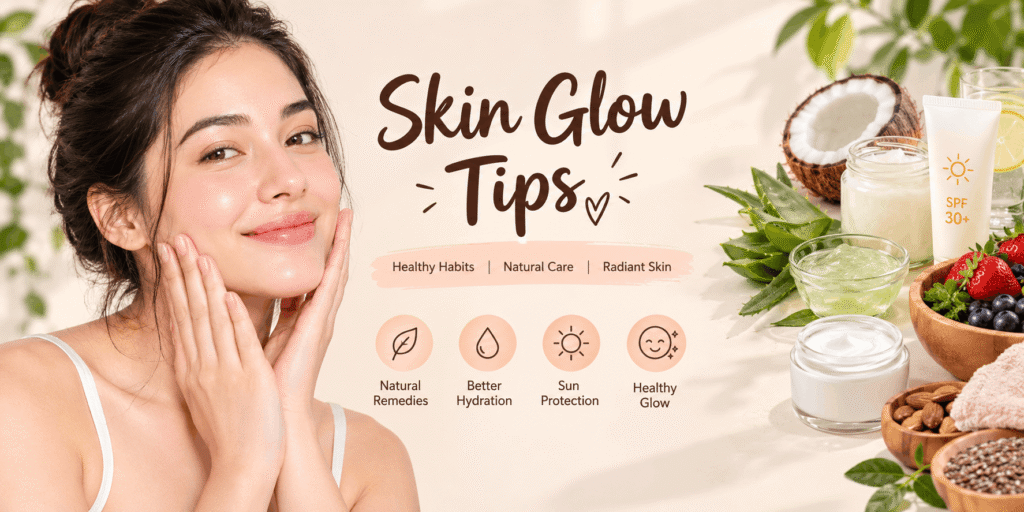
1. Soothe Skin With Virgin Coconut Oil
Coconut oil is a familiar ingredient in many homes, but its role in skincare is more specific than social media beauty advice sometimes suggests. Its oily texture helps reduce water loss from the skin, which can be useful when certain body areas feel rough, tight, or flaky.
Instead of treating coconut oil as an all-purpose facial treatment, consider where its richness may be beneficial. Hands exposed to frequent washing, dry elbows, and rough heels may respond better to an oil-based product than areas that already produce plenty of sebum.
Give Dry Areas a Little Extra Care
If you want to try virgin coconut oil, start with a small amount on an area of dry skin. After bathing or washing your hands, gently pat the area and spread a thin layer of oil over it. Avoid using so much that the skin remains excessively greasy.
Observe the result over several applications. If the area feels softer without irritation, the oil may suit that particular purpose.
For facial skincare, be more cautious. Coconut oil can clog pores in some people, making it a less suitable option for acne-prone skin. A non-comedogenic facial moisturizer may be a better choice if your main concern is dryness around the nose, cheeks, or forehead.
Keep these practical points in mind:
- Choose plain virgin coconut oil without added fragrance.
- Avoid applying it to active breakouts if oily products tend to worsen them.
- Test a small area before introducing it into your regular routine.
- Stop using it if you notice new bumps, itching, or redness.
Coconut oil should not be expected to remove acne scars, fade pigmentation, or lighten your natural complexion. Its potential benefit is mainly related to moisture retention.
A useful approach: Match the ingredient to the problem you are trying to address. If your skin needs moisture, focus on hydration rather than expecting one kitchen ingredient to solve several unrelated skin concerns.
2. Use Aloe Vera to Keep Skin Strong and Healthy
Aloe vera offers a different experience from coconut oil. Instead of a rich, oily finish, its gel has a lightweight consistency that many people find comfortable in warm weather. It is commonly included in skincare formulas designed to soothe the skin and provide a refreshing feel.
This makes aloe vera worth considering if you dislike heavy creams. However, a cooling sensation does not necessarily mean a product is treating an underlying skin problem. Its effects depend on the formulation, your skin’s condition, and how well you tolerate its ingredients.
Choose the Right Form of Aloe Vera
A skincare gel made for topical use is generally a straightforward option. Check the ingredient label and avoid assuming that a product is suitable simply because its packaging features a plant.
Fresh aloe vera also requires care. The leaf contains yellow latex beneath its outer surface, which can irritate the skin. If you are unfamiliar with preparing the plant, a properly formulated commercial product may be easier to handle.
To introduce aloe vera into your routine:
- Apply a small amount to a limited area of clean skin.
- Wait and observe whether discomfort, redness, or itching develops.
- If your skin tolerates it, use it according to the product instructions.
- Apply a moisturizer afterward if the gel does not provide enough hydration.
Avoid combining a new aloe vera product with several other unfamiliar treatments at the same time. Introducing products separately makes it easier to identify the cause if a reaction occurs.
Know Its Limitations
Aloe vera may help soothe minor discomfort, but it is not a guaranteed solution for acne, scars, or dark spots. Evidence for many popular claims about its cosmetic effects is limited, and results can vary.
If you experience persistent redness, painful pimples, or a rash that keeps returning, a home remedy may not address the underlying cause. A qualified dermatologist can help you identify a suitable treatment.
The most useful skin glow tips are not necessarily the ones with the most impressive promises. They are the ones that support your skin without causing additional irritation.
3. Moisturize Properly After Washing Your Face
Imagine washing your face and immediately feeling as though your skin has become one size too small. That tight sensation is a sign to reconsider your cleansing and moisturizing routine. A good moisturizer helps reduce water loss, softens the outer skin layer, and supports the barrier that protects your face from everyday environmental stress.
Moisturizing is not only for people with visibly dry skin. Oily skin can also become uncomfortable when cleansers are too harsh or acne treatments cause excessive dryness. The answer is not always a richer cream; it is finding a formula that provides enough moisture without feeling unpleasant.
Build a Moisturizing Habit Around Face Washing
After cleansing, avoid rubbing your face vigorously with a towel. Gently pat away excess water, leaving the skin slightly damp, and apply your moisturizer.
This small change can make your routine more comfortable and help limit moisture loss. Spread the product gently across your face, including dry areas around the cheeks or mouth if needed.
You do not need to apply a thick layer. Start with an amount that covers your skin comfortably and adjust according to the product instructions and your skin’s response.
Understand What the Ingredients Do
Different ingredients support hydration in different ways:
- Glycerin: Helps attract water into the outer layer of the skin.
- Ceramides: Help maintain the skin’s protective barrier.
- Petrolatum: Helps reduce water loss, particularly from dry areas.
- Hyaluronic acid: Helps bind water and is commonly used in hydrating skincare formulas.
A moisturizer can contain one or several of these ingredients. You do not need to purchase every ingredient separately to care for your skin effectively.
For oily skin, a lightweight lotion labelled non-comedogenic may be a comfortable option. Dry skin may benefit from a richer cream, while fragrance-free formulas can be a sensible starting point for sensitive skin.
Avoid Turning Hydration Into Overcomplicated Skincare
Applying several serums, facial oils, and creams is not automatically more beneficial than using one suitable moisturizer. Too many products may increase the chance of irritation and make it difficult to determine which formula works.
Pay attention to how your skin feels throughout the day. Persistent tightness may suggest that your cleanser is too harsh or your moisturizer is insufficient. Excessive greasiness or new breakouts may mean that a particular formula is not suitable.
If a product repeatedly causes burning or swelling, discontinue it. A moisturizer should make daily skincare more comfortable, not create a new problem.

4. Wear Sunscreen Daily
A skincare routine can include excellent moisturizers and carefully selected ingredients, yet still overlook one of the biggest influences on the appearance of the skin: ultraviolet radiation.
Repeated sun exposure can contribute to uneven pigmentation, fine lines, and premature skin aging. It may also make certain existing dark spots more noticeable. Sun protection is therefore useful not just for outdoor activities but as a regular part of caring for exposed skin.
Find a Sunscreen That Fits Your Lifestyle
Look for a broad-spectrum sunscreen with SPF 30 or higher. Broad-spectrum protection covers both UVA and UVB radiation.
Your preferred texture matters because a sunscreen that feels uncomfortable may be difficult to use consistently. Lightweight lotions or gels may appeal to people with oily skin, while those with sensitive skin may prefer a formula specifically designed for their needs.
If swimming or sweating is part of your day, choose a water-resistant sunscreen and follow the directions on its label. No sunscreen provides complete protection, so combine it with shade, protective clothing, and a hat when appropriate.
Apply It to More Than Just Your Face
The neck, ears, hands, and exposed areas near the hairline are easy to overlook. Include them when applying sunscreen to exposed skin.
Apply the product generously before outdoor exposure and reapply about every two hours while outdoors. Reapply sooner after swimming, sweating, or towel-drying as directed by the product.
Cloud cover does not eliminate UV exposure. Making sunscreen part of your morning routine can help you remember it even when the weather does not feel particularly sunny.
Be Patient With Uneven Skin Tone
Sunscreen helps reduce further sun-related damage and can prevent some dark spots from becoming darker. However, it will not erase every mark or treat every cause of pigmentation.
If dark patches continue to develop or change, seek professional advice rather than experimenting with harsh home bleaching mixtures. Some skin concerns need a treatment selected for their specific cause.
Remember that healthy skin does not have to be perfectly uniform in colour. The purpose of sun protection is to help preserve skin health and reduce avoidable damage, not to change your natural complexion.
5. Find a Cleansing Routine That Works
Your face collects more than visible dirt during an ordinary day. Sweat, excess sebum, sunscreen, makeup, and particles from the surrounding environment can build up on the skin’s surface. A suitable cleanser helps remove this buildup without leaving your face uncomfortable.
The challenge is finding the right balance. Cleansing too little may leave unwanted residue, while washing too often or using aggressive products can strip away protective oils. Rather than aiming for a squeaky-clean feeling, choose a routine that leaves your skin feeling fresh and comfortable.
Build a Routine Around Your Daily Activities
Your cleansing needs may change depending on your day. Someone who wears makeup and sunscreen regularly may need a more thorough evening cleanse than someone who spends most of the day indoors.
A simple routine can include:
- Morning: Cleanse gently if your skin feels oily or sweaty. People with very dry or sensitive skin may prefer a less intensive morning cleanse.
- Evening: Remove makeup and sunscreen, then wash away remaining residue with a suitable cleanser.
- After exercise: Cleanse after heavy sweating, particularly if sweat and oil remain on your face.
Use lukewarm water rather than very hot water, which may worsen dryness. Apply cleanser with clean fingertips and rinse thoroughly. Rough washcloths, aggressive scrubbing, and frequent exfoliation are rarely necessary for everyday cleansing.
Recognize When Your Cleanser Is Too Harsh
A cleanser may not suit you if your face repeatedly feels tight, itchy, or unusually dry after washing. Persistent redness or flaking can also suggest that your routine needs adjusting.
For dry skin, a gentle hydrating cleanser may be more comfortable. Oily skin may benefit from a mild formula that removes excess sebum without leaving the face stripped. If you experience frequent breakouts, look for products labelled non-comedogenic.
You do not need to wash your face many times daily to achieve a healthy appearance. Excessive cleansing can make irritation worse, particularly when combined with strong acne treatments or exfoliating products.
Be Careful With Homemade Cleansers
Ingredients such as lemon juice, baking soda, and coarse sugar are sometimes promoted as inexpensive facial treatments. However, these substances can irritate the skin or damage its protective barrier. Lemon juice may cause reactions when skin is exposed to sunlight, while rough particles can create friction.
A gentle, well-formulated cleanser is generally a more predictable choice than experimenting with harsh household mixtures.
Consistency matters more than the number of products on your bathroom shelf. Once you find a cleanser that removes daily buildup without causing discomfort, keep your routine simple and allow your skin time to respond.
6. Avoid Smoke and Secondhand Smoke
The condition of your skin is influenced by more than the products you apply. Environmental exposures also matter, and cigarette smoke is one factor worth reducing wherever possible.
Tobacco smoke contains substances that contribute to oxidative stress. Smoking is associated with premature skin aging and can affect the appearance of the skin over time. Research also links smoking with changes in collagen and elastin, proteins that help maintain skin structure.
Secondhand smoke is harmful too. Even if you do not smoke yourself, regularly spending time in smoky environments exposes you to substances you would otherwise avoid.
Reduce Exposure Where You Can
If you smoke, seeking support to quit is one of the most meaningful steps you can take for your overall health. It may also help reduce continued exposure to smoke-related substances that affect the skin.
If someone around you smokes, consider practical ways to limit exposure:
- Keep indoor living spaces smoke-free.
- Avoid spending unnecessary time in enclosed smoking areas.
- Encourage smoke-free environments at home and in vehicles.
- Seek support from a healthcare professional if quitting is difficult.
These changes do not require a new skincare product. They involve making your surroundings healthier.
What About Skin Brightness?
Reducing smoke exposure should not be viewed as an instant beauty treatment. Skin glow tips appearance depends on multiple factors, and changes may take time. Quitting smoking also cannot reverse every effect of previous exposure.
However, avoiding tobacco smoke supports general health and may help reduce ongoing contributors to premature skin aging.
If you are looking for practical skin glow tips, consider the habits that influence your skin over months and years, not only what happens immediately after applying a cream. A healthier environment is one part of that bigger picture.
7. Drink More Water
Water is essential for normal body functions, and drinking enough throughout the day helps prevent dehydration. However, the relationship between water intake and glowing skin is often exaggerated in beauty advice.
Drinking extra water does not automatically remove acne, erase dark spots, or produce a radiant complexion overnight. For people who already drink enough fluids, forcing themselves to drink substantially more may not provide additional skin benefits.
The sensible goal is to stay adequately hydrated rather than following an arbitrary water target.
Make Hydration Easier to Maintain
Instead of trying to drink a large quantity all at once, spread your fluid intake throughout the day. Keep water nearby during work or study, drink with meals, and take additional fluids when the weather is hot or you are physically active.
Your needs can vary depending on temperature, exercise, diet, and individual health circumstances. Water obtained from foods and other beverages also contributes to total fluid intake.
You can make drinking water more enjoyable by:
- Keeping a reusable bottle within reach.
- Drinking a glass of water with regular meals.
- Carrying water when travelling in hot weather.
- Eating water-rich foods such as cucumber, melon, and oranges.
These habits can make hydration easier without turning it into a complicated challenge.
Can Water Improve Dry Skin?
Adequate hydration supports normal body function, but drinking beyond your needs is not a reliable treatment for dry facial skin. Dryness is often related to the skin barrier, weather, cleansing habits, or underlying skin conditions.
If your face feels tight or flaky, review your cleanser and moisturizer rather than assuming that you simply need to drink more water.
People with medical conditions that require fluid restrictions should follow their healthcare professional’s advice instead of increasing water intake independently.
The best approach is straightforward: drink regularly according to your needs, eat a balanced diet, and use appropriate skincare products. Hydration is valuable, but it works alongside other habits rather than replacing them.
8. Eat to Nourish Your Skin
Your skin is a living organ that depends on nutrients to carry out its normal functions. A varied diet provides the vitamins, minerals, protein, fats, and other nutrients your body needs to maintain tissues and support repair.
No single fruit or food can guarantee glowing skin. Instead, the most useful dietary approach is to build balanced meals and avoid relying on one so-called beauty food.
Include Different Food Groups
Try to include a variety of foods in your regular meals:
Colourful vegetables and fruits: Carrots, spinach, tomatoes, berries, citrus fruits, and other produce provide different vitamins and plant compounds. Eating a range of colours helps diversify your nutrient intake.
Protein-rich foods: Eggs, lentils, beans, fish, chicken, and other protein sources provide building blocks needed by the body to maintain and repair tissues.
Sources of healthy fats: Nuts, seeds, fish, and suitable plant oils provide fats that contribute to normal body functions. Some also supply essential fatty acids.
Whole grains and legumes: Oats, whole-wheat roti, beans, and lentils provide energy, fibre, and additional nutrients.
You do not need to purchase expensive imported foods to eat well. Ordinary, affordable ingredients can contribute to a balanced diet.
Think About Your Overall Eating Pattern
Skipping meals and following extreme diets can make it harder to obtain enough nutrients. A more sustainable approach is to eat varied meals that suit your preferences, budget, and activity level.
For example, a meal containing lentils, vegetables, whole-wheat roti, and yogurt can provide several useful nutrients. Another meal might include eggs, vegetables, and whole-grain bread. The exact foods matter less than maintaining variety over time.
Avoid assuming that every skin concern comes from a nutritional deficiency. Acne, pigmentation, and dryness can have many causes, and taking large amounts of supplements without a demonstrated need is not necessarily beneficial.
If you suspect a deficiency or have a restrictive diet, speak with a qualified healthcare professional before starting supplements.
A balanced eating pattern cannot guarantee a flawless complexion, but it helps support the body that maintains your skin. Combined with suitable skincare and sun protection, good nutrition is a sensible part of a long-term approach.
9. Take Probiotics
Probiotics are living microorganisms found in certain foods and supplements. Some are studied for their effects on digestion and other aspects of health. Researchers are also investigating possible connections between the gut microbiome and skin, sometimes described as the gut-skin axis.
Although this area of research is interesting, it is important to separate early findings from established skincare advice. Probiotics are not a proven universal treatment for acne, eczema, pigmentation, or dull skin.
Where Can You Find Probiotics?
Certain fermented foods may contain live microorganisms, depending on how they are prepared and processed. Examples include some types of yogurt, kefir, and other fermented foods.
When choosing yogurt, check the product label, especially if you are looking for live cultures. Unsweetened varieties may also help limit added sugar in your diet.
Supplements are another option, but they vary considerably in their bacterial strains, amounts, and intended uses. A product marketed for digestive health may not have evidence supporting a specific skin benefit.
Should You Take a Probiotic for Glowing Skin?
Not necessarily. Current evidence does not establish that everyone needs probiotic supplements to improve their complexion. Results from studies can vary depending on the microorganism used, the condition being studied, and the individual taking it.
If you already enjoy yogurt or other fermented foods, they may fit into a balanced diet. However, you do not need to start taking supplements solely because you want brighter-looking skin.
People with weakened immune systems or certain serious health conditions should discuss probiotic supplements with a healthcare professional before using them.
Be cautious of products promising to clear acne or transform your complexion within a few days. Such claims may go beyond the available evidence.
For most people, the foundation of a practical skincare routine remains gentle cleansing, suitable moisturization, sunscreen, and healthy everyday habits. Probiotics are an optional area of interest, not a replacement for those basics.
10. Shorten Your Shower
Long, hot showers can feel relaxing, especially during cooler weather. However, spending too much time in hot water may remove some of the oils that help keep your skin comfortable. If your skin frequently feels tight or itchy after bathing, your shower habits may be contributing to the problem.
You do not need to stop enjoying a warm shower. Small adjustments to water temperature and duration can help reduce unnecessary dryness.
Adjust Your Bathing Routine
Try keeping showers reasonably short and using warm rather than very hot water. For many people, a shower of around five to ten minutes is a practical starting point, although individual needs can vary.
Use a gentle body cleanser, especially on areas that are not particularly dirty or sweaty. Strongly fragranced soaps and frequent scrubbing may worsen dryness for some people.
When you finish bathing, gently pat your skin with a towel rather than rubbing it vigorously. Apply a suitable body moisturizer while your skin is still slightly damp to help retain moisture.
Notice How Your Skin Responds
If you regularly experience dry legs, rough elbows, or itchy patches after showering, consider whether the water is too hot or your cleanser is too harsh.
Other factors can contribute to dryness as well, including cold weather, indoor heating, certain medications, and skin conditions such as eczema. Changing your shower routine may help, but it will not resolve every underlying cause.
Avoid using a rough exfoliating glove or scrub every day in an attempt to make your skin glow. Excessive friction can irritate the surface and make certain conditions worse.
If dryness persists despite gentle bathing and moisturizing, or if you develop painful cracks, a widespread rash, or severe itching, seek medical advice.
Shorter, gentler showers are a simple habit that can support skin comfort without requiring additional products. When combined with consistent moisturizing, they may help reduce the dryness that makes skin look rough or dull.
Takeaway
Healthy-looking skin glow tips is best supported by a routine that is gentle, practical, and suited to your individual needs. Home ingredients such as coconut oil and aloe vera may be useful in certain situations, but neither is necessary for everyone. Cleansing carefully, moisturizing appropriately, protecting your skin from the sun, and maintaining healthy lifestyle habits provide a more dependable foundation.
Introduce new products one at a time and pay attention to how your skin responds. Avoid harsh homemade treatments and be sceptical of promises that claim to deliver instant brightness or permanently remove skin imperfections. If a skin concern persists, professional advice can help you find an appropriate solution.
How We Reviewed This Article
This article was prepared as general skincare education, with an emphasis on practical home routines, realistic expectations, and avoiding unsupported beauty claims. Recommendations distinguish everyday skin-care practices from home remedies whose benefits may be limited or vary between individuals.
The information is not a substitute for a personal medical assessment. Readers with persistent acne, unusual pigmentation, allergic reactions, or ongoing irritation should consult a qualified healthcare professional. Product instructions and individual skin needs should always guide the use of skincare ingredients.
Sources
For further information about skincare, sun protection, and the evidence behind common home remedies, consult these established health resources:
- American Academy of Dermatology (AAD): Guidance on daily skin care, moisturizers, cleansing, acne, and sunscreen.
- National Institute of Arthritis and Musculoskeletal and Skin Diseases (NIAMS): Educational information about skin health and related conditions.
- National Center for Complementary and Integrative Health (NCCIH): Evidence-based information about complementary approaches and probiotics.
- Centers for Disease Control and Prevention (CDC): Public health information on tobacco smoke exposure and the benefits of avoiding smoking.
Final Thoughts
Achieving a healthy-looking complexion does not require an expensive skincare collection or complicated beauty treatments. The most effective skin glow tips often begin with simple choices, such as keeping your skin moisturized, choosing gentle cleansing products, wearing sunscreen, and eating a balanced diet. Home remedies like aloe vera or coconut oil may suit certain skin types, but it is important to understand their limitations and avoid ingredients that cause irritation.
Give your routine time to work instead of expecting overnight changes. Pay attention to how your skin responds, introduce new products gradually, and adjust your habits when necessary. With consistent care and realistic expectations, you can support your skin’s natural appearance while keeping it comfortable and healthy.
Start with three basic habits: cleanse your face gently, apply a suitable moisturizer, and use broad-spectrum sunscreen with SPF 30 or higher. Consistency is more important than using many products.
Maintain a simple skincare routine, eat a balanced diet, drink enough water, and get adequate sleep. Choose home remedies carefully because natural ingredients can still irritate your skin.
There is no single home remedy that works for everyone. Aloe vera may soothe some skin types, while coconut oil may help moisturize dry body areas. Choose ingredients according to your skin’s needs.
You may notice improved softness and hydration within a week by moisturizing regularly and avoiding harsh products. However, dark spots, acne marks, and other skin concerns usually require more time and sometimes professional treatment.




3 Comments