Healthy skin does not have to look perfectly smooth to be beautiful. Tiny pores, fine lines, natural creases, and small variations across the surface are normal parts of human skin. However, when your face begins to feel rough, looks bumpy under natural light, or develops areas that appear dry and uneven, you may start wondering what has changed and how to improve it.
Skin texture describes the way your skin looks and feels on the surface. Some people notice tiny bumps across their forehead, while others struggle with flaky cheeks, clogged pores around the nose, rough patches along the jawline, or an uneven surface left behind by previous acne. These concerns can have different causes, which means the same skincare product will not work equally well for everyone.
The first step toward improving skin texture is understanding what your skin may be responding to. Excess oil, accumulated dead skin cells, dehydration, irritation, acne, and natural changes associated with age can all influence the surface. A suitable routine can help improve some of these concerns, but aggressive scrubbing and using too many active ingredients may make the problem worse.
What Your Skin’s Surface Is Trying to Tell You
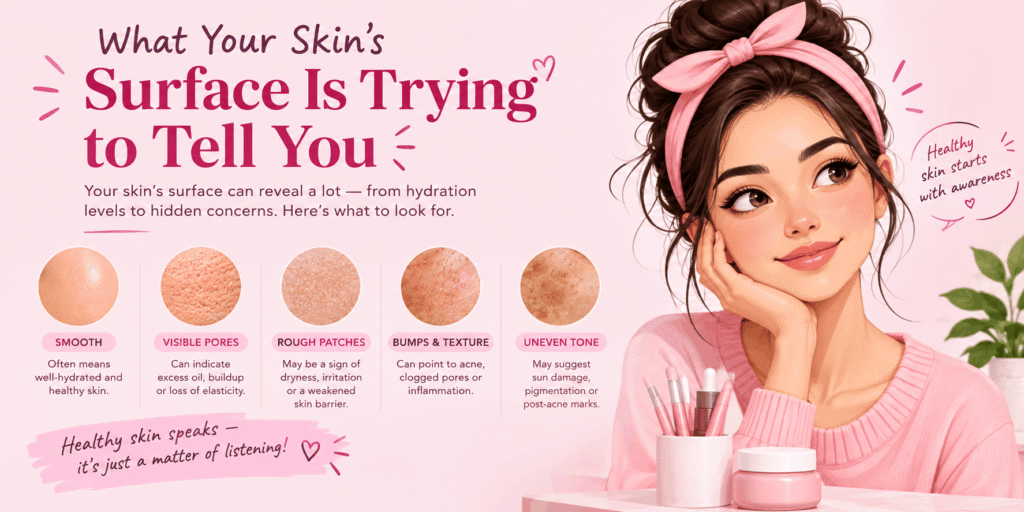
Skin texture can change gradually, making it difficult to identify the original trigger. You might notice that makeup no longer sits evenly, moisturizer seems to disappear into dry patches, or tiny bumps become more visible when sunlight falls across your face. These observations can offer clues, although appearance alone cannot confirm a particular skin condition.
A rough surface does not automatically mean your skin is dirty or that you need stronger cleansing. Your skin has a protective outer layer that helps retain moisture and defend against environmental irritants. When this barrier becomes disrupted, the surface may feel tight, flaky, sensitive, or less comfortable than usual.
On the other hand, small raised bumps may be associated with clogged pores, acne, or irritation from a skincare or haircare product. Depressed marks and shallow indentations can have a different origin, including previous inflammatory acne. These concerns should not all be treated with the same exfoliating product.
It is also important to distinguish temporary texture from a naturally visible skin feature. Pores cannot be permanently erased, and facial skin is not supposed to look completely flat. The realistic goal is to improve the concerns that bother you while keeping the skin comfortable and its protective barrier intact.
Why Your Skin May Feel Rough Even After Washing
Cleansing removes sunscreen, makeup, excess oil, sweat, and everyday debris. However, washing more frequently or using a harsh cleanser can strip away too much of the skin’s natural protective material. The result may be tightness, roughness, and visible flakes rather than a smoother complexion.
If your face feels uncomfortable immediately after cleansing, review the cleanser you use and how often you wash. A gentle, fragrance-free formula may be more suitable than a strong foaming product, especially if your skin is already dry or sensitive. Lukewarm water is generally preferable to very hot water, which can aggravate dryness.
Cleansing should leave your face feeling comfortable, not squeaky or stretched. If you are dealing with persistent roughness, begin by correcting these basic habits before introducing exfoliating acids or scrubs.
Understanding Tiny Bumps, Enlarged Pores, and Dry Patches
Different skin texture patterns can point toward different possibilities. Small bumps concentrated on the forehead or around the nose may be related to clogged pores, while inflamed pimples can leave the surface uneven as they heal. Flaking around the cheeks or mouth may instead reflect dryness, irritation, or a skin condition that needs a different approach.
Visible pores are also normal. Their appearance can vary with genetics, oil production, age, and the surrounding skin’s elasticity. Products may temporarily reduce the look of congestion or excess shine, but they cannot permanently close pores.
If the surface contains deep indentations, persistent scaling, painful bumps, or widespread redness, a basic smoothing routine may not be enough. A dermatologist can help distinguish ordinary texture concerns from acne scarring or inflammatory skin conditions that need targeted care.
The Everyday Factors That Can Change Skin Texture
The surface of your skin texture responds to more than the products sitting on your bathroom shelf. Weather, cleansing habits, friction, oil production, and the way your skin heals after a breakout can all influence how smooth or uneven it appears.
Dead skin cells naturally shed as part of the skin renewal process. Sometimes the surface looks dull or rough when dryness, irritation, or clogged pores interfere with its usual appearance. This does not mean that everyone needs daily exfoliation. For some people, improving hydration and reducing irritation will make a more noticeable difference than using another acid.
Acne can also affect texture in several ways. Blocked pores may create small bumps, inflamed breakouts can leave temporary discoloration, and deeper lesions may damage supporting tissue and result in lasting scars. Picking or squeezing spots increases the chance of inflammation and scarring, so it is better to manage breakouts gently.
Environmental exposure matters, too. Ultraviolet radiation contributes to changes in collagen and elastin over time, which can make the skin appear less firm and emphasize fine lines. A daily broad-spectrum sunscreen helps protect against this damage, although it will not reverse established scars or every age-related change.
Could Your Skincare Routine Be Making Things Worse?
Using several strong products at once can make it harder to understand what your skin actually needs. A cleanser containing exfoliating acids, a separate scrub, a strong retinoid, and multiple treatment serums may create excessive irritation when combined without a plan.
Signs that your routine may be too aggressive include persistent stinging, burning, unusual redness, peeling, and a tight feeling that continues throughout the day. If these symptoms appear, pause the irritating products and return to gentle cleansing, moisturizing, and sun protection while your skin settles.
Fragrance, essential oils, and certain other ingredients can also cause reactions in susceptible individuals. Even a product marketed for sensitive skin can disagree with your particular skin. Introduce new products one at a time so that you can more easily identify a possible trigger.
How Sleep, Stress, and Daily Habits Fit In
Lifestyle is not a simple cure for skin texture, but it can influence the conditions that affect your complexion. Poor sleep, ongoing stress, and inconsistent skincare may make it harder to maintain a routine, while stress can aggravate acne in some people.
A balanced diet, adequate hydration, regular sleep, and suitable physical activity support general health. However, there is no single food or drink that reliably smooths everyone’s skin, and drinking excessive water will not remove acne scars or close pores.
Focus on habits that are sustainable rather than trying to change everything at once. If a particular routine leaves your skin irritated, simplifying it may be more useful than purchasing another treatment.
Building a Smoother-Skin Routine Without Overloading Your Face
A useful skincare routine does not need a dozen steps. It should address your main concern, protect the skin barrier, and remain simple enough for you to follow consistently. Before buying a new product, decide whether your priority is dryness, clogged pores, acne, fine surface roughness, or scars. Each concern calls for a slightly different strategy.
Start With Moisture and Barrier Support
A moisturizer can improve the look and feel of rough skin texture by helping reduce water loss and keeping the outer layer flexible. Ingredients such as glycerin, ceramides, and hyaluronic acid are commonly used to support hydration and skin comfort.
If your face is dry or sensitive, choose a straightforward moisturizer without unnecessary fragrance. Apply it after cleansing while your skin is slightly damp if that feels comfortable. People with oilier skin may prefer a lightweight lotion or gel, while drier skin may respond better to a richer cream.
Hydration will not fill deep acne scars or permanently change pore size, but it can make superficial dryness and fine flaky areas less noticeable. It is often a sensible first step before deciding whether your skin needs a more targeted treatment.
Introduce Exfoliation for a Specific Reason
Exfoliating ingredients can help with selected texture concerns, but the type and frequency matter. Salicylic acid is often used for clogged pores and acne-prone skin because it can work within oily pores. Glycolic and lactic acids are alpha hydroxy acids that help loosen dead cells at the skin’s surface and may improve some forms of roughness.
These ingredients are not interchangeable, and using all of them together is unnecessary for many people. Begin with one suitable product, follow its instructions, and give your skin time to adjust. Avoid applying exfoliating products to cracked, sunburned, or actively irritated skin.
Physical scrubs can be particularly unhelpful when they create friction, especially on inflamed acne or sensitive areas. If you experience persistent redness or peeling, stop exfoliating until your skin has recovered. A gentler approach may produce better long-term results than repeatedly trying to remove the surface layer.
Protect Your Progress With Sunscreen
Sunscreen is important even when your primary concern is roughness rather than dark spots. Sun exposure contributes to collagen breakdown and visible signs of skin aging, while sunburn can aggravate irritation and interfere with recovery.
Choose broad-spectrum SPF 30 or higher and apply it to exposed skin during the day. Reapply approximately every two hours when outdoors, and sooner after swimming, heavy sweating, or wiping your face. Hats and shade can provide additional protection.
Sunscreen will not remove established texture changes, but it helps protect against further UV-related damage. It also supports a routine that includes ingredients which may increase sensitivity to sunlight.
A Smarter Way to Deal With Uneven Skin
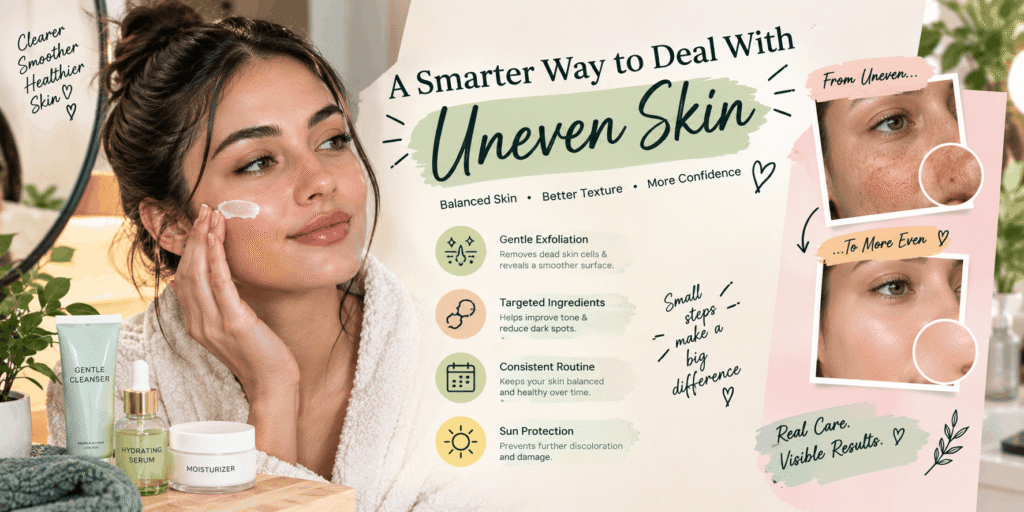
Skin texture can be frustrating because the problem is not always obvious. Your face may look fine from a distance but reveal tiny bumps in daylight, or your foundation may settle into areas that previously appeared smooth. Instead of treating every visible irregularity as the same issue, pay attention to its pattern and behavior.
For example, bumps that repeatedly appear after using a new cosmetic may suggest that the product does not suit your skin. Roughness that develops during cold weather may be linked to dryness. Small plugs around the nose and chin may be associated with clogged pores, while indentations left after severe acne are a different concern altogether.
These differences matter because surface care cannot correct every structural change. A moisturizer may improve flaky skin, but it will not fill an established acne scar. Likewise, an exfoliating serum may help certain clogged pores but could aggravate a rash caused by irritation.
Give yourself a clear starting point: identify your main concern, simplify anything that might be irritating your skin, and select treatments based on that concern. You do not need to pursue every skincare trend to make progress.
When the Problem Comes From Products You Use Every Day
Skin texture is not the only possible source of facial irritation. Hair oils, styling creams, heavy makeup, fragranced products, and even frequent contact with a phone or pillow can contribute to problems for some people. The connection is not always obvious because a reaction may develop gradually.
Think about whether your texture changed after introducing a product or changing a habit. If you suspect a cosmetic is responsible, stop using the suspected product temporarily and observe whether your skin improves. Avoid discontinuing prescribed medication without discussing it with the clinician who recommended it.
You can also keep a simple record of new products and changes in your skin. This is more useful than buying several treatments at once, because it helps you identify possible triggers rather than adding more variables.
If the area becomes itchy, swollen, painful, or persistently inflamed, do not keep experimenting with different products. A healthcare professional can assess whether irritation, allergy, acne, or another condition needs attention.
What Different Texture Concerns May Need
Rough, Sandpaper-Like Skin
A rough surface may develop when the skin is dehydrated, irritated, or affected by a buildup of dead cells. Sometimes the roughness is concentrated around the cheeks; in other cases, small bumps appear on the forehead or along the jaw.
Start by considering how the skin feels after cleansing. If it becomes tight or uncomfortable, reduce harsh washing and use a moisturizer that suits your skin. Avoid trying to scrub away every rough area, particularly when redness or flaking is present.
If your skin tolerates exfoliating ingredients, a low-strength product may help certain surface irregularities. However, persistent rough patches can also be related to conditions that need medical treatment. If gentle care does not help, seek an assessment instead of repeatedly increasing exfoliation.
Small Bumps That Keep Returning
Recurring bumps may be associated with clogged pores, acne, irritation, or other skin conditions. Their location can provide clues, but it cannot confirm the cause by itself.
If the bumps appear alongside blackheads or whiteheads, an acne-focused routine may be appropriate. Salicylic acid is one ingredient commonly used for clogged pores, but it can cause dryness or irritation if overused. Follow the product directions and introduce it gradually.
Do not assume that every tiny bump is acne. If the bumps are intensely itchy, all look very similar, or worsen despite ordinary acne care, a clinician can help determine what is happening. Using stronger acne products without knowing the cause may simply make the skin more uncomfortable.
Texture Changes After Acne
A breakout can leave several kinds of marks. Some are flat areas of discoloration; others involve changes in the skin’s actual contour. Raised scars and indented scars also differ from one another, so it is important not to treat them as interchangeable.
The first priority is to control ongoing breakouts. Repeated inflammation can lead to more marks and scarring, while squeezing pimples may increase tissue damage. If acne is deep, painful, or leaving visible indentations, seek dermatological advice early.
Once acne is under control, a dermatologist can evaluate any remaining scars. The appropriate approach depends on their depth, shape, and distribution. Ordinary creams may support skin hydration and improve the appearance of superficial dryness, but they generally cannot eliminate deeper structural scars.
Selecting Products With a Clear Purpose
The skincare market is full of products claiming to refine pores, polish the surface, or create glass-like skin. Those phrases can sound appealing, but the ingredient list and the purpose of the product are more useful than the promise on its packaging.
Retinol and Other Retinoids
Retinoids are vitamin A-related ingredients used for selected concerns, including acne and certain signs of skin aging. Depending on the formula, they may help improve cell turnover and the appearance of some forms of uneven texture over time.
They can also cause dryness, peeling, and irritation, especially during the early stages of use. Anyone considering a retinoid should choose a product appropriate to their needs, follow its directions, and avoid combining it carelessly with several other irritating treatments.
Retinoids are not suitable for every person or every skin concern. Topical retinoids should generally be avoided during pregnancy, and people with persistent sensitivity or an existing skin condition should discuss their options with a healthcare professional.
Niacinamide for Supporting the Skin Barrier
Niacinamide is a form of vitamin B3 included in many serums and moisturizers. It may help support the skin barrier and improve the appearance of oiliness or uneven tone, making it a possible addition to a simple routine.
It is not a resurfacing procedure, and it cannot erase deep scars or permanently change pore size. Think of it as a supporting ingredient rather than a universal texture treatment.
Choose a formula that fits your skin and introduce it without simultaneously changing several other products. If you notice persistent irritation, stop using it and reassess your routine.
Choosing a Moisturizer That Feels Right
A moisturizer should help your skin feel comfortable without leaving it excessively greasy or causing problems for your particular skin type. Creams may feel more comfortable on dry skin, while lightweight lotions can be preferable for people who dislike heavier textures.
Ingredients such as glycerin help attract water, while ceramides can support the skin’s protective barrier. You do not need a product containing every popular moisturizing ingredient; a well-tolerated formula used regularly is often enough.
If a moisturizer repeatedly causes burning, itching, or new breakouts, consider discontinuing it. Product labels can help guide your selection, but individual tolerance is more important than marketing claims.
Professional Options for Texture That Does Not Respond to Home Care
Some concerns can be managed with everyday skincare, while established scars and certain persistent conditions may require clinical treatment. A qualified dermatologist can assess whether the surface irregularity is caused by acne, scarring, inflammation, or another condition before recommending a procedure.
Microneedling for Selected Acne Scars
Microneedling uses a device with fine needles to create controlled micro-injuries in the skin. In appropriate cases, this can stimulate a healing response and gradually improve the appearance of some indented acne scars.
It is not a guaranteed solution, and results vary with the type of scarring, treatment plan, and individual healing response. Several sessions may be needed, and temporary redness or swelling can occur. Infection, scarring, and pigmentation changes are possible complications.
Treatment should be performed by an appropriately qualified professional who can assess your skin and explain the risks. At-home devices that penetrate the skin introduce avoidable risks, particularly when used without proper training or hygiene.
Laser Treatments and Other Clinical Procedures
Certain laser procedures may improve selected scars or other surface irregularities. Other options, such as subcision or specific resurfacing techniques, may be considered for particular scar patterns. These treatments work differently, so there is no single procedure that suits every face.
Your clinician should explain what improvement is realistic, the likely recovery period, the total cost, and the possibility of needing more than one treatment. Skin tone and a history of pigmentation are important considerations because some procedures can cause unwanted color changes.
Do not choose a procedure solely because a social media creator showed dramatic results. Lighting, camera angles, editing, and differences in the original skin condition can make before-and-after photographs misleading. A proper consultation provides a more realistic basis for deciding whether treatment is worthwhile.
Small Changes That Make a Routine Easier to Maintain
You do not need a complicated morning and evening schedule to care for textured skin. A routine that is easy to follow can make it simpler to notice improvements and recognize irritation before it becomes severe.
In the morning, use a gentle cleanser if needed, apply moisturizer, and finish with broad-spectrum sunscreen. At night, remove makeup and sunscreen, cleanse without scrubbing, and use your selected treatment if your skin tolerates it.
Avoid introducing a new serum, exfoliant, and retinoid all in the same week. If your skin reacts, you will have difficulty determining which product caused the problem. Introduce one change at a time and follow the product instructions.
You should also avoid evaluating your skin under a different light every few hours. Direct sunlight, bathroom lighting, and phone flash can exaggerate tiny surface variations. If you want to track progress, take occasional photographs under similar conditions rather than judging your skin against filtered images online.
Most importantly, remember that natural skin has pores, fine lines, and small variations. A healthy complexion does not have to resemble a smooth digital filter.
Final Thoughts
Improving skin texture is not about removing every pore or making your face perfectly flat. It is about understanding what is creating the roughness, choosing an appropriate response, and avoiding habits that repeatedly irritate the skin.
For some people, a better moisturizer and gentler cleansing are enough to make a difference. Others may benefit from a carefully selected acne treatment or professional help for persistent scars. The right path depends on the cause, not the number of products in your cabinet.
Keep your routine purposeful, introduce new treatments cautiously, and give suitable products enough time to work. When the problem is persistent or unclear, professional guidance can save you from unnecessary purchases and avoidable irritation.
No. Dead-cell buildup can contribute to some forms of roughness, but texture changes may also result from dehydration, acne, irritation, scarring, or natural skin characteristics. Identifying the likely cause is more useful than automatically reaching for an exfoliant.
You may notice greater comfort or less visible flaking within a short period if dryness is the main issue. Congested pores and acne usually need longer, while established scars generally cannot be meaningfully corrected in a week. Be wary of products promising dramatic permanent changes within days.
Adequate hydration supports general health, but drinking extra water beyond your needs is not a proven treatment for acne scars, enlarged pores, or every form of roughness. If your skin is dry, a suitable topical moisturizer may be more directly helpful.