Rosacea is a long-term skin condition that can cause facial redness, flushing, visible blood vessels, and sometimes acne-like bumps. Because different people experience different symptoms, there is no single treatment that works for everyone. A dermatologist can choose treatment based on the type and severity of rosacea, the symptoms causing the most trouble, and how sensitive the skin is.
The good news is that modern rosacea treatment can make symptoms much easier to control. Treatment may include gentle skin care, topical medications, oral medicines prescribed by a clinician, or laser and light procedures. Avoiding personal triggers and protecting the skin from the sun are also important parts of long-term management.
Rosacea Treatment: Key Takeaways
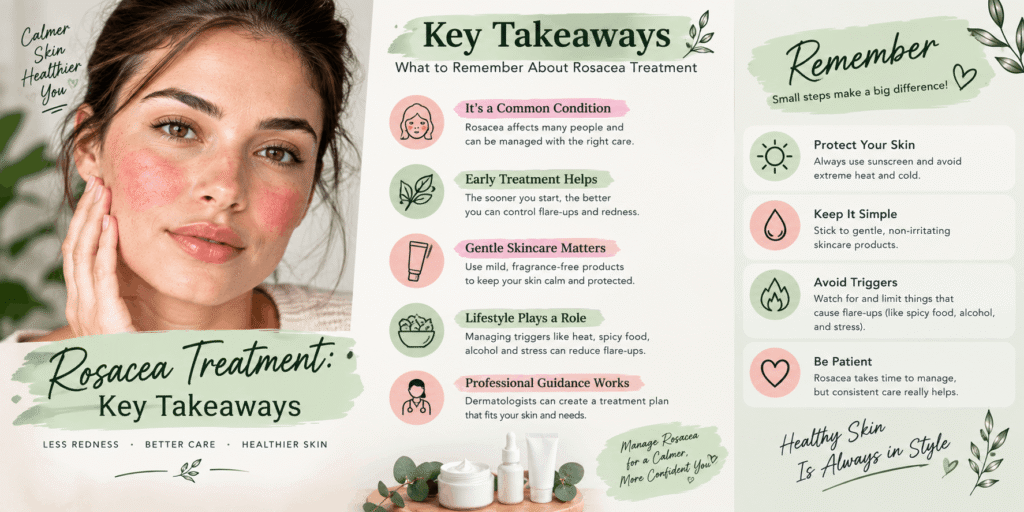
Rosacea treatment usually cannot be permanently cured, but it can often be managed successfully. The goal is to reduce visible symptoms, calm inflammation, limit flare-ups, and prevent the condition from becoming more noticeable over time.
Treatment depends on the symptoms. Creams and gels are commonly used when rosacea causes bumps, pustules, inflammation, or persistent redness. Some treatments work gradually, while others can temporarily reduce facial redness more quickly. Laser or light therapy may be considered when visible blood vessels or persistent redness are major concerns.
A gentle routine is equally important. Rosacea-prone skin can react easily to harsh products, excessive exfoliation, or irritating ingredients. Dermatologists generally recommend gentle cleansing, moisturizing, and regular sun protection as part of a treatment plan.
OTC Treatments: Rosacea Creams and Gels
Over-the-counter products can support rosacea-prone skin, but they are different from prescription treatments designed specifically for the condition. A basic routine should focus on keeping the skin comfortable rather than aggressively treating redness.
Gentle Moisturizers
A fragrance-free, non-irritating moisturizer can help support the skin barrier and reduce feelings of dryness or irritation. Moisturizing may also make prescribed rosacea treatments easier for some people to tolerate.
The ideal moisturizer is usually simple rather than packed with multiple active ingredients. If a product repeatedly causes burning, stinging, or worsening redness, stop using it and discuss the reaction with a healthcare professional.
Sunscreen
Sun exposure is one of the common triggers associated with rosacea flare-ups. Daily broad-spectrum sunscreen can therefore be an important part of rosacea care.
People with sensitive skin may prefer a sunscreen that feels comfortable and does not sting. The most useful product is one that can be used consistently without irritating the skin.
Be Careful With “Rosacea Cures”
Products marketed as instant rosacea cures deserve caution. Rosacea is a chronic condition, and there is currently no treatment that guarantees a permanent cure. A product that promises to eliminate rosacea forever may be making a claim that goes beyond established medical evidence.
Prescription Rosacea Creams and Gels
When rosacea causes persistent symptoms, a dermatologist may recommend prescription medication. Different topical treatments target different features of the condition, so the “best” cream depends on what is actually happening on the skin.
Treatments for Acne-Like Breakouts
Prescription topical treatments may include medications such as azelaic acid, ivermectin, or metronidazole. These are used for certain types of inflammatory or acne-like rosacea symptoms.
These treatments do not necessarily produce overnight results. Some topical medications may take several weeks before improvement becomes noticeable, so treatment should be followed according to the prescribing clinician’s instructions rather than changed too quickly.
Treatments for Persistent Redness
Some prescription medications can temporarily reduce persistent facial redness by affecting the blood vessels in the skin. Dermatologists may consider options such as brimonidine gel or oxymetazoline cream for appropriate patients. Their redness-reducing effect is temporary, so they are different from treatments intended to address visible blood vessels themselves.
Because prescription treatments can have side effects or may not be appropriate for everyone, they should be selected with a healthcare professional rather than used based only on online recommendations.
Oral Treatments for Rosacea
Some people with more persistent or inflammatory rosacea may need treatment taken by mouth. A dermatologist may consider oral medication when topical treatment does not provide enough control or when symptoms are more extensive.
When Oral Treatment May Be Considered
Oral treatments can be used to help control inflammation and acne-like breakouts in selected patients. Certain low-dose anti-inflammatory approaches are also used by dermatologists as part of longer-term management.
The choice depends on the individual’s symptoms, age, medical history, other medicines, and possible side effects. This is especially important because medication that is appropriate for one person may not be appropriate for another.
Never start, stop, or change a prescription medicine without guidance from a qualified healthcare professional.
Laser Treatment for Rosacea
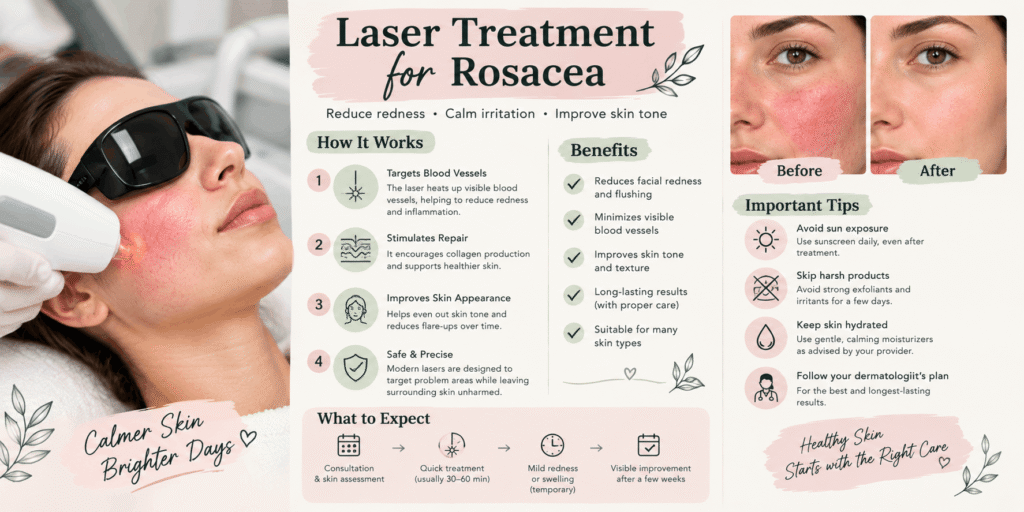
Laser and light treatments can be useful when rosacea causes visible blood vessels or persistent redness that does not respond sufficiently to topical approaches. They are generally considered part of a broader treatment plan rather than a guaranteed stand-alone cure.
What Laser Treatment Can Improve
Vascular laser or light treatments can target visible blood vessels and may reduce their appearance. Some laser approaches can also improve persistent redness. Results vary, and multiple treatment sessions may sometimes be needed.
The choice of device matters. A dermatologist needs to consider the person’s skin type, symptoms, medical history, and the specific type of redness or blood vessels being treated.
What to Expect From Treatment
Temporary redness, swelling, or other skin changes can occur after laser or light therapy. In skilled hands, serious complications are uncommon, but burns, pigment changes, and scarring are possible risks. This is why treatment should be performed by a qualified medical professional experienced in treating rosacea.
Laser treatment can improve existing visible vessels, but rosacea itself can remain an ongoing condition. New blood vessels or redness may develop later, meaning some people require future treatment or continued medical management.
Can Rosacea Be Permanently Removed?
There is currently no permanent cure for rosacea. However, that does not mean someone has to live with uncontrolled symptoms. With the right treatment plan, many people can reduce flare-ups and make redness, bumps, and other symptoms much less noticeable.
The most effective long-term approach usually combines treatment with everyday skin care and trigger management. Common triggers can include overheating, sunlight, spicy foods, alcohol, and other individual factors, although triggers vary from person to person. Identifying personal triggers can make it easier to reduce future flare-ups.
Building a Long-Term Routine
A dermatologist may adjust treatment after the initial symptoms are under control. Some people move to a maintenance plan that keeps their rosacea from becoming active again as frequently. Gentle cleansing, moisturizing, sun protection, and appropriate medical treatment can all have a role.
It is also useful to remember that rosacea is not simply a problem that can be solved by using more skincare products. Adding too many active ingredients can irritate sensitive skin and make the situation harder to manage. A simpler routine is often easier to maintain.
Understanding Rosacea Treatment
Rosacea treatment can look different from person to person, which is why there is no single treatment that works for everyone. Some people mainly experience redness, while others may have acne-like bumps, irritation, or eye-related symptoms. A dermatologist can help determine the type of rosacea and recommend an appropriate treatment plan.
A gentle skincare routine is an important starting point. Use a mild cleanser, avoid harsh scrubbing, and apply a moisturizer that feels comfortable on your skin. Daily sun protection is also important because sunlight can trigger or worsen symptoms for some people. Choosing products made for sensitive skin may make the routine easier to tolerate.
Prescription Treatments
Depending on your symptoms, a dermatologist may recommend prescription creams, gels, or other medications. Ingredients such as azelaic acid, metronidazole, or ivermectin may be used for certain forms of rosacea, particularly when bumps and blemishes are present.
For persistent facial redness, certain prescription treatments can temporarily reduce the appearance of redness. The appropriate option depends on the individual’s symptoms, skin sensitivity, and medical history, so these treatments should be discussed with a healthcare professional rather than selected solely from online recommendations.
Laser and Light Treatments
Laser or light-based treatments may be considered when visible blood vessels or persistent redness are a major concern. These procedures are performed by trained professionals and may require more than one treatment.
Results can vary, and temporary redness or irritation may occur afterward. A dermatologist can explain whether laser or light treatment is appropriate and what kind of improvement may realistically be expected.
Everyday Care for Rosacea
Skincare habits can make a meaningful difference in managing rosacea. Try to identify personal triggers and avoid products that consistently cause burning, stinging, or increased redness. Common triggers can include excessive heat, sunlight, spicy foods, and alcohol, although triggers are different for everyone.
Keep your routine simple rather than constantly adding new products. A gentle cleanser, moisturizer, and broad-spectrum sunscreen can provide a practical foundation. If a product causes significant irritation, stopping it and discussing the reaction with a professional may be helpful.
When to See a Dermatologist
If facial redness, bumps, burning, or irritation continues despite gentle skincare, consider speaking with a dermatologist. Professional guidance is especially useful when symptoms are changing, becoming more noticeable, or affecting your eyes.
The goal of Rosacea Treatment is usually to control symptoms, reduce flare-ups, and protect the skin over time. With the right combination of professional treatment and gentle daily care, many people can manage rosacea more comfortably.
What Can Make Rosacea More Noticeable?
Certain situations can make rosacea symptoms temporarily more visible. Changes in weather, strong sunlight, hot environments, spicy meals, and emotional stress are possible examples. However, triggers are highly individual, so there is no need to avoid everything on a general list.
Instead, paying attention to your own pattern can be more useful. If you notice that redness repeatedly appears after a particular situation, recording it can help you discuss the pattern with a healthcare professional.
Building a Comfortable Skincare Routine
When skin is easily irritated, a complicated routine may not be helpful. A gentle cleanser can remove everyday buildup without relying on aggressive scrubbing. Moisturizer can also help the skin feel more comfortable when dryness or tightness is present.
Sun protection deserves particular attention. Regular exposure to ultraviolet light can aggravate rosacea for some people, making a suitable broad-spectrum sunscreen a useful part of everyday skincare.
It is also worth being cautious with strongly fragranced products, harsh exfoliants, and anything that repeatedly causes stinging. Skin that feels uncomfortable after applying a product is giving you useful information, so adding more products is not always the answer.
Medical Options for Different Symptoms
Professional treatment depends on the features being addressed. Some prescription topical medicines are used for bumps and inflammatory lesions, while other treatments are designed to reduce persistent facial redness.
In certain cases, oral medication may also be considered by a healthcare professional. The choice depends on the severity and type of symptoms, previous treatments, and individual health factors.
For visible blood vessels that remain noticeable, dermatologists may discuss laser or light-based procedures. These treatments are performed differently from topical skincare and are generally selected after assessing the skin in person.
Long-Term Rosacea Care
Rosacea management is often about consistency rather than searching for one product that solves everything. Once you know which products and situations tend to bother your skin, maintaining a predictable routine can make everyday care easier.
It can also help to introduce new skincare products individually. That way, if irritation develops, it is easier to identify which change may have caused it.
If redness is persistent, symptoms are becoming more noticeable, or the eyes are also affected, professional assessment is worthwhile. A dermatologist can determine whether the symptoms fit rosacea or another skin condition and recommend an appropriate plan.
Ultimately, effective Rosacea Treatment is highly personal. Understanding your symptoms, protecting your skin from common irritants, and getting professional guidance when needed can help you manage the condition while keeping your routine simple and practical.
Final thoughts
The best rosacea treatment depends on the symptoms being treated. Gentle skincare, moisturizer, and sun protection can provide an important foundation, while prescription creams and gels may help control inflammatory bumps or persistent redness. Oral treatment can sometimes be considered for more difficult cases, while laser or light therapy may be especially useful for visible blood vessels and certain types of persistent redness.
Although rosacea does not currently have a permanent cure, it can often be managed. The goal is not to keep adding stronger products, but to find a treatment plan that controls symptoms while keeping the skin comfortable. Working with a qualified dermatologist is the safest way to decide which approach is appropriate.