
French braids are one of the most recognizable and versatile hairstyles in the world. They combine a classic appearance with practical benefits, making them suitable for everyday wear, school, work, casual outings, and special occasions. Whether you have long, medium-length, straight, wavy, or textured hair, French braids can be adapted to create different looks.
Unlike a traditional three-strand braid that begins at the ends of the hair, a French braid gradually incorporates additional sections as you work down the head. This technique creates a braid that stays close to the scalp and gives the hairstyle its distinctive appearance.
Learning how French braids work may seem difficult at first, but the technique becomes much easier with practice. Once you understand the basic pattern, you can experiment with different variations, accessories, and styling methods.
What Are French Braids?🎀
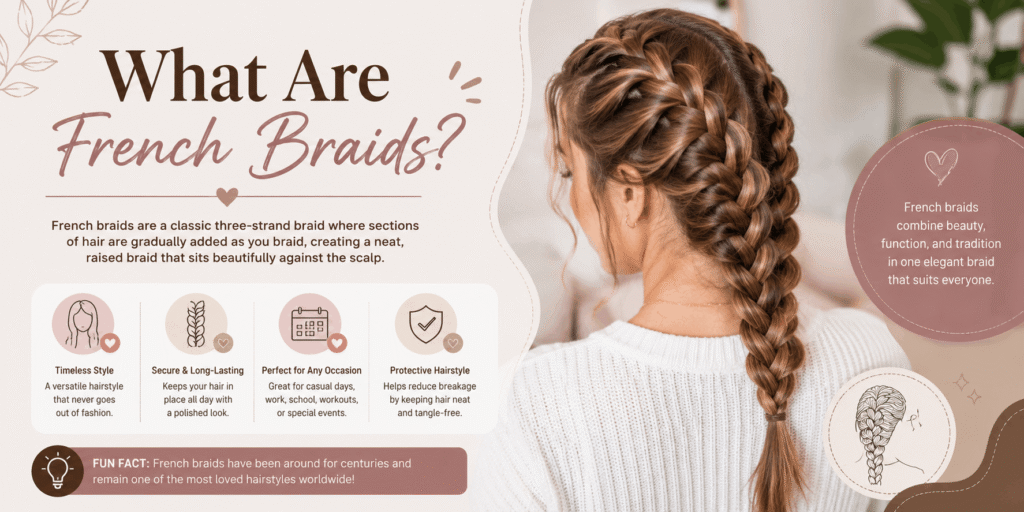
A French braid is a three-strand hairstyle created by gradually adding small sections of hair to the outer strands as the braid moves toward the back of the head.
The braid usually starts near the crown and continues down toward the ends. Because new hair is incorporated as you braid, the finished style remains attached to the head rather than hanging freely from the beginning.
How French Braids Differ From Regular Braids
A regular three-strand braid typically uses three sections of hair that are already separated and then crossed repeatedly.
French braids begin with a smaller section near the top of the head. Additional hair is gradually added to the three main sections as the braid progresses.
This difference gives French braids their distinctive close-to-the-head appearance.
Why the Style Remains Popular
French braids have remained popular because they are practical and adaptable. They can keep hair organized while creating a polished hairstyle without requiring complicated equipment.
The style can also be customized. You can create one French braid, two French braids, loose French braids, or combine the technique with ponytails and buns.
Benefits of French Braids✨
French braids are more than a fashionable hairstyle. They can also make hair easier to manage during everyday activities.
Helps Keep Hair Organized
One of the main advantages is that French braids keep much of the hair together. Loose strands are incorporated into the braid, which can make the hairstyle practical for busy days.
This can be particularly useful during activities where loose hair becomes inconvenient.
Works for Different Hair Types
French braids can be created on many different hair textures. Straight hair can produce a neat and defined braid, while wavy or textured hair can create a fuller appearance.
The technique may need slight adjustments depending on hair thickness and texture, but the basic three-strand method remains the same.
Creates Multiple Styling Options
A French braid can be worn by itself or used as the foundation for another hairstyle. For example, the braid can transition into a ponytail, bun, or low hairstyle.
This versatility makes French braids useful for both simple everyday looks and more polished occasions.
🪮How to Prepare Hair for French Braids
Good preparation can make braiding much easier. Hair that is extremely tangled may be difficult to divide into clean sections, so gently detangling it beforehand is helpful.
Start With Gently Detangled Hair
Use a suitable brush or comb to remove major tangles. Work gently, particularly if the hair is prone to breakage.
If your hair is very slippery, slightly textured, or freshly washed, you may find it harder to keep sections separated. In such cases, a small amount of suitable styling product can provide additional grip.
Decide Where You Want the Braid
Before starting, decide whether you want one braid in the center, two braids on either side, or a different variation.
For a traditional single French braid, the center of the crown is usually the starting point.
How to Do a Basic French Braid
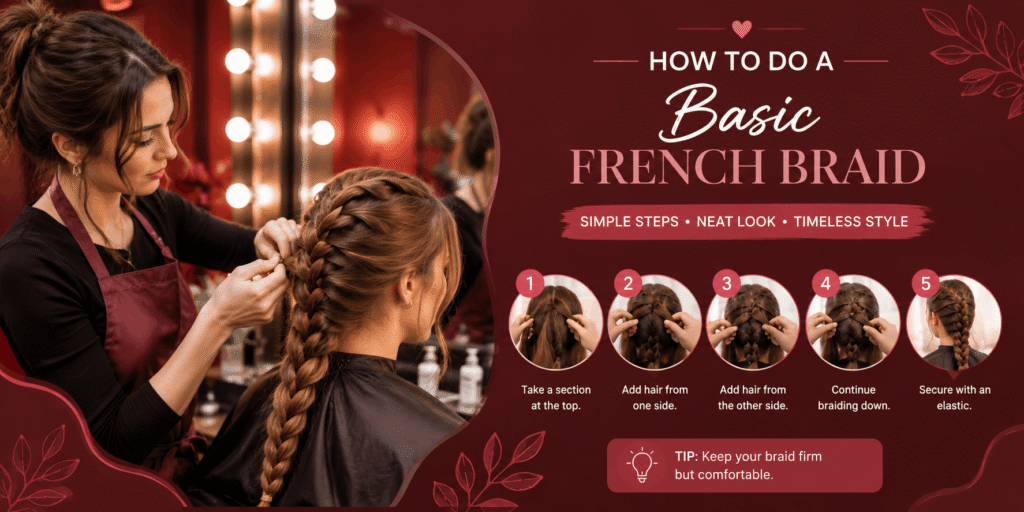
The basic technique involves creating three sections and repeatedly crossing them while adding new hair.
Step 1: Create the Starting Section
Take a section of hair near the crown and divide it into three roughly equal strands.
Hold one strand in each hand and keep the third strand between them.
Step 2: Begin the Three-Strand Pattern
Start by crossing one outside strand over the middle strand. Then cross the opposite outside strand over the new middle strand.
This establishes the same basic movement used in a regular three-strand braid.
Step 3: Add New Hair
Before crossing an outside strand again, pick up a small section of loose hair from the same side and combine it with that strand.
Cross the enlarged strand over the middle.
Repeat the process on the opposite side by gathering another small section of loose hair and adding it to the outside strand before crossing it over the middle.
Step 4: Continue Down the Head
Continue alternating sides while adding similar-sized sections of hair.
Try to maintain consistent tension without pulling too tightly. Keeping the sections reasonably even helps create a more balanced finished braid.
Step 5: Finish the Ends
Once you reach the point where there is no loose hair left to incorporate, continue with a regular three-strand braid.
Secure the end with a hair tie that feels comfortable and does not pull unnecessarily on the hair.
Tips for Making French Braids Look Neat💡
Creating a neat French braid is mostly about consistency and practice.
Keep Sections Similar in Size
Taking very different amounts of hair from each side can make the braid look uneven. Try to gather sections of similar size as you move downward.
Maintain Comfortable Tension
A braid should feel secure but comfortable. Excessive tension can make a hairstyle uncomfortable and may place unnecessary stress on the hair.
Use a Mirror
If you are learning to braid your own hair, a mirror can help you see where your hands are positioned and whether the sections are staying organized.
Practice Slowly
Speed is not important when learning French braids. Focus on understanding which strand moves over the middle and when new hair is added.
Once the movements become familiar, you can gradually increase your speed.
French Braids for Different Hair Lengths👧
Hair length can influence how easy it is to create a French braid.
Short to Medium Hair
Shorter hair may require smaller sections because there is less length available for the braid. Some shorter hairstyles may also need pins to secure loose pieces.
Medium-length hair usually provides enough length for a traditional French braid while remaining relatively easy to manage.
Long Hair
Long hair offers many possibilities for French braids. You can create long single braids, double braids, braided ponytails, or combine French braids with buns.
However, very long or thick hair may require additional time and larger sections to complete the style comfortably.
French Braids for Special Occasions💕
French braids can be dressed up for events by adding accessories or combining them with other hairstyles.
Adding Hair Accessories
Simple ribbons, decorative pins, or suitable hair accessories can change the appearance of a French braid.
For formal occasions, a neat braid combined with a bun can create an elegant hairstyle.
Creating a Softer Look
A French braid does not always have to look tightly structured. Slightly loosening the finished braid can create a softer and more relaxed appearance.
Be careful when loosening it, and avoid pulling aggressively on individual strands.
Common French Braiding Mistakes⚠️
Beginners often make a few predictable mistakes while learning the technique.
One common problem is taking sections that are too large or too small. Another is accidentally crossing the wrong strand over the middle.
Losing track of the three main sections can also make the braid confusing. If this happens, stop and reorganize the strands instead of continuing with an uneven pattern.
The most important thing is patience. French braids become easier as your hands become familiar with the movement.
French Braids as an Everyday Hairstyle🌸
French braids are practical because they can work with many everyday outfits and activities. They can create a neat appearance without requiring elaborate styling.
For casual days, you can wear a simple single braid. For a more structured appearance, two symmetrical French braids can create a balanced look.
The style can also be adapted according to personal preference, making it a useful option for people who enjoy changing their hairstyle regularly.
French braids are a timeless hairstyle that can be adapted for different occasions, hair lengths, and personal styles. Once you understand the basic braiding technique, there are many ways to make the hairstyle more interesting. From double French braids to braided ponytails, simple changes can create completely different looks.
The key to getting better results is practice. As your hands become familiar with separating, adding, and crossing the strands, the process becomes faster and more natural.
Popular French Braid Variations
French braids can be modified in several ways to create unique hairstyles.
Double French Braids
Double French braids are created by dividing the hair into two sections and making a separate braid on each side.
This style creates a symmetrical appearance and can be practical when you want to keep most of your hair secured. It works well for casual days, active routines, and relaxed occasions.
To create the style, make a clean center part and work on one side at a time. Keep the sections reasonably consistent so both braids have a similar appearance.
Side French Braid
A side French braid begins closer to one side of the head rather than directly in the center.
This variation creates an asymmetrical appearance and can be combined with a low ponytail or bun. It is also a useful option when you want something slightly different from the traditional center braid.
French Braid Ponytail
A French braid can transition into a ponytail once you reach the desired point on the head.
Instead of continuing the braid all the way to the ends, secure the remaining hair with a hair tie. This creates a practical hairstyle while leaving the rest of the hair loose.
French Braid Bun
For a more polished appearance, a French braid can be incorporated into a bun.
You can braid the hair from the crown toward the back and then gather the remaining hair into a bun. This combination can work particularly well for occasions when you want a more refined hairstyle.
French Braids for Different Hair Textures⭐
Hair texture can affect how the braid looks and how easy it is to create.
Straight Hair
Straight hair often produces clearly defined French braids. However, very smooth hair can sometimes be slippery.
A small amount of lightweight styling product may provide additional grip when necessary. Avoid using excessive product because it can make sections difficult to separate.
Wavy Hair
Wavy hair can give French braids a naturally textured appearance. The braid may look slightly fuller because of the natural movement in the hair.
A loose French braid can emphasize the texture, while a tighter but comfortable braid creates a more structured appearance.
Curly and Textured Hair
Curly and textured hair can create beautiful, full-looking French braids. Before braiding, gently detangle the hair and make sure the sections can be separated comfortably.
Working with the natural texture rather than trying to make every strand perfectly smooth can produce a relaxed and attractive result.
How to Make French Braids Last Longer❓
Several simple habits can help your hairstyle stay neat for longer.
Start With Suitable Hair
Hair that is excessively tangled or difficult to control can make braiding harder. Gentle preparation before styling can improve the final result.
Avoid Excessive Touching
Once your braid is finished, repeatedly adjusting it can loosen the sections and create flyaways.
Try to leave the braid alone as much as possible after securing it.
Use Comfortable Accessories
Choose hair ties and pins that hold the braid securely without creating excessive tension.
If an accessory feels uncomfortable, replace it with a more suitable option.
French Braids for Active Days
French braids are often chosen for activities where loose hair can become inconvenient.
Keeping Hair Secure
The close-to-the-head structure can keep much of the hair organized during movement.
However, the braid should not be pulled excessively tight. A secure hairstyle can still be comfortable.
After Exercise
If you wear French braids during exercise, allow your scalp and hair to dry appropriately afterward. Sweat and product buildup can accumulate over time, so regular cleansing is an important part of maintaining healthy hair.
How to Remove French Braids Gently❓
Removing a braid requires just as much care as creating one.
Start at the bottom and carefully remove the hair tie. Slowly loosen each section instead of pulling the entire braid apart at once.
If you encounter a knot, stop and gently separate it rather than forcing the strands apart.
After removing the braid, use your fingers or a suitable wide-tooth comb to gently separate the hair.
French Braids and Hair Protection
French braids can keep hair organized, but the way you create them matters.
A hairstyle that is consistently pulled tightly may cause discomfort and unnecessary tension. For regular wear, choose a comfortable level of tension and change your hairstyle occasionally.
If you notice persistent scalp discomfort from a particular style, loosen the braid or choose another hairstyle.
French braids work best as part of a broader hair-care routine that includes gentle washing, conditioning, careful detangling, and appropriate styling.
French Braids vs. Dutch Braids🔄
French and Dutch braids use similar techniques, but the strands are crossed differently.
In a French braid, the outside strands are generally crossed over the middle strand. In a Dutch braid, the outside strands are crossed underneath the middle strand.
This difference creates a distinct visual effect. French braids tend to appear woven into the hair, while Dutch braids often look more raised or prominent.
Both styles can be adapted into single braids, double braids, ponytails, buns, and other variations.
How to Practice French Braids💇
If you are struggling to create French braids, practice the hand movements before trying to braid your entire head.
Practice With Three Sections
Start by separating three small sections and practice crossing the outside strands over the middle.
Once you feel comfortable with that movement, begin adding small sections of loose hair.
Practice on One Side First
Trying to learn everything at once can feel confusing. Practice creating a single side braid before attempting a perfectly symmetrical double-braid style.
Use Consistent Sections
Focus on picking up similar amounts of hair each time. This helps the braid look more balanced and makes the technique easier to understand.
French Braid Styling Ideas
There are countless ways to customize this classic hairstyle.
You can combine French braids with a low ponytail for a simple everyday look. Two French braids can create a sporty appearance, while a braid leading into a bun can look more polished.
You can also experiment with braid placement, accessories, and the amount of looseness. Small changes can make the same basic technique look completely different.
Final Thoughts
French braids are a classic hairstyle that combines versatility, practicality, and timeless style. Once you understand the basic technique, you can create many different looks, including double French braids, side braids, braided ponytails, and braided buns.
The most important part of learning French braids is patience. Start with simple sections, practice the three-strand movement, and gradually learn how to add hair while maintaining consistent tension.
Whether you have straight, wavy, curly, or textured hair, French braids can be adapted to suit your personal style. With gentle handling and comfortable styling techniques, this classic braid can become an easy and reliable option for everyday hair care and special occasions.


One Comment