Airbrush foundation is changing the way people approach complexion makeup. Instead of relying on thick layers of product to cover every little imperfection, it creates a lightweight, finely distributed finish that can make skin look smoother, more even, and naturally polished. The technique has become especially popular among makeup artists, brides, beauty enthusiasts, and anyone who wants their foundation to look beautiful both in person and on camera.
But airbrush makeup is not just about achieving a flawless appearance. It is also about understanding how foundation is applied, how different formulas behave on the skin, and how to build coverage without making the face look overly heavy. With the right equipment and technique, airbrush foundation can offer a professional-looking result that traditional application methods may struggle to replicate.
Whether you are considering investing in an airbrush makeup system or simply curious about why so many makeup professionals use it, understanding how it works can help you decide whether it deserves a place in your beauty routine.
What Makes Airbrush Foundation Different From Regular Foundation?
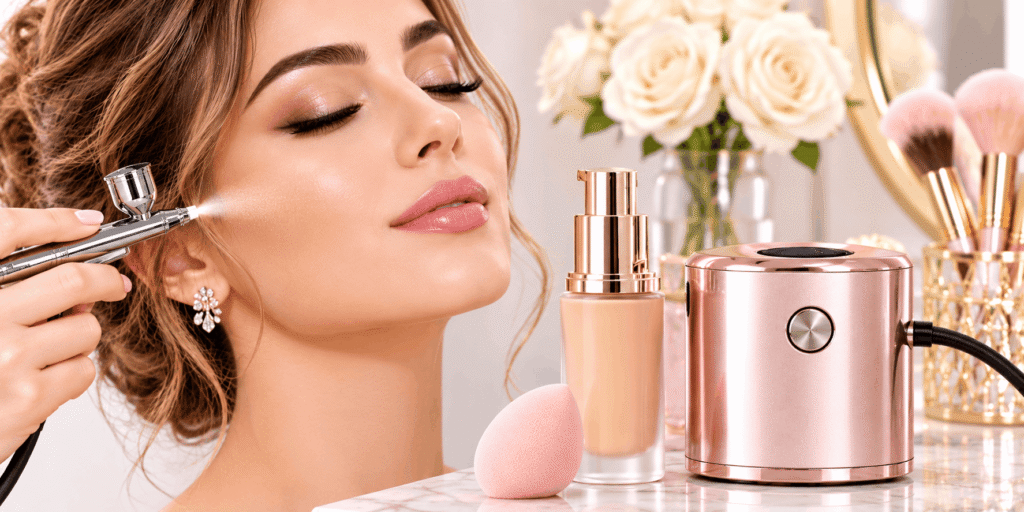
The biggest difference between airbrush foundation and traditional liquid foundation is the way the product reaches the skin.
Regular foundation is generally applied using fingers, sponges, or makeup brushes. These tools spread and blend the product directly across the face. Airbrush foundation, on the other hand, is applied through a specialized device that turns the formula into an extremely fine mist.
This mist settles onto the skin in tiny, controlled layers. Rather than placing a noticeable amount of product in one area, the makeup artist gradually builds coverage until the complexion reaches the desired appearance.
One interesting advantage of this technique is that it encourages a lighter approach to complexion makeup. Instead of applying a thick layer immediately, you can add small amounts until redness, uneven tone, and minor discoloration become less noticeable.
The result depends on several factors, including the foundation formula, air pressure, nozzle size, distance from the face, and application technique.
Airbrush makeup is not automatically better than traditional foundation. A poorly applied airbrush base can look patchy or overly dry, just as an incorrectly blended liquid foundation can look cakey. The real difference comes from controlling the application process.
How Airbrush Foundation Creates a Flawless-Looking Base
Airbrush foundation works through a combination of product formulation, air pressure, and controlled application.
Most airbrush systems contain a compressor, an airbrush gun, and a small container for foundation. When the device is activated, compressed air moves through the gun and helps distribute the liquid formula through a small nozzle.
The foundation comes out as a fine spray that can be directed toward different areas of the face.
The makeup artist moves the device continuously rather than concentrating the mist in one place. This prevents excessive product buildup and helps create a more even appearance.
A successful application usually involves several light passes.
For example, instead of trying to completely cover facial redness in one application, a makeup artist might apply a thin layer, allow it to settle, and then add another layer where additional coverage is needed.
This controlled process is particularly useful when working around the nose, cheeks, forehead, and chin, where skin texture and natural discoloration can vary.
Another important detail is the distance between the airbrush gun and the face. Holding it too close can create concentrated product deposits, while holding it too far away can cause the foundation to dry before reaching the skin properly.
Learning this balance is what separates a professional-looking finish from an uneven one.
7 Reasons Makeup Lovers Choose Airbrush Foundation
Airbrush foundation has become a favorite for several practical reasons. However, its benefits are not limited to special occasions.
1. A Naturally Blended Appearance
One of the most attractive qualities of airbrush makeup is its ability to create a soft, blended complexion.
Because the formula is distributed as a fine mist, it can create a smooth transition between areas of different skin tones. This helps reduce the appearance of obvious foundation lines around the jawline and other facial areas.
The goal is not to make skin look completely artificial or erase every natural feature. Instead, the technique aims to create a balanced complexion that still looks like skin.
2. Buildable Coverage Without Heavy Layers
Airbrush foundation can provide sheer, medium, or fuller coverage depending on the formula and how many layers are applied.
This flexibility makes it useful for people who prefer a lighter everyday appearance as well as those preparing for formal events.
For example, someone with mild redness may only need one or two light passes. Someone dealing with more noticeable discoloration might require additional coverage in selected areas.
The important thing is to build coverage gradually rather than spraying too much product onto the entire face.
3. A Polished Finish for Photography
Airbrush makeup is frequently used for weddings, professional photography, and special events because it can create an even complexion.
Under suitable lighting conditions, a well-applied airbrush base can photograph beautifully.
It can help minimize the appearance of uneven color and create a consistent finish across the face.
However, the final photographic result also depends on lighting, camera settings, skin preparation, and the specific foundation formula. Airbrush foundation does not automatically eliminate flashback or prevent every makeup issue.
4. Less Direct Contact During Application
Traditional foundation application involves repeatedly touching the face with brushes, fingers, or sponges.
Airbrush application can reduce the amount of direct tool contact with the skin because the product is sprayed onto the complexion.
This can be convenient in professional makeup environments where equipment is cleaned and maintained properly.
However, airbrush equipment still requires careful hygiene. The gun, cup, and other reusable components must be cleaned between clients to prevent product buildup and contamination.
5. Customizable Makeup Intensity
Another reason makeup artists appreciate airbrush foundation is the level of control it offers.
The amount of product, air pressure, and spraying distance can all influence the final result.
A light application can create a fresh, barely-there complexion, while additional passes can produce a more perfected appearance.
This makes the technique adaptable to different makeup styles rather than limiting it to one particular finish.
6. Useful for Long Events
Many airbrush formulas are designed with wear time in mind.
Certain silicone-based and water-resistant formulas can offer good staying power when applied correctly and paired with suitable skincare and setting products.
This makes them popular for occasions where makeup needs to remain presentable for several hours.
Still, longevity depends on skin type, weather, facial oil production, perspiration, and the formula itself. Airbrush makeup is not completely transfer-proof or guaranteed to last all day.
7. Professional-Looking Results With Practice
Airbrush foundation may look complicated when you first encounter the equipment, but the basic technique can be learned with practice.
Beginners can start by testing the spray pattern on a practice surface before moving to the face.
Once they understand how the device responds to different pressure settings and movements, applying foundation becomes easier.
The learning process takes patience, but it can open up more possibilities for creating different complexion finishes.
Understanding the Different Types of Airbrush Foundation
Not every airbrush foundation works the same way. Formulas are developed with different ingredients and performance characteristics, so choosing the right one matters just as much as selecting the equipment.
Water-Based Airbrush Foundation
Water-based airbrush foundation is generally associated with a lightweight feel and a more natural-looking finish.
These formulas can be suitable for people who prefer makeup that does not feel overly rich or heavy.
They are also popular in professional makeup kits because certain water-based formulas can provide a soft appearance without creating an excessively shiny complexion.
However, some formulas may require more frequent touch-ups, particularly in humid conditions or on skin that produces significant amounts of oil.
Water-based does not automatically mean suitable for every sensitive or acne-prone complexion. Always check the ingredient list and test the product before applying it across your face.
Silicone-Based Airbrush Foundation
Silicone-based formulas are widely used in professional makeup applications.
They often contain ingredients that help create a smooth, flexible texture and allow the product to spread evenly across the skin.
Many silicone-based options provide a more perfected appearance and can offer good wear time.
They may be particularly appealing for people who want a polished complexion for weddings, celebrations, and photography.
However, the finish varies between brands. Some formulas look natural, while others can appear more matte or full coverage.
Alcohol-Based Airbrush Foundation
Alcohol-based formulas are designed for specialized makeup applications and are commonly associated with body makeup, theatrical effects, and certain professional techniques.
They can provide strong durability and resistance to moisture, depending on the product.
However, these formulas are not necessarily appropriate for ordinary facial makeup routines.
Alcohol-based products may be drying or irritating, particularly around delicate facial areas. They should only be used according to the manufacturer’s instructions and intended application.
For everyday complexion makeup, a properly formulated water-based or silicone-based option is generally a more practical starting point.
How to Choose the Right Airbrush Foundation for Your Skin Type
Choosing an airbrush formula should involve more than selecting the lightest shade or the most expensive product.
Your skin type, preferred finish, coverage expectations, and environment all influence how the foundation will look throughout the day.
For Oily Skin
People with oily skin often prefer foundations that provide a soft matte or natural-matte finish.
A lightweight formula with suitable oil-control properties may help the complexion look less shiny.
Before applying airbrush foundation, use a moisturizer that absorbs comfortably and avoid layering too many rich skincare products.
A small amount of compatible primer may also help prepare areas that become oily quickly.
However, applying excessive powder underneath or over the foundation can create a dry, uneven appearance.
For Dry Skin
Dry skin usually benefits from a comfortable, hydrating preparation routine.
Start with a moisturizer that supports the skin barrier and allow it to absorb before applying makeup.
Look for formulas marketed with a natural or radiant finish rather than extremely matte products.
Airbrush foundation can emphasize dry patches if the skin has not been prepared properly. Applying more foundation to cover flaking usually makes the texture more visible.
The solution is better preparation, not necessarily heavier coverage.
For Combination Skin
Combination skin often requires different approaches across different areas of the face.
The forehead, nose, and chin may become oily, while the cheeks remain relatively dry.
Instead of using the same preparation technique everywhere, adjust your skincare and primer according to the needs of each area.
A balanced foundation formula can help create a consistent appearance without making dry areas look flat or oily areas look excessively shiny.
For Sensitive Skin
Sensitive skin requires additional attention when choosing any complexion product.
Check the ingredient list for known personal triggers, fragrance, and ingredients that have previously caused irritation.
It is also important to clean the airbrush equipment thoroughly and avoid sharing uncleaned tools.
Perform a patch test before using a new foundation across the entire face.
If your skin frequently experiences irritation, selecting a formula with a simple ingredient profile and seeking professional dermatological advice may be helpful.
How to Apply Airbrush Foundation at Home
You do not need to be a professional makeup artist to experiment with airbrush foundation. However, understanding the correct application sequence can make a noticeable difference.
Step 1: Prepare Your Skin
Begin with a clean face.
Apply your regular skincare products and allow moisturizer to settle into the skin. If you use sunscreen during the daytime, apply it before makeup and allow it to dry according to its instructions.
Avoid applying foundation over visibly wet or excessively slippery skincare layers.
Step 2: Select Your Foundation Shade
Choose a shade that blends naturally with your neck and surrounding complexion.
Testing the shade in natural lighting can help you avoid choosing a foundation that appears too pink, orange, yellow, or pale.
If your face and neck have slightly different tones, aim for a shade that creates a balanced transition rather than matching only the center of the face.
Step 3: Prepare the Airbrush Equipment
Check that the compressor, hose, and airbrush gun are properly connected.
Make sure the nozzle is clean and that the equipment is working correctly.
Read the manufacturer’s instructions before adding foundation, as different systems may require different formulas and cleaning procedures.
Step 4: Add a Small Amount of Foundation
Pour the recommended amount of compatible foundation into the product cup.
Beginners should start with a small quantity rather than filling the container.
Using too much product at once can make it harder to control the application and may result in unnecessary waste.
Step 5: Test the Spray Pattern
Before applying foundation to your face, test the spray on a clean practice surface.
Observe how the product comes out and adjust the pressure according to the equipment instructions.
The spray should be controlled and consistent rather than producing large droplets or irregular splashes.
Step 6: Apply in Light Circular or Sweeping Movements
Hold the gun at the recommended distance and move it continuously.
Begin with the forehead and cheeks, then work toward the nose, chin, and jawline.
Keep the airbrush moving rather than concentrating on a single spot.
Use light passes and allow the product to settle before deciding whether another layer is needed.
Step 7: Add Coverage Where Necessary
Pay attention to areas that may need additional coverage, such as redness around the nose, discoloration on the cheeks, or unevenness around the chin.
Apply extra product selectively instead of increasing the coverage across your entire face.
This helps preserve the lightweight appearance of the base.
Step 8: Complete the Rest of Your Makeup
Once the foundation has settled, continue with concealer where necessary, blush, bronzer, highlighter, and eye makeup.
Some cream and liquid products may need to be applied carefully to avoid disturbing the base.
Finish with a compatible setting spray or powder if required by your skin type and the foundation manufacturer’s instructions.
Common Airbrush Foundation Mistakes That Ruin the Finish
Even expensive airbrush equipment cannot guarantee a beautiful result if the application technique is incorrect.
Understanding common mistakes can help beginners avoid unnecessary frustration.
Spraying Too Much Product: Applying too many layers can make the complexion look heavy and unnatural. Start lightly and increase coverage only where necessary.
Holding the Gun Too Close: Excessive concentration in one area can create visible spots or uneven patches. Maintain a consistent distance according to your device’s instructions.
Keeping the Airbrush in One Position: Moving the device continuously helps distribute the foundation more evenly. Avoid directing the spray toward one facial area for too long.
Ignoring Skin Preparation: Foundation cannot hide every dry patch or uneven skin texture. A comfortable skincare base makes a significant difference.
Using the Wrong Formula: Not all traditional foundations are suitable for airbrush machines. Use products specifically approved for your equipment.
Skipping Equipment Cleaning: Dried foundation can block the nozzle and affect the spray pattern. Clean the equipment according to the manufacturer’s directions after each use.
Choosing an Incorrect Shade: A beautifully applied foundation can still look unnatural if the shade does not complement your neck and overall complexion.
Airbrush Foundation vs. Traditional Foundation: Which One Should You Choose?
Both techniques have advantages, and the better option depends on your makeup preferences, lifestyle, and application skills.
Traditional foundation is generally easier to apply because it does not require specialized equipment. You can use a brush or sponge, adjust coverage quickly, and blend products without learning how to operate an airbrush system.
It is also available in a huge variety of finishes, formulas, and coverage levels.
Airbrush foundation offers a different experience. Its fine-mist application allows users to build coverage gradually and create a soft, professionally polished appearance.
However, it requires equipment, compatible products, regular maintenance, and some practice.
For everyday makeup, traditional foundation may be more convenient. For weddings, professional makeup sessions, photography, or people who enjoy experimenting with different techniques, airbrush foundation can be an interesting investment.
Neither method is universally superior. A well-applied traditional foundation can look just as beautiful as a professionally applied airbrush base.
Is Airbrush Foundation Worth Buying for Personal Use?
The answer depends on how often you wear makeup and what you expect from your complexion products.
If you regularly attend formal events, enjoy creating professional makeup looks, or frequently experiment with different foundation techniques, an airbrush system may be worth considering.
It can provide greater control over the application process once you understand how the equipment works.
However, if you only apply foundation occasionally, purchasing an entire system may not be necessary.
A quality foundation, suitable brush, and makeup sponge can already deliver excellent results without requiring additional equipment.
Before investing, consider the cost of the machine, compatible foundation formulas, replacement components, and cleaning supplies.
Also think about storage and maintenance. Airbrush systems need proper care, and a device that remains unused for months may not provide good value.
The smartest purchase is one that fits your actual makeup habits rather than one based entirely on beauty trends.
How to Make Airbrush Foundation Last Longer
A long-lasting complexion begins before foundation touches the skin.
Start by cleansing your face and applying skincare products that suit your skin type. Allow each layer to settle before moving to the next step.
Avoid excessive moisturizer or primer, especially if your skin becomes oily during the day.
Choose an airbrush foundation designed for your desired wear time and apply it in thin, even layers. Building coverage gradually can help prevent unnecessary product buildup.
Once the foundation has settled, use setting products where needed.
People with oily skin may benefit from a small amount of translucent powder around the forehead, nose, and chin. Those with dry skin may prefer a compatible setting spray that does not emphasize texture.
During the day, gently blot excess oil instead of repeatedly adding powder.
Another important factor is avoiding unnecessary facial touching. Rubbing the face, wiping away perspiration, or repeatedly adjusting makeup can disturb the foundation.
Remember that even long-wearing formulas require realistic expectations. Heat, humidity, sweat, and natural skin oils can influence how makeup performs.
Final Thoughts
Airbrush foundation is more than just another makeup trend. It offers a different way to approach complexion makeup by combining specialized equipment, lightweight application, and buildable coverage.
Its biggest appeal is the ability to create a smooth, balanced appearance without automatically relying on thick layers of foundation. From everyday beauty experimentation to bridal makeup and professional photography, the technique offers plenty of creative possibilities.
Still, the secret to achieving a beautiful result is not simply owning an expensive airbrush machine. Choosing the right formula, preparing your skin, controlling the spray, and practicing the application technique all matter.
If you enjoy experimenting with makeup and want to explore a more controlled way of applying foundation, airbrush foundation may be worth trying.
Yes. Airbrush foundation can be used for everyday makeup if you prefer its application technique and have a suitable formula. However, the equipment may be less convenient than traditional foundation for quick daily routines.
It can create a very natural-looking finish when applied in thin layers. However, the final appearance depends on the formula, skin preparation, shade selection, and application technique.
Yes. Beginners can learn to use airbrush foundation by practicing on a clean surface, understanding the equipment settings, and starting with light applications.
It can work well on mature skin when the formula is comfortable and does not emphasize dryness or texture. Proper skincare preparation and avoiding excessive coverage are particularly important.