Nude lipstick shades can create anything from a barely-there makeup look to a polished, sophisticated finish. The right nude can make your lips look naturally defined, complement a bold eye look, or add warmth to everyday makeup without overpowering the rest of your face. The secret is choosing a shade that works with your natural lip colour, skin tone, undertone, and preferred lipstick finish.
Nude lipstick is not limited to beige or pale pink. It includes rosy browns, peachy neutrals, caramel tones, muted mauves, deeper chocolates, and sheer shades that let your natural lip colour show through. A colour that looks subtle on one person may appear noticeably pink, orange, or brown on someone else.
Whether you prefer creamy lipstick, a soft matte formula, a glossy finish, or a lightweight lip tint, there is a nude option for different styles and occasions. Below are 17 nude lipstick shades to explore, along with practical advice for choosing, applying, and wearing them confidently.
What Makes a Nude Lipstick Shade Flattering?
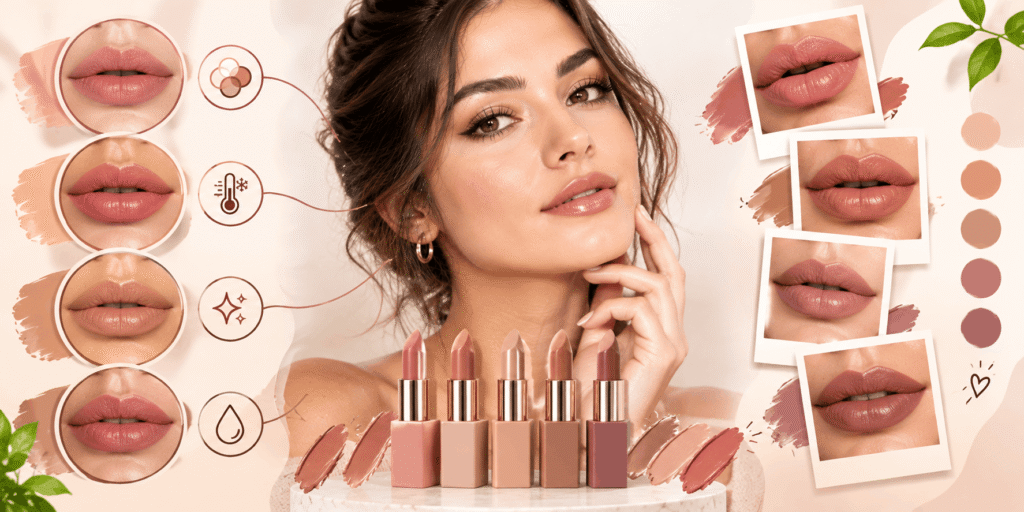
A flattering nude lipstick should complement your natural colouring rather than simply match your skin as closely as possible. A lipstick that is too pale can make the lips look washed out, while a shade that is too close to your skin colour may reduce definition around the mouth.
Start by considering the natural colour of your lips. If your lips are naturally pink, a rosy or pink-beige nude may blend in beautifully. If they have a brown or deeper mauve tone, a caramel, rose-brown, or chocolate nude may create a more balanced effect.
Your skin’s undertone is another useful consideration. Cool undertones often pair well with pink, mauve, and cool brown shades. Warm undertones may complement peach, terracotta, and caramel. Neutral undertones can usually explore both families, depending on the desired effect.
These are helpful starting points rather than strict rules. You can wear any colour you enjoy, regardless of undertone. The goal is to understand how a shade interacts with your natural colouring so you can choose the finish and intensity you prefer.
17 Nude Lipstick Shades to Try
1. Pinky Nude Lipstick
Pinky nude lipstick combines soft pink with a neutral base, creating a fresh colour that can look close to your natural lip tone. It is a versatile choice if you want your lips to look defined without wearing a bright or dramatic lipstick.
This shade works particularly well for everyday makeup, office looks, casual outings, and minimal beauty routines. It can also complement soft blush and neutral eyeshadow when you want a coordinated appearance.
For a natural result, choose a pinky nude that is slightly deeper or more saturated than your natural lip colour. If you have naturally pigmented lips, a medium pink-beige may be more visible than an extremely pale pink. A creamy or satin finish can keep the look comfortable and soft.
2. Rosy Nude Lipstick
Rosy nude lipstick offers a little more colour than a traditional beige nude. Its blend of muted rose and neutral tones creates an elegant appearance without feeling overly bold.
It is a useful option when you want your lips to stand out gently while maintaining a natural-looking makeup style. Rosy nude can complement pink blush, brown eyeliner, soft smoky eyes, and neutral clothing.
The exact shade can range from dusty rose to a deeper rose-brown. Choose a lighter rosy nude for a delicate daytime look or a richer version for evening makeup. If your natural lips are quite dark, a medium rosy shade may provide a more noticeable and even-looking finish.
3. Brown Nude Lipstick
Brown nude lipstick brings depth and definition to the lips while keeping the overall colour understated. Depending on the formula, it can appear like soft cocoa, milk chocolate, or a muted brown with pink undertones.
This shade is especially useful if pale beige lipsticks tend to make your complexion look dull. Brown nudes often provide enough contrast to define the lips without requiring a bold colour.
For a subtle look, choose a brown nude close to your natural lip depth. For a more sculpted appearance, pair it with a slightly deeper brown lip liner and blend the edges carefully. Keep the centre of the lips lighter if you want additional dimension, or use one shade across the entire lip for a simple monochromatic finish.
4. Peach Nude Lipstick
Peach nude lipstick combines beige with a gentle peach or apricot tint. It can add warmth to the face and works well for people who prefer a fresh, soft-focus makeup look.
This shade pairs naturally with peach blush, warm brown eyeshadow, and subtle bronzer. It can be especially appealing during spring and summer, although it works throughout the year when matched with the rest of your makeup.
Be mindful of how light the peach colour is. Very pale peach may look chalky on naturally pigmented lips, while a medium peach-beige can provide a more balanced result. If you want a natural finish, try a satin formula or a sheer lipstick that allows some of your own lip colour to show through.
5. Mauve Nude Lipstick
Mauve nude combines muted pink, subtle purple, and brown undertones. It is a sophisticated alternative to traditional beige because it adds colour while remaining relatively understated.
This shade can work well for everyday makeup, professional settings, dinners, and occasions when you want something more distinctive than a basic pink nude. It pairs nicely with cool brown eyeshadow, soft grey tones, and mauve blush.
If your skin has cool undertones, a cooler mauve may complement your colouring. Warmer complexions can also wear mauve successfully by choosing a version with more brown or rose in the formula. Test the lipstick in natural light to see whether it looks balanced against your skin and natural lip colour.
6. Orange Nude Lipstick
Orange nude lipstick adds a subtle terracotta or warm apricot quality to a neutral lip colour. It is a good option if pink-based nudes look too cool or if you enjoy warmer makeup tones.
Unlike a bright orange lipstick, an orange nude usually contains enough beige or brown to soften the colour. The result can look earthy, modern, and wearable without becoming the main focus of your makeup.
Try a muted terracotta nude with warm blush and soft brown eyeliner. If you prefer a lighter effect, choose a peachy orange nude with a creamy texture. If you want more definition, a deeper terracotta shade can provide a stronger finish while still working as a neutral colour.
7. Caramel Nude Lipstick
Caramel nude lipstick blends warm beige with golden brown tones. It creates a richer alternative to pale nude shades and can look especially beautiful when you want warmth without a strongly orange finish.
Depending on its depth, caramel nude can appear soft and understated or noticeably brown. It can pair well with bronze eyeshadow, golden highlights, warm blush, and neutral outfits.
If your lips are naturally darker, a medium caramel shade may be easier to wear than a very light beige. You can apply a thin layer for a softer effect or build the colour gradually for a more defined finish. A glossy top layer can make caramel tones look richer, while a matte finish creates a more velvety appearance.
8. Dark Nude Lipstick
Dark nude lipstick offers the understated character of a neutral colour with greater depth. Shades may include deep rose-brown, cocoa, muted chestnut, and soft chocolate.
It is an excellent option when a light nude disappears against your natural lip colour or makes your makeup look unbalanced. Darker nude shades can define the mouth while remaining versatile enough for everyday wear.
For a polished look, apply the lipstick carefully along the natural lip line and blend the edges for a smooth finish. You can combine it with a deeper liner for a more defined shape, but a matching liner usually creates a softer, more seamless result.
Dark nude lipstick can also work beautifully with minimal eye makeup. A little mascara, groomed brows, and a touch of blush may be enough to complete the look.
9. Light Nude Lipstick
Light nude lipstick creates a subtle, understated appearance, particularly when its undertone complements your natural colouring. It may lean beige, pink-beige, or soft cream depending on the formula.
Because very light colours can reduce lip definition, choosing the right depth is important. If the lipstick is nearly identical to your skin tone, the mouth may appear less defined than you intended. A shade with a little pink or brown can help preserve a natural-looking outline.
Light nude lipstick works well with soft makeup, defined lashes, and subtle blush. For a more balanced result, apply a small amount of lip liner in a similar tone before adding the lipstick. Blend the liner inward so the transition looks smooth rather than sharply outlined.
10. Light Pinky Nude Lipstick
Light pinky nude is a delicate variation of pink nude, often featuring a pale pink base with a hint of beige. It can create a soft, romantic finish that suits simple daytime makeup and more polished occasions.
This shade can be especially attractive if you prefer a subtle lip colour that does not compete with your eye makeup. It pairs well with light pink blush, neutral eyeshadow, and a gentle highlight.
However, extremely pale pinks may appear uneven over naturally darker or more pigmented lips. If that happens, try a slightly deeper pink-beige or use a coordinating liner to create a more consistent base. A creamy formula may also give a softer result than a very dry matte lipstick.
11. Cool-Toned Nude Lipstick
Cool-toned nude lipstick typically has pink, mauve, or taupe undertones rather than strong golden or orange tones. It can create a refined look that pairs well with cool brown eyeshadow, grey eyeliner, and muted blush.
The category includes a range of depths, from pale pink-beige to deeper taupe-brown. Choosing the right depth is just as important as choosing the right undertone. A cool nude that is too pale may look flat, while a medium taupe or rose-brown can provide more definition.
If warm nude lipsticks consistently appear too orange on you, a cool-toned shade may be worth testing. Still, do not rely on skin undertone alone. Your natural lip pigment and the lipstick’s formula can change how the colour appears once applied.
12. Warm Nude Lipstick
Warm nude lipstick includes shades with golden beige, peach, caramel, and warm brown undertones. These colours can give the lips a softly sunlit appearance and coordinate well with warm-toned makeup.
A warm nude can be subtle enough for everyday use or rich enough to complement a bronzed evening look. Choose a light peach-beige for a delicate finish or a medium caramel nude for greater contrast.
Warm nudes can also work across different skin tones. The key is finding a shade with suitable depth and avoiding a colour that looks too orange or too pale for your preferred style. Test it alongside your usual blush and foundation to see how the complete makeup look comes together.
13. Matte Nude Lipstick
Matte nude lipstick describes a finish rather than one specific colour. It can be pink, brown, mauve, peach, or beige, with little visible shine once applied.
A matte finish can create a clean, defined appearance and may suit long-wearing makeup styles. It is particularly useful when you want your lip colour to remain the main feature without the reflective effect of gloss.
Preparation matters because matte formulas can emphasise dry patches. Gently exfoliate only when appropriate for your lips, apply a comfortable lip balm, and remove excess balm before applying lipstick if the formula requires a drier surface. If your lips are very dry or irritated, prioritise comfort instead of forcing a matte finish.
For a softer result, press the lipstick onto the lips with a fingertip rather than applying a thick layer. This can create a blurred, natural-looking effect.
14. Nude Liquid Lipstick
Nude liquid lipstick comes in a range of colours and finishes, including matte, satin, and glossy formulas. It is often chosen when you want precise application or a more defined colour result.
A liquid formula can be useful for creating a neat lip shape, but the feel and wear time depend on the specific product. Some matte liquid lipsticks dry down firmly, while others remain flexible or creamy.
Apply a thin, even layer and allow it to set according to the product directions. Avoid repeatedly adding thick layers if the formula becomes heavy or uneven. If you prefer a softer nude look, gently blur the edges before the lipstick fully sets, provided the product allows it.
Check whether the formula feels comfortable after drying. Long wear is useful, but a lipstick that leaves your lips uncomfortably tight may not be the right choice for everyday use.
15. Glossy Nude Lipstick
Glossy nude lipstick adds shine to a neutral lip colour, making the lips appear more reflective and giving the overall makeup a fresh finish. Depending on the product, it may be a traditional lipstick with a glossy finish, a tinted balm, or a lipstick layered with lip gloss.
This style works well for casual makeup, soft glam, and occasions when you want a hydrated-looking appearance. Pink-beige, caramel, and rose-brown colours can all work beautifully with a glossy finish.
If your lipstick tends to move around, start with a thin layer and remove excess product before adding more. You can also apply gloss only to the centre of the lips to create a subtle highlight without covering the entire lip surface in a slippery layer.
Glossy nude lipstick is a flexible choice when you want a softer alternative to a full matte look.
16. Perfect Nude Lipstick
There is no single shade that qualifies as the perfect nude for everyone. A useful everyday nude is one that complements your natural lip colour, feels comfortable, and works with the makeup looks you wear most often.
For some people, that may be a muted rose. For others, it may be a brown nude, soft peach, caramel, or neutral mauve. The best choice is often a shade that adds enough definition to the lips without requiring you to change the rest of your makeup routine.
When shopping, test a few shades within the same colour family rather than choosing only one based on a product photograph. Compare how each colour looks in natural light and consider whether it still feels flattering when worn with your usual blush and eye makeup.
If you want one nude lipstick for everyday use, a medium-depth shade with a comfortable satin or creamy finish can be a practical starting point.
17. Sheer Nude Lip Tint
A sheer nude lip tint offers a lighter alternative to opaque lipstick. It adds a wash of colour while allowing more of your natural lip tone to remain visible.
This makes it useful for quick makeup routines, casual days, and people who prefer a low-maintenance finish. Depending on the formula, a lip tint may leave a subtle stain, provide a glossy appearance, or feel similar to a tinted balm.
Sheer nude tints can be especially forgiving because the natural lip colour contributes to the final result. However, the same tint may look different on two people because their natural lip pigmentation differs.
Apply one layer for a subtle effect and build gradually if you want more colour. If the product is drying, follow its directions and consider a comfortable lip balm. A sheer tint is a good option when you want your lips to look naturally enhanced rather than fully covered.
How to Choose Nude Lipstick for Your Skin Tone
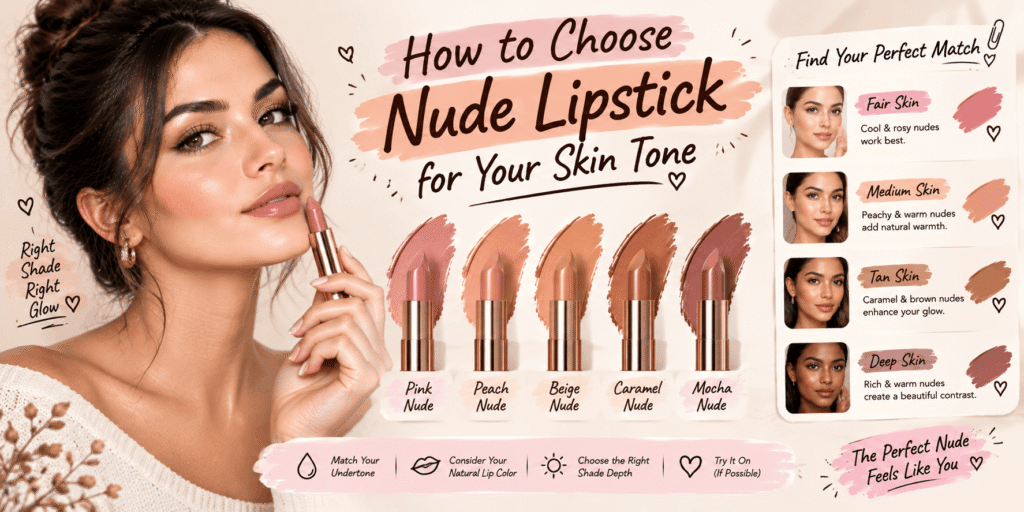
Although shade names can help narrow your options, the depth and undertone of a lipstick are more useful than a simple label such as “nude” or “beige.” Consider the following suggestions as a starting point, not strict beauty rules.
Fair and Light Skin
Fair and light complexions can work well with pink-beige, soft rose, peach nude, and light mauve shades. If you prefer a very natural effect, look for a lipstick that adds a little colour without blending completely into your skin.
Extremely pale beige can sometimes make the lips look washed out. A touch of pink or rose may provide a more balanced appearance. If you prefer a bolder nude, a medium rosy brown can create contrast while remaining neutral.
Medium and Olive Skin
Medium and olive complexions can explore caramel, warm rose, peach-brown, mauve-brown, and medium beige shades. The best option depends on whether your skin appears more golden, neutral, or cool.
A warm caramel nude can complement golden undertones, while rose-brown and mauve may provide a more muted effect. If a shade appears too orange, try a neutral brown or rose-based alternative.
Tan and Deep Skin
Tan and deep complexions can look beautiful with chocolate, chestnut, caramel, deep rose, and rich brown nude shades. These colours can enhance the natural lip shape while providing enough depth to remain visible.
Pale nude colours can also be worn if you enjoy them, but choosing a suitable undertone and adding definition may help avoid a washed-out appearance. A medium or deep lip liner can be blended into a lighter centre shade for a dimensional effect.
There is no need to limit yourself to colours traditionally recommended for your skin tone. Personal preference, natural lip pigmentation, and the complete makeup look matter just as much.
How to Apply Nude Lipstick for a Smooth, Natural Finish
Even a flattering shade can look uneven if the lips are dry or the colour is applied too heavily. A simple preparation and application routine can help create a more polished result.
Prepare Your Lips
Begin with clean lips. If they feel dry, apply a comfortable lip balm and allow it to settle before applying lipstick. Avoid aggressive scrubbing, especially if your lips are cracked, irritated, or sensitive.
If you are using a matte lipstick, check whether the formula works best on a relatively dry surface. Too much balm underneath certain formulas can affect how evenly they apply or how long they last.
Use Lip Liner When Needed
Lip liner can help define the natural lip shape and provide a base for lipstick. Choose a shade close to your lipstick or a natural colour that blends smoothly into it.
Outline the lips gently without drawing far beyond your natural lip line. If you want a softer appearance, lightly blend the liner inward so there is no obvious border. A liner that is significantly darker than the lipstick can create a dramatic effect, but it may not look like a seamless nude lip.
Apply the Colour in Thin Layers
Start with a thin layer of lipstick and build the colour gradually. This makes it easier to control the intensity and helps prevent a heavy or uneven appearance.
For a soft finish, press your lips together gently or use a fingertip to diffuse the edges. For a more defined look, use the lipstick’s applicator or a lip brush to refine the corners and cupid’s bow.
If you use a glossy product, apply only as much as you need. A small amount can provide shine without making the colour move beyond the lip line.
Check the Colour in Natural Light
Indoor lighting can make a nude lipstick appear warmer, cooler, lighter, or darker than it really is. Before deciding whether a shade suits you, check it near a window or in another setting with natural light.
Pay attention to how the lipstick looks with your skin and natural lip colour. If it seems too pale, try a deeper version of the same shade. If it looks too orange, compare it with a neutral or rosy option.
Common Nude Lipstick Mistakes to Avoid
One common mistake is choosing a shade solely because it looks good on someone else. The same lipstick can appear different depending on skin tone, lip pigmentation, lighting, and the amount applied. Use inspiration photographs to identify the colour family you like, then test similar shades on yourself.
Another mistake is choosing a nude that is too close to your skin colour without considering lip definition. If the result looks washed out, try a slightly deeper shade, a hint of pink or brown, or a coordinating liner.
Lip preparation is also important. Dry patches can become more noticeable under matte formulas, while excessive balm can affect how some lipsticks adhere. Choose a preparation method that suits the formula and the condition of your lips.
Finally, do not assume that a nude lipstick must be completely matte or long-wearing. A creamy lipstick, sheer tint, or glossy formula may be more comfortable for your needs. The best product is one that gives you the appearance you want without making your lips feel uncomfortable.
Final Thoughts
Nude lipstick shades offer plenty of variety, from soft pink-beige and peach to mauve, caramel, chocolate, and sheer neutral tints. Finding your ideal colour is less about following a single beauty rule and more about understanding your natural lip colour, choosing a suitable undertone, and deciding how much definition you want.
If you are unsure where to begin, try a rosy nude, medium brown nude, or neutral pink-beige. These colour families offer useful starting points for exploring different finishes and depths. Compare shades in natural light, and consider how each one looks with your usual makeup.
Most importantly, treat nude lipstick as a personal choice rather than a colour category with strict boundaries. Whether you prefer a barely-there tint, a creamy everyday lipstick, or a deeper brown nude, the right shade is the one that makes you feel comfortable and confident.
The most natural-looking shade is usually close to your natural lip colour, with enough pink, brown, peach, or mauve to preserve definition. The ideal depth varies from person to person, so testing several shades is more reliable than choosing a colour based on its name alone.
Yes. Light nude lipstick can work on dark skin tones, just as deeper nude colours can work on lighter complexions. If a pale shade looks washed out, try adding a coordinating lip liner or choosing a light nude with more pink or brown in it.
Neither is essential. A shade slightly deeper than your natural lip colour can provide definition, while a similar shade creates a subtle effect. A lighter nude can also work if you prefer that style, especially when the undertone complements your skin and the lip shape remains defined.