1930s fashion was a fascinating mix of elegance, practicality, and Hollywood-inspired glamour. The decade moved away from the loose, straight silhouettes of the 1920s and embraced longer hemlines, defined waists, graceful curves, broader shoulders, and clothing designed to create a more elongated appearance. From sophisticated bias-cut evening gowns to practical day dresses and sharply tailored men’s suits, 1930s style reflected both the hardships and the cultural excitement of the era.
The decade was shaped by the Great Depression, changing ideas about modern women and men, the growth of cinema, and improvements in clothing production. Fashion became more polished without necessarily becoming extravagant. People learned to make garments last longer, alter older clothing, and choose pieces that could work for several occasions. At the same time, Hollywood offered an idealized version of luxury that influenced what people wanted to wear.
What makes 1930s fashion particularly interesting today is the contrast between those two worlds. Everyday clothing could be simple and practical, while evening fashion could be remarkably glamorous. That combination created a distinctive aesthetic that continues to influence vintage fashion, bridalwear, red-carpet dressing, hairstyles, tailoring, and modern clothing design.
The Historical Shift That Shaped 1930s Fashion
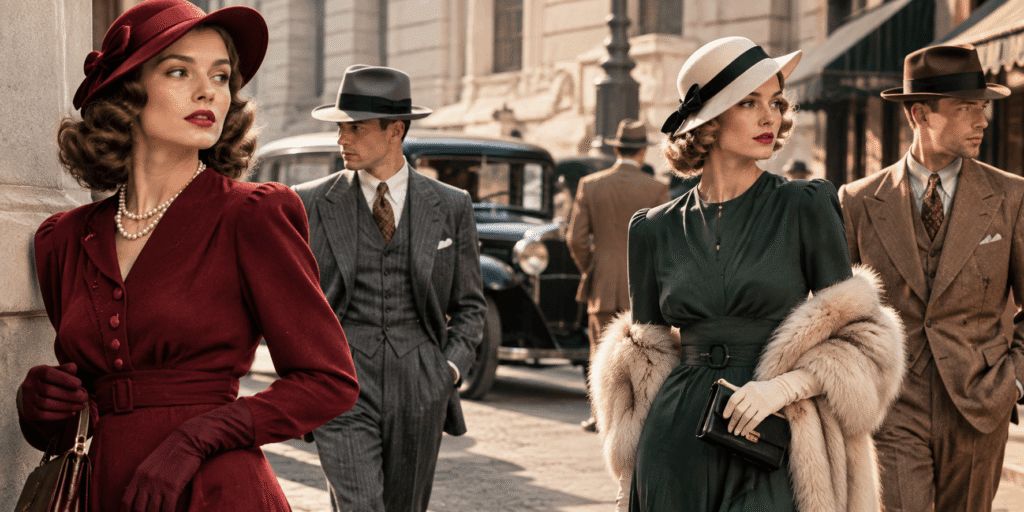
The easiest way to understand 1930s fashion is to see it as a reaction to the previous decade. The 1920s had celebrated a youthful, relaxed silhouette, with dropped waists, shorter skirts, and relatively straight shapes. By the early 1930s, the fashionable figure began moving in the opposite direction. Clothing once again emphasized the natural waist and created a longer, more feminine line.
This did not mean that everyone suddenly abandoned comfortable clothing. Instead, designers found ways to make practical garments look more refined. Dresses could have simple construction but still include elegant collars, shaped sleeves, clever pleating, or decorative buttons. Suits became useful for working women while maintaining a polished appearance.
The economic situation also had a major effect. During the Great Depression, many families had less money available for clothing, which encouraged careful purchasing and reuse. A fashionable wardrobe was not necessarily one filled with dozens of new garments. People repaired, altered, handed down, and repurposed clothing whenever possible.
At the same time, mass production made fashionable influences more accessible. Department stores, mail-order catalogs, sewing patterns, and ready-to-wear clothing allowed people outside wealthy social circles to follow trends. A woman did not need a designer wardrobe to imitate the general silhouette seen in magazines or films.
This created an interesting relationship between aspiration and reality. Fashion magazines and Hollywood showed luxurious gowns, elaborate hairstyles, and expensive-looking accessories, while ordinary people adapted those ideas using less expensive materials and simpler construction.
The New Silhouette: Longer, Sleeker, and More Defined
One of the most recognizable characteristics of 1930s fashion was its elongated silhouette. Instead of the loose rectangular shape associated with much of the 1920s, clothing increasingly followed the body more naturally.
The waist became important again, but the overall look was not necessarily extremely restrictive. Designers often created a gentle curve from the shoulders through the waist and down toward the hips. Skirts became longer, while dresses frequently extended below the knee and sometimes approached the ankle.
This longer silhouette gave clothing a sophisticated appearance. Even a relatively simple dress could look elegant because of its proportions.
Bias-Cut Dresses
The bias cut became one of the defining techniques associated with 1930s evening fashion. Instead of cutting fabric straight along the grain, designers cut it diagonally. This allowed certain fabrics to fall and move differently across the body.
Silk and satin were especially effective because they could drape softly and create fluid movement. A bias-cut dress could look simple when hanging on a mannequin but become remarkably graceful when worn.
The technique also helped create the relaxed elegance associated with Hollywood glamour. Rather than relying on heavy decoration, designers could use the movement of the fabric itself as the main visual feature.
The Importance of the Back
Another interesting feature of 1930s fashion was the attention given to the back of garments. Dresses could appear relatively modest from the front while revealing dramatic back details.
Low backs, decorative straps, unusual closures, draping, and carefully placed fabric details created an element of surprise. This was particularly effective in eveningwear because a dress could look sophisticated from one angle and much more dramatic from another.
The emphasis on the back also worked beautifully with the decade’s longer hairstyles and elegant posture. Designers were not simply decorating clothing; they were thinking about how the entire figure would look while walking, standing, or entering a room.
Women’s Daywear Was Elegant but Practical
Although modern images of the 1930s often focus on glamorous gowns, most women did not spend their days dressed for Hollywood premieres. Everyday fashion needed to be comfortable, durable, and appropriate for work, shopping, housework, travel, or social activities.
Day dresses were among the most common choices. They often featured modest necklines, sleeves, defined waists, and skirts that allowed movement. Small details such as collars, belts, buttons, pleats, and gathers could make an otherwise simple dress look carefully designed.
Printed fabrics were also popular. Florals, checks, stripes, dots, and other patterns could bring personality to everyday clothing without requiring expensive decoration.
Blouses, Skirts, and Separates
Separates gave women another practical way to create different outfits. A blouse could be paired with more than one skirt, allowing a small wardrobe to produce several combinations.
Blouses might include Peter Pan-style collars, bows, decorative buttons, puffed sleeves, or fitted shapes. Skirts generally had a more structured appearance than the very loose styles of the previous decade.
This approach was useful during financially difficult times. Instead of buying a completely new outfit for every occasion, people could change one component and create a different look.
Women’s Suits
Women’s suits became increasingly important during the 1930s, particularly as more women participated in professional and public life.
A typical suit might feature a fitted jacket, shaped waist, structured shoulders, and a matching skirt. The jacket could be worn with other garments, increasing its usefulness.
Tailoring also gave women a more authoritative appearance. The suit communicated seriousness while still incorporating feminine details through fabric, shaping, collars, buttons, or accessories.
Trousers and Sportswear
Trousers were not yet the universal everyday choice they would become later, but women increasingly wore them for certain activities.
Sportswear and leisure clothing helped make trousers more acceptable. Wide-legged trousers, practical separates, knitted garments, and relaxed tops appeared in contexts such as vacations, outdoor activities, and resort wear.
This was an important development because it demonstrated that fashion was beginning to accommodate movement and activity more openly. Clothing did not always have to prioritize formal appearance.
Eveningwear Turned 1930s Fashion Into Hollywood Glamour
If daywear represented practicality, eveningwear represented fantasy.
The 1930s fashion produced some of the most recognizable glamorous silhouettes in fashion history. Long gowns, flowing fabrics, elegant necklines, dramatic backs, and sophisticated draping created an appearance that was luxurious without necessarily depending on excessive ornament.
Satin, silk, velvet, chiffon, and other fabrics with movement or sheen were particularly effective for evening clothing.
Satin, Silk, and Velvet
Fabric choice was crucial to the visual language of 1930s eveningwear.
Satin could catch light dramatically, making a simple gown appear luxurious. Silk offered softness and movement, while velvet provided depth and richness. Chiffon could be layered or draped to create a lighter effect.
Because the silhouette itself was often relatively simple, fabric quality and construction became extremely important. A beautifully cut gown did not always need heavy decoration to attract attention.
Necklines and Sleeves
Evening dresses explored a wide range of necklines. Halter-inspired shapes, V-necks, draped necklines, and elegant shoulder treatments could all appear in formal clothing.
Sleeves also became an important design element. Some were slim and fitted, while others used gathering, flowing fabric, or unusual proportions to add drama.
The overall objective was usually elegance rather than visual overload. One dramatic feature could be enough to define the entire gown.
Hollywood Had an Enormous Influence on Fashion
Cinema played a major role in creating the glamorous image associated with the 1930s. Movie stars became style references for audiences who wanted to imitate the sophistication they saw on screen.
Marlene Dietrich, Jean Harlow, and Greta Garbo were among the stars whose appearances helped shape popular ideas about elegance during the period.
Film costumes were often more dramatic than ordinary clothing, but their influence extended beyond the cinema. A hairstyle, neckline, sleeve shape, or type of evening dress seen on screen could inspire consumers and designers.
Hollywood also helped popularize the idea that fashion could communicate personality. A sophisticated gown could suggest confidence, mystery, romance, or wealth before the wearer even spoke.
The connection between cinema and fashion became increasingly powerful because photographs of stars circulated through newspapers and magazines. People could see the latest screen looks and search for similar styles in shops or sewing patterns.
Men’s Fashion Became Broader and More Structured
Men’s fashion in the 1930s developed a strong, confident silhouette. Suits remained central to men’s wardrobes, but their proportions became broader and more imposing.
Shoulders were often emphasized, while jackets and trousers created a longer, stronger shape. This was particularly noticeable in formal suits.
Broad Shoulders and High-Waisted Trousers
The broader shoulder line became one of the defining features of men’s tailoring. Jackets could include structured shoulders and wider lapels, giving the upper body a stronger appearance.
Trousers were often worn higher on the waist than many modern styles. They could also feature wider legs, producing a balanced silhouette beneath the structured jacket.
This combination created a distinctly 1930s look: broad above, defined at the waist, and relatively full through the trousers.
Three-Piece Suits and Formal Dressing
Three-piece suits remained an important choice for formal occasions. A typical combination included a jacket, waistcoat, and trousers made from coordinating fabric.
The waistcoat added another layer of structure and allowed men to maintain a polished appearance even when the jacket was removed.
For business and formal settings, shirts, ties, polished shoes, and hats completed the outfit. Clothing was often expected to communicate respectability and social position.
Casual Men’s Clothing
Men’s casual fashion was more varied than the formal suit might suggest. Knitwear, sports jackets, lighter trousers, and relaxed shirts were suitable for leisure activities.
Resort clothing also became increasingly important. Lighter fabrics and more relaxed shapes allowed men to dress appropriately for vacations and outdoor settings without relying on heavy formal suits.
Fabrics, Patterns, and Colors Added Personality
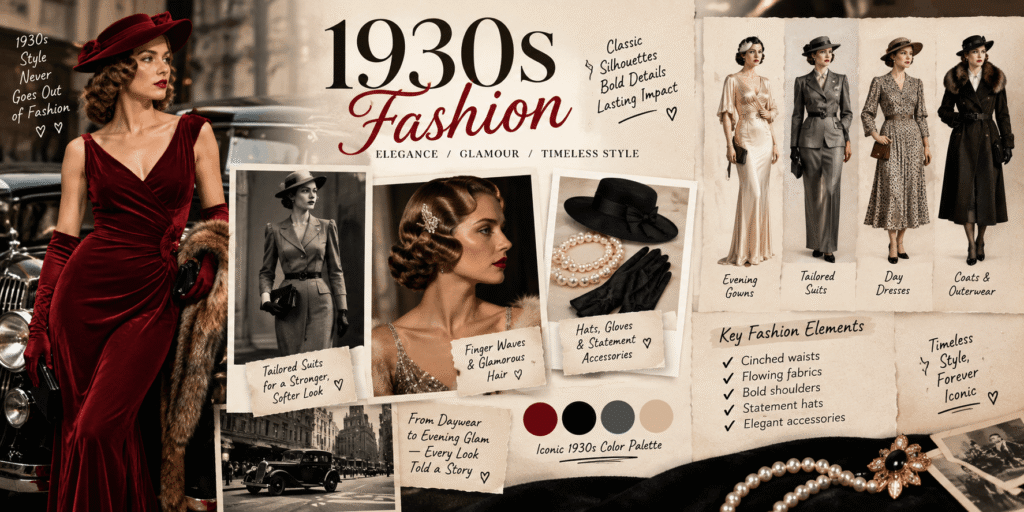
1930s fashion was not defined by one color palette or fabric. The decade offered considerable variety depending on the garment, occasion, and budget.
Everyday clothing could use cotton, wool, rayon, linen, and other practical textiles. More luxurious evening garments might use silk, satin, velvet, or chiffon.
Rayon was particularly useful because it could provide some of the visual qualities associated with more expensive fabrics at a lower cost.
Patterns Were Important in Everyday Clothing
Florals, checks, stripes, dots, geometric patterns, and small repeated motifs appeared frequently in women’s clothing.
Prints were particularly useful because they could make a simple dress look more interesting without requiring expensive embellishment.
Some prints were subtle and appropriate for daytime, while others were bolder and suited to evening or social occasions.
Color Was Used Strategically
The decade is often imagined through muted vintage tones, but 1930s fashion included a much wider range of colors.
Deep jewel-like shades, earthy neutrals, soft pastels, creams, blues, greens, reds, and warm browns could all appear in clothing.
Color selection often depended on the fabric and occasion. Evening gowns could use rich or sophisticated tones, while daytime dresses might use lighter or more practical shades.
Accessories Completed the 1930s Look
Accessories were not merely decorative additions. They helped transform a relatively simple outfit into a complete appearance.
Hats were particularly significant. Many women wore hats outside the home, and different shapes could dramatically change the character of an outfit.
Gloves were also common for formal or dressy occasions. Handbags, belts, scarves, jewelry, and shoes provided additional opportunities to coordinate an outfit.
Shoes and Stockings
Women’s shoes generally had practical yet elegant shapes. Heels were popular, but footwear needed to remain functional enough for walking and daily activities.
Straps, pumps, rounded toes, and decorative details could give shoes a feminine appearance.
Stockings were also an important part of a polished outfit. They helped create the continuous leg line that worked so well with the decade’s longer skirts and dresses.
Jewelry and Handbags
Jewelry could be used sparingly or more dramatically depending on the occasion. Brooches, necklaces, earrings, bracelets, and decorative clips added small points of visual interest.
Handbags were generally compact and carefully coordinated with the rest of the outfit. Rather than simply carrying practical items, a handbag could function as part of the overall fashion statement.
Hair and Beauty Were Essential Parts of 1930s Style
A 1930s outfit was rarely considered complete without an appropriate hairstyle and beauty look.
Hair became more sculpted and controlled than the shorter, more boyish styles associated with the early 1920s. Waves, curls, carefully arranged shapes, and defined parts were common.
The famous finger-wave effect became strongly associated with vintage glamour. Hair could be shaped close to the head before transitioning into carefully arranged curls or waves.
Makeup also became more sophisticated. Defined eyebrows, carefully shaped lips, and polished skin created the elegant appearance associated with photographs and cinema.
The goal was not necessarily to look heavily made up. Instead, beauty styling was used to create a controlled, finished appearance that complemented the clothing.
The Great Depression Changed How People Dressed
It is impossible to discuss 1930s fashion without considering the economic reality of the decade.
The Great Depression affected clothing choices in direct and indirect ways. For many families, purchasing new clothes was difficult, so garments needed to last.
People repaired damaged clothing, adjusted hemlines, reused fabric, and altered older pieces. Sewing skills were valuable because making or modifying a garment could be much more affordable than buying something new.
This did not eliminate fashion trends. Instead, it changed how trends were adopted.
A person might use an existing dress and update it with a new collar, belt, sleeves, buttons, or hairstyle. Someone could follow a fashionable silhouette without replacing an entire wardrobe.
This practicality is one reason 1930s fashion feels surprisingly relevant today. The decade demonstrates that style does not always require constant consumption.
Why 1930s Fashion Still Feels Modern
Although the clothing is nearly a century old, many principles of 1930s fashion continue to appear in contemporary design.
The bias cut remains important in eveningwear because it creates graceful movement. High-waisted trousers have repeatedly returned to modern fashion. Structured shoulders appear in tailoring, while long dresses and dramatic backs remain popular for formal events.
The decade also influenced the broader idea of understated glamour. Instead of covering a garment with decoration, designers can rely on proportion, fabric, movement, and silhouette.
That approach is still visible in modern red-carpet fashion.
The Return of Vintage-Inspired Dresses
Modern designers frequently borrow elements from historical fashion without reproducing an entire period costume.
A contemporary dress might use a 1930s-inspired bias cut while having a modern neckline. Another might use an elongated silhouette but pair it with modern footwear.
This selective approach allows the elegance of vintage fashion to remain wearable.
Modern Ways to Use 1930s Influences
Someone interested in 1930s fashion does not need to wear a complete vintage outfit. A few carefully chosen details can create the same atmosphere.
A high-waisted wide-leg trouser can provide the decade’s tailored silhouette. A softly draped blouse can echo vintage daywear. A long satin dress can capture the glamour of evening fashion, while a structured jacket can introduce the stronger tailoring associated with the period.
Accessories can make the connection even clearer. A vintage-inspired handbag, wave hairstyle, classic pump, or small brooch can suggest the era without making the outfit look like a costume.
1930s Fashion Was More Than a Vintage Trend
What makes 1930s fashion memorable is the way different forces came together. Economic hardship encouraged practicality, while Hollywood encouraged glamour. Changing lifestyles created new opportunities for sportswear and trousers, while traditional social expectations kept suits, dresses, hats, and formal clothing important.
The result was a decade that could look completely different depending on the setting.
A woman could wear a simple printed day dress in the morning, a tailored suit for professional activities, trousers for leisure, and a dramatic satin gown for an evening event. Men could move between formal three-piece suits, lighter sportswear, and relaxed resort clothing.
The decade also demonstrated how fashion can adapt to difficult circumstances without losing creativity. People did not stop caring about appearance simply because money was limited. Instead, they became more thoughtful about how clothing was purchased, maintained, altered, and combined.
At the same time, designers pushed fashion forward through new cutting techniques, fabric choices, and silhouettes. The bias cut is perhaps the clearest example: a technical approach to cutting fabric became one of the visual signatures of the decade.
Hollywood amplified these innovations, turning clothing into part of the fantasy of modern life. Movie stars provided inspiration, magazines spread new ideas, and ordinary people adapted those influences to fit their own circumstances.
Final Thoughts
1930s fashion combined elegance and practicality in a way few other decades managed to achieve. Its long silhouettes, defined waists, flowing gowns, tailored suits, carefully styled hair, and thoughtful accessories created an aesthetic that still feels sophisticated today.
The decade was not simply about glamorous dresses or Hollywood stars. It was also about ordinary people making clothing work harder during difficult economic times. Day dresses, separates, suits, trousers, practical fabrics, repaired garments, and carefully chosen accessories all played an important role.
That balance is what makes the era so fascinating. 1930s fashion could be luxurious without being excessively decorated, practical without appearing dull, and traditional while still introducing new ideas.
For anyone interested in vintage style, the decade offers plenty of inspiration. Its graceful silhouettes can be adapted into modern clothing, while its emphasis on quality, proportion, versatility, and thoughtful styling remains just as relevant today as it was nearly a century ago.
Typical 1930s fashion featured longer skirts and dresses, defined waists, elegant silhouettes, tailored suits, practical daywear, and glamorous evening clothing. Women often wore dresses, skirts with blouses, suits, and occasionally trousers, while men commonly wore structured suits with broad shoulders and high-waisted trousers.
Women commonly wore below-the-knee or longer dresses, skirts and blouses, tailored suits, coats, and practical separates. For evening occasions, long flowing gowns made from fabrics such as silk, satin, velvet, and chiffon were popular. Accessories such as hats, gloves, handbags, and jewelry often completed the look.
The 1930s moved away from the loose, straight silhouette of much of the 1920s. Fashion increasingly emphasized the natural waist, longer hemlines, graceful curves, and a more elongated appearance. Eveningwear also became especially known for flowing fabrics and bias-cut designs.